Hunting
Canada Goose Hunting in Quebec: Field Spreads vs. Water Sets
Learn how choosing between vast agricultural fields and rugged shorelines completely changes your Canada goose hunting strategy and overall experience.
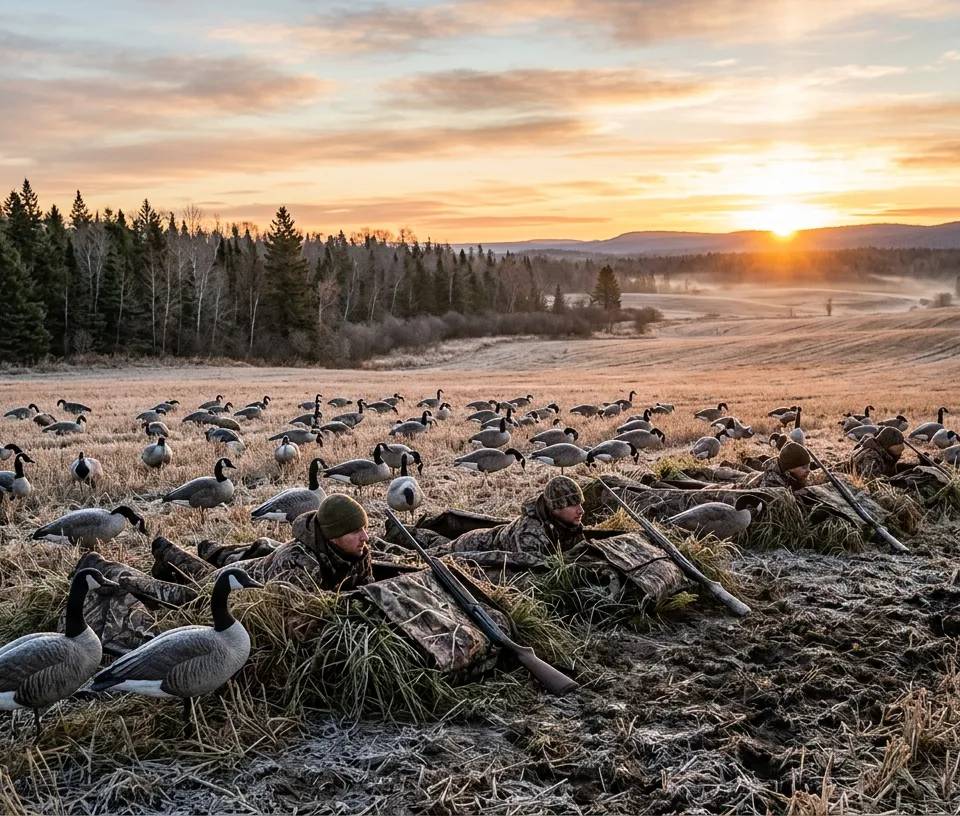
Canada goose hunting in Quebec presents a fascinating choice for waterfowl enthusiasts: the high-energy action of agricultural fields or the serene strategic challenge of water sets. Both environments offer a distinct thrill, but they require different gear, calling styles, and concealment tactics to fool the wary resident and migratory populations.
Field Hunting: The Power of the Spread
In the vast farming regions of Quebec, Canada geese focus heavily on grain corn and small grains. This type of hunting is a game of numbers and visual impact.
- Massive Decoy Spreads. To grab the attention of birds traveling from their roosts, hunters often use large spreads of full-body decoys. The goal is to simulate a safe, food-rich social gathering.
- Layout Blind Tactics. Concealment in an open field is the greatest challenge. Hunters use low-profile layout blinds, meticulously "stubbled" with local vegetation to disappear into the dirt and crop residue.
- The Landing Zone. Success depends on creating a clear "hole" in the decoy spread that invites the geese to land exactly where the shooters have the best angle, always keeping the wind at their backs.
Water Sets: Strategic Interception
Hunting over water, whether on the shores of the St. Lawrence or near inland lakes, focuses on resting and loafing areas. This is often a more intimate experience.
- Floating Decoy Dynamics. Quality trumps quantity on the water. A well-placed group of floaters that move naturally with the current or wind is often more effective than a massive static spread.
- Shoreline Concealment. Instead of layout blinds, hunters typically use natural cover like cattails or driftwood, or professional shore blinds. It requires less physical effort but demands absolute stillness as geese scan the water from above.
- Retrieval Challenges. A good dog or a small boat is essential for water hunting. The logistics shift from carrying heavy decoys into a field to managing water safety and bird recovery in potentially cold conditions.
Adapting Your Calling Strategy
Geese sound different depending on what they are doing. In a field, they are loud and aggressive, competing for the best ears of corn. When approaching water, they are often seeking safety and companionship. A skilled hunter will use fast, excited greeting calls and double-clucks in the field, while switching to softer moans and occasional honks to coax birds into a water set.
Booking Your Quebec Outfitter
When selecting an outfitter, consider what type of experience you prefer. Many Quebec outfitters offer both styles depending on the weather and bird movement. Inquire about the scouting process; the best outfitters spend hours daily locating exactly where the birds want to be. Booking a guided trip ensures you have access to prime private land and top-tier equipment, which is vital for a successful Canada goose hunt in the province.
Frequently asked questions
What is the best time of day to hunt Canada geese?
Dawn is the most productive time as geese leave their roosts to feed in the fields. A second peak of activity often occurs in the late afternoon when they return to the water.
Do I need a special permit for Canada geese?
Yes, you must have both a provincial small game hunting license and a federal migratory bird hunting permit. Always check the specific season dates for your hunting zone.
What ammunition is recommended for Canada geese?
Hunters typically use 12-gauge shells with steel or tungsten shot in sizes BB or 2. Lead shot is strictly prohibited for waterfowl hunting across Canada.
Is field hunting more effective than water hunting?
Both can be highly effective; fields often offer higher volume early in the season, while water hunting can be more consistent during cold snaps or once the ground freezes.
Should I use a dog for field hunting?
While less essential than for water retrieves, a well-trained retriever is a valuable asset for finding birds that fall in tall grass or drainage ditches surrounding the fields.