Hunting
Whitetail Hunting in Ontario: Choosing Between North and South
Compare trophy hunting in Northern Ontario's vast forests with high-density agricultural hunts in the South to find your ideal whitetail experience.
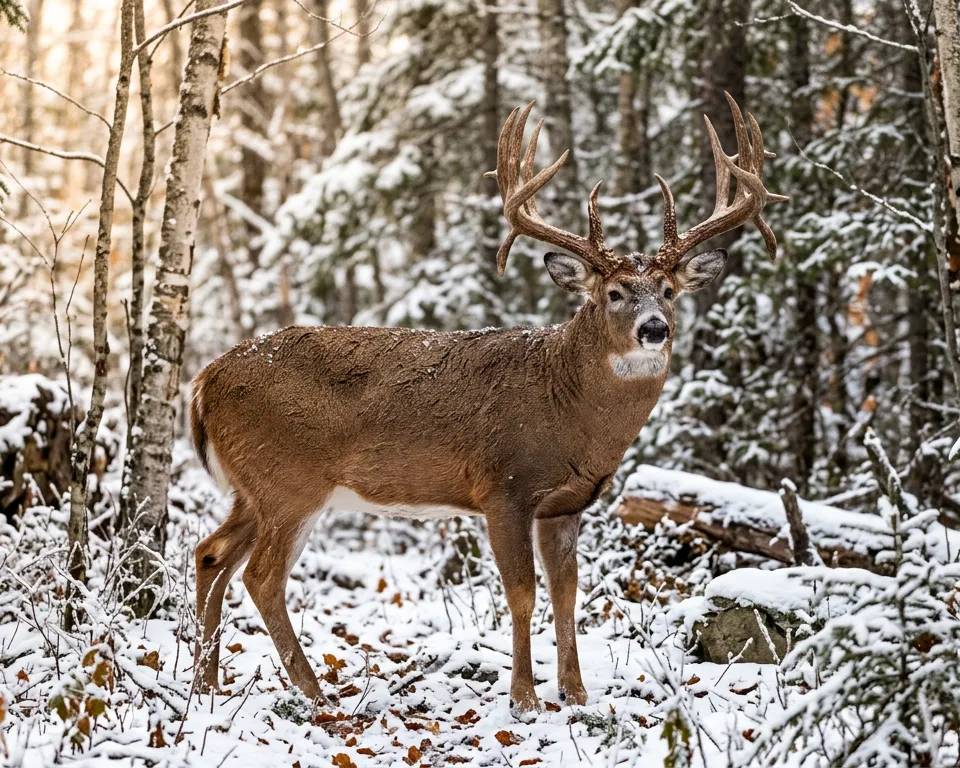
Ontario presents two distinct whitetail worlds that cater to different hunting styles. From the rugged, deep-woods tracking of the Northwest to the high-density agricultural stands of the South, choosing the right destination is about matching your expectations with the local geography. Our outfitters help break down what to expect when you head into the Ontario bush.
The Big Woods of Northern Ontario
Northern Ontario, specifically the Sunset Country and Rainy River regions, is famous for producing "heavyweight" bucks. The deer here are physically larger to withstand the cold, sporting dark antlers and thick necks. You won't see dozens of deer a day, but the one you do see could be the buck of a lifetime.
- The Experience. This is true wilderness hunting. You are often miles from the nearest road, surrounded by boreal forest and Canadian Shield rock.
- The Strategy. Sitting over active scrapes or funnel points during the November rut is the primary tactic. Success requires patience and resilience against the elements.
- Trophy Quality. The lack of hunting pressure allows bucks to reach 5.5 or 6.5 years of age regularly.
Agricultural Abundance in Southern Ontario
Southern Ontario offers a more temperate climate and a landscape rich in nutrients. With corn, soy, and winter wheat fields providing a constant food source, deer populations thrive. This is the place for hunters who want to see multiple animals every outing and enjoy shorter travel times.
- Access. Most hunting occurs on private woodlots or managed forest tracts. Outfitters here have spent years building relationships with local farmers.
- Regulation Nuances. Many southern WMUs are restricted to shotguns, muzzleloaders, or archery equipment due to population density.
- High Success Rates. If filling the freezer is your priority, the high deer-per-square-mile ratio in the South is hard to beat.
Comparing Gear and Tactics
In the North, warmth is your best friend. High-quality insulated boots and layered wool or synthetic clothing are mandatory for sitting in stands during sub-zero temperatures. Long-range rifles are standard here as shots can happen across frozen marshes or long logging roads.
In the South, versatility is key. You might spend the morning in a tree stand and the afternoon participating in a organized push or "deer drive." Archery is massive in Southern Ontario, with many hunters taking advantage of the early October season when the weather is still mild and deer are on a predictable feeding pattern.
Choosing Your Ontario Outfitter
Booking with an outfitter simplifies the complexities of Ontario's Wildlife Management Units (WMUs). An outfitter provides not just a bed, but local intelligence on deer movement and pre-scouted stands. When selecting a lodge, ask about their success rates over the last three seasons and what specific gear they recommend for their terrain. Whether you choose the quiet solitude of the North or the high-action woodlots of the South, Ontario remains one of North America's premier whitetail destinations.
Frequently asked questions
Do I need a guide to hunt whitetail in Ontario as a non-resident?
Yes, non-residents of Canada are required to hunt with a licensed outfitter or guide in Ontario. This ensures compliance with Wildlife Management Unit regulations and helps with licensing logistics.
When is the best time to see trophy bucks?
The rut, which typically peaks during the second and third weeks of November, is the prime time. Bucks are much more active during daylight hours, especially in Northern regions.
Can I use a rifle anywhere in Ontario?
No, many Southern Ontario WMUs prohibit high-power rifles for safety reasons, allowing only shotguns (slugs), muzzleloaders, or archery equipment instead.
What is the weight difference between Northern and Southern deer?
Northern deer are physically larger due to Bergmann's rule; a buck can exceed 250 lbs. In the South, they are slightly smaller in frame but often very well-fed due to crop access.
Is it easy to transport my venison after the trip?
Most outfitters offer butchery services or have facilities to quarter and wrap meat. Ensure you have the proper export permits if crossing provincial or international borders.