Hunting
Canada Goose Hunting Packages & Guided Trips
Discover the best outfitters in Canada for guided Canada goose hunting. Experience world-class decoy setups and calling during the fall migration.
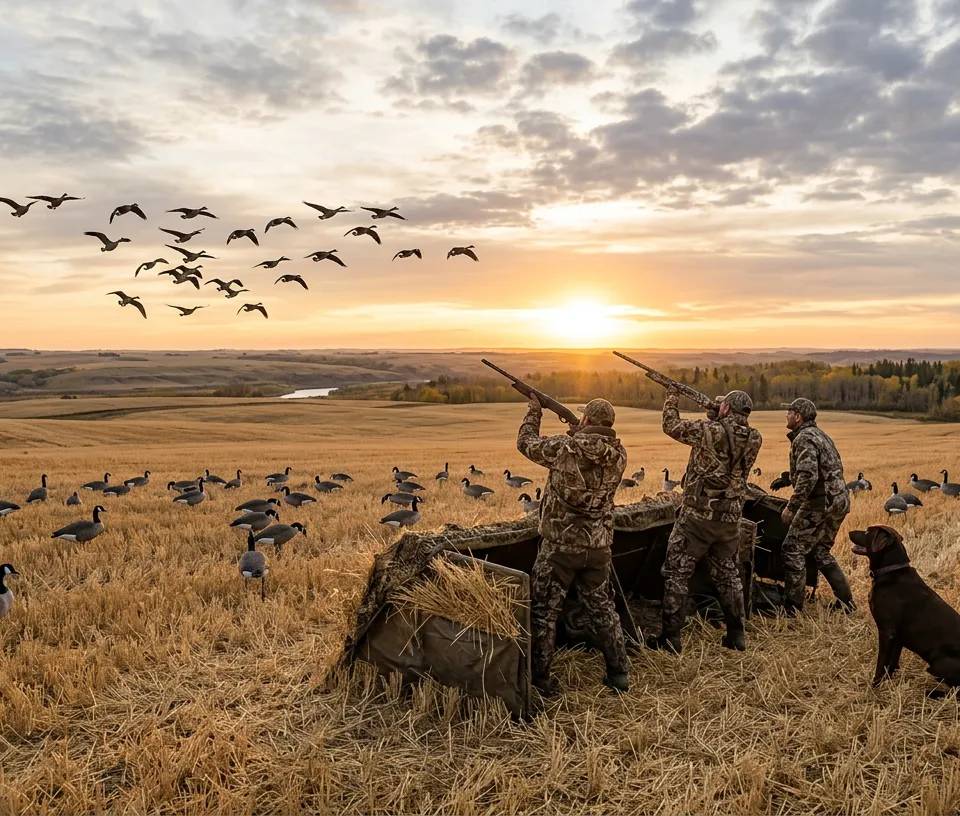
Canada goose hunting is far more than an early morning wakeup call; it is a full immersion into one of North America’s greatest migratory spectacles. Whether you are tucked into a harvested grain field in the Prairies or waiting along a vast eastern waterway, Canadian outfitters provide the essential expertise needed to outsmart these notoriously wary birds. This guide prepares you for a thrilling expedition where adrenaline builds with every approaching flock.
Canada’s Major Migration Flyways
Canada serves as the primary staging ground for millions of migrating waterfowl, offering world-class hunting opportunities from coast to coast. The region you choose will dictate both the scenery and the tactical approach.
- The Western Prairies: Saskatchewan, Alberta, and Manitoba are bucket-list destinations for waterfowl hunters worldwide. The massive fields of wheat, barley, and peas offer an endless buffet that holds massive concentrations of geese.
- The Central Staging Areas: Ontario and Quebec boast rich agricultural lands and the vital St. Lawrence River corridor. Hunters here target both large resident populations and the major autumn migratory waves heading south.
- The Atlantic Provinces: Coastal zones and farmland in the Maritimes provide dynamic hunting setups, heavily influenced by shifting tides and unpredictable ocean winds.
The Critical Importance of Concealment
Canada geese possess phenomenal eyesight and a sharp memory for landscapes. Professional guides put immense effort into making you virtually invisible in the field.
- Layout Blinds: These low-profile setups allow hunters to lie comfortably right amidst the decoy spread. The guide calls the shot at the precise moment the birds commit, requiring a quick sit-up and shoot motion.
- A-Frame Blinds: Increasingly popular in areas with taller vegetation like hedgerows or marsh edges, A-frames allow you to hunt comfortably from a seated or standing position. They are excellent for group hunts and offer better mobility.
- Natural Camouflage: Top-tier guides constantly adjust the blind cover using the exact vegetation from the field you are hunting—be it corn stalks or wheat stubble—ensuring there are no dark shadows or unnatural shapes.
Strategic Decoy Spreads
Setting the stage is back-breaking work that begins long before dawn. Outfitters supply the extensive gear required to create the perfect illusion of a safe, actively feeding flock.
- Volume and Realism: It is common to hunt over massive spreads consisting of three hundred to five hundred high-quality full-body and silhouette decoys.
- The U or J Hook Formations: These classic decoy layouts are designed to create an inviting landing zone directly in front of the blinds. Since geese always land into the wind, the spread is meticulously angled based on the morning breeze.
- Motion is Key: Guides often use flagging techniques to simulate the wing beats of landing geese. This movement grabs the attention of distant flocks and gives them the confidence to finish their approach.
The Art of Calling
Having the right gear is only half the battle; you also need to speak their language. Professional outfitters are master callers who can read the birds' body language. They use a variety of sounds, from deep greeting honks to rapid feeding chuckles. This two-way communication with incoming geese is a true art form. If the birds hesitate or slide away, the guide adapts the cadence to pull them back in. This vocal expertise is what separates a fly-by from birds dropping their landing gear right into your spread.
How to Choose and Book Your Outfitter
Planning a successful goose hunt requires foresight, as the prime migration dates book up incredibly fast.
- Evaluate the Inclusions: Determine if you want a fully inclusive lodge experience (meals, lodging, bird processing) or a simple day-hunt with a freelance guide.
- Discuss Group Sizes: Ask how many hunters will be in the blind. If you have a small party, find out if you will be mixed with other clients.
- Verify Licenses: Ensure you secure your provincial hunting license as well as your federal Migratory Game Bird Hunting Permit and conservation stamp.
- Book Early: The best Canadian outfitters hold exclusive leases with local farmers for the most productive fields. Their autumn calendars often fill up a year in advance, so start reaching out by late winter or early spring to secure your spot.
Frequently asked questions
What type of shotgun and ammunition should I use?
A 12-gauge shotgun is the standard choice for Canada goose hunting. You must use non-toxic shot (such as steel, bismuth, or tungsten) typically in size BB or number 2.
Do I need to bring my own decoys and blinds?
No, outfitters provide all the heavy equipment, including the massive decoy spreads and the blinds. You just need to bring your camouflage clothing, firearm, and ammunition.
How should I dress for a morning hunt?
Layering is crucial, as mornings are freezing but temperatures rise quickly once the sun is up. Opt for field-patterned camouflage (like stubble or corn) and bring waterproof boots.
What does the outfitter do with the meat after the hunt?
Most packages include or offer an option for bird processing and packaging. You will leave with your goose breasts cleaned and ready to cook or freeze.
Can I bring my own hunting dog?
This depends entirely on the outfitter. Some welcome well-trained client dogs that are accustomed to blind hunting, while others prefer to use their own experienced camp retrievers.