Hunting
Willow Ptarmigan Hunting in Quebec: Complete Guide
Discover how to hunt willow ptarmigan in Quebec: northern habitats, winter stalking strategies, cold-weather gear, and tips for planning your trip.
Species overview and identification
The willow ptarmigan (*Lagopus lagopus*), often referred to as "white partridge" by outdoors enthusiasts, is one of the most iconic and fascinating game birds in Quebec. A member of the grouse family (Phasianidae), this hardy bird is exquisitely adapted to survive the harsh subarctic and arctic climates. Similar in size to a ruffed grouse, it has a stocky build, a relatively short tail, and densely feathered legs and feet that act as natural snowshoes in deep powder.
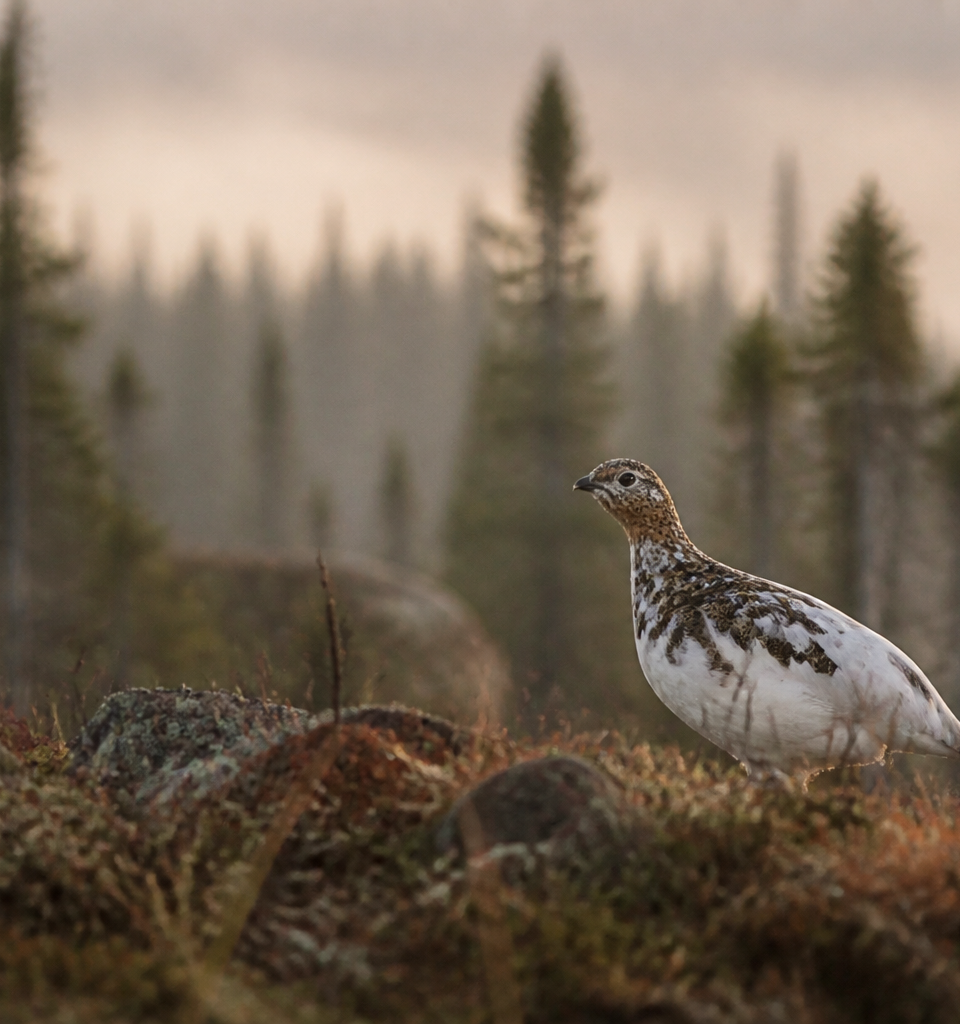
The most striking feature of the willow ptarmigan is its seasonal plumage change. During the summer months, the bird displays a rich reddish-brown plumage mottled with black and buff, providing flawless camouflage in the shrub tundra and peat bogs. As winter arrives, a complete moult transforms the bird into immaculate white, save for its outer tail feathers (rectrices), which remain deep black and are typically hidden when the bird is at rest. Males are distinguished by a small, bright red fleshy comb above each eye, which becomes especially prominent during the spring breeding display.
While willow ptarmigan can be confused with rock ptarmigan where their northern ranges overlap, several physical cues set them apart. The willow ptarmigan has a noticeably heavier, stouter bill and a slightly larger overall body size. Furthermore, in winter plumage, male willow ptarmigan lack the black transocular stripe (eye line) characteristic of male rock ptarmigan.
Habitat and geographic distribution
In Quebec, the willow ptarmigan reigns supreme across vast northern landscapes. Its range extends primarily throughout Nord-du-Québec, including the remote expanses of James Bay, Nunavik, and the northern reaches of the Côte-Nord. It thrives in the transition zone between open taiga and treeless tundra, where low-growing shrubbery dominates the terrain.
The species is closely tied to stands of shrub willows, dwarf birch, and green alder. These shrubs grow abundantly along frozen river valleys, around subarctic lake margins, in alluvial floodplains, and throughout open peatlands. These dense thickets serve as both their primary winter food source and critical cover against aerial and terrestrial predators.
During the cold season, local migratory movements frequently push large flocks southward toward the northern edge of black spruce and tamarack forests. This wintering movement provides outstanding hunting opportunities in areas accessible via northern road corridors or groomed snowmobile trails.
Behaviour and seasonal patterns
Willow ptarmigan behaviour changes significantly throughout the year. In spring and summer, territorial pairs disperse to nest on the ground, concealing their clutches in moss and lichen depressions. Their summer diet is varied, consisting of insects, seeds, wild berries such as blueberries and lingonberries, and fresh green shoots.
By late autumn and winter, ptarmigan become gregarious, gathering into coveys that range from a dozen birds to several hundred when harsh weather concentrates them in prime feeding areas. Their winter diet shifts almost entirely to the buds, twigs, and catkins of willows and dwarf birches.
To survive extreme northern cold, ptarmigan utilize an ingenious energy-saving tactic: they dive or dig into soft snowdrifts to form roosting cavities known as "snow igloos" or snow bowls. This insulating blanket shields them from biting winds and keeps them hidden from predators. The birds typically emerge to feed during the first light of dawn and again in the late afternoon.
Best seasons and conditions
Winter ptarmigan hunting represents the ultimate subarctic hunting experience in Quebec. The period from January through late March generally delivers the most stable conditions and the highest success rates. By this time, the birds are in full winter white, gathered in sizeable coveys, and actively feeding in exposed willow thickets.
Cold, clear, calm days are ideal. Sunny weather enhances visibility, making it easier to spot subtle contrasts like bird shadows on the snow crust or the movement of willow branches as birds feed. Furthermore, calm conditions encourage ptarmigan to stay perched on low branches rather than remaining buried in snow shelters.
Conversely, heavy blizzards, high winds, and severe winter thaws make hunting difficult. During storms, coveys stay huddled under the snowpack, making them nearly impossible to locate. The day after a fresh snowfall demands extra physical effort on snowshoes, but it rewards hunters with crisp, easy-to-track fresh sign.
Where and how to find it
Locating willow ptarmigan across vast northern expanses requires careful reading of the terrain and keen observation of field sign. The fundamental rule is to follow low-lying drainages, riverbanks, and lake edges where willows grow tall enough to break through the snowpack and provide accessible browse.
Key signs to look for when searching for coveys include:
- Snow tracks: Broad, feathered foot impressions that leave distinctive tracks, often accompanied by wing drag marks from takeoffs.
- Winter droppings: Small, yellowish or greenish fibrous cylindrical pellets deposited in piles near snow roosts.
- Nipped willow tips: Clean, bevelled cuts on shrub stems made by their sharp, powerful bills.
- Distinctive calls: Hoarse, guttural cackles and "chuckles" emitted by males that carry long distances across frozen ground.
A high-quality pair of binoculars is indispensable. Methodically scan the edges of willow runs, paying close attention to small dark spots that reveal a black bill, a dark eye, or the faint shadow of a perched bird.
Recommended techniques and strategies
Snowshoeing is the primary method for hunting willow ptarmigan. Hunters should advance slowly into or across the wind, constantly scanning the shrubbery at mid- and long-range. Maintain a deliberate pace interspersed with frequent pauses. Ptarmigan rely heavily on their camouflage and will often hold tight until the last moment; a sudden, prolonged pause by the hunter creates uncertainty that frequently prompts nervous birds to flush.
Stalking a spotted covey on the ground or in shrubs requires patience. Avoid walking directly toward the birds, as a straight approach usually triggers an immediate flush. Instead, take a gradual, zigzagging approach, angling slightly away while closing the distance into shooting range. If the flock begins stretching their necks and running across the snow, be ready—a covey rise is imminent.
When birds take wing, stay composed and mark their flight line. Unlike dense-forest grouse, ptarmigan often fly in a straight path for a few hundred metres across open tundra before settling down again, allowing you to track them down for a second stalk.
Equipment and gear
Heading into subarctic winter conditions requires dependable, cold-tested gear designed for warmth and mobility. Firearm selection depends on regional regulations and hunting style. A 12- or 20-gauge shotgun loaded with #6 or #7.5 shot is versatile and effective for flushing shots. For precision shooting on stationary birds at a distance, a small-calibre rimfire rifle (.22 LR or .17 HMR) fitted with clear optics allows clean, meat-sparing head and neck shots.
Clothing must follow a strict layering system:
- A moisture-wicking merino wool or technical synthetic base layer.
- A warm, breathable mid-layer made of heavy fleece or packable down.
- A windproof, breathable outer shell, preferably in white or winter camouflage to blend into the snowscape.
- Cold-weather hunting mitts with fold-back trigger fingers for warmth without sacrificing dexterity.
High-flotation snowshoes—either wide traditional wooden models or modern large-footprint backcountry snowshoes—are essential for navigating deep powder. Polarized sunglasses or ski goggles are mandatory to prevent snow blindness caused by the intense glare reflecting off the snow.
Regulations, licences and ethical practices
Willow ptarmigan hunting in Quebec is strictly regulated by provincial wildlife authorities. All hunters must hold a valid small game hunting licence for the current season and comply with open season dates specific to northern hunting zones.
Daily bag and possession limits are established to ensure sustainable harvests. Ethical hunting practices require taking only high-percentage shots to guarantee clean, quick kills, and making every reasonable effort to retrieve downed game in deep snow. Hunters must also respect Category lands and the ancestral rights of local Cree, Inuit, and Naskapi nations across these territories.
To review current season dates, zone limits, and approved calibres, consult the official Government of Quebec (hunting and fishing) portal. Regulations change annually: always verify official rules before your trip.
Conservation, population and ecosystem role
The willow ptarmigan plays a cornerstone ecological role in northern Quebec. As specialized herbivores, their winter browsing influences the growth dynamics of subarctic shrub communities. Simultaneously, they serve as a critical prey base for a wide array of tundra and taiga predators.
Ptarmigan populations sustain iconic northern predators including the arctic fox, Canada lynx, gyrfalcon, rough-legged hawk, and snowy owl. Like snowshoe hares and lemmings, willow ptarmigan populations undergo natural multi-year boom-and-bust cycles, typically fluctuating over a 9- to 11-year period between peak abundance and low population densities.
Conserving the species depends on maintaining intact northern habitats in the face of climate change and industrial development. Sport hunters contribute to conservation efforts by respecting harvest limits and providing valuable harvest data to northern wildlife biologists.
Planning a guided trip or outfitter stay
A winter ptarmigan expedition into Northern Quebec requires thorough preparation. Remote geography, extreme weather, and intricate travel logistics make booking through an established outfitter the safest and most rewarding option. Quebec's northern outfitters have the equipment, heated base camps, and snowmobile fleets needed to ensure a successful winter adventure.
Hiring an experienced local guide provides direct access to productive willow draws reached via snowmobile or sled. Local guides understand daily flock movements, localized micro-habitats, and the best stalking tactics for prevailing weather conditions. After a long day in the biting cold, a heated, comfortable outfitter camp provides a welcome retreat.
Whether you want to experience traditional snowshoe stalking across the James Bay territory or embark on a remote winter hunt in Nunavik, planning your trip is the first step toward an unforgettable adventure. Explore options today and book your northern outfitter stay through MyOutfitters—your trusted marketplace for Quebec's premier hunting experiences.
Frequently asked questions
What is the best firearm and calibre for willow ptarmigan hunting?
A 12- or 20-gauge shotgun loaded with #6 or #7.5 shot is ideal for birds on the wing. For stationary birds at distance, a .22 LR or .17 HMR rimfire rifle equipped with a scope allows clean, precise harvesting without damaging the meat.
How do you tell a willow ptarmigan from a rock ptarmigan?
The willow ptarmigan is slightly larger with a noticeably heavier, broader bill. In winter plumage, male willow ptarmigan have an entirely white head with a red comb, lacking the distinctive black eye line found on male rock ptarmigan.
Why do willow ptarmigan change colour in winter?
This seasonal moult provides vital thermal insulation and protective camouflage. Turning pure white allows the bird to blend into the snow to evade predators like gyrfalcons and arctic foxes, while dense feathering traps body heat in extreme subarctic cold.
Where are willow ptarmigan found in Quebec?
They inhabit northern Quebec, primarily across Nunavik, James Bay, and the upper Côte-Nord. In winter, flocks frequently migrate locally southward along the ecotone between the open tundra and northern taiga.
What type of vegetation attracts willow ptarmigan?
Willow ptarmigan are strongly tied to thickets of shrub willow, dwarf birch, and alder found along frozen streams, lakeshores, and wetland basins. The buds, catkins, and twigs of these shrubs make up nearly their entire winter diet.
How can you detect ptarmigan hidden beneath the snow?
Look for broad, feathered foot tracks, wing drag marks, yellowish cylindrical droppings near shrub edges, and snow-burrow entry holes. Using binoculars to scan willow edges will help you spot contrasting black beaks and dark eyes.
What clothing is essential for winter ptarmigan hunting?
Wear a technical layering system consisting of a merino wool base layer, a warm fleece or down mid-layer, and a windproof white outer shell. Pack extreme-cold winter boots, insulated shooting mitts with fold-back fingers, and polarized sunglasses.
What licence is required to hunt ptarmigan in Quebec?
Hunters must hold a valid provincial small game hunting licence for Quebec residents or non-residents. Be sure to check specific open season dates, regulations, and daily bag limits for your northern hunting zone prior to departure.
How do you cook and prepare willow ptarmigan?
Ptarmigan meat is dark, tender, and distinctly rich with a boreal, gamey flavour. It is best quickly pan-seared in butter and served medium-rare, paired with wild berry sauces, or slow-braised in a traditional wine and herb stew.
Why should I book a guided ptarmigan hunt through an outfitter?
An outfitter manages complex northern logistics, provides warm accommodations, and supplies snowmobile transport. Professional guides know the active willow corridors and safely navigate remote, cold terrain to put you on birds.