Hunting
Goose Hunting in Ontario: Field Decoying vs. Water Sets
Explore the best strategies for Canada goose hunting in Ontario, from southern grain fields to coastal marshes, including new extended winter seasons.
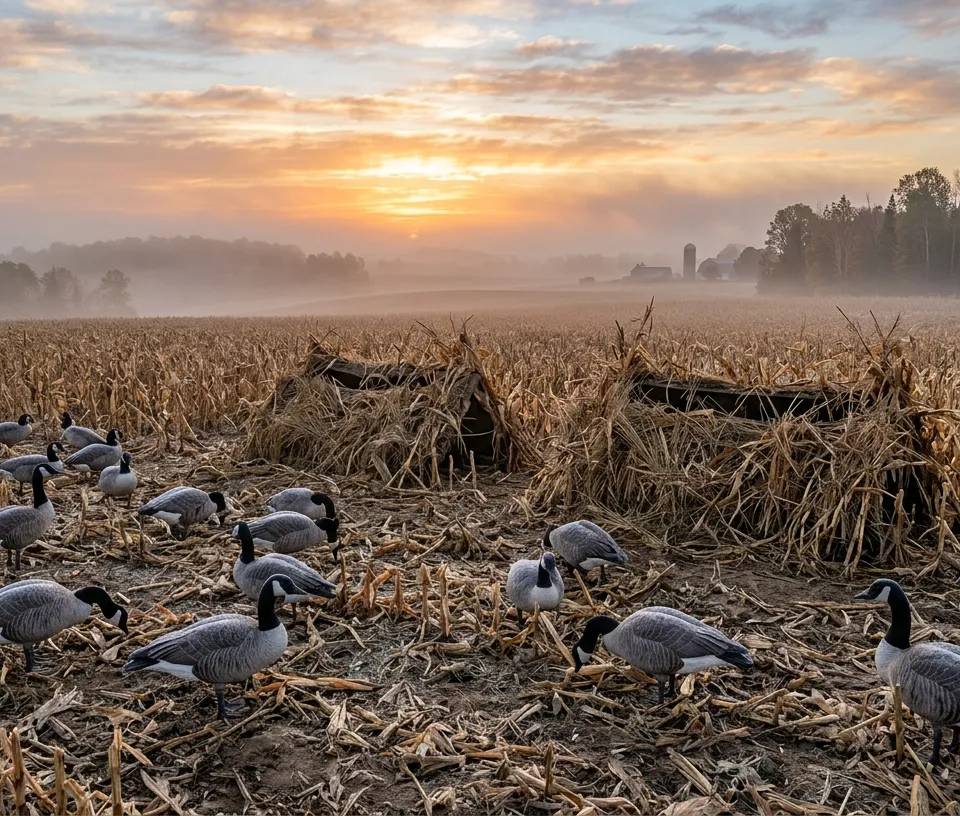
Ontario provides some of the most diverse Canada goose hunting opportunities in North America. From the sprawling grain fields of the south to the rugged shorelines of the Great Lakes, the choice between field and water setups defines your tactical approach and the overall experience of the hunt.
Tactical Field Hunting in Southern Ontario
Field hunting is the cornerstone of the Ontario goose season, particularly in the agricultural heartlands. Success here is built on locating the specific grain fields—corn, wheat, or soy—that the birds have selected for their morning and evening feeds.
- Full-body realism. In the open fields, geese have plenty of time to inspect a spread. High-quality, flocked full-body decoys are essential to fool late-season birds.
- Layout blind strategy. Concealment is your biggest challenge. Outfitters spend hours 'mudding' and brushing blinds to match the specific stubble of the field.
- Mobility. Unlike permanent blinds, field setups allow you to move exactly where the birds want to be, which is the golden rule of waterfowling.
The Dynamics of Water Sets and Marshes
Water hunting offers a different pace, focusing on loafing areas where geese go to rest and drink after feeding. This is particularly effective during the mid-day period or in regions like the North where agricultural fields are scarce.
- Floaters and movement. A spread of floating decoys should be spaced out to look like a relaxed flock. Adding movement to the water surface is key to drawing in high-flying migrants.
- Natural cover. Hunting from shoreline blinds or specialized boats allows for a more comfortable experience, often shared with duck hunting opportunities.
- Weather impact. Cold fronts often push geese off small ponds toward larger, open water bodies that stay ice-free longer.
Seasons and New Winter Opportunities
Ontario’s season starts early in September, targeting local resident geese. As the migration kicks in, the strategy shifts to intercepting large flights coming from the subarctic. Hunters should prepare for the upcoming 2026-2027 seasons, which will introduce new short winter windows in specific Southern WMUs. These late-season hunts can be incredibly productive as birds congregate in massive numbers before the final push south.
How to Choose Your Ontario Outfitter
Booking with an outfitter is the most efficient way to secure access to prime private land and professional-grade equipment. When selecting a guide, ask about their scouting routine and the size of their decoy spreads. A professional outfitter handles the heavy lifting of trailer-loads of gear and permission from landowners, letting you focus on the shot. You can browse expert guides across Ontario on MyOutfitters.ca to find the perfect match for your next waterfowl adventure.
Frequently asked questions
When is the best time to hunt geese in Ontario?
The season starts in early September for resident birds, but the peak migration typically occurs from October to November. New winter seasons will also be available in 2026-2027.
Do I need a special permit for waterfowl?
Yes, you must have a valid Ontario hunting license along with a federal Migratory Game Bird Hunting Permit and the conservation stamp.
Why hunt with an outfitter instead of solo?
Outfitters secure access to private lands and own hundreds of expensive decoys. They also perform daily scouting, which significantly increases your chances of success.
What is the difference between a Canada Goose and an Outarde?
In French Canada, the term 'outarde' is commonly used to refer to the Canada Goose, although the bustard (outarde) is technically a different European bird.
What gauges are recommended for geese?
The 12-gauge is the standard, using non-toxic shot (steel, bismuth, or tungsten) in sizes BB or 2 to ensure a clean harvest.