Hunting
Deer Hunting in Quebec: Complete Guide and Tips
Discover the best techniques, hunting zones, and peak periods for deer hunting in Quebec, from autumn scouting to full-service outfitter trips.
Key takeaways
- The season generally runs from late September to late November, depending on the hunting implement and specific Quebec hunting zones.
- White-tailed deer primarily inhabit mixed woodlands, agricultural edges, regenerating clearcuts, and transition corridors throughout southern Quebec.
- Elevated treestands and slow still-hunting along travel routes remain the most productive hunting methods.
- Hunting requires a valid hunter's certificate, a species-specific tag/licence, and mandatory registration of every harvested animal.
- Strict scent control and consistent wind awareness are critical when pursuing this wary big game species.
How to identify male and female deer in Quebec?
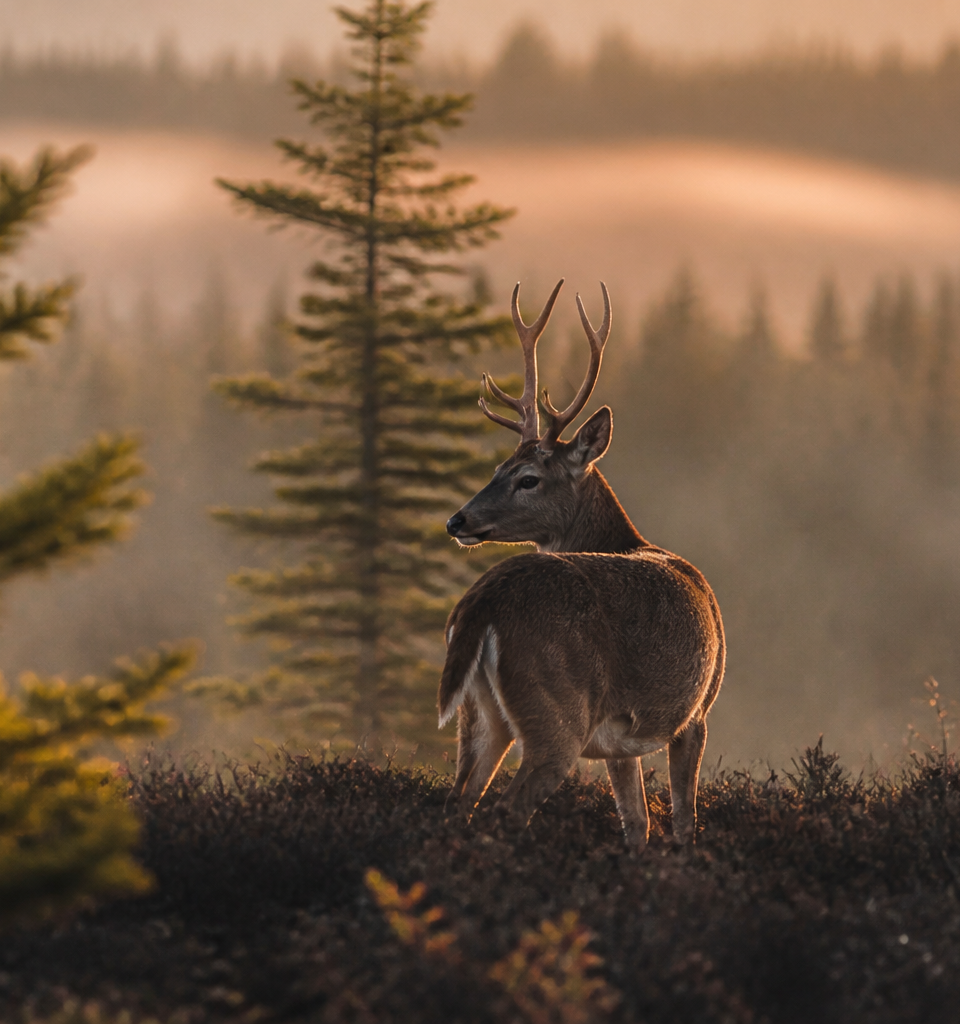
Identifying white-tailed deer relies on observing their body profile, seasonal coat, and the presence or absence of antlers on mature bucks. In the fall, deer grow a dense grey-brown coat that replaces their reddish summer hair. The broad tail, brown on top and stark white underneath, flashes like a warning flag as the animal bounds away—a hallmark signature in mixed and boreal forests.
An adult male, or buck, carries forward-curving main beams with unbranched tines, the size of which depends on age, genetics, and nutrition. During the breeding season, high testosterone levels cause the buck's neck to swell noticeably. Young button bucks born in the spring may only show small bony nubs hidden by fur, requiring careful glassing with binoculars before deciding to shoot, depending on local antler restrictions.
Does have a sleeker, more triangular head with no antlers. They frequently travel with one or two fawns, recognizable by their smaller build and cautious, hesitant movements. Evaluating posture, stride, and overall body size helps hunters quickly differentiate mature does from young deer in split-second shooting situations.
Natural habitat and distribution of deer in Quebec
White-tailed deer thrive in the diverse ecosystems of southern Quebec, particularly in the Eastern Townships, Montérégie, Outaouais, and the Laurentians. These regions offer an ideal mix of agricultural fields rich in corn and soybeans alongside mature timber stands that provide essential thermal cover. Edge habitats, or ecotones, are prime locations where deer find both abundant food and rapid escape routes.
Further east, Beauce, Bas-Saint-Laurent, and Anticosti Island also support significant deer populations adapted to harsher weather. On the mainland, the northern boundary of deer distribution is largely dictated by winter snow depth, which restricts movement and access to browse. Deer seek out mixed stands of maple, cedar, and hemlock that act as natural windbreaks and trap blowing snow.
Across commercial timberlands and public crown land, regenerating clearcuts between five and ten years old serve as prime feeding grounds. These thick brushy areas provide secure cover against predators while offering an abundance of nutrient-rich woody browse vital for building fat reserves before winter.
Deer behavior and the rut cycle
The deer's yearly cycle is driven by photoperiod and food availability, peaking during the fall breeding frenzy known as the rut. In late summer, decreasing daylight triggers velvet shedding on buck antlers, signalling the start of territorial marking. Bucks begin rubbing saplings like alders and maples and opening ground scrapes to deposit scent from their interdigital and tarsal glands.
The peak of the rut generally occurs during the first two weeks of November across Quebec. During this intense phase, mature bucks cast aside much of their usual caution, cruising vast home ranges day and night to locate does in estrus. This window is often the best opportunity to spot normally nocturnal bucks moving in broad daylight along forest funnels and field edges.
After breeding wraps up in late November, deer shift into recovery mode, conserving energy as winter approaches. Herds begin congregating near traditional wintering yards, or deer yards (*ravages*). Daily movements become shorter, more predictable, and centered around remaining food sources.
When to hunt deer based on fall weather?
The most productive hunting days typically follow cold fronts between late October and mid-November. A sudden drop in barometric pressure prompts deer to feed heavily right before and immediately after weather systems move through. The morning after a light first snowfall offers prime conditions for tracking fresh sign and spotting dark silhouettes against the white forest floor.
Wind direction and speed heavily dictate deer movement: a steady, light breeze aids in masking scent and predicting travel corridors, while high winds exceeding 40 km/h tend to pin deer down in thick cover. Overcast days with light drizzle or mist dampen dry leaves, making it much easier to walk quietly without alerting nearby sentries.
Early mornings and late afternoons are consistently reliable early in the season, but midday movement picks up sharply during the rut. Staying on stand between 10:00 a.m. and 2:00 p.m. often rewards hunters with sightings of cruising bucks actively seeking does.
Where to locate white-tailed deer in Quebec?
Locating deer requires focusing on travel funnels connecting daytime bedding areas to nocturnal feeding grounds. Ridge saddles, swamp edges, and natural terrain pinch points serve as regular travel corridors. Setting trail cameras along these strategic routes helps verify herd movements without spreading excessive human scent in the area.
Visual ground sign offers valuable clues about deer size and traffic levels. High rubs on larger-diameter trees point to the presence of mature bucks, while active teardrop-shaped scrapes indicate hot territorial lines. Clear hoof tracks in soft mud reveal direction of travel, herd composition, and travel speed.
Hunters planning a multi-species trip in mixed woodland can also complement their outing by reviewing our Complete guide to grouse hunting in Quebec, as prime upland bird cover often borders the thick feeding brush preferred by deer.
Effective stand-hunting techniques for deer
Elevated hunting from treestands or enclosed ground blinds is the most common and effective strategy in Quebec. Setting a stand four to six metres up helps disperse human scent above the deer's line of sight and provides clear shooting lanes through thick undergrowth. Patience is essential, requiring hours of motionless, quiet vigil during peak movement windows.
Vocal calling and antler rattling can produce excellent results during the pre-rut and rut. Short grunt calls or the sound of sparring antlers pique the curiosity of dominant bucks looking to defend their territory. Calling should be done sparingly to avoid educating cautious older animals.
Still-hunting—moving slowly and deliberately through the woods—is best suited for damp, windy days when crunchy ground debris is silenced. This approach involves taking a few slow steps into the wind, stopping, and glassing every pocket of cover with binoculars before advancing further.
What equipment to choose for deer hunting?
Successful hunts depend on dependable firearms or archery gear, clear optics, and performance layering built for unpredictable Quebec fall weather. Centre-fire rifle calibres such as .308 Winchester, .270 Winchester, .30-06 Springfield, and 6.5 Creedmoor deliver flat trajectories and sufficient knockdown power for clean, ethical harvests at typical hunting distances of 50 to 200 metres.
For bowhunters, a well-tuned compound bow or crossbow paired with sharp, reliable broadheads ensures deep penetration. Quality 8x42 or 10x42 binoculars with good low-light transmission are indispensable for glassing shadowed timber at dawn and dusk without raising a firearm.
A moisture-wicking layering system with merino wool base layers and a quiet, windproof outer shell prevents chills during long hours on stand. Non-resident hunters planning to bring hunting equipment across the border should consult Bringing a firearm to Canada for hunting: Complete guide to streamline customs declarations.
Regulations and licences for deer in Quebec
Deer hunting in Quebec is governed by wildlife management zones, each with specific season dates, bag limits, and implement restrictions. Every hunter must hold a valid hunter certification for their chosen equipment and a zone-specific deer licence tag. Blaze orange clothing covering the chest, back, and head is mandatory during firearms seasons.
Harvest registration is mandatory and must be completed within the designated time frame at an official registration station or through the provincial online portal. Some zones enforce antler-point restrictions to protect young yearlings and promote a balanced buck age structure. Hunters must check exact opening and closing dates depending on whether they are using archery, crossbow, muzzleloader, or rifle gear.
For complete details on quotas, season dates, and zone boundaries, visit the Government of Quebec (hunting and fishing). Regulations change annually: always verify official dates and requirements specific to your zone before planning your trip.
Deer management and conservation in Quebec
Sustainable white-tailed deer populations rely on wildlife management practices that balance herd densities with forest carrying capacity and hunting pressure. Provincial wildlife biologists adjust the allocation of antlerless deer tags annually based on winter severity, harvest statistics, and the health of key wintering yards.
Severe winters remain the main natural limiting factor for deer in northern ranges, as deep snowpack limits mobility and foraging. Preserving mature softwood stands helps reduce snow accumulation beneath the canopy and maintains packed travel trails. Private woodlot owners also play a valuable stewardship role by creating forest openings and protecting critical cedar stands.
Ethical hunting practices and adherence to harvest limits ensure healthy herds for future generations. Those interested in unique island settings can also check out 1 outfitter to discover on Anticosti, where deer thrive in a world-renowned island ecosystem with no major natural predators.
Planning a guided deer hunting trip at an outfitter
Booking a trip with a specialized outfitter turns an autumn hunt into a memorable and hassle-free backcountry experience. Outfitters manage extensive private or exclusive-rights territories where hunting pressure is controlled to support mature deer. Experienced local guides know the terrain, deer bedding areas, and prime stand locations inside and out.
Guided packages typically include comfortable wilderness lodging, on-territory transportation, and complete field care, including field dressing and meat preparation. This full-service approach lets hunters focus entirely on their time in the woods while drawing on the expertise of seasoned professionals.
Whether you are planning your first big game hunt or targeting a trophy buck in remote country, explore our featured Quebec hunting outfitters. Check out available packages to book your next fall hunting trip in Quebec's top hunting country.
Frequently asked questions
When does the deer rut start in Quebec?
The rut begins with light pre-rut activity in late October and reaches peak intensity during the first two weeks of November. During this window, bucks move actively day and night searching for does, making it the most productive time for stand hunting.
What rifle calibres are best for white-tailed deer?
Popular and effective calibres include .308 Winchester, .270 Winchester, .30-06 Springfield, and 6.5 Creedmoor. They offer flat shooting, manageable recoil, and sufficient terminal energy for clean, ethical harvests between 50 and 200 metres.
How much does a resident deer hunting licence cost in Quebec?
Licence fees depend on residency status and the specific tag type or hunting season selected. Current rates are updated each year and can be confirmed directly on the official Quebec wildlife management portal.
Is blaze orange mandatory for deer hunting in Quebec?
Yes, hunters must wear blaze orange covering the back, chest, and head, visible from all angles, during all firearm and muzzleloader hunting seasons. Exceptions apply only during certain archery-only periods.
Where are the highest deer densities in Quebec?
The highest deer densities are found in southern zones such as the Eastern Townships, Outaouais, Montérégie, and Chaudière-Appalaches. Anticosti Island also supports exceptionally high deer numbers per square kilometre due to its predator-free island habitat.
How do you call white-tailed deer effectively during the hunt?
Using a grunt tube to mimic buck grunts or a doe bleat call works well leading up to and during the rut. Pairing short calling sequences with light antler rattling can draw in territorial bucks searching for rivals in the area.
Is baiting deer permitted during the fall in Quebec?
Baiting rules using apples, carrots, or grains vary by hunting zone and time of season in Quebec. Some areas restrict or ban baiting to limit disease transmission; always check current local zone regulations before placing bait.
What is the average shooting distance when stand hunting in the woods?
In dense Quebec woodlands, most shots occur between 30 and 80 metres due to brush and timber. Stands set along agricultural field edges or open clearcuts can present shooting opportunities beyond 150 metres.
How do you register a harvested deer in Quebec?
Hunters must immediately attach their transportation tag to the harvested deer and register the animal within the required legal timeframe. Registration can be completed online through the provincial wildlife portal or at an authorized registration station.
Can you hunt grouse while on a deer hunting trip?
Yes, small game such as ruffed grouse can be harvested if the respective seasons are open and you hold valid licences for both species. Many hunters save bird hunting for mid-afternoon walks to avoid disturbing prime deer stand areas during dawn and dusk.