Hunting
Elk Hunting in Quebec: Complete Guide for Success
Discover the secrets of elk hunting in Quebec: techniques, gear, cervid behaviour, and expert tips to plan an unforgettable hunting adventure.
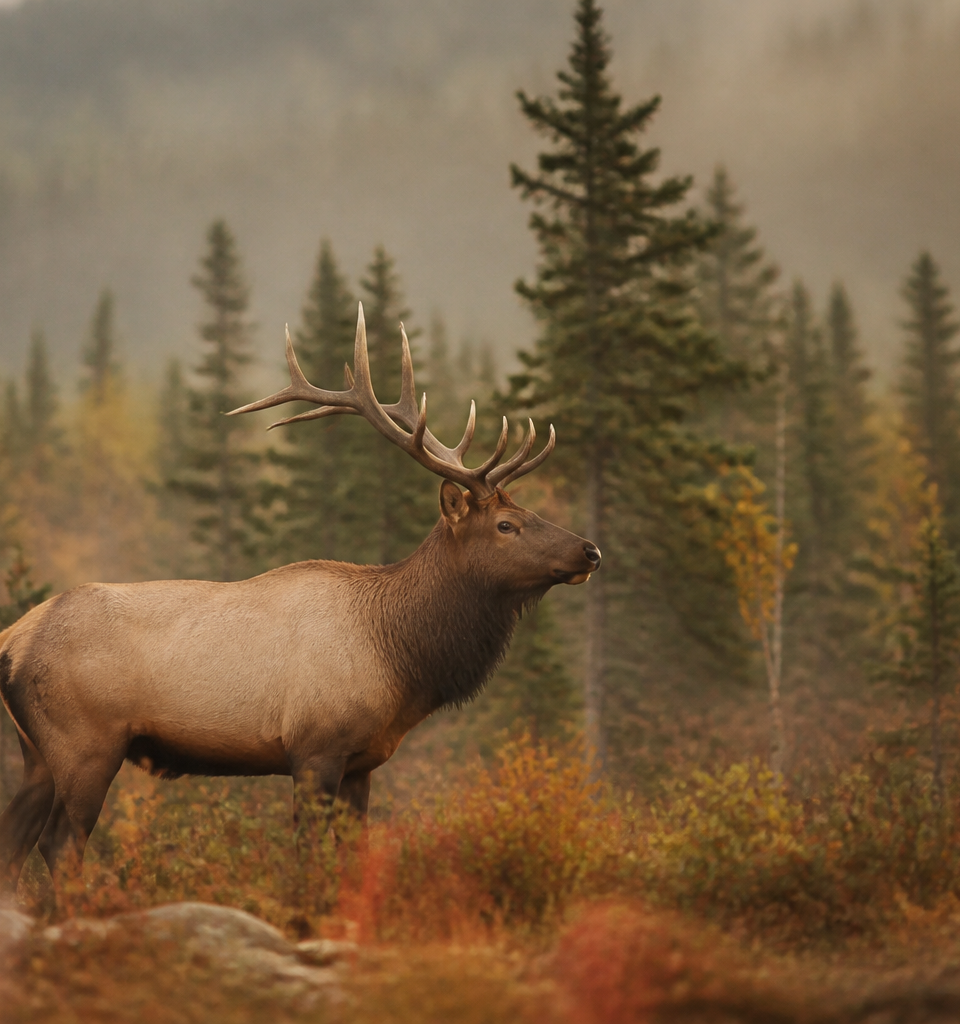
Species overview and identification
The elk (*Cervus canadensis*), also known as wapiti, is among the largest cervids in North American wildlife, surpassed in size only by the moose. This magnificent ungulate is distinguished by its stately appearance and striking, high-contrast coat. Its body typically displays a tawny or copper-brown colour, while its neck, head, and legs feature a dark brown to almost black coloration. One of its most distinctive visual identifiers is its prominent yellowish or cream-coloured rump patch, bordered by a short tail of the same shade.
Adult males, commonly referred to as bulls, carry impressive, sharp-tined antler racks that can rise more than a metre above their heads. These antlers are shed in late winter and regrow each spring, covered in nutrient-rich velvet until late summer. Females (cows) lack antlers and have a sleeker build, though their stature remains imposing compared to a white-tailed deer. Field identification relies on this massive frame, an elongated facial profile, and the distinctive pale rump clearly visible from a distance.
Habitat and geographic distribution
In Quebec, the presence of elk is unique. Historically widespread across eastern North America, wild elk populations declined following early settlement. Today, elk hunting opportunities in Quebec take place primarily within managed forest estates, private preserves, and dedicated outfitter territories, where diverse habitats are maintained to recreate the species' ideal natural conditions.
Elk favour a mosaic landscape combining open foraging grounds and dense timber cover. Mixed stands of mature maple, birch, and conifers provide both thermal shelter from harsh weather and abundant browse. Natural clearings, bog edges, regenerating clearcuts, and semi-wooded meadows serve as prime grazing areas, supplying the grasses, forbs, and tender shrub shoots essential to sustaining their substantial body mass.
Behaviour and seasonal patterns
An elk's daily routine and seasonal movements are deeply tied to the weather and herd social structure. Throughout most of the year, herds are matriarchal: cows live in tight-knit groups with calves and juveniles under the watchful eye of experienced lead cows. Mature bulls form smaller bachelor groups or lead a solitary existence in more remote, rugged forest pockets.
In late summer and early autumn, a dramatic shift occurs as the rut begins. Bulls thrash their antlers against tree trunks to rub off remaining velvet and move in to locate cow herds. The bugle then echoes across the valleys—a powerful, raspy whistle used to challenge rivals and herd females into jealously guarded harems. During this intense hormonal period, bulls eat very little, channelling all their energy into display rituals, sparring, and defending their breeding territory.
Best seasons and conditions
Autumn is without question the prime time to hunt elk. The rut, peaking between mid-September and mid-October, offers an unmatched sensory spectacle. This is when animals are most active during daylight hours and most responsive to calling. Late autumn, into November, also delivers productive hunting opportunities, as elk feed heavily to build up fat reserves before the onset of the boreal winter.
Weather conditions play a decisive role in hunt success. Crisp, cool days marked by morning frost and a steady, light breeze encourage movement; these large animals tolerate heat poorly due to their thick winter coats. Foggy mornings and overcast late afternoons are ideal for catching elk feeding along woodland edges, whereas stormy, high-wind days prompt the herd to bed down in sheltered ravines and dense softwood stands.
Where and how to find it
Locating elk requires careful reading of the landscape and the sign left by moving herds. Elk tracks resemble moose tracks but are more rounded at the tips of the hooves, forming well-worn trails along ridge lines or forest fringes. Fresh antler rubs on tree trunks, where bark has been stripped at shoulder height, provide undeniable proof of an active bull in the area.
To spot animals, hunters should focus their scouting on edge habitats, or ecotones. The transition zones between mature coniferous timber and open grass meadows are major staging areas at first light. Listening intently during early morning hours often allows you to triangulate the bugle of a bull echoing from a draw or timbered bench, providing a clear target for a strategic stalk.
Recommended techniques and strategies
Elk hunting in Quebec is typically conducted using three proven approaches, tailored to local terrain and weather:
- Active calling during the rut: utilizing bugles and cow calls to trigger a bull's territorial aggression or lure in a curious satellite male.
- Spot-and-stalk: quiet, deliberate stalking into the wind through feeding zones and bedding cover after glassing animals from vantage points.
- Stand or blind hunting: positioning quietly in a ground blind or elevated platform set up along active travel corridors or key feeding clearings.
Wind management is the most critical element of any approach. An elk's sense of smell is remarkably keen; the slightest breeze carrying human scent toward the herd will trigger an instant, silent escape. When calling, hunting in tandem is an effective tactic: the shooter positions themselves several dozen metres ahead of the caller to intercept a wary bull as he attempts to circle downwind of the sound.
Equipment and gear
Hunting an animal of this size demands capable firearms or archery gear suited to northern conditions. For rifle hunters, versatile, hard-hitting calibres with flat trajectories and high terminal energy are recommended, such as the .300 Winchester Magnum, .30-06 Springfield, 7mm Remington Magnum, or .338 Federal, paired with heavy, controlled-expansion bullets. Bowhunters and crossbow hunters should use setups pulling at least 60 pounds, equipped with razor-sharp fixed-blade broadheads.
Key optics and field gear should include:
- High-grade binoculars (8x42 or 10x42) with excellent low-light transmission for dawn and dusk glassing.
- A quality laser rangefinder for accurate distance estimation in variable terrain.
- Layered, silent technical hunting clothing (fleece, brushed microfibre) that is breathable, weatherproof, and suited to autumn woodland patterns.
- A heavy-duty pack frame designed to carry daily gear and pack out quarters of venison.
- Sharp field dressing knives, a bone saw, and breathable game bags to protect and cool the meat immediately.
Regulations, licences and ethical practices
In Quebec, hunting is strictly regulated to safeguard wildlife populations and ensure safety in the field. Hunters must hold a valid hunter's certificate confirming safety training for their chosen weapon (firearm, bow, or crossbow) and obtain the applicable species-specific licence for the relevant zone and territory. For complete legal requirements, visit the official Government of Quebec (hunting and fishing) website.
Ethical hunting requires discipline, precise shot selection, and aiming strictly for the vital zone (heart-lungs) to achieve a swift, clean harvest. Proper meat care, from prompt field dressing to cool storage, is a core responsibility of every hunter. Regulations change each year: always verify official conditions with the ministry before planning and undertaking your trip.
Conservation, population and ecosystem role
Big game herd management reflects the importance of maintaining balance between wildlife and natural habitats. As a large herbivore, the elk shapes the vegetative structure of its range, stimulating shrub regeneration through browsing while keeping forest clearings open. This dynamic creates diverse micro-habitats that benefit numerous songbirds, small mammals, and other forest wildlife.
Wildlife stewardship strategies rely on sound biological principles to balance herd density with the carrying capacity of the land. Quebec territory managers monitor bull-to-cow ratios and herd health closely. This responsible oversight maintains exceptional hunting quality while protecting the province's natural heritage.
Planning a guided trip or outfitter stay
Booking a guided elk hunt through a professional outfitter elevates a regular hunting trip into a world-class outdoor experience. Outfitter guides possess extensive local knowledge: they track herd movements daily, understand local wind currents across varying topography, and know the best calling setups. Their expertise significantly boosts your odds of success while ensuring safe, professional meat care and game recovery.
Choosing an all-inclusive outfitter package gives you comfortable backcountry lodging, hearty meals, and dedicated facilities for hanging and processing your harvest. Whether you are an experienced hunter seeking a new big game challenge or pursuing your first autumn bull, Quebec's outfitter network delivers an unforgettable wilderness adventure.
To find your next hunting destination and compare outfitter packages, explore our exclusive listings on MyOutfitters today.
Frequently asked questions
What is the main visual difference between an elk and a moose?
A moose features a uniform dark brown-to-black coat, a prominent bulbous muzzle, a throat bell, and broad, palmate antlers. In contrast, an elk has a tan or reddish-brown body with a dark neck, a distinct cream-coloured rump patch, and long, branching antler beams with individual tines.
What rifle calibres are recommended for elk hunting?
Potent, flat-shooting calibres such as the .300 Win Mag, 7mm Rem Mag, and .30-06 Springfield loaded with heavy, bonded-core or monolithic bullets are standard choices, delivering the penetration and kinetic energy required for a large bull's heavy chest cavity.
How does elk hunting operate in Quebec?
In Quebec, elk hunting is primarily conducted within managed private territories, preserves, and specialized outfitters featuring extensive forested terrain. Packages often include professional guide services to help scout the territory and coordinate the hunt.
When is the best time of year to hear elk bugling?
The elk rut peaks between mid-September and early October. During these weeks, bulls vocalize actively at dawn and dusk to challenge competing males and keep their harems assembled.
Is it necessary to hire a guide for an elk hunt?
While regulations vary by territory, hiring an experienced guide is strongly recommended. Their intimate knowledge of travel corridors, local winds, and calling strategies greatly improves your odds of a successful harvest and makes field dressing and packing out a large animal much easier.
What are typical shooting distances in Quebec woodlands?
In mixed forest settings, most shot opportunities arise between 50 and 150 metres. However, across large clearings or cutovers, shots out to 200 or 250 metres are possible from a stable rest.
What does elk venison taste like?
Elk meat is renowned for being tender, lean, and mild in flavour. It is widely considered one of the finest wild game meats, with a clean, subtle taste that is far less gamey than white-tailed deer.
What licences or certifications are required to hunt in Quebec?
Hunters must hold a valid hunter's certificate with the appropriate endorsement for their weapon type (firearm, bow, or crossbow) and purchase the corresponding hunting licence for the specified zone or territory from an authorized distributor.
How can you beat an elk's sense of smell during a stalk?
Always move directly into or across the wind. Practising scent control—such as washing gear with unscented detergents, using scent-eliminating sprays, and constantly checking wind direction with a powder wind checker—is vital.
What should you do if an aggressive bull approaches too closely during the rut?
During the rut, territorial bulls can be unpredictable. If a bull approaches aggressively, stay calm, avoid sudden frantic movements, keep a large tree or natural barrier between you and the animal, and back away slowly without turning your back.