Hunting
Black Bear Hunting in Quebec: Complete Guide and Expert Tips
Discover everything about black bear hunting in Quebec: seasons, habitats, stand and spot-and-stalk tactics, ethical shot placement, and planning your outfitter stay.
Species overview and identification
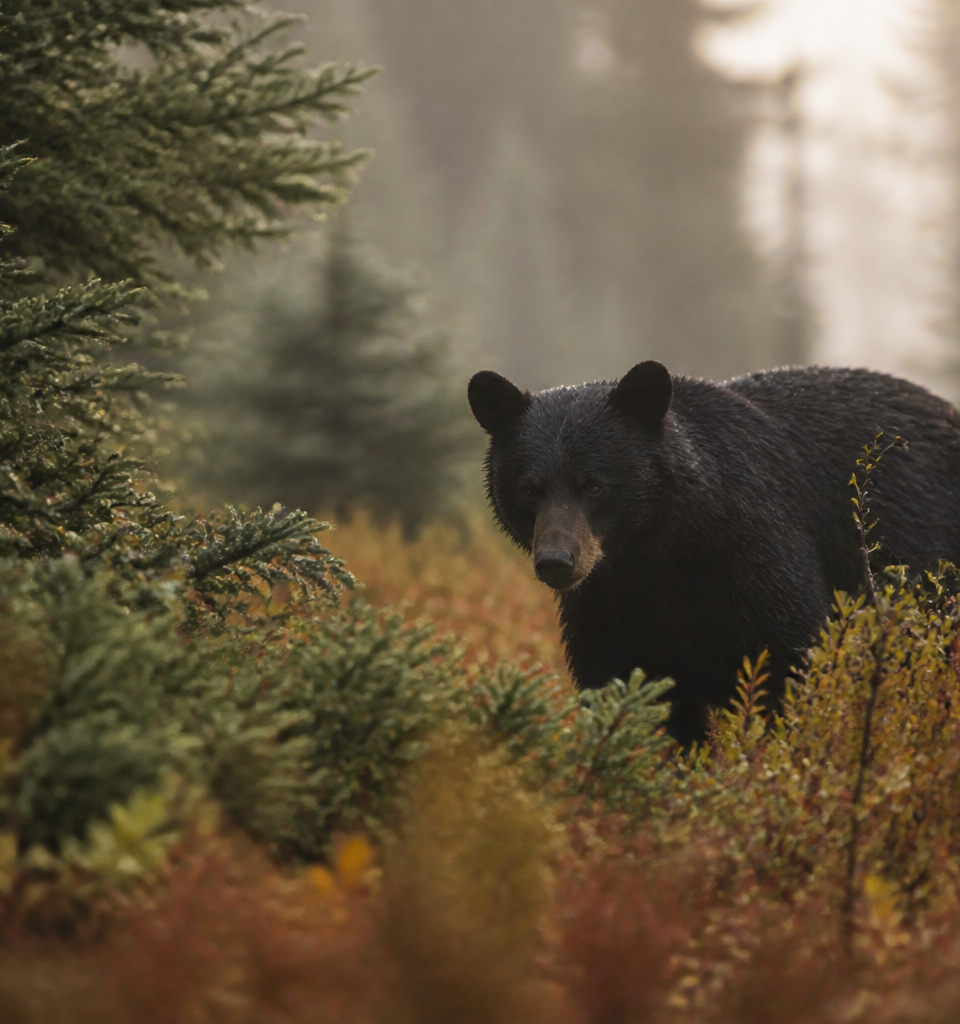
The American black bear (*Ursus americanus*) is the largest land predator commonly encountered in Quebec's forests. Featuring a massive silhouette, a slightly arched back, and powerful limbs equipped with non-retractable claws, this animal commands respect. In Quebec, its coat is almost exclusively glossy black, though some individuals display a white, crescent-shaped patch on the chest. Cinnamon or brown color phases remain exceptionally rare in Quebec compared to western North America.
Accurately judging the sex and maturity of a bear in the field is one of the most critical skills a hunter must master. Mature boars exhibit heavy builds, broad and blocky heads with a pronounced central groove, and ears that appear small and set wide apart on the skull. Their gait is heavy and rolling, with a belly hanging close to the ground. Conversely, sows and younger bears present a more triangular, tapered head, a slimmer neck, and proportionally large ears that stand erect like those of a deer fawn.
Careful observation of behaviour also helps hunters avoid mistaking a solitary boar for a sow with cubs. In the spring, cubs of the year can be remarkably discreet, often perched up a nearby tree or hidden in the surrounding brush. Taking several minutes to evaluate the animal before drawing or shouldering your firearm confirms its status, ensures proper field judging, and guarantees an ethical harvest.
Habitat and geographic distribution
Black bears inhabit virtually all forested territory in Quebec, from the Canada–US border north to the edge of the continuous boreal forest. High population densities thrive in renowned regions such as Mauricie, Abitibi-Témiscamingue, the Laurentians, Outaouais, Saguenay–Lac-Saint-Jean, Côte-Nord, Bas-Saint-Laurent, and Gaspésie.
This large omnivore thrives across a habitat mosaic that provides both dense thermal cover and abundant forage. It favours mixed and coniferous stands broken up by recent forest disturbances. Regenerating clearcuts, multi-year cutovers, riparian alder runs, and river edges are prime feeding grounds. These open environments spur the rapid growth of pioneer plants, berry-producing shrubs, and nutrient-rich buds.
In rugged terrain, bears take advantage of south-facing slopes early in the spring, where snow melts first and green-up begins earliest. Later in the season, they regularly frequent dense cedar swamps and bogs, where moisture keeps temperatures cool and supports high plant and animal biomass.
Behaviour and seasonal patterns
The annual cycle of the black bear is entirely governed by denning and an unrelenting search for calories. Bears emerge from their winter dens between mid-April and late May, depending on latitude and spring weather conditions. Following hibernation, their digestive system takes time to resume full function. The bear seeks easily digestible, moisture-rich foods: young green shoots, horsetails, trembling aspen catkins, dandelions, and winterkill carcasses.
By late spring and early summer, the breeding season (rut) begins. Dominant boars cover vast territories in search of receptive sows, travelling at all hours of the day. While their general vigilance may temporarily dip during the peak rut, their sharp senses remain fully alert.
In the fall, bears enter a critical physiological state known as hyperphagia. They must pack on thick layers of subcutaneous fat to survive the long winter months. Their diet shifts heavily toward wild berries (blueberries, raspberries, serviceberries), followed by hard mast such as beech nuts and acorns in southern hardwood stands. A bear may forage up to twenty hours a day during this period before entering its den between mid-October and late November.
Best seasons and conditions
Spring bear hunting is by far the most popular and widespread hunt in Quebec. It offers distinctive advantages, beginning with prime fur quality. Emerging from hibernation, the bear's pelt is exceptionally thick, long, and lustrous, completely free from the rubbing and wear common in late summer. Additionally, the relative scarcity of natural food in May and June makes bears highly responsive to consistently maintained bait sites.
Fall hunting provides a different pursuit, often paired with other big game hunts or focused on spot-and-stalk tactics near natural berry patches and mast crops. Bears are at their maximum weight in the autumn, carrying heavy fat reserves, though their coats are generally shorter than in the spring.
Regarding weather, mild, sunny days with a steady, predictable breeze are ideal. Late afternoon through dusk accounts for the vast majority of bear movement toward feeding areas. Periods following a light rain—which softens the forest floor and cools the air—frequently encourage bears to venture into openings earlier in the afternoon.
Where and how to find it
Locating black bears requires sharp observation and the ability to read sign effectively. Bear tracks are unmistakable: the hind track closely resembles a bare human footprint, while the front track is rounder with five distinct toes and clear claw impressions. Spotting a fresh track on a damp logging road or along a sandy creek bank confirms active movement.
Scat offers valuable insight into current feeding patterns. In spring, droppings are greenish, fibrous, and very compact, made up of fresh grasses and roots; by late summer, they turn dark and loose, packed with berry seeds. Other reliable signs include clawed or chewed tree trunks, overturned rotting logs ripped apart for grubs, and shredded stumps.
To find active bears, focus on transition zones: the edges between mature protective timber and young cutovers, quiet logging roads lined with wild clover, and moist valley bottoms. Hydro corridors and transmission rights-of-way also serve as excellent travel routes and grazing grounds.
Recommended techniques and strategies
Two primary hunting methods dominate Quebec bear hunting: stand hunting over bait and spot-and-stalk.
Stationary hunting from a treestand or ground blind is the standard approach during the spring season. It demands rigorous scent control and strict attention to prevailing winds. A bear's sense of smell surpasses that of nearly every other big game animal; a faint human scent trace carried on a shifting breeze will spook a mature boar long before it steps into sight. Set your shooting setup at an optimal distance: typically 15 to 30 metres for archery and crossbow hunters, and 40 to 80 metres for rifle hunters.
Spot-and-stalk hunting is growing in popularity, particularly across large cutovers in northern regions and rolling valleys in eastern Quebec. This method involves glassing open hillsides with quality binoculars or a spotting scope from elevated vantage points, then planning a quiet stalk into the wind using terrain features to break up your profile.
Regardless of the technique, shot placement must be exact. A bear's vital zone sits slightly lower and further back than that of a whitetail deer, shielded by heavy shoulder musculature and thick bone structure. Always wait for a broadside or slightly quartering-away presentation before breaking your shot.
Equipment and gear
To ensure a successful and ethical hunt, select firearms, bows, and optics that emphasize terminal performance and dependable field mechanics:
- Firearms: Choose proven, versatile calibres such as .30-06 Springfield, .308 Winchester, .300 Winchester Magnum, or .270 Winchester, paired with heavy, controlled-expansion bullets (165 to 200 grains) designed for deep penetration.
- Bows and Crossbows: Use heavy arrow setups with ultra-sharp, rugged fixed-blade or reliable mechanical broadheads built to cut through dense fat and break heavy ribs without deflecting.
- Optics: Pack quality 8x42 or 10x42 binoculars with high light transmission to pick out dark targets in dim, late-evening cover.
- Clothing and Protection: Bring quiet, breathable layers suited for wide temperature swings, along with a bug jacket or head net and a portable fuel-powered mosquito repellent device—essential gear for dealing with spring blackflies and mosquitoes.
- Field Care Gear: Carry a razor-sharp skinning knife, bone saw, game bags, disposable gloves, and a reliable headlamp with extra batteries for tracking and recovery after dark.
Regulations, licences and ethical practices
Black bear hunting in Quebec is governed by strict regulations to ensure sustainable populations. Every hunter must hold a valid hunter certificate appropriate for their chosen weapon and purchase a black bear hunting licence before going afield. Harvested bears must be registered at an official check station or online within the timeframes set by wildlife authorities.
Harvesting a sow accompanied by cubs of the year, as well as the cubs themselves, is strictly prohibited. This rule protects reproductive females and ensures healthy recruitment. Season dates, authorized zones, baiting rules, and mandatory buffer distances from public roads and dwellings vary by hunting zone.
For current zone maps, detailed season dates, and legal requirements, always consult the official resource: Government of Quebec (hunting and fishing).
Regulations change annually: always verify official rules before heading out into the field.
Conservation, population and ecosystem role
Quebec's black bear population is robust and healthy, supported by sound wildlife management and immense expanses of contiguous habitat. Thriving across hundreds of thousands of square kilometres, bears play an essential ecological role in northern ecosystems.
As opportunistic omnivores, bears serve as key seed dispersers for fruiting shrubs and plants across large home ranges. They also function as natural forest cleaners by consuming winter-killed carcasses, which helps reduce disease transmission among wildlife. In early spring, bears can act as opportunistic predators on newborn moose calves and deer fawns, naturally balancing ungulate numbers.
Hunters play a direct part in conservation through licence revenues, adherence to harvest regulations, and the submission of biological samples—such as the extraction of a premolar tooth—which enables biologists to accurately monitor population demographics and age structures.
Planning a guided trip or outfitter stay
Booking a guided outfitter trip is the premier way to experience Quebec bear hunting while enjoying warm hospitality and comfortable lodge amenities in remote wilderness. Outfitter territories offer vast exclusive rights where bait sites are established weeks in advance and monitored with trail cameras to track mature boars.
Having an experienced guide is invaluable, especially for first-time bear hunters. Your guide understands daily wind patterns, excels at field judging bear sizes at a distance, and sets you up on productive stands. After the shot, outfitters provide the equipment and facilities needed for prompt tracking, field dressing, caping for taxidermy, and storing venison in walk-in coolers.
To find the right outfitter for your next hunting adventure and browse guided packages across Quebec, plan your trip today on MyOutfitters.
Frequently asked questions
What is the best time of day to hunt black bears in the spring?
Late afternoon until legal shooting light ends at dusk is by far the most productive window. Bears typically leave their bedding areas as evening temperatures cool down to feed on active bait sites or in green forest openings.
How can you tell an adult boar from a sow in the field?
Look closely at head shape, ear proportions, and body structure. A mature boar has a broad, square skull with small-looking ears set far apart, a thick neck, and a heavy, rolling gait. Sows show a more tapered, triangular snout and proportionally larger, upright ears.
What rifle calibre is best suited for Quebec black bear hunting?
Standard big-game calibres such as .30-06 Springfield, .308 Winchester, and .300 Winchester Magnum loaded with quality 165- to 180-grain controlled-expansion bullets are ideal for deep penetration and decisive knockdown power.
Is black bear meat good to eat, and how should it be cooked?
Spring bear meat is lean, tender, and delicious when properly handled, field dressed quickly, and kept clean and cold. It must always be cooked thoroughly to an internal temperature of at least 74°C (165°F) to eliminate any risk of trichinosis.
Why is scent control so important when hunting bears from a stand?
A black bear's sense of smell is extraordinary, easily outpacing that of deer and hunting hounds. Any trace of human odour carried downwind toward an incoming bear will usually cause it to spook immediately before stepping into view.
Where is the ideal shot placement on a black bear?
Aim for the lower third of the body cavity just behind the front shoulder on a broadside animal. This targets the heart and lungs while avoiding the heavy, dense shoulder bone structure.
How should hunters manage biting insects during a spring hunt?
Wear lightweight insect-proof clothing with an integrated face net and bring a portable fuel-powered mosquito repellent device to your blind or treestand. This setup keeps you motionless without swatting blackflies and mosquitoes.
Is bowhunting or crossbow hunting legal and effective for bears in Quebec?
Yes, both archery and crossbow hunting are legal, popular, and effective in Quebec. Success requires patience, close shot distances (usually inside 25 metres), and heavy arrows tipped with razor-sharp broadheads to generate heavy blood trails.
Can I harvest a bear and save the hide for a rug or taxidermy mount?
Yes. Spring bear hides are prized for their thick, lush underfur. To preserve the pelt, skin the bear promptly, scrape away excess fat and meat, apply liberal amounts of non-iodized fine salt, or freeze the hide until it reaches your taxidermist.
What are the benefits of booking an outfitter for a Quebec bear hunt?
Outfitters provide exclusive hunting territories, active and pre-baited stands, experienced guides who know local bear movements, and walk-in meat lockers, ensuring a safe, comfortable, and highly successful hunt.