Hunting
Coyote Hunting in Quebec: Complete Guide and Tactics
Discover the essentials of coyote hunting in Quebec: prime habitats, calling strategies, caliber choices, and winter tactics to outsmart this crafty predator.
Key takeaways
- Winter hunting delivers optimal conditions for tracking fresh sign in the snow and glassing predators from a distance.
- Agricultural margins, brushy fields, and forest edges offer the most productive hunting territory across the province.
- Pairing electronic calls featuring distress sounds with a motorized decoy greatly increases your chances of a fast approach.
- A regular small game licence is required and allows harvesting in accordance with established regional hunting zones.
- Strict wind management and full winter camouflage are essential against this predator's razor-sharp senses.
Identifying the Eastern Coyote in the Field
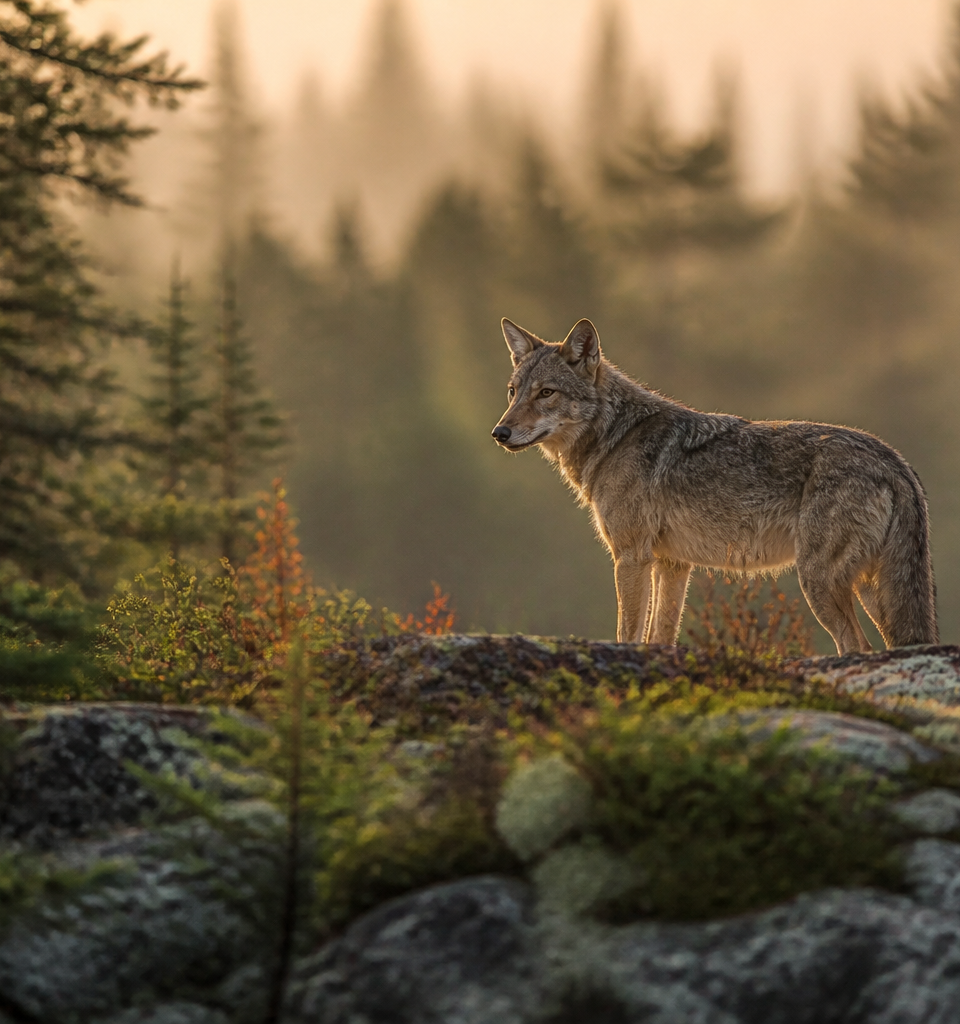
The eastern coyote stands out from its western counterpart with a larger frame and a thick, multi-toned coat. Widespread across Quebec, adult males average between 14 and 20 kilograms, with exceptional specimens exceeding that mark. Their dense, insulating winter coat blends tawny grey, grizzled black along the back, and creamy white across the throat and belly.
In the field, confusion with wolves can occur in northern transition zones, but key physical traits settle the question. Coyotes feature a narrower, more pointed muzzle, proportionally larger ears, and a lighter gait, holding their bushy tail downward while running. Their tracks are noticeably more compact and narrower than wolf prints, generally measuring under nine centimetres in length.
Recognizing their vocalizations is another core skill for hunters. Sharp yips interspersed with rising howls and high-pitched barks give away their presence at dusk. Distinguishing a rally howl from an alarm bark allows you to adjust your field strategy before you even spot the animal.
Where Does the Coyote Live in Quebec?
Coyotes thrive in diverse habitats throughout Quebec, showing a strong preference for the mixed agroforestry landscapes of the southern regions. They are abundant in Montérégie, the Eastern Townships, Centre-du-Québec, Chaudière-Appalaches, and the Bas-Saint-Laurent. The mosaic of cultivated fields, hedgerows, brushy cover, and woodlots provides these opportunistic predators with ample food and reliable escape routes.
Further north in boreal pockets like the Mauricie, the Laurentians, or the Outaouais, coyotes adapt by hunting the edges of recent cutovers, power line corridors, and riverbanks. These open clearings support high densities of rodents and snowshoe hare, creating natural feeding grounds that canids patrol daily. For a closer look at these habitat dynamics, check out our comparison on Coyote Hunting in Quebec: Forest or Farmland?.
Accessing productive ground often involves securing permission from private landowners in farming sectors or targeting expansive public lands cut by logging roads. Success hinges on finding natural travel corridors: ridgelines, major drainage ditches, and connecting timber strips between woodlots.
Coyote Behavior and Seasonal Cycles in Quebec
Coyote behaviour shifts noticeably across the seasons in Quebec, driven by food availability and their breeding cycle. In spring and summer, adults concentrate their movements around den sites to feed pups, preying on small rodents, insects, wild berries, and vulnerable fawns. By autumn, young coyotes disperse to establish their own home ranges, creating a noticeable surge in overall movement across the landscape.
Winter dramatically reshapes their habits and kicks off the prime window for hunters. During January and February, the breeding season reaches its peak: coyotes become vocal, patrol wide circuits to defend territories or find mates, and respond aggressively to challenge calls. As deep snow slows down prey, they also target wintering birds and carrion, and upland bird hunters frequently encounter their tracks while following the Complete Guide to Partridge Hunting in Quebec.
The coyote's extreme wariness is its primary survival asset. Equipped with a keen sense of smell capable of detecting human scent hundreds of metres downwind, it continuously monitors its surroundings. Its eyesight catches subtle movement instantly, and its sharp hearing can detect the snap of a frozen twig from extreme distances.
When to Hunt Coyote in Quebec for the Best Success?
December through March is the most rewarding window for hunting coyote in Quebec. During these cold months, pelts reach peak prime condition and winter coats are at their thickest, while snow cover provides clear sightlines across fields and makes sign easy to read. In addition, scarcer natural prey makes predators far more responsive to distress calls.
The first few hours after sunrise and the final two hours before dark offer the most consistent activity. On crisp, clear days with light winds, coyotes frequently bed on south-facing slopes to soak up warmth while surveying the valley below. A falling barometer ahead of a winter storm often triggers intense feeding activity across local packs.
Conversely, high winds and heavy blowing snow reduce calling effectiveness, as sound travels poorly and coyotes tend to hold tight in heavy cover. Plan your hunts around calm, frosted mornings when temperatures drop below minus ten degrees Celsius to maximize your odds of seeing a predator come charging across an opening.
Scouting the Best Spots for Coyote
Winter field scouting lays the groundwork for any successful coyote hunt. Following a fresh snowfall, cruise back roads and field edges to identify active crossings. Coyote tracks typically travel in a purposeful, straight line along fence lines, ditches, or snow ridges, unlike domestic dogs that tend to wander erratically.
Keep an eye out for flocks of ravens or magpies circling over fields, as these scavengers regularly reveal winter-killed deer or livestock carcasses where coyotes feed. Droppings prominently deposited on snowbanks or rocks serve as territorial markers and highlight established travel routes.
Early morning or late evening listening sessions are also effective for pinpointing local packs. A locator howl blown from a high vantage point at twilight will often trigger a vocal chorus in response. Mark the exact bearings of those howls to plan your morning setup downwind at a comfortable distance.
Proven Calling and Stand Hunting Tactics for Coyote
Stand hunting paired with calling is the most dynamic and effective method for coyote. Your setup must be well thought out: select an elevated vantage point with clear shooting lanes, set up against a dense background that breaks up your outline, and make sure the prevailing wind blows from the target zone toward your position. Never cross the open ground where you expect the animal to approach, as any ground scent will spoil the stand.
Electronic callers offer major advantages in sound clarity and allow you to place the audio source well away from your blind. Snowshoe hare, rodent, and injured bird distress sounds are top food-based triggers early in the season. Mid-winter, blending distress calls with challenge barks or territorial howls can provoke an aggressive response from dominant coyotes.
Adding a motorized decoy with a flickering tail or feather near the call locks the predator's vision onto a focal point. When a coyote commits, seeing movement that matches the sound keeps it from circling wide downwind to check for scent, giving you a steady, ethical shot opportunity.
Choosing the Right Caliber for Coyote Hunting
Selecting your firearm and caliber requires flat-shooting ballistics and surgical accuracy for mid- to long-range shots in open terrain. Centrefire rifles in .223 Remington, .22-250 Remington, or .243 Winchester are the top choices among Quebec hunters. These calibers drive light bullets at high velocities, delivering flat trajectories that compensate for minor range estimation errors across snow-covered fields.
For close-range setups along brushy field edges or tight timber, a 12-gauge shotgun loaded with specialized predator loads—such as Number 4 buckshot or heavy BB—is devastating inside 50 metres. Visiting hunters traveling into the province should plan their firearm logistics well ahead by reviewing Bringing a Firearm to Canada for Hunting: The Complete Guide.
For optics, choose a bright riflescope with variable magnification like a 3-9x40 or 4-12x50 to make the most of early morning and late evening light. Quality binoculars, a laser rangefinder to judge distances over uniform snow, a stable shooting rest or tripod, and breathable winter whites round out your cold-weather kit.
Rules and Licences for Coyote Hunting in Quebec
Coyote hunting is subject to provincial regulations tailored to specific hunting zones. Every hunter must hold the appropriate hunter certificate for their weapon type and purchase a valid regular small game hunting licence. Across most southern zones, the season spans a generous portion of fall and winter, with no daily bag limits for coyote.
Hunting ethics require respecting private property by obtaining permission from farmers before entering their land. Shooting from a public road or motor vehicle is strictly prohibited, as is the wanton waste of harvested animals when the pelt or carcass can be utilized through an authorized fur buyer or taxidermist. For complete season dates, authorized calibers, and local boundary rules, consult the Government of Quebec (hunting and fishing).
Regulations change each year: always verify official rules with the relevant authorities before heading out on your hunt.
Wildlife Balance and Coyote Population Management
The coyote plays a vital role as a generalist apex predator across southern and central Quebec. In farming and populated areas where wolves are absent, it naturally controls populations of small mammals, rodents, and crop pests while cleaning up winter carrion. Its presence is an established component of the terrestrial ecosystem.
However, high coyote numbers can exert heavy predation pressure on white-tailed deer populations, particularly in winter deer yards where hard snow crusts let coyotes run on top while deer break through and struggle. Regulated sport hunting provides wildlife managers with a practical tool to maintain densities at balanced levels, reducing conflicts with livestock and domestic pets near rural communities.
The coyote's reproductive resilience ensures that hunting does not threaten population sustainability. When local numbers decrease, remaining females respond with larger litters and pup survival rates climb, sustaining healthy numbers throughout their range.
Booking a Guided Coyote Hunt with an Outfitter
Teaming up with an experienced outfitter guide fast-tracks your learning curve in this highly tactical pursuit. Professional guides spend hundreds of hours in the field each season: they know local pack travel routes, have perfected hand and electronic calling techniques, and maintain heated or well-concealed blinds positioned strategically on private or exclusive territories.
A guided package eliminates the hurdle of securing private land access and puts you right in front of realistic, educational hunting setups. You will sharpen your wind management, quicken your target acquisition, and gain deep insight into predator habits. Many outfitters offer all-inclusive packages combining warm lodge accommodations, hearty meals, and hunts during peak morning and evening windows.
To plan a memorable winter predator adventure and refine your skills alongside seasoned hunting guides, find your destination among top Quebec Hunting Outfitters. Book your next hunt with MyOutfitters to experience the challenge of tracking winter predators across Quebec's snow-covered landscape.
Frequently asked questions
When does the best coyote hunting season start in Quebec?
The prime window runs from mid-December through late February across Quebec. During these months, winter pelts are at peak quality and the winter breeding period makes coyotes far more responsive to territorial and distress calling over the snow.
Do you need a special licence to hunt coyote in Quebec?
No special tag or dedicated predator permit is required. You only need a standard small game hunting licence valid for the current season, along with the appropriate hunter certification for the firearm or archery gear you are using.
What is the ideal firearm caliber for coyote?
.223 Remington and .22-250 Remington are two of the most popular and effective calibers for coyotes. Their high muzzle velocity and flat trajectory deliver excellent precision between 100 and 300 metres in open agricultural terrain.
Where are the highest coyote densities found in Quebec?
Montérégie, Centre-du-Québec, Chaudière-Appalaches, and the Eastern Townships support the highest densities. These areas feature extensive grain fields, brushy fallow ground rich in rodents, and woodlots providing prime denning cover.
How should you position your call to lure a wary coyote?
Set your electronic caller 30 to 60 metres upwind or crosswind from your blind. This positioning draws the predator's eyes and line of approach toward the sound source rather than your concealed setup.
What is the typical shooting distance for winter coyote?
Most shots range between 75 and 200 metres in agricultural country from a steady setup. With a rifle zeroed on shooting sticks or a bipod, experienced shooters frequently make clean, ethical shots past 250 metres in calm conditions.
Can you hunt coyote at night in Quebec?
No, night hunting using artificial lights or spotlights is strictly prohibited by Quebec hunting regulations for this species. Hunting must take place within legal daylight hours, from one half-hour before sunrise to one half-hour after sunset.
Why is the wind so critical when hunting coyote?
Coyotes have an acute sense of smell and will circle downwind of a call to scent-check the area from hundreds of metres away. If human scent blows toward their approach, they will spook and bolt before you ever see them.
How much does an adult coyote weigh on average in Quebec?
An adult eastern coyote typically weighs between 14 and 18 kilograms for females and between 16 and 22 kilograms for well-fed males. They are noticeably larger and heavier than western prairie coyotes.
Is hunter orange mandatory in winter for coyote hunting?
Hunter orange is not mandatory outside of open big game firearm seasons in the respective hunting zone. In mid-winter, most hunters wear full white snow camouflage to blend seamlessly into open snowy landscapes.