Hunting
American Woodcock Hunting in Quebec: Field Guide and Tactics
Discover how to succeed at American woodcock hunting in Quebec: prime habitats, pointing dog strategies, migration timing, and expert field tips.
Key takeaways
- Hunting generally begins in mid-September in Quebec and wraps up around mid-November depending on the flight of migratory birds.
- Woodcock seek out damp alder runs, young aspen stands, and dense abandoned fields with earthworm-rich soil.
- Working methodically with a pointing or flushing dog remains the most productive way to hunt thick underbrush.
- You must hold a federal migratory game bird permit as well as a valid provincial licence to hunt in Quebec.
- Keep a close eye on the first northern night frosts, which trigger major migratory flights into southern covers.
Identifying the American woodcock in Quebec forests
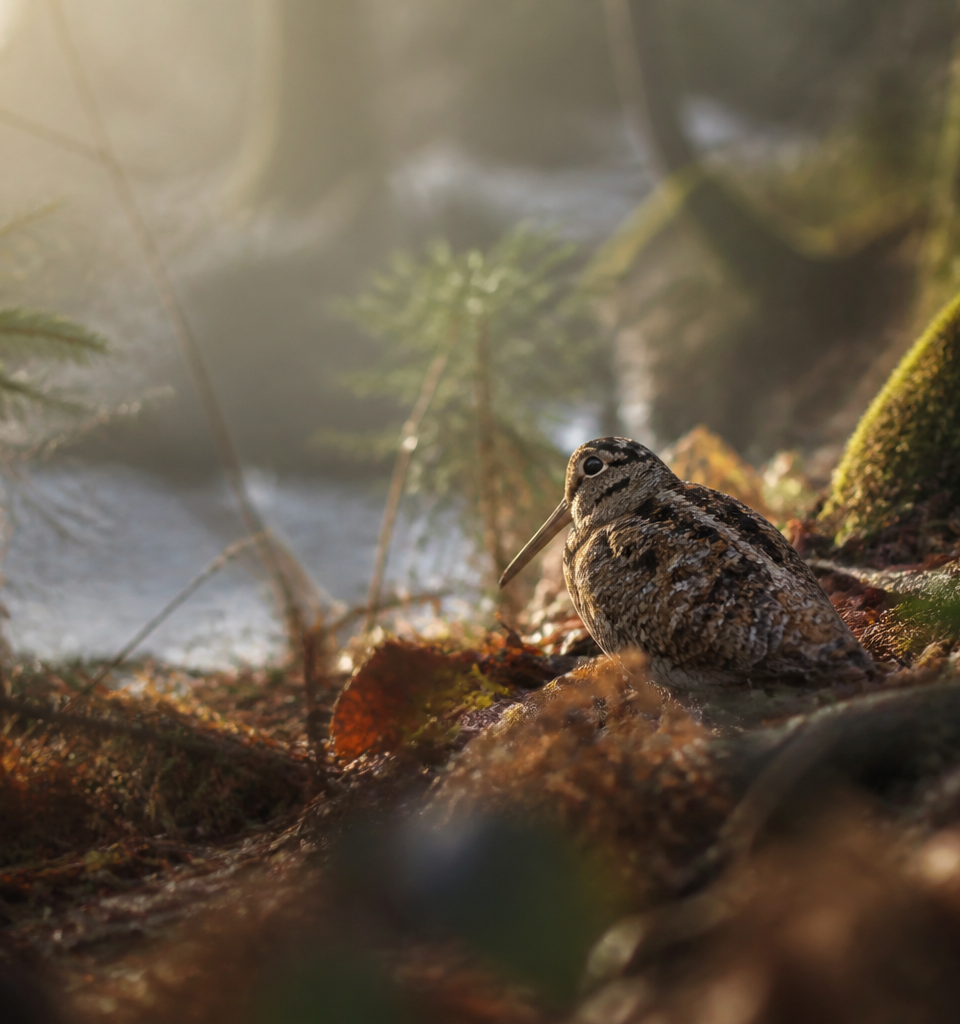
The American woodcock is instantly recognizable by its long, slender bill, plump body, and cryptic plumage mottled in tones of dead leaves. This fascinating game bird weighs on average between 150 and 220 grams, with females slightly larger than males. Its large, dark eyes sit high on the skull, providing an exceptional 360-degree field of view essential for spotting aerial and ground predators while probing the forest floor.
In the undergrowth, its compact profile and blend of brown, rust, gray, and black feathers create perfect camouflage, making it practically invisible to the naked eye when holding tight to the ground. When it flushes suddenly underfoot, its takeoff produces a distinctive whistling sound created by air rushing through its three narrow outer primary wing feathers. Unlike other upland species featured in our Complete guide to grouse hunting in Quebec, the woodcock takes erratic, zigzagging flight paths through the timber.
Its bill measures six to seven centimetres long and features a flexible, prehensile upper tip. This unique adaptation allows the bird to grasp and extract earthworms underground without opening its entire bill. Positively identifying the bird on the wing takes a split second: look for a round body, a downward-pointed bill, and the rapid wingbeats typical of this classic forest game bird.
Where does the American woodcock live in Quebec?
In Quebec, the American woodcock settles primarily across the deciduous and mixed forests of the St. Lawrence Lowlands, the Eastern Townships, Centre-du-Québec, the Outaouais, and the southern edge of the Canadian Shield. It favors transitional habitats and early successional forest stands between ten and twenty years old. Young aspen groves, birch thickets, and especially dense alder runs serve as its primary habitat throughout its stay in the province.
Loose, humus-rich, well-drained yet consistently damp soil is the critical habitat factor for the species. Earthworms account for more than sixty percent of its daily diet, forcing birds away from hard-packed clay soils or dry sand. Meandering creek bottoms, shaded lowlands, and the edges of overgrown agricultural fields often hold remarkable concentrations of food.
The Chaudière-Appalaches, Bas-Saint-Laurent, and Mauricie regions also feature excellent hunting cover where woodlots interspersed with openings support abundant bird numbers. During its fall migration, the woodcock uses a sequence of micro-habitats: it spends the daytime feeding in dense alder covers and moves into open roosting fields and pastures at dusk to sleep away from woodland predators.
American woodcock behavior and fall migration
Woodcock behavior is governed by nighttime weather conditions and the availability of soil invertebrates. Nocturnal and crepuscular by nature, the bird spends most of the daylight hours camouflaged on the ground, holding tight and taking flight only as a last resort when approached closely. As soon as ground frost hardens the topsoil in the northern reaches of its range, the migratory urge takes over and pushes the birds south.
Migration takes place exclusively at night through individual, low-altitude flights, typically on clear nights accompanied by north or northwest tailwinds. Hunters often witness sudden flight arrivals: a cover that was completely empty one afternoon may hold dozens of birds the next morning following a cold front. This unpredictable dynamic is part of the bird's unique appeal, as explored in our article on The short, magical woodcock window in Quebec.
Resident birds hatched across Quebec begin shifting toward southern areas by late September, soon joined by flight birds arriving from northern boreal forests. Once landed in stopover cover, the woodcock feeds heavily to rebuild fat reserves for the next leg of its journey to the southeastern United States. If the weather remains mild and the ground stays soft, birds may hold in the same covers for several days.
When to hunt American woodcock in Quebec?
The prime window for hunting woodcock in Quebec generally runs from early October through late October, when migration peaks. Although the legal season opens in mid-September in most southern hunting zones, early autumn hunts focus on scattered resident birds protected by heavy foliage that makes wing-shooting challenging.
The main action begins when the first hard frosts hit regions like Abitibi, Saguenay, and Upper Mauricie, pushing northern woodcock south along major river corridors. Cool, overcast, and calm days following the passage of a fall storm front are particularly productive. During these windows, migrating woodcock concentrate heavily in southern thickets, providing exceptional shooting opportunities for a brief stretch of days.
By early November, opportunities drop off quickly as frozen ground deprives the birds of earthworms. Late-season flights consist of wary, experienced birds that often congregate on sunny southern slopes where the topsoil stays thawed longer. To get the most out of your season, track regional weather forecasts and hunt the days immediately following a sharp drop in overnight temperatures.
Finding the best American woodcock cover
To locate productive woodcock covers, you must learn to read the terrain and identify the right balance of soil moisture, pioneer plant species, and stem density. Speckled alder runs lining ditches, wooded bogs, and creek bottoms are prime covers for Quebec hunters. Alder stems provide an ideal overhead canopy while keeping ground-level vegetation open enough for birds to walk and probe freely.
Examine the ground closely for sign: woodcock droppings, known as splash or chalking, look like white, chalky paint splattered on damp leaf litter. You will also spot probe holes—small, clean, vertical holes bored into fresh mud or rich topsoil by the bird's bill. Finding fresh chalking and active probe holes confirms that birds are currently using the cover.
Do not overlook young mixed softwood and hardwood plantations, eight- to twelve-year-old clearcuts, and the edges of maple woodlots where trembling aspen is dominant. Incorporating these scouting techniques into a broader upland routine, as outlined in our Small game hunting in Quebec: practical guide and tips, will help you pinpoint reliable flight covers year after year along natural travel corridors.
Effective techniques for hunting American woodcock with dogs
Hunting woodcock with pointing or flushing dogs is the most effective and rewarding way to work thick Quebec covers. Pointing breeds like the Brittany Spaniel, English Setter, and German Shorthaired Pointer excel at working close and pinning birds that rely on their camouflage. The dog should work systematically at a controlled range while remaining in visual or audible contact with the handler.
When a dog locks on point, the hunter must move in quickly and quietly to set up in an open lane or shooting window before the flush. Woodcock frequently run a few yards through the brush before launching almost vertically through the canopy. Working with flushing dogs such as English Springers or Cockers requires rapid shooting reflexes, as birds are flushed directly into the air without a preparatory point.
Hunting woodcock without a dog is entirely feasible by using a slow, stop-and-go walking pace. Walking softly through prime cover and pausing abruptly for ten to twenty seconds near thickets and blowdowns puts pressure on holding birds. Thinking they have been detected, they will often flush from cover. This walk-up style demands constant focus and the ability to mount and fire accurately in an instant.
What gear to choose for American woodcock hunting?
Choosing the right gear comes down to handling speed and maneuverability in dense, wet underbrush. A lightweight 20-gauge or 28-gauge shotgun—or a nimble 12-gauge—in over-under, side-by-side, or semi-automatic configurations is ideal for close-range, reactive shooting. Short barrels between 24 and 26 inches make swinging through tangled alder branches much easier.
For choke selection, choose open constrictions like Cylinder and Improved Cylinder to produce broad, consistent patterns between ten and twenty yards. Target loads or field shells with shot sizes #8, #8.5, or #9 and light payloads (24 to 28 grams / 7/8 to 1 oz) deliver clean kills without tearing up delicate table fare. Note that non-toxic shot regulations may apply in certain public management units and federal lands.
Your hunting apparel must resist thorns while breathing well during strenuous walks. Wear briar-resistant brush pants or chaps, supportive waterproof hunting boots, and a blaze orange hunting vest. Protective shooting glasses are essential to shield your eyes from whipping branches in thick alder runs.
American woodcock hunting regulations and licenses in Quebec
To hunt American woodcock in Quebec, hunters must hold both a valid provincial small game hunting licence and a federal Migratory Game Bird Hunting Permit with a Canadian Wildlife Habitat Conservation Stamp. Because the American woodcock is a migratory game bird, it is managed under federal and provincial frameworks, with strict daily bag limits and possession limits in place across the province.
Wearing a blaze orange vest or garment visible from all angles is mandatory to maintain safety in heavy brush. Hunters must also follow the specific opening and closing dates for each hunting zone, as well as rules governing bird transport and storage. To verify current zone dates and legal limits, consult the official Government of Quebec (hunting and fishing) website.
Ethical woodcock hunting means respecting daily limits and making every reasonable effort to retrieve downed birds. Pick up spent hulls in the woods and always obtain permission before hunting on private property. Regulations are subject to annual updates: always verify current dates and limits with official authorities before heading into the field.
American woodcock population conservation in forests
Conserving American woodcock populations relies on maintaining and creating early successional forest habitats. Over recent decades, maturing forests across northeastern North America and urban expansion have reduced the acreage of young, dense cover needed for breeding and feeding. Modern wildlife forestry programs aim to create habitat mosaics that incorporate clearings, cutovers, and regenerating stands.
Canadian and American wildlife biologists collaborate under the American Woodcock Conservation Plan, monitoring population trends through annual spring singing-ground surveys. These data guide harvest management decisions to safeguard long-term population stability. Hunters contribute directly to research efforts by submitting harvested wings to annual wing-collection surveys, which help biologists track recruitment rates and age ratios.
By supporting habitat management initiatives and sustainable harvest practices, hunters actively support broader forest biodiversity. The woodcock serves as an umbrella species: protecting its preferred early successional covers directly benefits a wide range of songbirds and small mammals that rely on the same dense shrub layers.
Booking a guided American woodcock hunt in Quebec
Booking a guided hunt is an exceptional way to explore prime covers across the province alongside experienced upland professionals. Professional guides field seasoned pointing dogs and hold detailed knowledge of local flight covers where migrating woodcock concentrate. Guided hunts help novice wing-shooters build solid field fundamentals while allowing experienced hunters to maximize productive cover time.
When booking with Quebec hunting outfitters, guests enjoy complete logistical support, including comfortable lakeside cabins, home-cooked meals featuring local game, and access to private or managed hunting territories. Many outfitters also welcome your own hunting dogs in dedicated kennels or cabin accommodations while directing you to the most active covers of the week.
To experience an unforgettable autumn adventure in Quebec's fall woods, explore the specialized packages offered by outfitting operations on MyOutfitters and start planning your next woodcock hunt today.
Frequently asked questions
When to hunt American woodcock in Quebec?
The peak window runs from early to late October during the main migration. The first sharp nighttime frosts in northern regions push large flights of birds into southern Quebec covers.
Where does the American woodcock live in Quebec?
Woodcock live in damp alder runs, young aspen stands (10 to 15 years old), and overgrown farm edges. They require soft, moist soils rich in organic matter and earthworms.
What licences are needed for American woodcock hunting in Quebec?
You need both a provincial small game hunting licence and a federal Migratory Game Bird Hunting Permit with a conservation stamp. Both are mandatory to hunt woodcock legally.
What shotgun gauge is best for American woodcock?
A 20-gauge or 28-gauge shotgun is preferred for its lightweight handling and speed in thick brush. A lightweight 12-gauge with light target or field loads is also effective.
What shot size should you use for American woodcock?
Shot sizes #8, #8.5, or #9 provide the dense pattern needed for small upland birds. Light field loads between 24 and 28 grams (7/8 to 1 oz) deliver clean kills without damaging meat.
How do you spot fresh woodcock sign in the woods?
Look for chalking (white, paint-like droppings on leaf litter) and probe holes (small vertical holes in damp soil). Fresh sign indicates woodcock are actively feeding in the cover.
Do you need a dog to hunt American woodcock?
No, a dog is not required, though hunting with a pointing or flushing dog significantly increases success in thick cover. Slow walking interspersed with brief pauses also flushes holding birds.
What are the best dog breeds for American woodcock hunting?
Brittany Spaniels, English Setters, Pointers, and German Shorthairs are top pointing breeds for woodcock. Flushing breeds like English Springer Spaniels are also popular and effective.
What is the daily bag limit for woodcock in Quebec?
Daily limits are set by federal migratory game bird regulations, typically at 8 birds per day. Always check current zone limits and possession quotas with official authorities before hunting.
How do you cook American woodcock?
Woodcock is best roasted whole at high heat or pan-seared as breast fillets served medium-rare to pink. Its rich, dark meat is delicately flavored and becomes dry if overcooked.