Hunting
Spring black bear hunting: baits, stands and safety
How a spring black bear hunt works at an outfitter: baits, stands, animal selection, gear and meat handling.
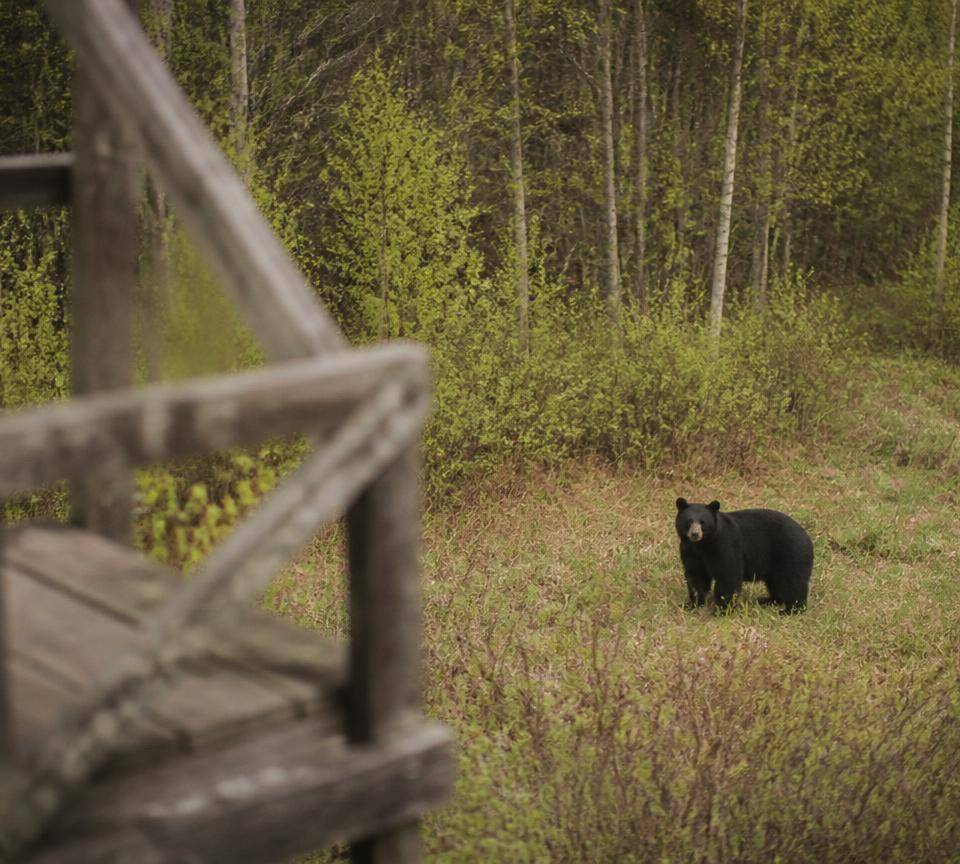
Spring black bear hunting is often a new hunter's first big-game hunt, and for good reason: success rates are high, logistics are light and the time on stand is intense. At an outfitter, the demanding preparation work is already done.
How it works
As soon as the snow melts, the outfitter sets bait sites and feeds them for several weeks to build a predictable schedule. A stand or blind is placed at a suitable distance, with the prevailing wind in mind. Your guide drives you in late afternoon and picks you up at dark.
A typical day looks like this: free morning (fishing, rest), climb into the stand around 3 or 4 p.m., sit until dark, then pickup. Most bears show up in the last hour of light.
Timing
The spring season generally runs from mid-May to late June depending on province and zone. Mid-June is the activity peak: bears have their appetite back, males travel widely during the rut and days are long. The trade-off is mosquitoes. A bug suit is not a luxury.
Choosing your animal
This is the most important — and most misunderstood — part.
- Never shoot a sow with cubs. It is illegal and unethical.
- A big male has a wide head, ears that look small and set apart, a heavy back and a slow, confident walk.
- A female without cubs looks leaner, with prominent ears.
- Take your time. A bear that comes to bait will come back. When in doubt, do not shoot.
Your guide will describe the size class to look for on that territory, often based on a specific management goal.
Gear
Rifle, crossbow or bow depending on the zone; a well-placed bullet behind the shoulder beats a big calibre used poorly. Add:
- dark, quiet clothing with a bug net;
- a safety harness, mandatory in a treestand;
- binoculars, headlamp, cushion, thermos;
- knives, game bags, butchering gloves.
Staying still and silent for three hours matters more than any piece of equipment.
Safety
Follow three simple rules: always stay clipped to the harness while climbing and descending, never leave the stand without telling your guide where you are, and never approach a hit animal without waiting and having your weapon ready. Black bears are rarely aggressive, but a wounded animal demands absolute caution.
Meat and hide
Spring bear meat is excellent when cooled quickly and cooked through — that is mandatory, to avoid trichinosis. Trim excess fat, keep the quarters clean, and hand the hide to a taxidermist as soon as you return if you plan to keep it. Several provinces require registration and sometimes a tooth sample for age analysis.
What to ask before booking
- How many bait sites are reserved for your group?
- How long have those sites been fed?
- Does the guide accompany each hunter or supervise several stands?
- Are the cold room, transport and recovery included?
- Is a combined fall hunt available?
To compare territories, browse black bear hunting outfitters or all hunting outfitters in Quebec.
Frequently asked questions
When does spring black bear season run?
Generally mid-May to late June depending on province and zone, with peak activity around mid-June during the rut.
How do you tell a big male from a female?
A male has a wide head, ears that look small and set apart, a heavy back and a slow walk. A female looks leaner with prominent ears. Never shoot a sow with cubs.
Is bear hunting suitable for a beginner?
Yes: bait sites are prepared by the outfitter, the sit is supervised and success rates are high. A safety harness is mandatory in a treestand.
Is bear meat good to eat?
Yes, especially in spring, provided the carcass is cooled quickly and the meat is always cooked through to avoid trichinosis.
What gear is needed for a bear sit?
Dark quiet clothing with a bug net, a safety harness, binoculars, a headlamp, knives and game bags.