Hunting
Canada Goose Hunting in Quebec: Expert Tactics & Guide
Discover the best decoy spreads, top agricultural flyways, calling techniques, and regulations for successful Canada goose hunting in Quebec.
Key takeaways
- The main hunting season runs from early September through late autumn, with a special early resident season kicking off in late August.
- St. Lawrence River tidal flats, coastal marshes, and cut grain fields offer the most productive staging grounds across Quebec.
- Using low-profile layout blinds, realistic decoy spreads set into the wind, and controlled calling maximizes harvest success.
- Waterfowlers require a provincial small game licence along with a federal Migratory Game Bird Hunting Permit and conservation stamp.
- Cool, windy mornings following a cold front trigger strong feeding flights and deliver the best shooting opportunities.
How to identify Canada goose when hunting?
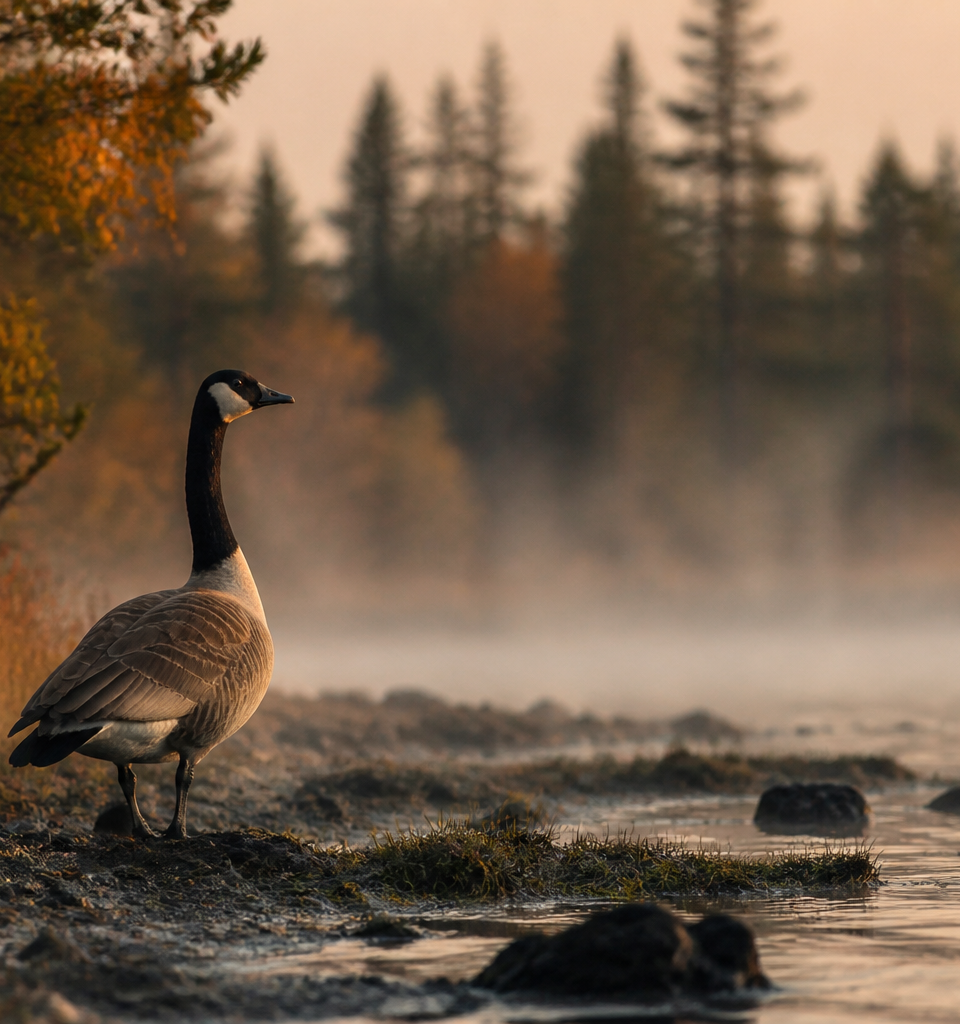
Canada geese (*Branta canadensis*) are easily identified by their long black neck, dark head, and distinctive white chinstrap extending across the cheeks. In flight, an impressive wingspan exceeding 1.5 metres and a heavy, greyish-brown body distinguish them from all other waterfowl. A short black tail contrasts sharply with a clean white rump patch, clearly visible whether the bird is resting or airborne.
Waterfowlers across Quebec encounter multiple subspecies that differ primarily in size. Resident geese, which are generally heavier and bulkier, share staging areas with the slightly leaner and faster-flying migratory Interior Canada geese. In low light or fog, their loud, resonant honking call provides the first clue of an approaching flock—a deep, brassy sound distinctly different from ducks and snow geese.
Canada goose habitats and flyways in Quebec
Canada geese congregate heavily across the expansive agricultural lowlands of the St. Lawrence Valley, intertidal marshes, and river shallows that form the core of the Quebec flyway. The Montérégie, Centre-du-Québec, Chaudière-Appalaches, and Bas-Saint-Laurent regions host hundreds of thousands of birds each fall as they build energy reserves for migration. The shores and archipelago of Lake Saint-Pierre also serve as historic, high-traffic staging hubs.
These birds seek a precise combination: calm, safe open water for night roosting located within easy flight distance of carbohydrate-rich feeding fields. Freshly harvested corn, soybean, barley, and wheat fields consistently pull in large concentrations of geese. To explore other productive Atlantic Flyway destinations, some hunters compare these staging areas with Canada goose hunting in Ontario: field vs. water to adapt their setups to different terrain.
Seasonal migration and Canada goose behaviour
Canada goose behaviour follows a strict daily routine and a tight family structure. At first light, flocks lift off from their water roosts and head toward agricultural feeding fields in classic V-formations. They spend several hours feeding on waste grain before returning to the water around midday to drink, preen, and rest, often repeating this feeding flight late in the afternoon before sunset.
Social structure revolves around lifelong mated pairs and family groups that stay together throughout migration. Experienced mature geese lead the flights and show extreme caution toward any visual glare or unnatural movement on the ground. As autumn progresses and freezing temperatures grip northern Quebec, migration ramps up, sending massive waves of northern birds southward behind passing cold fronts.
When to hunt Canada goose in Quebec based on the weather?
Overcast, cold, and windy days following a sharp cold front provide prime conditions for hunting Canada geese in Quebec. Sustained winds of 20 to 40 km/h force birds to fly lower, lower their guard, and stabilize their landing approach into the wind, giving hunters predictable shot presentations. Wind also helps muffle movement inside the blinds and carries goose calls naturally across the spread.
In contrast, bluebird days with calm winds make hunting difficult; birds fly high, circle repeatedly to inspect decoys, and spot minor flaws or unnatural shine. The early season features predictable resident birds, while peak October migration brings large flocks of wary northern migrants. To time your trips around official zone dates, check the Canada hunting calendar: seasons and key dates.
Scouting Canada goose feeding areas in Quebec
Scouting is the cornerstone of successful goose hunting in Quebec. This involves driving rural concession roads at dawn and dusk with binoculars, tracking feeding flights from roost waters to surrounding agricultural ground. Finding the exact field where birds fed the previous afternoon—the "X"—dramatically increases the likelihood of a successful morning shoot.
Once a feeding flock is pinpointed, securing landowner permission is the essential next step. Hunters must evaluate critical field details: where the birds sat, the prevailing wind direction, available cover for concealing blinds, and crop stubble conditions. Noting power lines, fence rows, and terrain depressions allows for a blind setup that will not raise suspicion from keen-eyed sentry geese.
Calling and blind setups for Canada goose hunting
Field success depends on a strategic decoy spread paired with flawless concealment. Arrange decoys in a horseshoe, J-hook, or wide V-pattern, leaving an open landing zone directly upwind of the hunters where approaching geese naturally want to touch down. Adding several flagging devices or motorized wing flappers provides necessary motion to catch the attention of distant flocks.
Calling should be measured and tailored to flock reactions. Sound off with loud, aggressive hail calls and clucks to get their attention at a distance, shifting to gentle ground clucks, murmurs, and feeding chuckles as birds commit to the final approach. If you also enjoy duck hunting in Quebec: complete guide and expert tips, you will find that geese demand even tighter concealment, tolerating zero shadows, face glare, or sudden movement in the spread.
Essential gear and shot sizes for Canada goose hunting
A 12-gauge shotgun chambered for 3-inch or 3.5-inch shells is the standard choice for hunting Canada geese in Quebec. High-velocity non-toxic loads in sizes BB, 1, or 2 deliver the energy required to penetrate dense down and heavy muscle. Premium tungsten or bismuth loads, while more expensive, provide denser patterns and superior knockdown power at longer distances.
For concealment, low-profile layout blinds or panel blinds brushed with natural crop stubble from the surrounding field blend seamlessly into the terrain. Round out your spread with high-end full-body decoys and shells featuring flocking or non-glare matte finishes to prevent sun reflection. Waterproof camouflage clothing matched to corn or wheat stubble keeps hunters warm and concealed during long morning sits.
Regulations and licences for Canada goose hunting in Quebec
Waterfowl hunting in Canada is governed under joint provincial and federal frameworks. To hunt Canada geese legally in Quebec, you must hold a valid Quebec small game hunting licence, a federal Migratory Game Bird Hunting Permit with a conservation stamp, and your Hunter Education certification. Daily bag and possession limits vary by hunting zone and time of season, with higher allowances typically offered during the early resident goose management seasons.
Non-toxic shot is strictly mandatory for all waterfowl hunting across Quebec; lead ammunition is entirely prohibited. Hunters must also adhere to legal setback distances from public roads and dwellings, and firearms must be plugged so they cannot hold more than three shells in the magazine and chamber combined. For full legal details and updates, visit the Government of Quebec (hunting and fishing). Regulations change annually: always verify exact season dates, bag limits, and district-specific rules with official authorities before heading afield.
Population management and Canada goose conservation
Canada goose numbers across Quebec have grown significantly over recent decades, particularly resident populations nesting in southern agricultural regions. High local concentrations can cause crop damage in grain and forage fields, prompting wildlife agencies to establish early management hunting seasons to keep numbers in balance. Regulated hunting serves as a primary tool for sustainable wildlife management.
Revenue generated from federal conservation stamps directly funds the protection, enhancement, and restoration of wetlands critical to hundreds of wildlife species. By practising ethical harvesting, retrieving every downed bird, and preparing rich, flavorful goose meat, Quebec waterfowlers actively contribute to habitat stewardship and conservation.
Booking a guided Canada goose hunt
Hiring an experienced outfitter simplifies field logistics and eliminates the burden of hauling hundreds of full-body decoys and layout blinds. Professional guides spend every day scouting fresh fields, maintain exclusive access agreements with local landowners, and run large, tournament-grade decoy spreads tailored to daily weather conditions. Their calling expertise and fieldcraft ensure high-percentage shot opportunities.
A guided package includes coaching on shooting angles, blind positioning, and hunting ethics, along with the assistance of well-trained retriever dogs. To book a premier waterfowl trip along Quebec's best flight corridors, explore verified options through Quebec hunting outfitters on MyOutfitters.
Frequently asked questions
When does the Canada goose hunting season open in Quebec?
The season generally opens in late August with a special early resident goose season in several southern Quebec zones. The regular fall season opens in early September and runs through late autumn depending on the specific wildlife management zone.
What licences are required to hunt Canada geese in Quebec?
You need a valid Quebec provincial small game hunting licence, a federal Migratory Game Bird Hunting Permit with the Canadian Habitat Conservation Stamp, and proof of hunter safety and firearm certification.
What shotgun gauge is best for Canada goose hunting?
A 12-gauge shotgun chambered for 3-inch or 3.5-inch shells is the most versatile and effective setup. It delivers sufficient payload weight and velocity with non-toxic shot to cleanly take down large geese.
What shot size should I use for Canada geese?
Steel shot in sizes BB, 1, or 2 is standard for medium-range field shooting. When using denser alternatives like bismuth or tungsten-based shot, sizes 2, 3, or 4 provide exceptional pattern density and striking energy.
How many decoys do you need for a field goose spread?
A standard field spread typically ranges from two to six dozen decoys, mixing full-bodies, shells, and silhouettes. In late season against large, educated flocks, spreads of ten dozen or more decoys significantly increase pulling power.
Where are the best fields for Canada goose hunting in Quebec?
Top areas include the agricultural flatlands of Montérégie, Centre-du-Québec, Chaudière-Appalaches, and the St. Lawrence River valley. Cut corn, barley, and wheat fields adjacent to major water roosts hold the highest bird numbers.
Is non-toxic shot mandatory for goose hunting in Quebec?
Yes, non-toxic shot is strictly required by law for all waterfowl hunting in Canada. Steel, bismuth, and tungsten-alloy shot are approved alternatives that protect wetland and wildlife health.
How should decoys be positioned relative to the wind?
Set decoys with the wind at the hunters' backs or quartering from behind, forming a horseshoe or J-pattern. Because geese land directly into the wind, this layout creates an open landing pocket right in your primary shooting lane.
What is the daily bag limit for Canada geese in Quebec?
Daily limits typically range between 5 and 10 geese per day, depending on the hunting zone and season dates. The early resident management season in late summer often features more liberal bag limits.
Why should I book a hunt with a Quebec waterfowl outfitter?
An outfitter provides access to pre-scouted private fields, large commercial decoy spreads, and expert calling without the need to invest in extensive trailers of gear. Experienced guides and trained retriever dogs ensure a safe, efficient hunt.