Hunting
Guinea Fowl Hunting in Quebec: Tactics and Techniques
Discover everything about hunting Guinea fowl in Quebec: flocking behavior, driven hunts, pointing dog tactics, recommended shotgun setups, and outfitter tips.
Key takeaways
- The hunting season runs primarily from September to November on managed game preserves and Quebec outfitters.
- This upland bird frequents fallow fields, woodland edges, and forage crops interspersed with dense brush.
- Walk-up hunting with pointing dogs or flushers provides the most exciting and effective wing shooting.
- A provincial small game licence or specific preserve access permit is required depending on land tenure.
- Expect very fast running on the ground before flight; block open edges with posted gunners to force flushes.
How to recognize Guinea fowl when hunting?
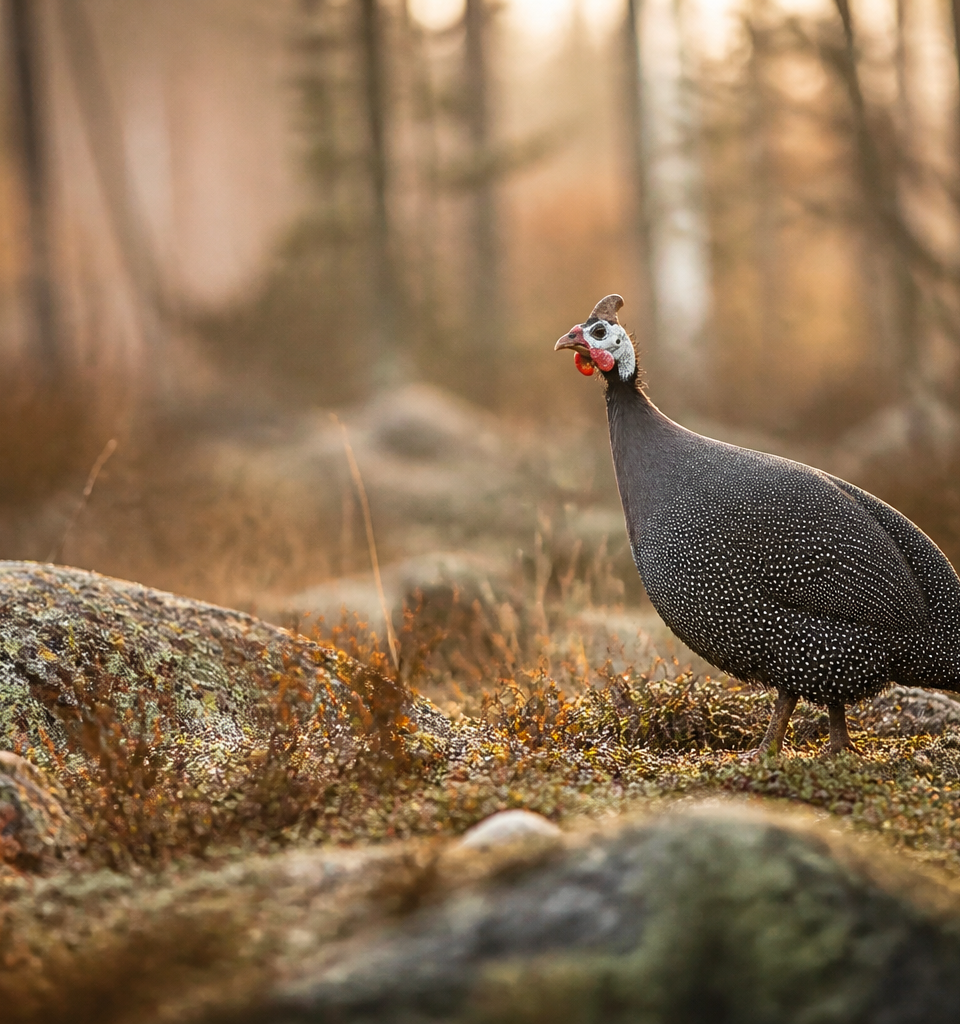
Guinea fowl are instantly recognizable by their dark slate-grey plumage finely speckled with white pearl dots and their bare heads with colourful wattles. This round, stocky gallinaceous bird carries its head high, topped with a distinctive bony casque or helmet. At first glance, its compact profile and jerky gait clearly set it apart from other game birds found in Quebec.
In the field, Guinea fowl emit loud, harsh, metallic alarm calls at the slightest hint of danger. This chorus of chatter alerts the entire flock in seconds. When the birds finally take wing after running at breakneck speed, their flush is explosive, straight, and powerful, driven by short yet muscular wings.
On hunting preserves, sports enthusiasts value the agility of this bird, which challenges even seasoned wing shooters. Its firm, flavourful, and slightly gamey meat makes for an exceptional reward after a full day navigating coverts and field edges.
Typical Guinea fowl habitat in Quebec
Guinea fowl thrive on managed hunting preserves across Quebec featuring diverse, mixed vegetation. They are commonly found across the rolling terrain of the Eastern Townships, Centre-du-Québec, Montérégie, and the Laurentians, where outfitters cultivate hay meadows, grass strips, and fallow fields flanked by hedgerows.
These birds prioritize transition zones where thick brush offers instant security from ground and aerial predators. Bramble patches, dogwood thickets, and tall prairie grasses provide ideal hideouts for an entire flock. Standing corn borders and alder swales also serve as prime travel corridors for these wary birds.
Moderate soil drainage is vital to their everyday comfort. Rather than boggy ground, Guinea fowl prefer sunlit openings where they can dust-bathe to condition their feathers and feed on seeds, insects, and wild berries sheltered from harsh winds.
Flock behavior and reactions of Guinea fowl
Guinea fowl are intensely gregarious birds that stick to tight flocks and coordinate their escape tactics. Whenever a hunter or dog approaches, the group bunches up tightly and chooses to run along the ground rather than flush immediately. This ground-running defence makes pursuing them both exciting and challenging.
When pressed, lead birds produce rhythmic alarm calls that put the entire flock on high alert. If pressure increases, the flock stretches into a rapid, single-file line weaving through tall grass, attempting to outpace bird dogs without taking flight as long as overhead cover exists. This dynamic differs noticeably from strategies detailed in our complete guide to pheasant hunting in Quebec.
Only when cornered at a field edge or blocked by blockers will the flock burst into the air. The birds explode in divergent directions, creating a chaotic and thrilling visual and auditory challenge for the shooting line.
When to hunt Guinea fowl in Quebec?
Autumn, from September through late November, offers peak conditions for hunting Guinea fowl in Quebec. Over these months, morning frosts gradually knock down heavy foliage, making it easier for dogs to work scent while leaving ample cover to hold birds.
Cool, overcast days with light winds provide optimal conditions for working field edges. In damp, calm weather, bird scent stays close to the ground, allowing pointing dogs to lock onto birds with pinpoint accuracy. Conversely, heavy winds scatter scent cones and make Guinea fowl excessively skittish and prone to running wild.
Late in the fall before heavy snow arrives, crisp, frosty mornings deliver memorable outings. Flocks often gather along sunny hedgerows to warm up, creating prime opportunities for strategic walk-up approaches.
Where to find Guinea fowl at an outfitter?
To locate Guinea fowl effectively, focus on buffer zones between agricultural crops and dense timber. Trails lined with berry-producing shrubs, grassy drainage ditches, and spruce pockets nestled within overgrown fields are prime midday holding areas.
Pay close attention to early morning and late afternoon vocalizations. A Guinea fowl's loud alarm call carries hundreds of metres across Quebec countryside, pinpointing the flock's location before you step into the cover. Reading the landscape in this manner aligns closely with tactics outlined in our article on small game hunting in Quebec: practical guide and tips.
Slightly elevated, sun-exposed grassy mounds also draw birds for dusting and preening. Finding small dry dirt depressions confirms an active flock in the immediate sector.
Strategies and techniques for hunting Guinea fowl
The most productive method is a coordinated walk-up hunt using a line of pushers paired with pointing or flushing dogs. By advancing steadily through dense cover, hunters drive birds toward posted stands at the end of the field, forcing them to flush cleanly over the tree line.
When working over pointing dogs, patience and caution are essential because Guinea fowl run with impressive speed. An experienced dog must learn to track without crowding, pinning the birds before they sprint out of range. Hunters familiar with our complete guide to grouse hunting in Quebec will appreciate the unique challenge presented by the foot speed of this hearty upland bird.
Shooting Guinea fowl requires disciplined gun handling and a smooth swing. Due to their rapid initial acceleration and low flight profiles near brush, mount the gun cleanly, swing through the target, and avoid rushed shots that can damage prime meat.
What shotgun gauge should you choose for Guinea fowl?
A 12-gauge or 20-gauge shotgun is the standard choice for clean, ethical harvests on Guinea fowl. A lightweight, well-balanced over-and-under or semi-automatic allows for quick mounting when birds flush unexpectedly from thick grass.
For ammunition, standard field loads with #6 or #7.5 shot provide the ideal balance of pattern density and knockdown energy to penetrate dense feather layers. Interchangeable chokes in Improved Cylinder and Modified configurations cover the vast majority of shooting scenarios in semi-open terrain.
Wear briar-resistant clothing, including reinforced brush pants and waterproof hunting boots. For international visitors traveling with firearms, consult our guide on bringing a firearm to Canada for hunting: the complete guide.
Guinea fowl hunting laws and regulations in Quebec
In Quebec, Guinea fowl are managed on private hunting preserves, recreational estates, and dedicated outfitters. While provincial rules for native game birds may differ, carrying a valid hunter certificate and wearing a blaze orange vest and hat remain mandatory during group hunts to guarantee field safety.
Each preserve sets clear rules regarding harvest quotas, designated hunting zones, and safety parameters. It is essential to respect property boundaries and maintain safe shooting lanes relative to guides, fellow hunters, and dogs at all times.
To review provincial small game licensing and firearm regulations, visit the official portal of the Government of Quebec (hunting and fishing). Regulations change annually: always verify official rules before planning your trip.
Managing Guinea fowl populations on game preserves
The presence of Guinea fowl across Quebec is supported by dedicated preserve management focused on maintaining quality upland habitat. Preserve operators raise flight-conditioned birds in large outdoor flight pens to foster wild instincts, flight strength, and natural wariness.
This managed hunting activity helps relieve hunting pressure on native woodland species such as ruffed grouse and spruce grouse. By offering high-action wing shooting on dedicated parcels, these properties support the conservation of open green spaces.
Exposure to natural predators like red foxes and raptors sharpens flock instincts. As a result, hunters enjoy an authentic, challenging upland pursuit across well-maintained Quebec landscapes.
Planning a Guinea fowl hunt in Quebec
Booking a guided package is the best way to enjoy a full day of upland wing shooting. Outfitter packages typically include experienced guides, trained bird dogs, bird processing, and clubhouse hospitality.
Whether you want to try wing shooting with friends or fine-tune your bird dog on challenging quarry, these hunts cater to all skill levels. Explore available options among Quebec hunting outfitters to find the right destination for your sporting and culinary interests.
To find your next destination, book custom hunt packages, and enjoy premier outdoor experiences, rely on MyOutfitters to organize your next adventure.
Frequently asked questions
Where can you hunt Guinea fowl in Quebec?
Guinea fowl hunting takes place primarily on private game preserves and specialized outfitters across the Eastern Townships, Montérégie, Centre-du-Québec, and the Laurentians, where dedicated grass strips and cover crops are cultivated for upland hunting.
What is the best shotgun gauge for shooting Guinea fowl?
A 12-gauge or 20-gauge shotgun is ideal for Guinea fowl wing shooting. Use #6 or #7.5 shot with an Improved Cylinder or Modified choke to ensure a dense, effective pattern.
When does the Guinea fowl hunting season take place in Quebec?
The season generally runs from early September through late November. This autumn window offers cool weather and optimal cover conditions for pointing and flushing dogs.
Do you need a bird dog to hunt Guinea fowl successfully?
A bird dog is not strictly mandatory, but it significantly improves success. Because Guinea fowl prefer running along the ground, a dog helps pin the flock and force a flush within shotgun range.
Is Guinea fowl a native species in Quebec?
No, Guinea fowl originate from Africa and are not a native wild game species in Quebec forests. They are raised and managed specifically on private hunting preserves and outfitters.
Is blaze orange mandatory when hunting Guinea fowl?
Yes, wearing blaze orange covering the back, chest, and head is mandatory during driven and group hunts in Quebec to maintain clear visual safety among hunters and guides.
How does a flock of Guinea fowl react when hunters approach?
The flock almost always attempts to run in single file through tall grass rather than flush immediately. They take flight in an explosive, multi-directional burst only when cornered or blocked by hunters.
What does Guinea fowl meat taste like?
Guinea fowl is prized table fare with darker, firmer, and more flavourful meat than standard chicken. Its subtle gamey taste is comparable to pheasant and works wonderfully in roasts, braises, and terrines.
How many shotgun shells should you bring for a day hunt?
Bringing one to two boxes of 25 shells per active hunting day is recommended. The bird's rapid acceleration and unpredictable flight angles often demand fast reaction shots.
Can you hunt Guinea fowl with your own dog at an outfitter?
Yes, most game preserves and outfitters allow hunters to handle their own dogs. It provides an excellent training ground for honing pointing, holding, and retrieving skills on fast-running birds.