Hunting
Complete Guide to Pheasant Hunting in Quebec
Discover the essentials of pheasant hunting in Quebec: prime habitats, pointing dog techniques, recommended gear, and pro tips for an unforgettable day in the field.
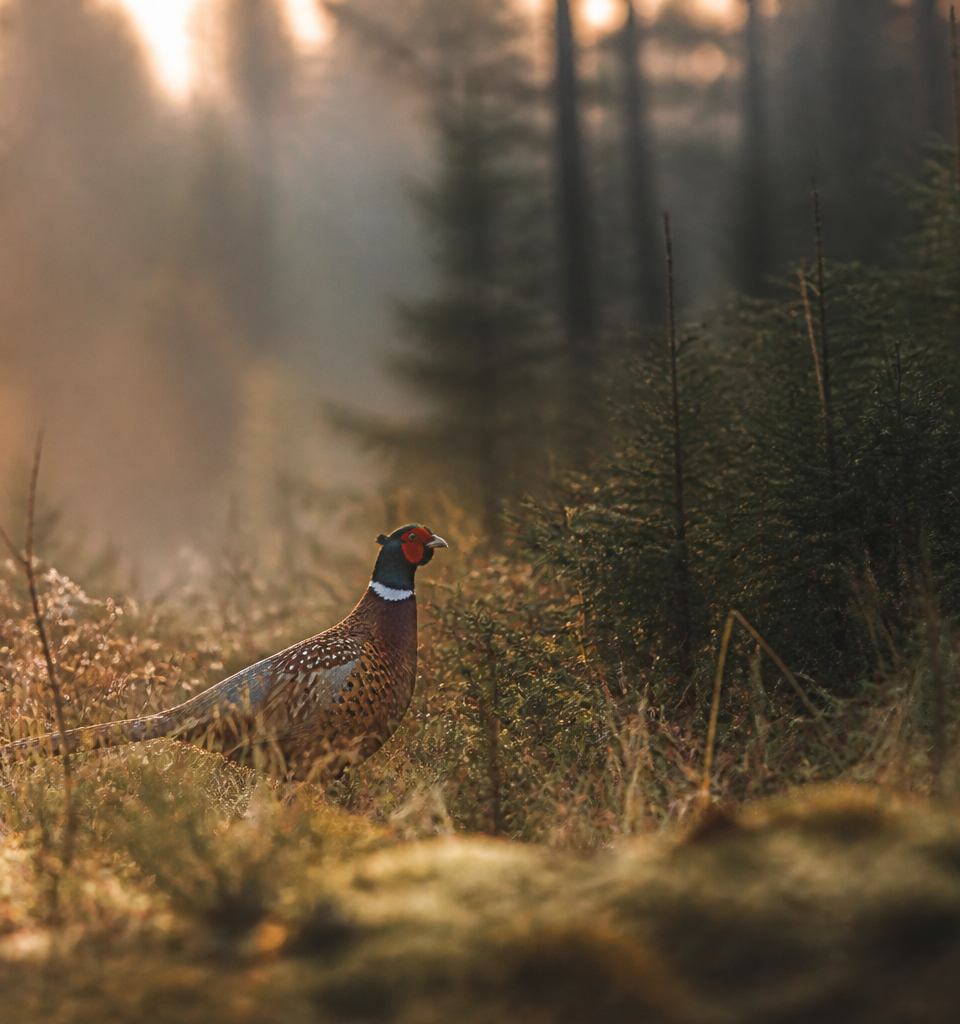
Species overview and identification
The ring-necked pheasant (*Phasianus colchicus*) is undeniably one of the most striking game birds to pursue across Quebec's landscape. Originally native to Asia, this terrestrial upland bird has adapted remarkably well to agricultural and mixed agroforestry environments. Sexual dimorphism is especially pronounced in this species, making visual identification straightforward even during the sudden adrenaline rush of an explosive flush.
The adult male, or rooster (cock), displays brilliant, iridescent plumage. His bottle-green head with purplish highlights is framed by scarlet-red facial wattles and a distinct white neck ring. The rooster's body is covered in rich coppery-gold, chestnut, and buff feathers dappled with black. His long, tapering tail alone can reach over 40 centimetres. In contrast, the hen exhibits a much more subdued palette of cryptic beiges, tans, and browns that provide exceptional ground camouflage while nesting and foraging.
Physically, the ring-necked pheasant is a sturdy bird with powerful legs equipped with sharp spurs in mature males. These strong legs allow it to sprint through thick cover rather than taking flight at the first sign of danger. When it does flush, the takeoff is explosive and nearly vertical, accompanied by a thunderous wingbeat and often a harsh, cackling alarm call from the rooster that will quicken the pulse of any hunter holding a shotgun.
Habitat and geographic distribution
Pheasants are closely tied to open agricultural landscapes interwoven with dense protective cover. In Quebec, their presence is concentrated primarily in southern and central regions, including the Montérégie, Eastern Townships, Centre-du-Québec, and Chaudière-Appalaches. They can also be found in semi-rural and rural pockets of Lanaudière and the Laurentians where diverse cover meets reliable food sources.
Ideal pheasant habitat combines four essential components: feeding zones rich in waste grain and seeds (such as harvested corn, soybeans, and small grains), standing grassy fields for nesting and roosting, thick shelterbelts and hedgerows for secure travel, and heavy brush or conifer stands for winter thermal cover and predator avoidance. Ditch banks, overgrown fence lines, and wetland edges choked with cattails and alders also serve as prime holding areas.
Unlike the ruffed grouse, which thrives in continuous boreal and mixed hardwood forests, pheasants avoid deep, unbroken woods. They flourish where human agriculture and natural edge cover create a patchwork of fields, woodlots, and brush. Across many parts of Quebec, huntable populations are largely supported and managed by dedicated game farms, shooting preserves, and outfitters that actively cultivate habitat tailored to this upland bird's life cycle.
Behaviour and seasonal patterns
Understanding the daily and seasonal patterns of the pheasant is essential for consistently filling your game bag. This bird is predominantly diurnal, with distinct activity peaks at dawn and late afternoon. At first light, pheasants leave their roosts to feed in field edges and waste grain plots. By midday, they retreat into thick cover to loaf, dust-bathe, preen, and stay shielded from birds of prey and high winds.
During autumn—the peak upland hunting window—pheasant behaviour shifts as crop harvesting progresses. As vast standing cornfields are cut, birds are squeezed into remaining islands of heavy cover: overgrown pastures, goldenrod patches, willow swales, and creek bottoms. Reading the terrain and pinpointing these remaining transition corridors becomes the deciding factor in locating birds.
One of the pheasant's most challenging defence mechanisms is its instinct to run rather than fly. An experienced rooster will run ahead through a ditch or hay strip for hundreds of metres without showing a feather. He will only flush when pinned at the very edge of a cover strip or when a well-trained dog cuts off his escape route.
Best seasons and conditions
Quebec's autumn delivers prime conditions for upland hunting from early October straight through December. Early season outings feature warmer temperatures and denser foliage, requiring extra physical effort but offering gorgeous days afield. As November arrives, falling leaves and cut fields strip away hiding spots, concentrating birds in distinct, manageable cover pockets.
Weather conditions heavily influence both bird behaviour and canine scenting efficiency. Crisp mornings with light frost or moderate humidity create the ideal environment for bird dogs to track fresh ground scent left at daybreak. An overcast sky paired with a steady, moderate breeze helps dogs catch airborne scent cones while muffling the hunter's footsteps through dry grass.
Conversely, unseasonably warm afternoons, high winds, or torrential rain make for tough hunting. In heavy winds, pheasants turn skittish and frequently flush well out of shooting range. Late in the season, a light blanket of fresh snow transforms the hunt, exposing fresh tracks and pushing pheasants into dense spruce pockets, cedar thickets, and thorny brush.
Where and how to find it
To find pheasants consistently, focus your efforts on transition zones, commonly known as "edge habitat." Birds rarely linger in the barren middle of an open field or deep inside dark woods. Instead, they patrol narrow strips where two distinct cover types meet, providing immediate food alongside an instant escape route into heavy cover.
Key areas to prospect during your hunt include:
- Shelterbelts and windbreaks of spruce, cedar, or berry-producing shrubs connecting open fields.
- Cut cornfield borders adjacent to cattail sloughs, marsh edges, or deep drainage ditches.
- Overgrown fields thick with goldenrod, milkweed, switchgrass, and uncut standing cover.
- Patches of hawthorn, wild apple, staghorn sumac, and sea buckthorn providing both food and overhead protection.
- Mixed woodlot edges lined with dense brambles where birds stage before roosting.
Work these linear covers systematically into or across the wind. Work through dense pockets slowly and deliberately; a tight-holding rooster will let a hunter walk within two metres of him without moving if your pace is steady and uninterrupted.
Recommended techniques and strategies
Pheasant hunting is primarily pursued in two ways: behind working bird dogs or by walking up birds solo or with a small group. Hunting over dogs is the traditional and most rewarding method. Pointing breeds (such as the Brittany spaniel, French Pointer, German Shorthair, English Pointer, or English Setter) pin the bird with an intense point, giving the gunner time to step in for a clean shot. Flushing breeds (such as the English Springer Spaniel or Labrador Retriever) work enthusiastically within shotgun range, rooting birds out of impenetrable cover and forcing a fast rise.
If you hunt without a dog, the stop-and-go walking technique is essential. Walk slowly and erratically, pausing for 10 to 20 seconds near thick briars or heavy grass clumps. These sudden halts rattle a hiding bird; convinced it has been spotted by a motionless predator, it will often lose its nerve and flush explosively.
For small groups, a coordinated drive along brushy hedgerows produces consistent action. Two or three hunters sweep through the cover in line while a blocker quietly positions themselves at the far end of the strip to intercept running roosters. Strict muzzle discipline, constant communication, and adherence to safe shooting lanes are absolute priorities.
Equipment and gear
Selecting the right shotgun and load comes down to fast handling and clean lethality. A 12-gauge shotgun remains the most versatile platform, especially for late-season birds or windy days where longer shots are common. However, a lightweight 20-gauge is a favourite among upland hunters walking long miles behind pointing dogs. A balanced over-and-under or light semi-automatic allows for quick, instinctive mounting on fast-rising flushes.
For choke selection, an Improved Cylinder and Modified combination handles almost every scenario. Quality upland field loads firing #5 or #6 lead or steel shot—with 32 to 36 grams (1 1/8 to 1 1/4 oz) of shot in 12-gauge or 28 grams (1 oz) in 20-gauge—provide the downrange energy required to fold tough, well-feathered birds cleanly.
Essential clothing and accessories prioritize safety and field durability:
- A durable upland hunting vest with a spacious rear game bag, shell loops, and compliant blaze orange panels.
- A blaze orange hunting cap or hat ensuring 360-degree visibility in tall cover.
- Briar-proof pants or chaps to navigate thorny bushes and dense scrub without tearing up your legs.
- Waterproof, supportive upland hunting boots designed for long walks across uneven, damp terrain.
- High-impact shooting glasses to protect against brush and electronic hearing protection that amplifies natural sounds while muffling gunshots.
Regulations, licences and ethical practices
In Quebec, small game hunting is regulated to support wildlife conservation and maintain field safety. To hunt pheasant, Quebec residents must hold a valid hunter's certificate appropriate for their chosen firearm and a current general small game hunting licence. Wearing a blaze orange vest or garment that is clearly visible from all angles is mandatory under provincial hunting regulations.
Pheasant hunting rules and opportunities may differ depending on whether you are hunting on public land, private land, or within specialized managed territories such as outfitters and controlled harvesting zones (ZECs). Always obtain explicit permission from the landowner before stepping onto private property. Closing gates, respecting standing crops, and avoiding farm livestock are core tenets of ethical upland hunting.
For season dates, regional bag limits, and detailed zone regulations, visit the Government of Quebec (hunting and fishing). Regulations change every year: always verify the official rules before your trip.
Conservation, population and ecosystem role
While the ring-necked pheasant is an introduced upland species rather than an indigenous bird of the northern boreal forest, it coexists well in modern agricultural landscapes without competing with native woodland species like the ruffed grouse or spruce grouse. Its diet of weed seeds, waste grain, and agricultural insects during the summer months makes it a beneficial ally for natural pest management in rural areas.
Managing habitat for pheasants creates broader ecological benefits across the rural landscape. Conserving riparian buffers, replanting shelterbelts, and seeding pollinator-friendly fallow strips directly benefits ground-nesting songbirds, native pollinators, and other small game like the snowshoe hare.
Responsible upland hunting emphasizes selective harvest, ethical shot presentation, and full utilization of harvested game. Pheasant meat is lean, delicate, and widely considered one of the finest wild table fares in Quebec. Dressing and preparing your birds properly honours the hunt and completes a rewarding day in the field.
Planning a guided trip or outfitter stay
Booking a hunt with a specialized Quebec outfitter is one of the best ways to experience world-class pheasant hunting, whether you are a newcomer learning field basics or an experienced wingshooter eager to watch elite bird dogs work. These destinations feature expertly managed properties with varied cover courses—combining brushy coulees, oat plots, native grasses, and sorghum fields designed for high-action flushes.
At an outfitter, you will be guided by dedicated upland professionals who handle seasoned pointing and flushing dogs. It provides an exceptional opportunity to sharpen your instinctive wingshooting, learn how birds use the wind, and witness the incredible teamwork between guide and dog in a safe, welcoming setting. Outstanding lodge amenities, hearty regional cuisine, and warm hospitality ensure every trip is memorable both in the field and around the hearth.
To plan your next upland adventure and experience high-flying action in Quebec's premier hunting country, explore top-rated packages and guided hunts on MyOutfitters today.
Frequently asked questions
What are the best shotgun gauges for pheasant hunting in Quebec?
A 12-gauge is the most versatile and hard-hitting option, ideal for late-season hunts and windy days with longer shots. A 20-gauge is extremely popular for walked-up hunting behind pointing dogs thanks to its lighter weight and fast handling.
Do I need a hunting dog to hunt pheasants successfully?
No, a dog is not mandatory, but it significantly boosts your success rate. Without a dog, use a stop-and-go walking pace with frequent pauses near dense cover to make nervous birds think they have been spotted and flush within range.
Which dog breeds are best suited for pheasant hunting?
Pointing breeds like the Brittany spaniel, German Shorthaired Pointer, and English Setter excel at locking birds down for a composed approach. Flushing breeds like English Springer Spaniels and Labrador Retrievers are outstanding at actively working heavy brambles and pushing tight-holding birds into flight.
How do you quickly tell a rooster from a hen on the flush?
Roosters are distinctly larger with vibrant green, gold, and copper plumage, a white neck ring, and a long tail, often accompanied by a harsh cackling call on takeoff. Hens are smaller, silent on the flush, and covered in mottled, drab brown feathers.
What is the best time of day to hunt pheasants?
Early morning and late afternoon are the most productive windows. Pheasants leave heavy roosting cover during these hours to feed along field edges, laying down fresh scent trails that are easy for bird dogs to work in the morning dew.
How do you handle a pheasant that runs instead of flushing?
Work the cover toward a natural bottleneck or field edge to corner the bird, or station a blocker at the end of the hedgerow. A well-trained bird dog that can loop around and pin the bird from the front will also force a running rooster to flush.
What choke and shot size should I use for pheasants?
An Improved Cylinder or Modified choke paired with #5 or #6 shot is standard for shots between 15 and 35 metres. These loads provide good pattern density and sufficient energy to cleanly down tough, well-feathered birds.
Can you hunt pheasants after the first snowfall?
Yes, as long as the provincial season remains open. Fresh snow makes tracking easy and pushes birds into sheltered conifer stands, cedar thickets, and dense thorn patches out of the cold wind.
What safety clothing is required in Quebec?
Quebec hunting regulations require hunters to wear a blaze orange vest or garment that is clearly visible from all angles, as well as a blaze orange hat or cap, ensuring maximum visibility to other hunters in heavy cover.
Why book an outfitter for a pheasant hunt?
Specialized outfitters provide access to prime managed bird habitat, high game bird densities, experienced guides, and trained bird dogs. It is the safest, most productive environment to practice wingshooting and learn upland hunting strategies.