Hunting
Snow Goose Hunting in Quebec: Complete Guide and Strategies
Discover the best techniques, seasons, and strategies for hunting Greater Snow Geese in Quebec from spring through fall, complete with expert advice.
Species overview and identification
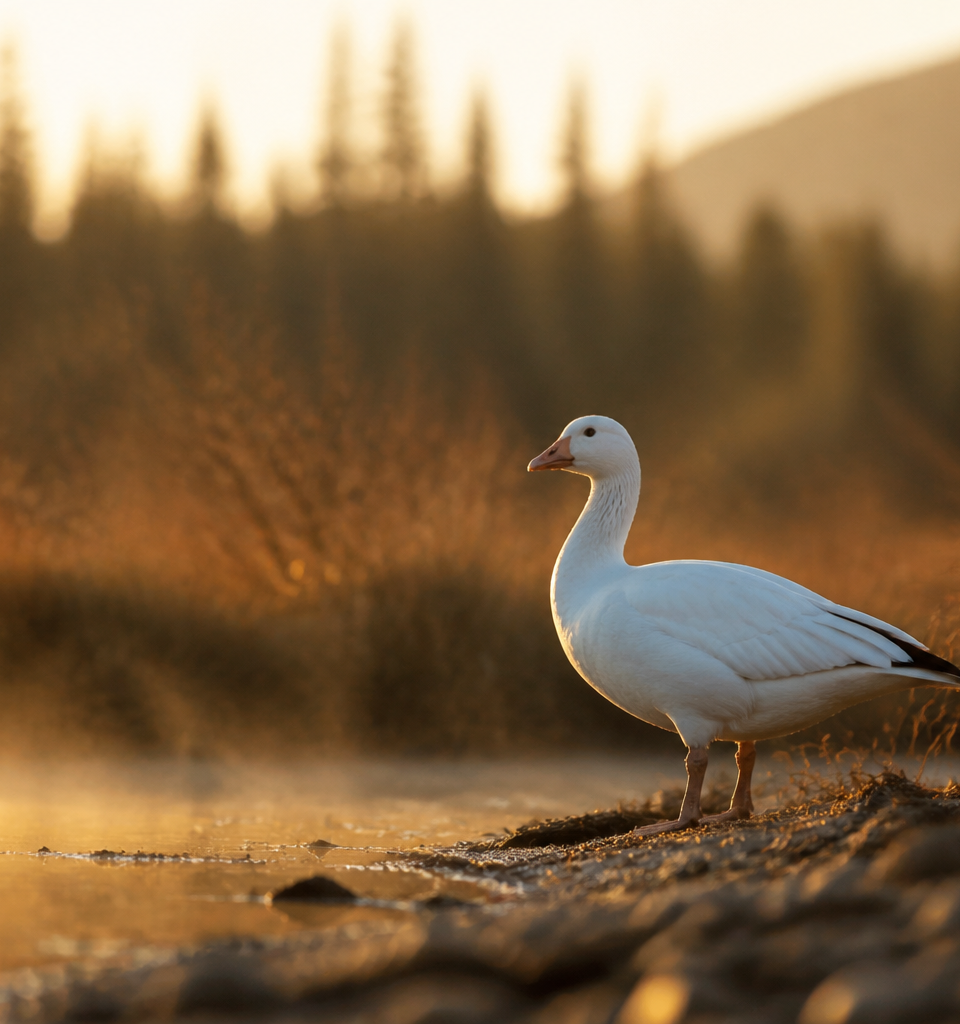
The Greater Snow Goose (*Anser caerulescens atlanticus*) is a spectacular migratory waterfowl that captivates waterfowlers across Quebec. Slightly larger than its western counterpart, the Lesser Snow Goose, it features an impressive wingspan and powerful, tight-flock flight patterns. Adults display brilliant white plumage accented by jet-black primary wingtips and a pink bill with serrated black cutting edges—commonly referred to as the "grinning patch" or "goose smile."
A dark morph, known as the blue phase, also occurs, although it is much less common in Greater Snow Geese than in Lesser Snow Geese. Juvenile birds of the year, recognizable by their mottled grey wash and darker legs, are generally far less cautious than mature adults. Renowned for their longevity and sharp eyesight, snow geese quickly learn to pick out imperfections in decoy spreads, making them one of the most formidable and cunning game birds to hunt in North America.
Habitat and geographic distribution
In Quebec, the presence of the snow goose is closely tied to the St. Lawrence River and the fertile agricultural plains that border its shores. During their long migratory journeys between the Canadian High Arctic and the American Atlantic coast, hundreds of thousands of birds stop to refuel in the province's intertidal marshes and harvested crop fields.
Key staging areas include the Montmagny and islands region, the Côte-de-Beaupré corridor featuring the famous Cap Tourmente National Wildlife Area, the Centre-du-Québec region around Lake Saint-Pierre, as well as the Montérégie and Bas-Saint-Laurent. In these regions, geese spend the night roosting on secure, open bodies of water protected from predators before taking flight at first light to feed actively in harvested cornfields, cereal stubble, and forage pastures.
Behaviour and seasonal patterns
The snow goose is deeply gregarious, relying entirely on safety in numbers. In the fields, a feeding flock relies on dedicated sentinels that constantly scan the surroundings while other birds feed voraciously. If a single sentinel gives an alarm call, the entire flock lifts off in a deafening roar, making any spot-and-stalk approach virtually impossible.
Flock behaviour differs significantly between spring and fall:
- During the spring migration, birds are in a hurry to reach their northern Arctic breeding grounds. They search for protein-rich food sources and travel in massive flocks that can be challenging to decoy without an extensive setup.
- In the fall, migration is more drawn out. The presence of young, inexperienced birds often makes flocks more responsive to a well-placed decoy spread, although weeks of accumulated hunting pressure quickly restore their legendary wariness.
Best seasons and conditions
Two distinct periods define the calendar for Quebec waterfowlers. The spring conservation order provides a unique opportunity to hunt while birds stage across fields that are often still bordered by snow. The fall brings the traditional regular season, extending from September until water bodies freeze over in November.
Weather conditions play a decisive role in hunting success:
- Overcast skies paired with moderate to strong winds (between 25 and 45 km/h) are ideal, forcing birds to fly lower and commit into the wind directly toward your landing zone.
- Foggy or drizzly days reduce the geese's visibility, concealing minor flaws in your setup and creating prime opportunities for close-range shooting.
- Bluebird, calm days present the greatest challenge, as high-flying birds have ample time to spot unnatural glare on decoys and pick out human silhouettes.
Where and how to find it
Scouting is the cornerstone of successful snow goose hunting. Spotting birds in a field the evening before is no guarantee if they have already depleted the available food. Thorough glassing with binoculars helps map their daily flight lines between water roosts and feeding fields.
To pinpoint productive ground:
- Drive rural backroads early in the morning and late in the afternoon to follow feeding flights leaving major water roosts.
- Mark the flock's exact landing zone and note prevailing wind directions to predict the next day's approach angles.
- Always secure landowner permission before setting up on private farmland, an essential practice that respects Quebec's agricultural community.
Recommended techniques and strategies
Snow goose hunting in Quebec is primarily conducted from field blinds set within agricultural parcels. With thousands of keen eyes inspecting every detail, your setup must appear completely natural and welcoming. Deploying a massive decoy spread is standard practice to compete with the real flocks feeding in neighbouring fields.
Key hunting strategies include:
- Arrange your decoys (windsocks, silhouettes, and full bodies) into a "J" hook, horseshoe, or funnel pattern to create an inviting landing pocket positioned downwind and directly in front of your shooting line.
- Meticulously conceal your layout blinds by heavily stubbling them with natural cover collected on-site, such as corn stalks, dried hay, or local mud.
- Use goose flags to simulate flapping wings and catch the attention of distant passing flocks.
- During the spring conservation hunt, take full advantage of electronic callers running high-volume feeding chatter tracks.
Equipment and gear
Hunting Greater Snow Geese requires durable equipment built to withstand rugged conditions, from freezing spring mud to late-fall sleet.
Firearm and ammunition selection should emphasize knockdown power and effective range:
- A 12-gauge shotgun chambered for 3-inch or 3.5-inch shells, using a semi-automatic action to absorb recoil or a reliable pump action that cycles smoothly in dirty conditions.
- Non-toxic steel shot in sizes BB, 1, or 2, or premium dense alternatives like bismuth or tungsten for clean, ethical harvests at longer distances.
- Mid-range chokes, such as Modified or Light Modified, matched for non-toxic shot patterns.
- Technical, waterproof, and breathable layered outerwear patterned in field-matched camouflage, or clean white coveralls for snow-covered fields.
- Waterproof gun cases and ventilated decoy bags to efficiently transport hundreds of decoys.
Regulations, licences and ethical practices
Migratory bird hunting is subject to strict federal and provincial regulations designed to conserve bird populations while managing high flock densities. Every hunter must hold a valid federal Migratory Game Bird Hunting Permit with a Canadian Wildlife Habitat Conservation Stamp, along with a valid Quebec provincial small game hunting licence.
Consult official guidelines on the Government of Quebec (hunting and fishing) website for specific season dates, hunting zones, and special conditions. During the spring conservation order, specific exemptions may apply, such as the use of electronic calls and the removal of daily bag limits in designated conservation zones. Ethical hunting practices remain essential: avoid taking low-percentage shots out of range, respect cultivated ground, and make every effort to retrieve downed birds immediately. Regulations change annually: always verify exact dates, bag limits, and current rules with relevant authorities before planning your trip.
Conservation, population and ecosystem role
The Greater Snow Goose represents a remarkable wildlife recovery success story. In the early 20th century, the population had dwindled to just a few thousand individuals. Thanks to coordinated conservation measures, numbers rebounded dramatically by the late 20th century, eventually reaching historic highs that began threatening fragile Arctic breeding grounds.
Overabundant populations lead to intense overgrazing, degrading delicate Arctic tundra habitats and impacting other northern wildlife species. The spring conservation order was established to help stabilize population levels at ecologically sustainable thresholds. By participating in this hunt, waterfowlers act as active wildlife stewards while harvesting lean, flavourful wild game.
Planning a guided trip or outfitter stay
Hunting snow geese on your own requires a significant investment in scouting time, land access coordination, and heavy gear. Purchasing hundreds of decoys, an enclosed trailer, layout blinds, and audio systems represents a major expense for a few outings per year. Booking a guided trip with a professional outfitter eliminates these logistical hurdles.
Quebec outfitters maintain top-tier field setups, secure exclusive hunting leases on prime staging grounds along the St. Lawrence River, and employ experienced scout teams that track bird movements daily. This expertise ensures decoy spreads are tailored to changing wind conditions, electronic callers are managed expertly, and shooting opportunities remain safe and organized.
For an unforgettable waterfowl adventure across Quebec's legendary flyways, rely on certified local specialists and plan your next guided trip through MyOutfitters.
Frequently asked questions
What is the main difference between the spring and fall snow goose hunts?
The spring hunt is a special conservation order with no daily bag limits that permits the use of electronic callers and unplugged shotguns in designated zones. The fall season is a traditional migratory hunt with standard equipment rules and daily bag limits.
How many decoys are needed to hunt snow geese effectively?
Volume is essential for snow geese. A minimum spread of 300 to 500 mixed decoys (windsocks, silhouettes, and full bodies) is recommended, while professional outfitters routinely deploy spreads of 1,000 or more to simulate a safe feeding flock.
What shotgun gauge and shot size should I choose?
A 12-gauge shotgun chambered for 3-inch or 3.5-inch shells is standard. Use non-toxic steel shot in sizes BB, 1, or 2. For extended range and increased energy, denser bismuth or tungsten shot provides excellent knockdown power.
How can you tell a juvenile snow goose from an adult in flight?
Adult snow geese are clean white with distinct black wingtips. First-year juveniles feature a dusky grey cast across their neck and back, darker bills, and greyish legs, giving them an overall darker profile in flight.
What licences are required to hunt snow geese in Quebec?
You must hold a federal Migratory Game Bird Hunting Permit with a Canadian Wildlife Habitat Conservation Stamp, as well as a valid Quebec provincial small game hunting licence.
Why is wind so critical for snow goose hunting?
Snow geese take off and land facing into the wind to maintain aerodynamic lift. A steady wind lowers their flight altitude, slows their descent speed, and allows you to funnel their final approach directly into your designated landing zone.
How do you camouflage layout blinds in open fields?
Use low-profile layout blinds heavily covered with local stubble, dry hay, or crop residue gathered directly from the field. In snowy conditions, white blind covers or full white outerwear allow hunters to blend seamlessly into the decoy spread.
How should snow goose meat be prepared and cooked?
Snow goose breast meat is lean and dark, best served rare or medium-rare when pan-seared. Legs, thighs, and mature birds are ideal for slow braising, confit, fresh sausages, cured jerky, or seasoned ground meat.
Why are snow geese considered so wary and difficult to hunt?
Snow geese have exceptional visual acuity and can live over 20 years, meaning mature adults have encountered countless hunting setups. In massive flocks, thousands of watchful eyes make spotting unnatural movements or glare nearly instantaneous.
Why choose a guided outfitter over a DIY hunt?
A guided outfitter eliminates the massive investment required for large decoy spreads, trailers, and daily field scouting. Outfitters secure prime private agricultural leases, set up before dawn, and optimize your chances in a controlled, safe environment.