Hunting
Snowshoe Hare Hunting in Quebec: Tips and Tactics
Discover the best techniques, key habitats, and expert advice for successful snowshoe hare hunting across Quebec's game-rich forests.
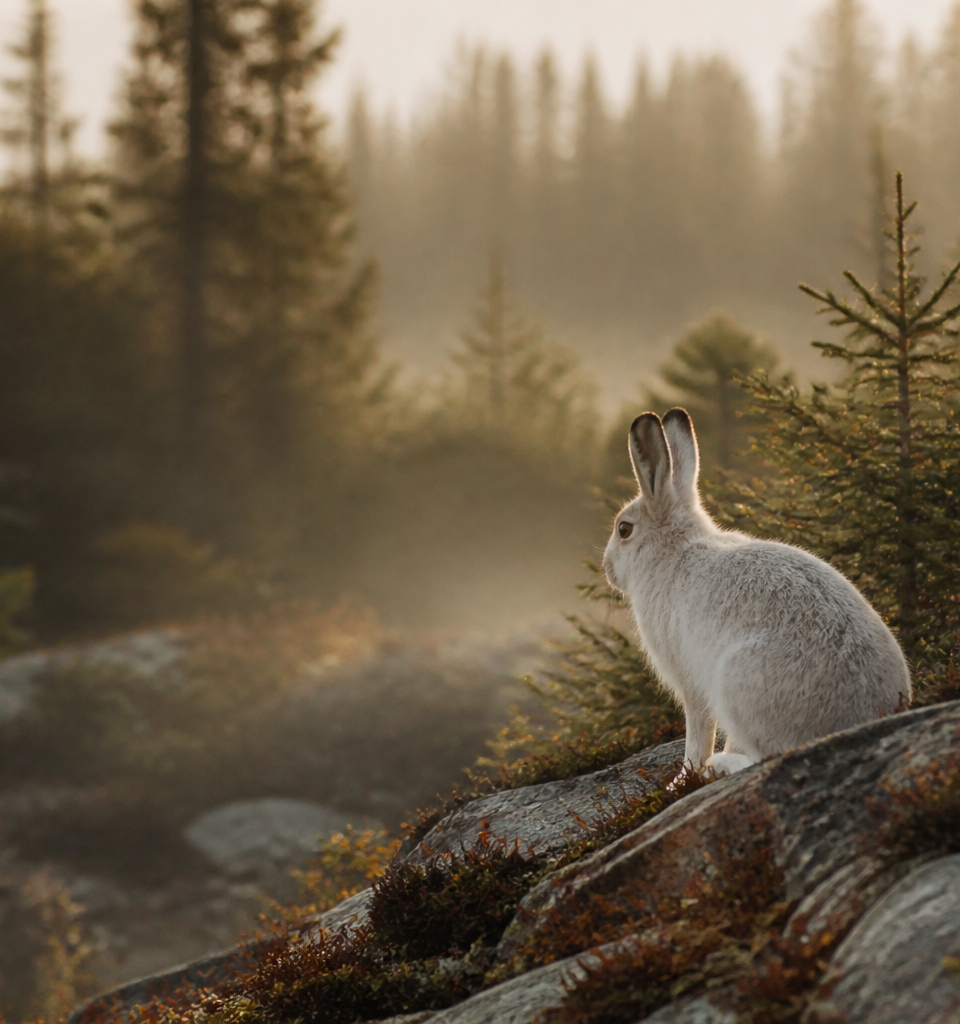
Species overview and identification
The snowshoe hare (*Lepus americanus*) is undeniably one of the most iconic small game species found in Quebec's forests. Unlike the eastern cottontail, which prefers agricultural and suburban areas in the southern reaches of the province, the snowshoe hare is perfectly adapted to the harsh conditions of the mixed and boreal forest biomes. Its most striking adaptation remains its remarkable seasonal dimorphism: its coat shifts from a grayish-brown in summer to pristine white in winter, save for the distinctive black tips on its ears.
Morphologically, the snowshoe hare is characterized by its exceptionally large hind feet, heavily furred with stiff bristles during the winter months. This biological adaptation acts as a natural pair of snowshoes, enabling the hare to bound effortlessly over deep powder where its natural predators flounder. Adults generally weigh between one and two kilograms. Their large, dark eyes are set laterally on the head, providing an almost 360-degree field of view to keep them constantly on guard against danger.
Habitat and geographic distribution
Found across virtually all of Quebec, the snowshoe hare thrives in the mixed forests of the Outaouais, Laurentians, and Eastern Townships, as well as the vast boreal expanses of the Côte-Nord, Mauricie, Saguenay–Lac-Saint-Jean, and Abitibi-Témiscamingue. Its home range is closely tied to the density of ground-level vegetation, which provides both a steady food supply and overhead protection from a wide variety of aerial and terrestrial predators.
Preferred habitats include regenerating forest stands, especially 10- to 20-year-old cutovers, dense cedar swamps, alder thickets along stream banks, and spruce-balsam fir stands with thick underbrush. The snowshoe hare actively seeks areas where the tangled vegetative cover is so thick that walking through it is challenging. In these protective thickets, it finds the young woody browse essential for winter survival.
Behaviour and seasonal patterns
The snowshoe hare is primarily crepuscular and nocturnal. During the daylight hours, it spends long stretches resting motionless in a "form"—a shallow depression scraped into the soil beneath low conifer boughs, an overturned root ball, or a dense slash pile. It truly becomes active at dusk, foraging on tender bark, buds, twigs, and conifer needles.
Hare populations undergo spectacular boom-and-bust cycles that run on a roughly 9- to 11-year timeline. During peak cycle years, the woods seem alive with hares, which subsequently fuels an increase in predator numbers, particularly the Canada lynx. During cycle troughs, local densities drop sharply before rebounding. In the spring and fall, the molting process creates windows of heightened vulnerability: a stark white hare resting on bare forest floor is easily spotted by observant hunters.
Best seasons and conditions
While hunting seasons open in the fall, winter remains the preferred period for most Quebec hunters. A blanket of fresh snow radically transforms scouting, instantly exposing animal density and travel routes via distinct triangular or cross-shaped tracks. The months of December, January, and February offer outstanding tracking and stalking conditions throughout snow-covered woodlands.
Calm, overcast days with light winds and moderate temperatures following a snowfall are optimal. Bitter cold often forces hares to conserve energy and hunker down in deep cover, drastically reducing their movements. In contrast, hunting the morning after a fresh blanket of snow has erased older tracks means that every visible trail is recent, making active tracking much more effective.
Where and how to find it
Finding snowshoe hares starts with reading the terrain. Look for well-trodden trails in the snow, commonly referred to as "runs" or "runways." When multiple hares use these paths repeatedly, the snow becomes hard-packed and littered with small, round, fibrous droppings and woody stems neatly clipped at a 45-degree angle.
Focus your efforts on transitional edge habitats (ecotones), where young softwood regeneration meets mature hardwood timber or along alder-lined wetlands. The edges of overgrown logging roads, where ample sunlight promotes dense low-lying browse, also make prime areas for slow, deliberate still-hunting.
Recommended techniques and strategies
Several methods are effective for harvesting snowshoe hare in Quebec, depending on your preferred hunting style and group dynamics:
- Still-hunting (walking fine): Move through thick cover at a crawl, taking only a few steps before pausing for extended periods to scan the undergrowth. Look for the black outline of an eye, the dark tips of the ears, or a motionless white shape tucked against a stump.
- Hunting with hounds: A deeply rooted Quebec tradition, using small scent hounds such as Beagles flushes hares from their forms. Because hares typically run in a wide territorial circle back to where they were kicked up, hunters can post up along known runs to intercept them as they loop around.
- Group drives: Two or three walking hunters push through a thick woodlot abreast, bumping hares forward toward stationary partners positioned along natural pinch points or forest edges.
- Snaring: A time-honoured and highly effective winter harvest method, setting brass wire snares along active runs requires patience, precision, and a sharp eye for regular travel corridors.
Equipment and gear
A rewarding winter hunt begins with gear built to withstand Quebec's cold weather. A pair of narrow, quiet snowshoes—whether traditional rawhide or modern aluminum designs—is indispensable for navigating deep drifts quietly without alerting game. Layering with breathable, moisture-wicking fabrics helps regulate body temperature while walking and retains warmth during stationary periods.
For firearms, a 20-gauge or 12-gauge shotgun loaded with No. 6 or 7.5 shot is ideal for snap shooting in dense cover or ahead of hounds. For those who favour precision and headshots that preserve the meat, a rimfire rifle in .22 Long Rifle or .17 HMR equipped with crisp optics is a classic, rewarding choice. A pair of compact, lightweight binoculars will also help you glass through tangled brush to spot resting hares.
Regulations, licences and ethical practices
Snowshoe hare hunting is managed by specific wildlife management zones in Quebec, each featuring distinct season opening and closing dates, as well as gear-specific rules (firearms, crossbows, bows, or snaring). Hunters must hold a valid small game hunting licence issued by the provincial authorities.
Ethical hunting demands safe, clean shots and avoiding firing through heavy brush that could result in wounded game. When snaring, checking sets regularly and diligently is both a moral obligation and a strict legal requirement to ensure ethical harvest. To check open seasons, bag limits, and the specific rules in your area, always consult the official Government of Quebec (hunting and fishing) documentation. Regulations change annually: always verify the official rules before heading into the field.
Conservation, population and ecosystem role
The snowshoe hare plays an essential role in the northern food web. Recognized as a keystone prey species by biologists, it provides the primary food source for a broad spectrum of Quebec predators, including the Canada lynx, coyote, red fox, American marten, great horned owl, and northern goshawk.
Hare populations remain inherently resilient thanks to their high reproductive potential, with females capable of raising multiple litters of three to six leverets each summer. Long-term conservation depends largely on maintaining diverse, contiguous forest ecosystems that offer reliable refuge amid resource extraction and changing climate patterns.
Planning a guided trip or outfitter stay
Booking a snowshoe hare hunt at a Quebec outfitter provides an authentic outdoor experience in well-managed wilderness territories. Whether you choose a fully equipped rustic log cabin or an all-inclusive guided package, outfitters grant exclusive access to extensive networks of logging trails, young regenerations, and cedar lowlands far from heavy public pressure. Local guides bring unmatched knowledge of their grounds and often maintain trained packs of beagles for memorable winter outings.
Whether you are a newcomer eager to learn track-reading basics or a group of friends looking to enjoy a classic winter hunting getaway from a cozy backcountry camp, Quebec's outfitter network caters to every level of outdoors enthusiast. Start planning your next snowshoe hare adventure by exploring the outfitters available on MyOutfitters.
Frequently asked questions
What is the difference between a snowshoe hare and a rabbit in Quebec?
The snowshoe hare is larger, features much longer hind feet, and changes its coat to white in winter. Its young (leverets) are born fully furred with open eyes. The eastern cottontail rabbit, found in southern Quebec, remains brown year-round and gives birth to blind, hairless young inside underground burrows.
What is the best firearm calibre for snowshoe hare hunting?
A 12-gauge or 20-gauge shotgun with No. 6 or 7.5 shot is ideal for quick shooting in thick cover and ahead of hounds. For stationary shooting at distance, a .22 Long Rifle rimfire remains the gold standard for taking clean headshots without damaging table meat.
What time of day is the snowshoe hare most active?
Snowshoe hares are primarily crepuscular and nocturnal. Peak activity occurs around dawn and dusk. During the day, they remain stationary in small hollows (forms) beneath conifers or inside brush piles to avoid predators.
How do you identify a fresh snowshoe hare track in the snow?
The track shows a characteristic pattern where the two larger hind feet land ahead of the two smaller front feet. Fresh tracks have crisp edges, loose powder thrown in the direction of travel without a freeze crust, and dark, moist droppings that have not hardened in the frost.
Can you hunt snowshoe hare successfully without hunting dogs?
Yes. Slow, methodical still-hunting through thick cover is very effective for spotting hares tucked into their forms. By taking quiet steps and pausing often to scan low conifer branches, hunters can spot game or take clean shots before they bolt.
What types of forest cover provide the best hunting opportunities?
Dense 10- to 20-year-old regenerating mixed stands, mature cedar stands, alder-lined stream bottoms, and early-successional cutovers offer the highest success rates due to abundant winter browse and heavy overhead protection from birds of prey.
Why does the snowshoe hare's coat change colour in the fall?
The molt is triggered by photoperiod, meaning the decrease in daylight hours as winter approaches. This gradual biological shift gives the hare camouflage against snowy ground to avoid detection by natural predators.
What gear is essential for winter snowshoe hare hunting?
A pair of narrow, quiet snowshoes is essential for navigating dense underbrush in deep snow. You will also need breathable layered clothing (wool or synthetic), insulated waterproof winter boots, a blaze orange safety vest or hat, and clear hunting optics.
Is hare snaring permitted across all of Quebec?
Snaring is allowed in many wildlife management zones across Quebec, but rules, allowable wire types, and open dates vary by zone. Hunters must hold the appropriate small game licence and verify the specific local regulations for their target hunting zone.
How do you best prepare snowshoe hare for the table after the hunt?
Because hare meat is lean and active, slow-cooking methods such as stews, red wine civets, or braises are ideal. Cooking the meat low and slow with root vegetables and added fat, like bacon or salt pork, keeps the meat tender and showcases its wild flavour.