Fishing
Mastering Giant Bucktails for Trophy Shallow Water Northern Pike
Learn how to trigger aggressive strikes from 40-inch northern pike in shallow weed beds using giant double-blade bucktails and expert retrieval techniques.
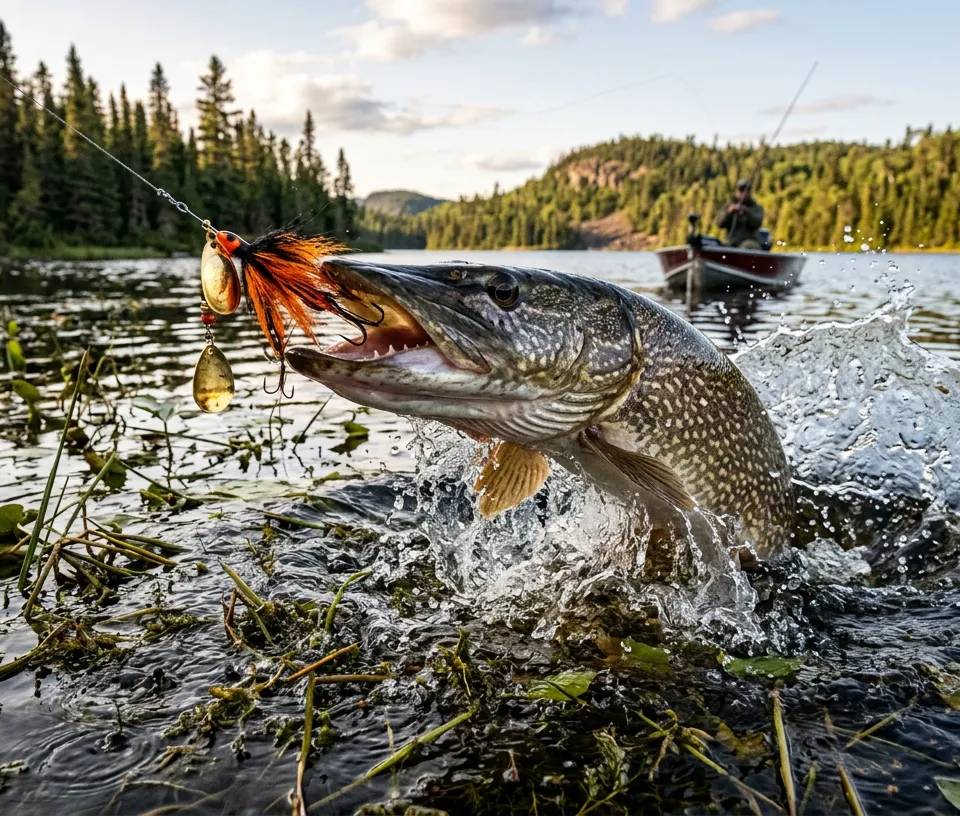
Targeting trophy Brochet (Northern Pike) in shallow weed beds requires a bold approach that leans into the predator’s natural aggression. By utilizing giant double-bladed bucktails, you aren't just presenting a meal; you are creating an acoustic and visual disturbance that is impossible to ignore. This guide covers the first-hand tactics used across Canada to trigger violent strikes from specimens exceeding the 40-inch mark.
Identifying High-Traffic Shallow Structures
Finding giant pike in early to mid-summer means searching for specific vegetation that provides both cover and oxygen-rich water. Large fish are lazy and prefer spots where food comes to them.
- Mixed weed varieties. Look for areas where cabbage weeds meet lily pads; these transitions are trophy magnets.
- Deep water access. The best shallow beds are those immediately adjacent to a steep drop-off or a deep river channel.
- Pocket hunting. Focus on small openings or "lanes" within dense weed mats where a large pike can position itself for an ambush.
The Anatomy of a Giant Bucktail
Giant bucktails, traditionally used for Muskellunge, are now the gold standard for trophy pike due to their massive water displacement.
- Double blades. Large twin blades (size 9 or 10) create a heavy vibration that pike can sense through their lateral line even in murky water.
- Pulse action. The deer hair or synthetic skirt breathes in the water, expanding and contracting to mimic a large forage fish.
- Deflection capabilities. High-speed blade rotation helps push weeds away from the hooks, allowing you to run the lure right through the "slop."
Retrieval Tactics for Reaction Strikes
The goal is to force a split-second decision. You want the pike to strike out of instinct rather than hunger.
- Bulging the surface. Retrieve fast enough that the blades create a wake just below the surface. This creates a silhouette that giants find irresistible.
- The "Rip and Kill". When your lure catches a weed, don't just pull; rip it hard with the rod tip. The sudden burst of speed followed by a split-second pause is a classic trigger.
- Finishing the cast. Always perform a "Figure 8" or a wide oval at the side of the boat. Big pike frequently shadow large lures all the way to the gunwale.
Heavy Gear for Heavy Cover
You cannot bring a knife to a gunfight. Extracting a 20-pound pike from thick weeds requires specialized tackle.
- Heavy power rods. A rod with a stiff backbone (7'6" to 8'6") is essential for casting heavy lures and setting the hook through thick vegetation.
- Heavy braid. Spool up with 65lb to 80lb braided line. This helps slice through weed stalks during a fight.
- Bulletproof leaders. Use high-quality steel or 80-100lb fluorocarbon leaders to prevent bite-offs from the pike's razor-sharp teeth.
Planning Your Trophy Outfitting Trip
Success starts with choosing the right water. Canadian outfitters in regions like Northern Manitoba, Saskatchewan, and Sunset Country specialize in trophy pike management. When booking, ask about the average depth of the bays and the density of the weed growth during your stay. Many outfitters provide specialized boats with casting platforms that are ideal for working these shallow structures. Booking a guided day early in your trip can help you identify the specific weed types that are holding the biggest fish of the season.
Frequently asked questions
What is the best bucktail color for northern pike?
High-contrast colors like black/orange or white/red are excellent for overcast days, while natural patterns or chrome blades work best under bright sun.
Should I use a steel or fluorocarbon leader?
For heavy bucktails, a 12-inch steel leader is the safest against teeth, but 80lb+ fluorocarbon offers more stealth in very clear water.
How fast should I retrieve my bucktail?
Retrieve it fast enough to feel the vibration in your rod; in shallow water, keep it moving just above the weed tops to avoid constant snagging.
Why do a figure-eight at the end of the cast?
Large pike often follow a lure without striking; the sudden change in direction and speed at the boat's edge often triggers a reflex strike.
Do bucktails work in the fall as well?
Yes, but you often need to slow down your pace or use larger blades that offer more lift to fish slowly over dying weed beds.