Fishing
Fishing Regulations in Ontario and Quebec: Permits and Limits
A clear guide to fishing permits, catch limits, and slot sizes in Ontario and Quebec to ensure you stay compliant on your next Canadian adventure.
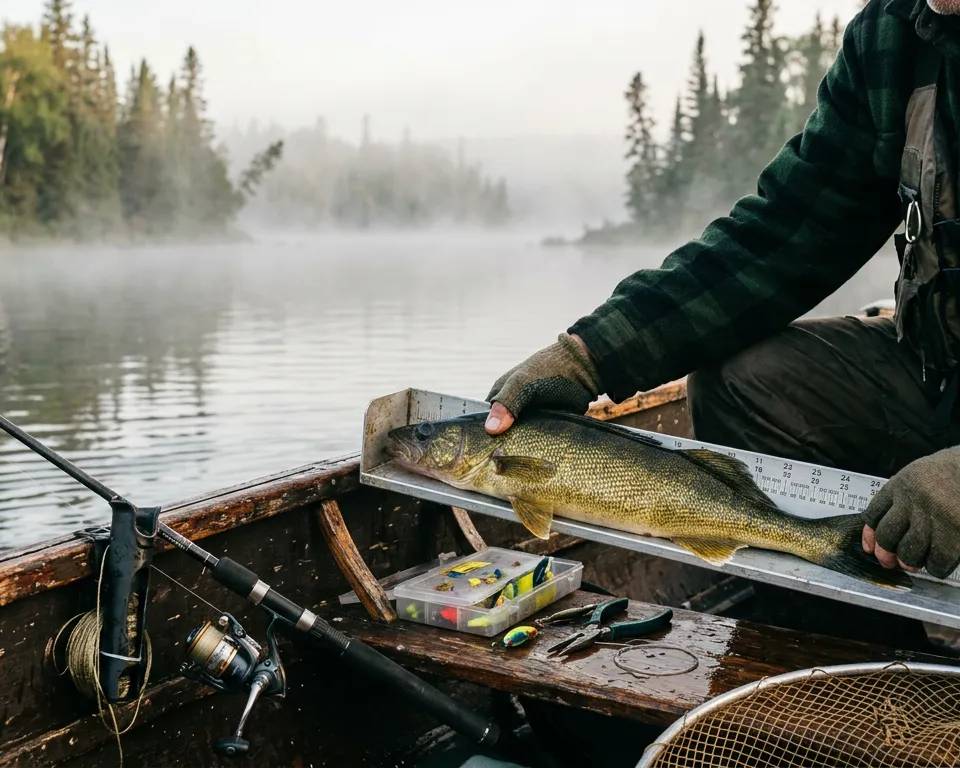
Planning a successful fishing trip in Central Canada starts with a clear understanding of the legal frameworks. Whether you are targeting Walleye in Ontario's Shield lakes or Brook Trout in the Quebec backcountry, navigating permits and quotas is essential for resource protection. This guide simplifies provincial requirements so you can focus on your cast from the moment you arrive at the lodge.
Licensing Requirements and Outdoors Cards
In both provinces, a valid license is mandatory for anyone actively fishing. In Ontario, non-residents must first obtain an Outdoors Card before purchasing a fishing license. You can choose between a Sport Fishing License, which offers full catch limits, or a Conservation License, which is cheaper but has lower limits. In Quebec, licenses are typically sold per species group or for all species except Atlantic Salmon. Always carry your permit and a piece of identification on the water, as conservation officers conduct regular checks.
Catch and Possession Limits
It is vital to distinguish between what you can catch in a single day and what you can legally have in your possession.
- Daily Catch Limit. This is the maximum number of fish you can keep from midnight to midnight.
- Possession Limit. This includes all fish you have in your cooler, at your camp, or in your vehicle. If the limit for Walleye is four, you cannot have more than four in your possession, even if you are on a week-long trip.
- Catch and Release. Even if you release your fish, they count toward your daily limit once you have reached the maximum allowed for keeping in your possession.
Slot Sizes and Protected Lengths
Conservation rules often include slot sizes to protect breeding populations. For species like Northern Pike or Walleye, you may be required to release any fish falling within a specific size range, such as between 40 and 55 centimeters. Always measure your fish from the tip of the snout to the end of the tail while the tail is squeezed. These rules vary significantly between Management Zones, so checking the local zone map is a non-negotiable step before your first cast.
Bait Restrictions and Transport Rules
Invasive species prevention has led to strict bait laws. Ontario has established Bait Management Zones (BMZs) that restrict the movement of live bait across boundaries. In Quebec, the use of live bait is prohibited in most zones during summer. Furthermore, when transporting your catch, you must leave a patch of skin on fillets to allow for species identification by wildlife officers. Failure to do so can result in fines and the confiscation of your catch.
Choosing and Booking Your Outfitter
Professional outfitters are your best resource for staying compliant. When booking, ask about specific lake regulations, as some private or leased territories may have stricter conservation rules than the general provincial guidelines. Many outfitters provide on-site license sales and can explain the current slot sizes for their specific waters. Start your search by filtering for your preferred species and region to ensure you find a lodge that matches your expertise level.
Frequently asked questions
Is an Ontario fishing license valid in Quebec?
No, each province requires its own license. You must purchase the specific permit for the province where you are fishing, even on border waters.
What is the difference between a catch limit and a possession limit?
The catch limit is the daily maximum you can keep, while the possession limit is the total number of fish you have at any time, including those in storage.
What is a slot size?
It is a regulation requiring you to release fish within a specific length range to protect breeding populations or younger fish.
Can I use live bait fish everywhere?
No, the use of live bait is strictly regulated and prohibited in many areas to prevent the spread of invasive species.
Do I have to leave the skin on my fish fillets?
Yes, in most jurisdictions, you must leave a patch of skin on the fillets to allow for species identification by conservation officers.