Hunting
Deer Hunting in Saskatchewan: Complete Guide for Success
Discover how to succeed on your Saskatchewan deer hunt: boreal habitats, November rut strategies, extreme cold-weather gear, and expert advice.
Key takeaways
- The hunting season runs from September to early December, peaking during the mid-November rut.
- Transition zones between the mixed boreal forest and agricultural farmland hold the province's largest bucks.
- Stationary stand hunting along natural travel corridors and feeding funnels remains the most effective, time-tested tactic.
- Non-resident hunters must book through a licensed outfitter to secure a valid hunting licence.
- An extreme cold-weather layering system is essential for enduring long stationary sits below -20°C.
Identifying trophy Deer in Saskatchewan
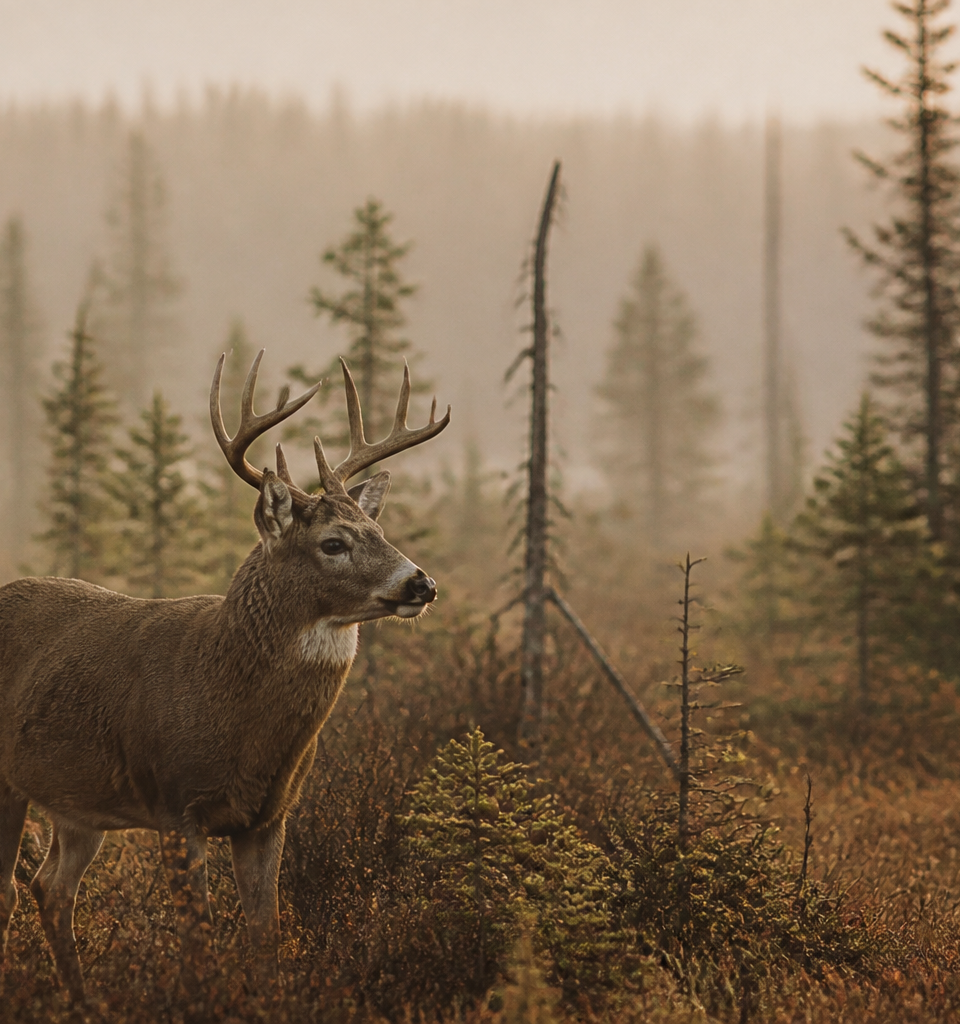
Saskatchewan white-tailed deer stand out for their massive body size, heavy bone structure, and dense winter coats. At these northern latitudes, Bergmann's rule is on full display: to endure frigid Canadian Prairie winters, deer develop significantly greater body mass than their southern counterparts. A mature buck can easily exceed 250 pounds on the hoof, sporting a deep chest and a swollen neck during the rut.
Beyond their sheer body size, Saskatchewan deer are world-renowned for their heavy antler mass. Racks frequently feature exceptional base circumference, thick main beams, and a dark finish stained from rubbing against trembling aspen and alder bark. Long, symmetrical tines and heavy pearling define the trophy bucks roaming these forest fringes.
Distinguishing a mature buck from a younger deer requires a trained eye. A harvest-ready buck shows a straight or sagging belly line, a flat back, legs that appear proportionally short due to the depth of the body cavity, and a shorter, blockier snout. These physical traits signal a buck that has reached full biological maturity.
Best Deer habitats in Saskatchewan
White-tailed deer thrive across the agro-boreal transition zone and the southern fringe of the boreal forest. This fertile ribbon of land, where grain and oilseed fields border dense stands of aspen, spruce, and willow, provides an ideal mosaic of rich forage and secure bedding cover. Deer find high-calorie nutrition along field edges and impenetrable sanctuary just yards into the timber.
River valleys and extensive coulee networks serve as prime habitat across the prairie landscape. Over millennia, river systems like the North Saskatchewan, South Saskatchewan, and Battle rivers carved deep valleys lined with timbered bluffs and heavy brush. These natural corridors allow deer to travel long distances unhindered, sheltered from wind and hunting pressure.
Further north, the mixed boreal forest presents a wilder, more demanding landscape where deer rely heavily on forest regeneration, recent burns, and muskeg openings. To explore prime hunting territories managed by experienced outfitters, review available Saskatchewan deer hunting outfitters to target well-managed zones.
Understanding mature Deer behaviour in autumn
Mature buck behaviour shifts dramatically throughout the fall as daylight hours shorten. In early season (September and October), mature bucks remain cautious, sticking to small home ranges and moving almost exclusively at dusk and dawn. They spend these early weeks building thick fat reserves for the upcoming winter.
By late October, the pre-rut begins with an increase in fresh tree rubs and active ground scrapes along travel corridors. Rising testosterone drives bucks to widen their patrols and check on doe family groups. Daylight movement increases noticeably, offering improved opportunities for hunters on stand.
Peak rut arrives in November, when trophy bucks abandon caution to actively seek and chase receptive does. They cover miles through timber and openings at all hours of the day. Once the rut winds down in December, exhausted bucks regroup near high-energy food sources to recover and begin their winter survival phase.
When to hunt Deer in Saskatchewan during the fall?
The most productive window for harvesting a trophy deer runs from November 10 to November 25. During these two weeks, peak breeding activity aligns with early arctic cold fronts and initial snow cover. High buck activity during daylight hours maximizes the odds of encountering a mature deer.
Weather conditions strongly influence deer movement. Cold fronts paired with a dropping barometer and moderate winds prompt deer to feed heavily to generate body heat. Calm, frigid days with temperatures dipping below -15°C often produce some of the best daytime buck activity of the season.
A fresh dusting of snow transforms the hunt by improving visibility through dense undergrowth and revealing fresh travel patterns. Compared to other Western destinations highlighted in our guide to Deer hunting in Alberta: Complete guide and tips, Saskatchewan's continental climate provides dependable, consistent deer movement year after year.
How to locate big Deer in the boreal forest?
Locating a mature buck requires targeting natural pinch points connecting thick bedding cover to primary feeding areas. Strategic funnels—such as timber points extending into agricultural fields, narrow strips of high ground between swamps, or forested saddles between ridges—concentrate deer movement. Trophy bucks prefer these sheltered routes to scent-check for does without exposing themselves in open country.
Scouting ground sign delivers vital intelligence on local deer quality. Heavy rubs on large-diameter trees at chest height point to a dominant buck with substantial antler mass. Active scrape lines freshened regularly with tarsal scent indicate established patrol routes.
Much like tactics detailed in our overview on Deer hunting in Manitoba: Tips for a successful hunt, using trail cameras along travel corridors allows you to pattern deer and confirm buck age classes without leaving continuous human scent in core sanctuaries.
Stand hunting and stalking strategies for Deer
All-day sits in enclosed, insulated box blinds or ground blinds remain the gold standard for taking mature deer in Saskatchewan. Sub-zero temperatures and the sharp senses of older bucks make staying still from dawn to dusk inside an insulated hide the highest-percentage approach. Blinds are typically positioned downwind of intersecting trails or primary feeding funnels.
Rattling and vocal calling can be effective during the first three weeks of November. Crashing rattling antlers together simulates a territorial fight between rival bucks, triggering curiosity and aggression in dominant local deer. Pairing antler sequences with low, throaty grunts can coax wary bucks out of thick staging cover.
Scent control is the bedrock of any successful hunt. White-tailed deer possess an acute sense of smell capable of detecting human scent hundreds of yards away. Washing gear in unscented detergents, storing clothing in airtight containers, and hunting strictly with favourable winds are non-negotiable practices.
Choosing cold-weather gear for Deer hunting
Reliable cold-weather gear and an accurate rifle calibre are critical for a successful Saskatchewan deer hunt. Given the large body mass of northern deer, flat-shooting, proven calibres such as .30-06 Springfield, .308 Winchester, .270 Winchester, and .300 Winchester Magnum are top recommendations. Paired with heavy, well-constructed expanding bullets, they deliver dependable terminal performance.
Rifle scopes and binoculars must feature excellent light transmission to cut through dark timber at dawn and dusk. A variable 3-9x or 2.5-10x optic with a minimum 40 mm objective lens and quality anti-fog coating ensures a crisp sight picture in freezing temperatures or driving snow.
Your clothing system demands careful planning to prevent cold-related fatigue during ten- to eleven-hour stationary sits. Use a three-layer system: heavyweight merino wool next to skin for moisture management, a high-loft down or heavy fleece insulating mid-layer, and a quiet, windproof outer shell. Extreme cold-weather boots with at least 1,200 grams of insulation, hand warmers, and a specialized insulated heater body suit complete the kit.
Saskatchewan Deer hunting regulations and licences
Provincial hunting regulations manage deer harvests to protect herd quality and wildlife resources across Saskatchewan. Non-resident hunters (both Canadian non-residents and non-resident aliens) are legally required to book through a licensed outfitter holding exclusive big game allocations. Non-residents cannot hunt white-tailed deer unguided on Crown land.
Blaze orange safety apparel is strictly enforced during firearm seasons. Hunters must wear a solid blaze orange cap or toque and a solid blaze orange outer garment (vest or jacket) covering the upper body that remains visible from all directions. This rule ensures high visibility and hunter safety in the woods.
For current season dates, wildlife management zones (WMZs), and export regulations, visit the official Government of Saskatchewan website. Regulations are updated annually: always verify the latest official rules before heading out.
Saskatchewan Deer herd management and ecological balance
White-tailed deer management in Saskatchewan relies on regular aerial surveys and monitored harvest quotas led by provincial wildlife biologists. The primary objective is balancing population densities with habitat carrying capacity, minimizing agricultural crop damage, and maintaining a healthy buck-to-doe ratio and age structure.
Harsh Prairie winters serve as the main natural regulator of deer numbers. Deep, persistent snowpacks restrict access to browse and increase caloric expenditure, causing higher winter mortality among fawns and older deer. Following severe winters, wildlife managers adjust licence allocations to support herd recovery.
Disease monitoring remains an ongoing priority, particularly concerning Chronic Wasting Disease (CWD). Mandatory and voluntary testing programs track CWD prevalence and inform regional herd management strategies, helping protect the long-term health of Saskatchewan's deer population.
Planning an outfitted Deer hunt in Saskatchewan
Booking a guided trip with a certified outfitter provides a secure, well-supported hunting experience in prime deer country. Outfitters handle logistics: heated camp or lodge accommodations, hearty meals tailored for long days in the field, strategically placed box blinds, and daily field transportation. Their pre-season scouting directly enhances your odds of encountering a trophy buck.
To prepare for your adventure and choose the right package, explore our Saskatchewan deer hunting guide: Planning your hunt. It features practical tips on shooting preparation, physical conditioning, and managing extreme cold.
Trust the MyOutfitters team to connect you with top-rated Saskatchewan outfitters and plan an unforgettable hunt for massive Canadian white-tailed deer.
Frequently asked questions
When does the peak of the deer rut occur in Saskatchewan?
The peak of the deer rut in Saskatchewan typically takes place between November 10 and November 25. During this window, mature bucks travel extensively throughout daylight hours searching for receptive does, giving stand hunters their best chance at a mature buck.
Can non-residents hunt deer without a guide in Saskatchewan?
No, non-resident hunters are legally required to book through a licensed Saskatchewan outfitter to hunt white-tailed deer. This provincial regulation ensures hunter safety, strict harvest tracking, and regulated access to prime hunting zones.
What rifle calibre is recommended for Saskatchewan deer hunting?
Versatile calibres such as .30-06 Springfield, .308 Winchester, and .300 Winchester Magnum are highly recommended. They provide the downrange energy and penetration required to cleanly take large-bodied Prairie bucks that frequently exceed 250 pounds.
What is the average size of a trophy buck in Saskatchewan?
A mature Saskatchewan trophy buck typically weighs between 250 and 300 pounds on the hoof. Antlers feature exceptional mass, heavy base circumferences, and routinely score above 150 inches.
Is blaze orange mandatory for deer hunting in Saskatchewan?
Yes, wearing a solid blaze orange cap or toque along with a solid blaze orange outer garment covering the upper body is mandatory during all firearm big game seasons in Saskatchewan to ensure high visibility in the field.
How should you dress for extreme cold-weather deer hunting in Saskatchewan?
Use a three-layer system: moisture-wicking heavyweight merino wool base layers, a high-loft fleece or down insulating mid-layer, and a windproof, quiet outer shell. Heavy-duty winter boots with at least 1,200 grams of insulation and an insulated stand suit are essential for all-day sits.
Why are Saskatchewan deer larger than eastern deer?
Saskatchewan deer are larger due to Bergmann's rule, an ecological principle where northern mammals evolve greater body mass to minimize heat loss during severe winters. Rich agricultural food sources also support exceptional body and antler growth.
Where are the best deer hunting areas in Saskatchewan?
The top hunting areas are located within the central agro-boreal forest fringe, where agricultural croplands meet the northern forest, as well as along major river valleys and coulee systems that offer dense protective cover and rich feed.
Can you hunt deer with archery gear or a crossbow in Saskatchewan?
Yes, Saskatchewan offers dedicated archery seasons that typically open in early September ahead of the general firearm season. Outfitters offer specialized tree stands and ground blinds set up for close-range shot opportunities along feeding trails.
Should you test your harvested deer for Chronic Wasting Disease?
Yes, Saskatchewan wildlife authorities encourage hunters to submit the heads of harvested deer to provincial surveillance drop-off stations for CWD testing. Submissions assist biologists in tracking disease distribution and provide hunters with peace of mind regarding venison safety.