Hunting
Deer Hunting in British Columbia: Complete Guide
Learn how to hunt whitetail deer in British Columbia: prime habitats, peak rut periods, stand-hunting tactics, and essential tips for a successful hunt.
Key takeaways
- The hunting season generally runs from September to early December, peaking during the intense November rut.
- Whitetail populations thrive in forested river valleys, agricultural edges, and the foothills of the Kootenays and Peace River regions.
- Tree stands near feeding corridors and slow still-hunting along timber edges deliver high success rates.
- Non-resident hunters must hold a valid provincial licence and be accompanied by a certified outfitter or licenced resident host.
- Monitor fall weather closely, as early snowfalls concentrate deer in valley bottoms and make tracking far easier.
How to identify Whitetail Deer versus Mule Deer
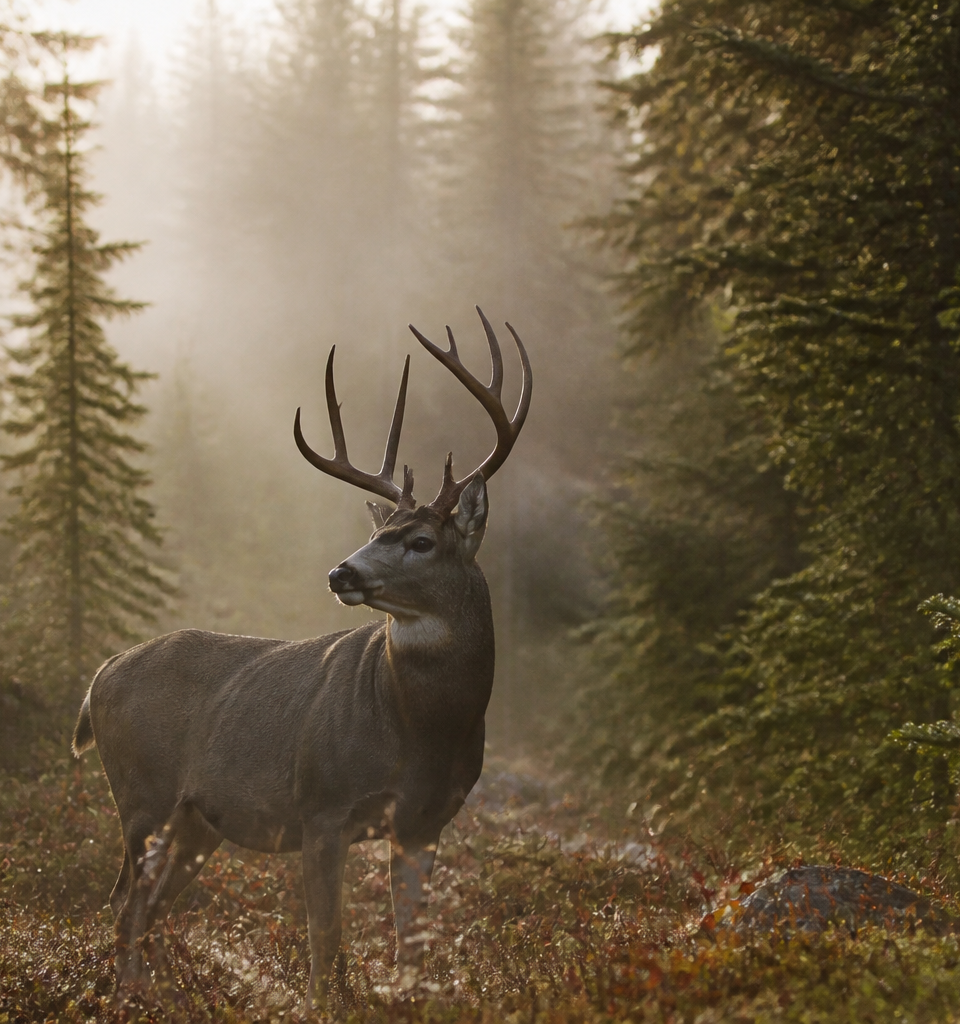
Whitetail deer stand out immediately by their broad, bushy tail fringed with white, which they raise like a flag when alarmed. Unlike mule deer, which frequently share the same ranges in Western Canada, whitetail antlers feature a main forward-curving beam with unbranched vertical tines. Their fall coat turns a dense brownish-grey, providing superb camouflage in thick undergrowth.
Morphologically, mature whitetail bucks carry a proud posture with a powerful chest that swells significantly as the breeding season approaches. Their ears are smaller and more rounded than the oversized ears characteristic of mule deer. Accurately distinguishing between the two species in the field is critical, as British Columbia hunting regulations enforce specific harvest rules that often differ between deer species sharing the same wildlife management unit.
Where to find Deer in British Columbia
Whitetails primarily occupy fertile valleys, agricultural transition zones, and low-elevation foothills across southern and northeastern British Columbia. Dense populations thrive in the Kootenays, Okanagan Valley, Boundary country, and the Peace River district. Unlike the expansive boreal forests explored during Deer hunting in Quebec: complete guide and tips, British Columbia terrain combines dramatic mountain elevation with lush alluvial bottoms.
The species favors mixed-forest edges of trembling aspen, willow, and conifers bordering alfalfa or grain fields. Major river systems, including the Kootenay, Columbia, and Peace rivers, serve as vital travel corridors and wintering grounds. These river bottoms provide abundant woody browse and dense thermal cover against harsh mountain weather and major predators.
Deer behavior across hunting seasons
Whitetail behavior shifts dramatically between late summer and the arrival of December winter storms. Early in the fall, bucks remain discreet and predominantly nocturnal, frequently banding into small bachelor groups that feed quietly at dusk. They minimize their movements within thick canopy and stick to shaded pockets to conserve energy.
By late October, the pre-rut shifts this dynamic completely. Bucks begin rubbing saplings and opening up ground scrapes to mark their territory. During the peak November rut, mature bucks travel long distances day and night in search of receptive does, lowering their usual guard and creating the season's best opportunities for patient hunters.
When to hunt Deer in British Columbia
The most productive window to harvest a mature buck falls between November 5 and November 25, right in the heart of the provincial rut. During these peak weeks, daytime movement surges and crisp temperatures keep deer active throughout the day. Hunters seeking conditions similar to Deer hunting in Alberta: complete guide and tips will find comparable action in the eastern foothills of British Columbia.
Early-season hunts in September and October are well-suited for archery and rifle hunters focusing on late-afternoon feeding patterns. In late November and early December, accumulating snow at higher elevations pushes deer down into valley bottoms. Fresh tracking snow creates exceptional opportunities for slow stalking and reading fresh sign.
Scouting for Deer in British Columbia forests
To locate whitetails efficiently, concentrate your glassing on ecotones between dense conifer stands and open feeding meadows. Analyzing secondary ridge lines, timbered draws with active water sources, and vegetation transitions helps pinpoint primary travel routes. Long glassing sessions with quality optics from an elevated vantage point overlooking a fertile bottom should start any scouting effort.
Ground sign quickly reveals the presence of territorial bucks. Look for fresh rubs on young alder or willow, often positioned at chest height, as well as active scrapes beneath overhanging licking branches. In steep terrain, whitetails consistently use mid-slope contour trails that let them monitor the valley below while keeping a quick escape route to higher timber.
Best strategies for tracking mature Deer
Stand hunting from an elevated tree stand or ground blind remains the premier tactic for intercepting cautious whitetail bucks. Position your setup along natural bottlenecks linking daytime bedding sanctuaries to active feeding areas. Strict scent control and a precise read on morning and evening thermal winds are vital to avoid alerting deer in the area.
Still-hunting on foot produces excellent results on windy or drizzly days when wet ground dampens footsteps. Calling with a grunt tube or rattling antlers works exceptionally well during the peak November rut. This acoustic stimulus often draws dominant bucks eager to run off potential rivals from their core territory.
Gear essentials for Deer hunting
A dependable bolt-action rifle chambered in a flat-shooting, versatile caliber like .270 Winchester, .308 Winchester, or .30-06 Springfield is ideal. These calibers offer the accuracy and terminal performance needed for ethical shots ranging from 50 to 250 metres across mountain clearings. Top your rifle with clear, light-gathering optics featuring an objective lens of at least 40 or 50 mm to maximize visibility during legal shooting light at dawn and dusk.
Layering with merino wool next to skin and quiet, breathable technical outerwear is essential to handle British Columbia's sharp autumn temperature swings. Bring waterproof, supportive boots built for steep sidehills and rugged terrain. Quality 10x42 binoculars, an angle-compensating laser rangefinder, and a sturdy pack frame for hauling meat complete your kit.
Deer hunting regulations in British Columbia
Big game hunting in British Columbia is structured around distinct Wildlife Management Units (WMUs). Each unit sets specific season dates, bag limits, and antler-point restrictions for legal bucks. Compulsory inspection, harvest reporting, and high-visibility clothing requirements apply depending on the region and open season.
Non-resident hunters visiting British Columbia are generally required to book with a licensed guide outfitter holding exclusive territory rights or hunt under a resident hunter host permit. Visit the official Government of British Columbia portal to review the most up-to-date hunting regulations. Regulations change annually: always verify official dates, open zones, and licensing requirements before heading out.
Deer conservation and population dynamics
Whitetail deer populations in British Columbia undergo ongoing scientific monitoring to balance herd health with habitat carrying capacity. Because whitetails share range with native ungulates like elk, moose, and mule deer, wildlife managers adjust harvest allocations regularly. Severe winters and predation by cougars and wolves remain the primary natural forces regulating local populations.
Hunters and conservation groups directly fund habitat improvement programs and the preservation of crucial migration corridors. Prescribed burns and winter-range restoration projects in the Kootenays and Okanagan encourage the growth of high-value browse essential for fawn survival. This adaptive management sustains robust deer herds while providing exceptional, ethical hunting opportunities.
Booking a guided Deer hunting trip
Booking with a professional outfitter is the most reliable way to experience a world-class hunt in the rugged landscapes of the West. Local guides know every hidden travel corridor and adapt their tactics to changing weather and hunter mobility. Review our guide on Guided, semi-guided, or DIY hunting: which package to choose for your success? to choose the right style of hunt for your goals.
When booking with Hunting outfitters in British Columbia, you gain full logistical support, including comfortable base-camp lodging, hearty meals, and professional field dressing for your trophy and venison. Trusting your hunt to experienced territory outfitters maximizes your odds of taking a mature buck in a safe, well-managed environment.
Ready to plan your next Western Canadian adventure? Explore partner outfitters and find your ideal package on MyOutfitters.
Frequently asked questions
When does the whitetail deer rut peak in British Columbia?
The whitetail deer rut in British Columbia peaks between November 10 and November 25. During this window, mature bucks cover extensive ground throughout daylight hours searching for receptive does, offering hunters the highest chance of encountering quality bucks.
Where are the highest deer densities in British Columbia?
The highest whitetail densities are found in the Kootenays, the Okanagan Valley, the Boundary region, and the Peace River drainage. These areas combine agricultural valley floors with timbered foothills that provide excellent forage and protective cover.
Do non-residents need a guide to hunt deer in British Columbia?
Yes. Non-resident hunters, including Canadian residents from other provinces and international hunters, must book through a licensed guide outfitter or be accompanied by an eligible British Columbia resident holding a valid Hunter Host permit.
What is the recommended rifle caliber for deer hunting in Western Canada?
Versatile calibers such as .270 Winchester, .308 Winchester, 6.5 Creedmoor, and .30-06 Springfield are top recommendations. They offer flat trajectories, excellent medium-to-long-range accuracy, and ample knockdown power to cleanly take a mature buck.
How do you distinguish a whitetail deer from a mule deer in the field?
Whitetails feature a broad, white-fringed tail that flares upward when fleeing, alongside antlers with single tines branching off a main beam. Mule deer have large ears, a narrow white tail tipped in black, and antlers that fork into distinct Y-shaped points.
How long is a typical guided deer hunt in British Columbia?
Most guided whitetail hunts in British Columbia run 5 to 7 full hunting days. This duration gives hunters adequate time to adjust to changing weather patterns, scout multiple productive areas, and maximize chances at a mature buck.
What is the most effective hunting technique for mountain deer?
Hunting from a well-placed tree stand or ground blind overlooking a proven travel funnel is the most reliable method. In more open, rolling country, glassing from vantage points followed by a careful spot-and-stalk approach into the wind is also very effective.
Is blaze orange mandatory for deer hunting in British Columbia?
Blaze orange is not strictly mandatory under provincial law across all hunting zones, but wearing hunter orange or bright safety colors is strongly encouraged. Some outfitters and specific management areas may enforce their own blaze orange requirements during firearm seasons.
Can you hunt deer in combination with other big game species in British Columbia?
Yes, many outfitters offer multi-species combo packages that allow hunters to target whitetail deer alongside mule deer, elk, or wolf, depending on unit regulations and open seasons. Proper species tags and licenses must be purchased prior to the hunt.
What clothing should you pack for a fall deer hunt in British Columbia?
Dress in a modular layering system that includes merino wool base layers, breathable mid-layer fleece or synthetic down insulation, and a quiet, waterproof outer shell. Late-fall mountain weather can shift quickly from mild afternoons to freezing snowstorms.