Hunting
Deer Hunting in New Brunswick: Guide and Expert Tips
Discover how to succeed on your New Brunswick deer hunt: key habitats, rut strategies, essential gear, and booking outfitters for your trip.
Key takeaways
- The hunting season generally spans from October to November, offering dedicated windows for archery, crossbow, and modern firearms.
- Agricultural valleys, dense cedar swamps, and forest edges across the southern and western regions hold the highest game densities.
- Treestand hunting along feeding trails and monitoring rub lines remain the most productive tactics.
- Non-residents are required to hold a specific licence and hunt with a licenced guide or an accredited outfitter.
- Target the first two weeks of November during the peak rut to intercept mature bucks actively moving in broad daylight.
Identifying Mature Deer in the Acadian Forest
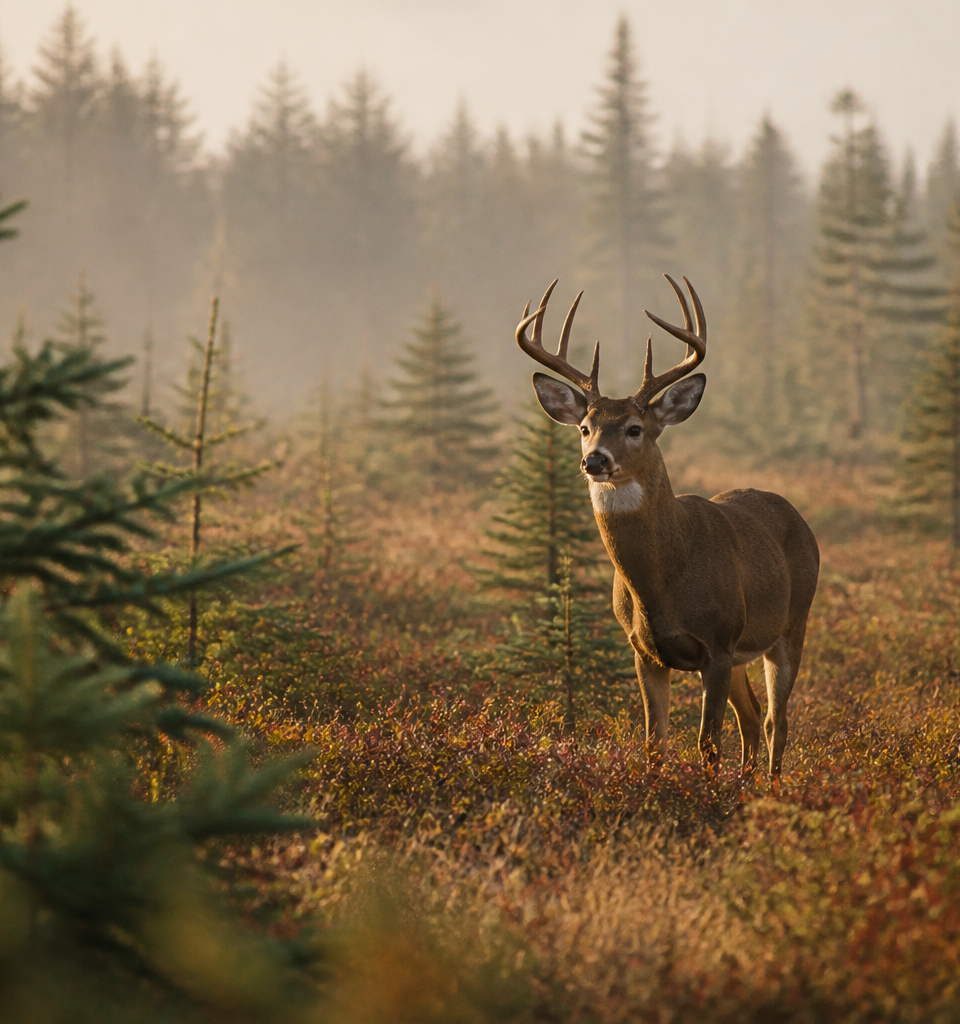
A mature white-tailed deer stands out with a heavy frame, a swollen neck in the fall, and antlers extending well past its ears. In the forests of New Brunswick, adult bucks trade their reddish summer coats for a dense greyish-brown coat as soon as October frosts arrive. While their characteristic white rump and raised tail during flight allow for immediate species recognition, assessing a buck's maturity requires a close look at chest depth and jaw structure.
Maritime weather conditions and harsh winters select for hardy cervids capable of weathering prolonged cold spells. While the province is also renowned for other big game like moose hunting in New Brunswick and Newfoundland, white-tailed deer remain the premier pursuit to test a hunter's patience and fieldcraft within mixed woodlands.
Where to Find Deer in New Brunswick?
Deer are primarily concentrated in the fertile valleys of southern and western New Brunswick, particularly along the Saint John River basin and throughout Carleton, York, and Kings counties. These areas provide an ideal mix of productive farmlands, abandoned orchards, and mature timber stands, offering abundant food sources and prime thermal cover.
Further north and through the central interior, where the boreal forest dominates, deer densities decline due to deeper winter snowpacks. In these zones, deer key in on lowland wetlands, riparian corridors, and mixed softwood stands featuring maple, yellow birch, and cedar browse. Much like what hunters encounter when deer hunting in Quebec: complete guide and tips, proximity between feeding areas and dense spruce or cedar cover is the defining factor in locating productive ground.
Understanding Seasonal Deer Patterns
A deer's daily routine shifts considerably between early autumn, the breeding season, and the onset of winter snow. Early in the season, deer exhibit highly predictable bed-to-feed patterns around dusk and dawn, travelling between secure timber bedding and open clearings rich in grasses or red oak acorns.
By late October, the pre-rut disrupts this regularity as bucks begin marking their territories with ground scrapes and tree rubs. During the peak rut in November, mature bucks cruise actively throughout the day searching for receptive does, throwing typical caution to the wind. As December nears and temperatures plummet, herds congregate to conserve energy and migrate toward traditional winter yards.
When to Hunt Deer in New Brunswick?
The most productive window for tagging a mature buck runs from the first through the third week of November. Daylight movement peaks during this period due to intense rutting activity, greatly increasing your odds of crossing paths with an elusive trophy buck patrolling his territory.
Cold, calm, overcast days following a passing cold front offer prime conditions to get deer on their feet. A light dusting of fresh snow provides an undeniable edge for spotting fresh tracks, assessing local herd density, and stalking quietly through the timber without alerting game.
Locating Deer Transition Corridors
To hunt deer effectively, focus on natural terrain funnels, edges of forest cuts, and vegetation transition zones. Dominant bucks rarely cross wide-open spaces in broad daylight, preferring to skirt timbered ridgelines or travel through concealed draws and low ground.
Scouting should start well before setting up on stand: locate fresh rub lines, active scrapes under overhanging licking branches, and worn trails connecting softwood bedding cover to primary food sources. Topographical map analysis and cellular trail cameras placed at major trail intersections help map local deer movements with precision.
Best Tactics for Fall Deer Hunting
Stationary hunting from elevated treestands or ground blinds remains the most dependable method to outsmart a deer's keen senses. Position your stand downwind of major travel corridors linking bedding areas to clover fields or hardwood beech ridges.
Strategic calling using grunt tubes, snort-wheezes, and rattling antlers delivers strong results in New Brunswick, mirroring tactics detailed in the Saskatchewan deer hunting guide: planning your trip. On damp or windy days, still-hunting slowly and deliberately through hardwood stands allows you to sneak up on bedded or feeding deer along timber edges undetected.
Choosing Your Gear for Mature Deer
Your hunting kit must deliver ballistic accuracy, weather protection, and total silence in changeable maritime conditions. Versatile calibres such as the .308 Winchester, .270 Winchester, or .30-06 Springfield provide ample knockdown power for clean harvests through timber openings or across agricultural field edges.
Choose a quiet, breathable, multi-layered clothing system made of wool or brushed fleece to stay comfortable during long sits in sub-zero temperatures. High-quality binoculars with superior low-light transmission are essential for glassing thick understory at dawn and dusk, when deer blend seamlessly into the autumn woods.
Deer Hunting Regulations in New Brunswick
Deer hunting is governed by distinct Wildlife Management Zones (WMZs) that establish season dates, bag limits, and permitted weapon types. To consult zone maps and acquire required licences, refer directly to the Government of New Brunswick. Non-resident hunters must abide by strict guiding requirements through a licenced guide or registered outfitter.
Wearing solid hunter orange visible from all angles is mandatory for hunter safety in the field. Ethical hunting requires respecting private property boundaries, taking only high-percentage shots, and registering every harvested animal at an official check station without delay. Regulations change annually: always verify official rules before heading out.
Managing Deer Populations and Wintering Yards
Sustaining healthy deer numbers in New Brunswick relies on balanced population management and the protection of traditional winter yards (deer yards). These dense stands of mature cedar and hemlock intercept heavy snow, reducing snow depth on the forest floor and easing herd movement during critical winter months.
Provincial wildlife biologists adjust antlerless deer tag allocations annually to match herd sizes with habitat carrying capacity. By respecting harvest quotas, hunters help preserve genetic vitality and maintain balanced ecosystems where predators and ungulates coexist.
Booking a Deer Outfitter in New Brunswick
Booking a guided hunt with an experienced outfitter maximizes your chances of success while streamlining logistics. Local guides possess intimate knowledge of the land, run trail cameras for months leading up to the season, and maintain stands positioned for prevailing wind directions.
Turning to New Brunswick deer hunting outfitters provides comfortable log cabin accommodations, home-cooked meals, and full game retrieval and processing support. It is the premier way to experience a seamless hunting trip in the Acadian woods.
To find the right outfitter for your goals and organize your next hunt, explore the available listings on MyOutfitters and start planning your New Brunswick hunting trip today.
Frequently asked questions
When is the deer hunting season in New Brunswick?
The white-tailed deer hunting season generally runs from early October to late November, with specific firearm, archery, and crossbow dates set by provincial Wildlife Management Zones.
Where are the highest deer densities found in New Brunswick?
The highest concentrations are located in southern and western New Brunswick, particularly along the Saint John River valley and across Carleton, York, and Kings counties, where mixed woodlots border productive farmlands.
Is a guide mandatory for non-residents hunting deer in New Brunswick?
Yes, non-resident hunters are required by law to hire a licenced New Brunswick guide or book their hunt through an accredited hunting outfitter.
What rifle calibre is ideal for deer hunting in the Acadian forest?
Versatile calibres such as the .308 Winchester, .270 Winchester, and .30-06 Springfield are ideal, delivering flat trajectories and sufficient stopping power in both dense timber and open fields.
What is the best time to hunt a dominant buck during the rut?
The first two weeks of November are the prime time to intercept mature bucks, as heightened breeding instincts drive them to roam actively during daylight hours in search of receptive does.
How do deer survive harsh New Brunswick winters?
Herds congregate in late autumn within mature softwood deer yards—primarily dense cedar and hemlock stands—which block heavy snow accumulation and provide essential emergency browse.
Are trail cameras allowed for deer hunting in New Brunswick?
Yes, trail cameras are legal for scouting before and during the hunting season, provided hunters respect private property access rules and all applicable wildlife guidelines.
What hunter safety clothing is mandatory for deer hunting in New Brunswick?
Hunters using firearms are required to wear solid hunter orange outerwear—including a jacket and cap—that remains clearly visible from all angles while moving and on stand.
Can you harvest an antlerless deer in New Brunswick?
Antlerless deer harvest is strictly regulated through an annual provincial draw for antlerless deer permits, designed to manage local herd sizes sustainably across individual management zones.
Why book a deer hunting trip with a local outfitter?
Booking with an outfitter provides access to managed private leases, pre-scouted treestand setups, experienced guides familiar with local deer movements, and full camp lodging and game care.