Hunting
Deer Hunting in Manitoba: Planning a Successful Hunt
Discover the complete guide to Deer hunting in Manitoba. Explore prairie habitats, rut timing, stand strategies, and outfitter advice for an unforgettable hunt.
Key takeaways
- Rifle hunting runs primarily from late October through late November during the peak of the fall rut.
- Agricultural edges bordering the boreal forest and transitional aspen parklands provide Manitoba's most productive habitats.
- Stationary hunting from tree stands or ground blinds along feeding corridors remains the most proven technique.
- Non-resident hunters must purchase an allocated licence and use the services of a licensed outfitter.
- Pack silent, ultra-insulated clothing to endure long stationary sits in sub-zero prairie temperatures.
Trophy Deer identification and characteristics
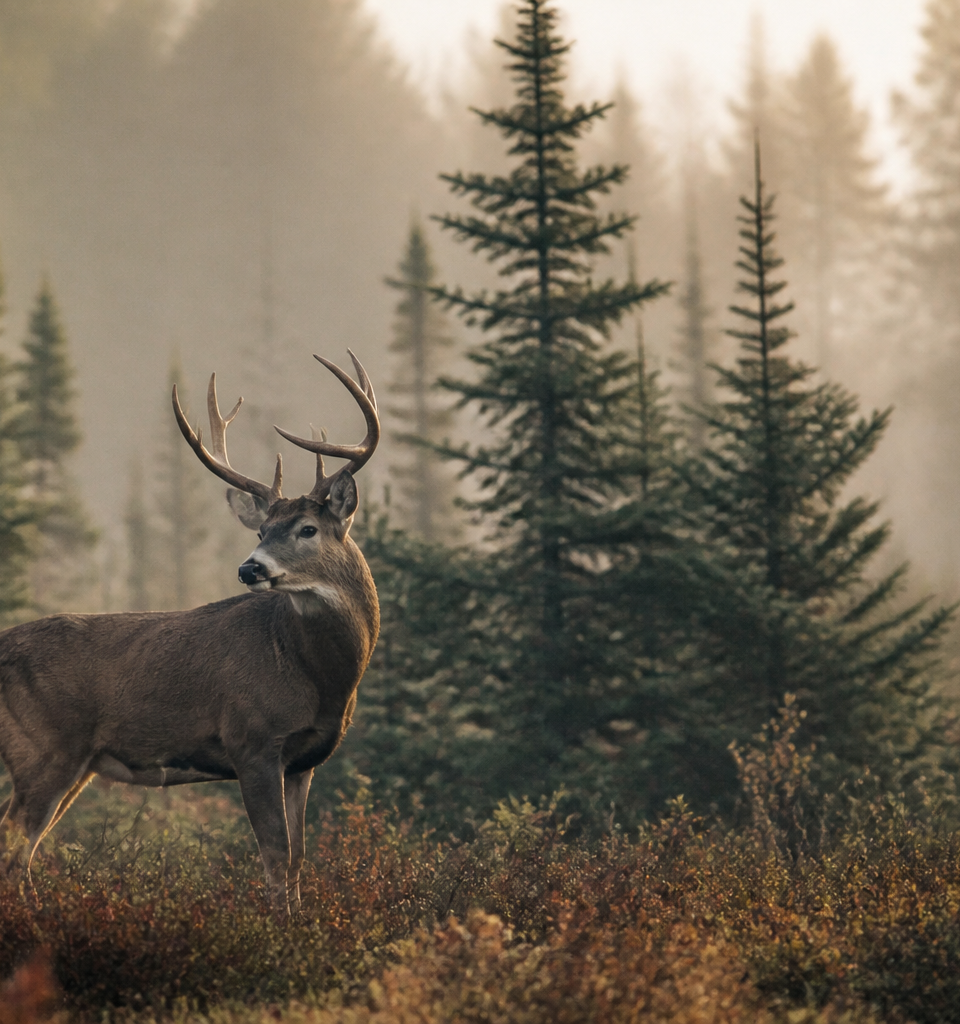
Manitoba whitetail Deer, belonging to the northern subspecies *Odocoileus virginianus borealis*, are renowned for their heavy bodies and massive racks adapted to severe winters. Mature bucks frequently exceed 110 kilograms on the hoof, sporting deep chests and swollen necks during the rut. Their coats transition from a reddish summer tone to a dense, thick greyish-brown with the arrival of early fall frosts.
Anatomically, the antlers of Manitoba bucks often feature heavy main beams with tall, deeply pearled tines. Regional genetics, paired with a rich diet of cereal crops and nutrient-dense browse, allow these bucks to grow exceptional headgear. Assessing muscle development and a buck's blocky, rectangular frame helps hunters determine maturity before taking a prime trophy animal.
Where do Deer live in Manitoba regions?
Deer thrive across the agro-forested mosaic of southern and western Manitoba, particularly throughout the Red River Valley, the Parkland region, and the areas surrounding Riding Mountain. These transition zones, where expansive crop fields border thick stands of trembling aspen and bur oak, provide critical escape cover and abundant food sources.
To the north and east, Deer densities drop as continuous boreal forest takes over. Deep river coulees and valleys, such as those along the Assiniboine and Pembina rivers, create natural travel corridors where whitetails seek shelter from prevailing prairie winds. As detailed in the Saskatchewan Deer Hunting Guide: Plan Your Trip, proximity to canola, alfalfa, and grain crops remains key to locating the highest animal concentrations.
Deer behaviour and rut across the seasons
The seasonal cycle of Manitoba Deer is strictly driven by climate severity and food availability. In late summer and early fall, whitetails follow predictable patterns, feeding in small bachelor groups near open fields at dusk before retreating to dense timber bedding areas before dawn.
The arrival of November sparks the rut, drastically changing the cautious patterns of mature bucks. Driven by the urge to breed, they travel actively throughout the day searching for receptive does, laying down heavy rubs and active scrapes. This intense rutting activity mirrors patterns found across western Canada, as seen in Deer Hunting in Alberta and Saskatchewan.
When to hunt Deer in Manitoba for best success?
The most productive window runs from early to late November, when the rut reaches its peak and snow blankets the ground. Frigid temperatures force whitetails to burn more calories, prompting mature bucks to extend their feeding and cruising activity well into midday.
Cold, crisp days with steady, predictable winds provide ideal conditions to trigger buck movement. A fresh layer of tracking snow highlights active travel routes and enhances visibility in open timber. Early morning hours and the final hour of legal shooting light remain prime times to intercept cruising bucks.
Spotting trophy Deer along forest edges
Locating a trophy Deer requires focusing on pinch points that connect dense bedding cover to agricultural feeding grounds. Wooded draws, grassy fence lines, and terrain depressions serve as natural travel funnels where mature bucks navigate their territory with minimal exposure.
Pre-season scouting with trail cameras and topographical maps helps pinpoint active rub lines and primary scrape areas. Marsh edges and impenetrable brush thickets often function as daytime sanctuaries for older bucks. Patience involves identifying the exact transition line between this heavy cover and high-calorie food sources such as standing corn or harvested grain fields.
Best techniques for hunting Deer from tree stands
Stationary hunting from elevated tree stands or enclosed box blinds is the most effective method for harvesting wary Manitoba Deer. This setup keeps human scent elevated above the forest floor while providing a clear sightline over tall prairie grasses and thick underbrush.
Using grunt tubes to mimic rival bucks or rattling antlers to simulate territorial sparring can produce excellent results during the peak rut. On windy days or when crunchy snow makes quiet walking possible, slow and methodical still-hunting into the wind along timber ridges can also catch a bedded buck off guard. To hunt these vast landscapes effectively, booking through hunting outfitters in Manitoba ensures optimal stand placement and a higher chance of success.
What gear to choose for Deer hunting?
High-performance cold-weather gear is essential for late-season Deer hunting across Manitoba. A layering system combining merino wool base layers, high-loft insulation, and a quiet, windproof outer shell is critical for enduring long sits in temperatures dipping below minus twenty degrees Celsius.
For firearms, versatile calibres with flat trajectories such as .30-06 Springfield, .308 Winchester, or .300 Winchester Magnum deliver clean, ethical shots across prairie field edges exceeding 200 metres. A high-transmission rifle scope, quality binoculars, and chemical warmers or insulated boot blankets complete the essential gear list.
Deer hunting laws and licences in Manitoba
Deer hunting in Manitoba is strictly regulated to sustain provincial herds. Season dates, weapon restrictions, and harvest limits vary by Game Hunting Area (GHA). Non-resident hunters must book through a licensed outfitter to secure an allocated licence tag.
Hunters must wear hunter orange or solid white clothing according to firearm season safety regulations. Always review the official guidelines provided by the Government of Manitoba to verify licensing quotas and game registration rules. Regulations change every year: always verify official rules before heading out.
Management and conservation of wild Deer herds
Conserving Manitoba's whitetail Deer populations relies on biological monitoring to manage the impacts of harsh winters and natural predators. Severe winters with deep snowpack can significantly impact fawn survival and reduce herd numbers.
Provincial wildlife biologists adjust licence allocations and harvest quotas based on aerial surveys and population health assessments. Conserving wooded corridors along agricultural land and monitoring for Chronic Wasting Disease (CWD) are central to protecting the balance of these wildlife habitats.
Why book an outfitter for Deer hunting in Manitoba?
Booking a hunt with a Manitoba outfitter is the most dependable way to target mature whitetail bucks while enjoying seamless logistical support. Outfitters hold exclusive rights to vast private and public hunting concessions managed for low hunting pressure.
To determine the right hunt style for your goals, consider reading Guided, semi-guided, or unguided hunting: which package should you choose for success?. Experienced guides maintain stand locations, manage heated blinds, and take care of field dressing and trophy preparation.
To experience an exceptional hunt across Manitoba's prairie and timber landscapes, explore verified hunting packages on MyOutfitters and start planning your next expedition today.
Frequently asked questions
When is the best time to hunt Deer in Manitoba?
The peak of the rut, typically between November 10 and November 25, offers the best hunting opportunities. Mature bucks travel actively during daylight hours in search of does, significantly increasing sighting opportunities along timber edges.
Where are the biggest Deer found in Manitoba?
The highest densities of trophy whitetails are found in the Parkland region, along the Riding Mountain escarpment, and throughout the Pembina River Valley. These areas feature a prime mix of hardwood timber and nutrient-rich agricultural crops.
Do you need a guide to hunt Deer in Manitoba?
Yes, non-resident hunters are legally required to book their hunt through a licensed Manitoba outfitter and hunt with a certified guide. This regulation ensures sustainable wildlife management and safe hunting practices.
What rifle calibre is recommended for Manitoba Deer?
Calibres such as .308 Winchester, .30-06 Springfield, and .300 Winchester Magnum are ideal for large-bodied Manitoba whitetails. They provide flat trajectories and ample terminal energy for shots across open fields.
What is the average size of a mature buck in Manitoba?
A mature Manitoba buck typically weighs between 90 and 125 kilograms (200 to 275 pounds) on the hoof due to cold-weather adaptations. Their heavy antlers and body mass often surpass whitetails from southern regions.
How should you dress for a November Deer hunt in Manitoba?
Dress in a three-layer system with merino wool base layers, high-loft down or synthetic mid-layers, and a windproof, silent outer shell. Hand warmers and heavily insulated boots are essential for enduring stationary stand sits.
Which hunting technique works best for Deer in Manitoba?
Hunting from enclosed box blinds or elevated tree stands along agricultural and forest transition zones is the most effective method. It minimizes human scent dispersal while covering high-traffic travel corridors.
How many Deer can you harvest per licence in Manitoba?
The standard bag limit is one Deer per licensed hunter per season, subject to the specific regulations of the Game Hunting Area. Non-resident allocations typically target antlered adult bucks.
Is blaze orange required for Deer hunting in Manitoba?
Yes, hunters must wear a solid hunter orange cap and outer garment visible from all directions during big game firearm seasons. Solid white outerwear is also permitted during designated snow conditions.
What budget should you plan for an outfitted Deer hunt in Manitoba?
The cost of an outfitted Deer hunt depends on trip length, lodging style, included meals, and guiding ratios. You can explore available packages and current pricing directly on MyOutfitters.