Fishing
Bluegill Fishing in Ontario: Guide and Tips
Discover how to fish for Bluegill in Ontario: prime habitats, ultralight tactics, peak seasons, and essential tackle to land more panfish.
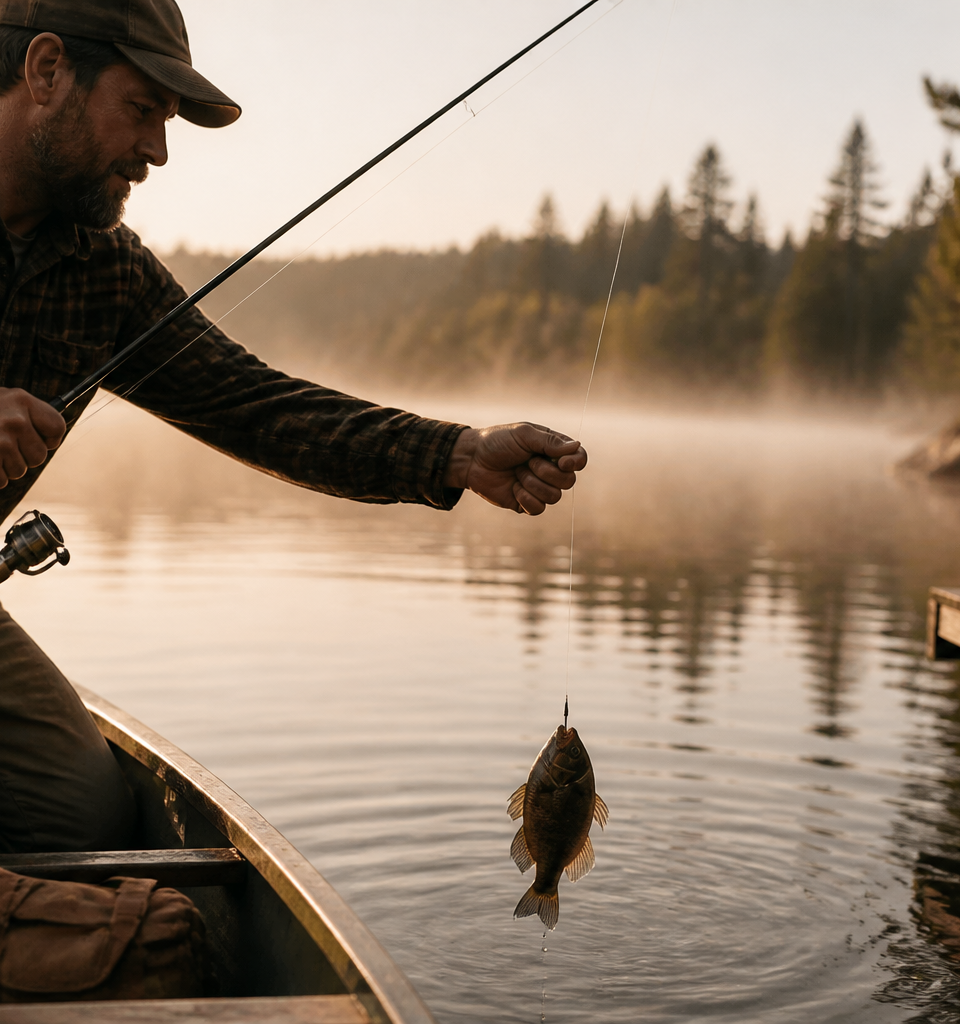
Key takeaways
- Bluegill fishing peaks from late May through October, with prime action during the spring spawn.
- This panfish thrives in shallow bays, dense weedbeds, and submerged timber across sunlit Ontario lakes.
- Micro soft plastics, small earthworms suspended under a light float, and tiny flies remain top-producing presentations.
- Every angler must hold a valid Ontario fishing licence and respect local Fisheries Management Zone harvest limits.
- Spool up with light fluorocarbon line to fool sharp-eyed Bluegill that fight well above their weight class.
How to identify Bluegill
Bluegill are easily identified by their deep, laterally compressed body and a distinct black flap on the rear edge of the gill cover. Known for the metallic blue sheen along the lower jaw and cheek, this popular sunfish displays olive, yellow, and bronze tones across its flanks. Breeding males develop a fiery orange breast that makes them instantly recognizable.
Unlike other members of the sunfish family, the Bluegill has a relatively small mouth adapted for feeding on tiny aquatic prey, along with faint dark vertical bars across its sides. Its dorsal fin is continuous, featuring sharp spiny rays leading into soft rays. Checking for the absence of a red or white border on the black ear flap helps avoid confusion with pumpkinseed, which displays a prominent bright red edge on its opercular flap.
Where to find Bluegill in Ontario
Bluegill are widely distributed across southern, eastern, and central Ontario waters. High concentrations thrive in the Kawartha Lakes, the Bay of Quinte, the St. Lawrence River, the Rideau canal system, and sheltered bays throughout the Great Lakes, including Lake Erie, Lake St. Clair, and Lake Huron. This species prefers warm, clear-to-moderately turbid waters rich in submerged aquatic vegetation.
In these productive ecosystems, Bluegill frequently share habitat with other popular sportfish. Anglers exploring Black Crappie Fishing in Ontario: Complete Guide and Tips often encounter quality Bluegill in the exact same weedbeds. Sandy-gravel bottoms, lily pad fields, submerged timber, and marina docks represent premier holding water across the province.
Bluegill seasonal behaviour and movements
Bluegill movements are heavily influenced by water temperature and day length. In spring, once water temperatures climb to between 18 and 21 degrees Celsius, schools leave their winter depths and push into shallow, sheltered bays. Males fan out circular, saucer-shaped nests in dense colonies, aggressively defending their territory from any nearby intruders.
Once the spawn concludes in early summer, larger specimens migrate toward slightly deeper water, often holding between three and six metres deep along outer weed edges or beneath floating docks. In the fall, they gather in tight schools to feed heavily ahead of winter. Through the hardwater season, Bluegill remain active under the ice, patrolling surviving green weedlines in search of zooplankton and aquatic insect larvae.
Best times to catch Bluegill in Ontario
Late spring through early summer offers the most productive Bluegill fishing in Ontario, as fish congregate in accessible shallow water near shore. Calm, sunny days with stable barometric pressure provide prime conditions for slow, sight-oriented presentations. Early mornings and late afternoons see intense feeding spurts as fish rise to intercept hatching insects at the surface.
Summer delivers non-stop action, especially during midday around shaded cover where Bluegill seek relief from intense sunlight. Ice fishing in winter is another favourite pursuit for panfish enthusiasts, with the best bites typically occurring around dusk over green weed flats. Stable weather patterns consistently trigger strong feeding activity across all seasons.
Locating the best Bluegill fishing spots
To find productive Bluegill water, look for transition zones where thick aquatic vegetation drops into deeper structure. Wind-protected bays, milfoil beds, cabbage patches, and wooden docks are top-priority areas to explore. While probing these structures, you may also come across classic multispecies terrain featured in 10 Walleye Fishing Destinations to Discover in Ontario.
Early in the season, scan shallow sand and gravel flats using polarized sunglasses to spot the distinct crater-like nests of spawning colonies. In midsummer, use a fish finder to locate schools suspended along outside weedlines and submerged humps. Bridges, pilings, and fallen trees also create ideal ambush cover that routinely holds large schools.
Best techniques for catching Bluegill
Float fishing with live bait or small soft plastics remains the most dependable technique for catching Bluegill. A slender, sensitive slip float reveals subtle takes, while a small piece of worm, a maggot, or a micro soft-plastic larva on a 1/32- or 1/64-ounce jig head triggers fast strikes. Work the rig with gentle twitches followed by long pauses to let the bait hang in the strike zone.
Vertical jigging with ultralight tungsten jigs over deep weed edges produces outstanding results in midsummer and throughout the ice-fishing season. Fly anglers can enjoy exciting topwater action using miniature foam poppers or generic mayfly nymphs on a light tippet. Presentation finesse is essential: oversized lures or aggressive retrieves will be ignored by wary, trophy-class fish.
Recommended gear and tackle for Bluegill
An ultralight or light spinning setup provides the ideal balance of sensitivity and fun when targeting Bluegill. A 5-foot-6 to 7-foot graphite rod with a fast action and a soft, forgiving tip casts tiny 1/64- to 1/16-ounce lures with ease. Pair it with a 500- to 1000-size spinning reel spooled with 2- to 4-pound-test monofilament or clear fluorocarbon line.
For terminal tackle, select size 8 to 12 long-shank hooks that allow easy unhooking from the fish's small mouth. Stock your tackle box with micro tungsten jigs, miniature tubes, soft-plastic grubs, and sensitive balsa slip floats. Long-nose forceps or small needle-nose pliers are essential tools for quickly and safely unhooking fish prior to release.
Fishing regulations for Bluegill in Ontario
Bluegill fishing in Ontario is governed by individual Fisheries Management Zones (FMZs), which establish daily catch and possession limits. While panfish limits are generally generous throughout southern and central Ontario, specific waterbodies may enforce special conservation limits to maintain trophy fishery quality. Regulations also depend on whether you fish with a Sport or Conservation fishing licence, as outlined in our guide on Ontario and Quebec Fishing Regulations: Licences and Limits.
To purchase a licence and review provincial rules, visit the Government of Ontario portal. Practice selective harvest by releasing large nesting males to preserve strong genetics on the spawning beds. Fishing regulations are updated annually; always verify current zone limits with the Ontario Ministry of Natural Resources before heading out on the water.
Ecological role and conservation of Bluegill
Bluegill play a vital role in Ontario's freshwater food webs. By consuming substantial volumes of aquatic insects, small crustaceans, and fish fry, they help regulate invertebrate populations. In turn, they serve as a critical forage base for top predators including Northern Pike, Largemouth Bass, Muskellunge, and Walleye.
Heavy harvesting of large, dominant bull males can harm population structure by encouraging early maturation of smaller, stunted fish. A conservation-minded approach involves harvesting modest numbers of medium-sized fish for a shore lunch while releasing larger specimens. Protecting natural weedbeds and preserving shoreline water quality will keep Ontario's panfish populations healthy for future seasons.
Booking a Bluegill fishing trip in Ontario
Booking a stay at an established lodge or camp is one of the best ways to enjoy a rewarding panfish adventure with family or friends. Reputable Ontario fishing outfitters offer access to prime waters, reliable boats, local guide knowledge, and comfortable waterfront accommodations. Local guides know the precise weedlines and sheltered bays where trophy-sized fish school up.
Guided packages eliminate the guesswork on large, unfamiliar lakes. A seasoned guide can show you proper boat positioning, seasonal micro-lure choices, and productive structures. Bluegill fishing provides fast-paced action ideal for introducing new anglers to the sport while taking in Ontario's scenic waterways.
Explore available outfitter packages and start planning your next Ontario fishing trip on MyOutfitters.
Frequently asked questions
When does Bluegill spawning begin in Ontario?
Bluegill spawning in Ontario typically begins between late May and mid-June when shallow bay water temperatures reach 18 to 21 degrees Celsius. Over several weeks, males fiercely guard circular nest colonies fanned out in shallow gravel or sand near shore.
Where can you find Bluegill during the summer in Ontario lakes?
In midsummer, Bluegill hold along deep outside weed edges, around sunken timber, and under shaded boat docks. Larger fish often move to depths between three and six metres to locate cooler water and ambush passing prey.
What is the best bait for catching Bluegill?
A small piece of nightcrawler or garden worm on a fine-wire hook is the most reliable live bait. Waxworms, maggots, and one-inch soft-plastic micro jigs suspended below a sensitive float also trigger aggressive bites.
What line weight should you use for Bluegill fishing?
Use 2- to 4-pound-test monofilament or fluorocarbon line for ultralight Bluegill fishing. Clear, thin line avoids spooking keen-eyed fish and allows you to cast tiny lures weighing under two grams effectively.
Do you need a licence to fish for Bluegill in Ontario?
Yes, anglers aged 18 and older need a valid Ontario fishing licence accompanied by an Outdoors Card. Canadian residents under 18 or 65 and older generally fish under deemed licence provisions.
How do you tell a Bluegill apart from a Pumpkinseed?
A Bluegill has an entirely black opercular ear flap, whereas a pumpkinseed features a distinct bright red or orange border on the tip of the flap. Bluegill also have smaller mouths and faint vertical barring on their sides.
Can you ice fish for Bluegill in Ontario?
Yes, hardwater fishing for Bluegill is very popular throughout southern and eastern Ontario lakes. Anglers use tiny tungsten teardrop jigs tipped with live larvae or micro plastics over healthy green weedbeds, with late afternoon offering prime action.
How many Bluegill can you keep per day in Ontario?
Daily catch and possession limits vary by Fisheries Management Zone, typically ranging between 25 and 50 sunfish under a standard Sport Fishing Licence. Always check the current Ontario Fishing Regulations Summary for zone-specific exceptions.
What rod setup is recommended for Bluegill?
A 6- to 7-foot ultralight graphite spinning rod with a fast action and sensitive tip is ideal. Matched with a 1000-size reel and light line, it delivers pinpoint casting accuracy with micro lures and cushions panfish headshakes.
Is Bluegill good to eat?
Bluegill is an excellent table fish featuring firm, sweet, and flaky white fillets. While small, they are delicious pan-fried in butter or lightly breaded. Keep medium-sized fish for the pan and release larger breeding stock.