Fishing
Sea-Run Brook Trout Fishing in Quebec: The Ultimate Guide
Discover the secrets of fishing for anadromous brook trout in Quebec: coastal estuaries, tidal dynamics, fly-fishing techniques, and guided outfitter trips.
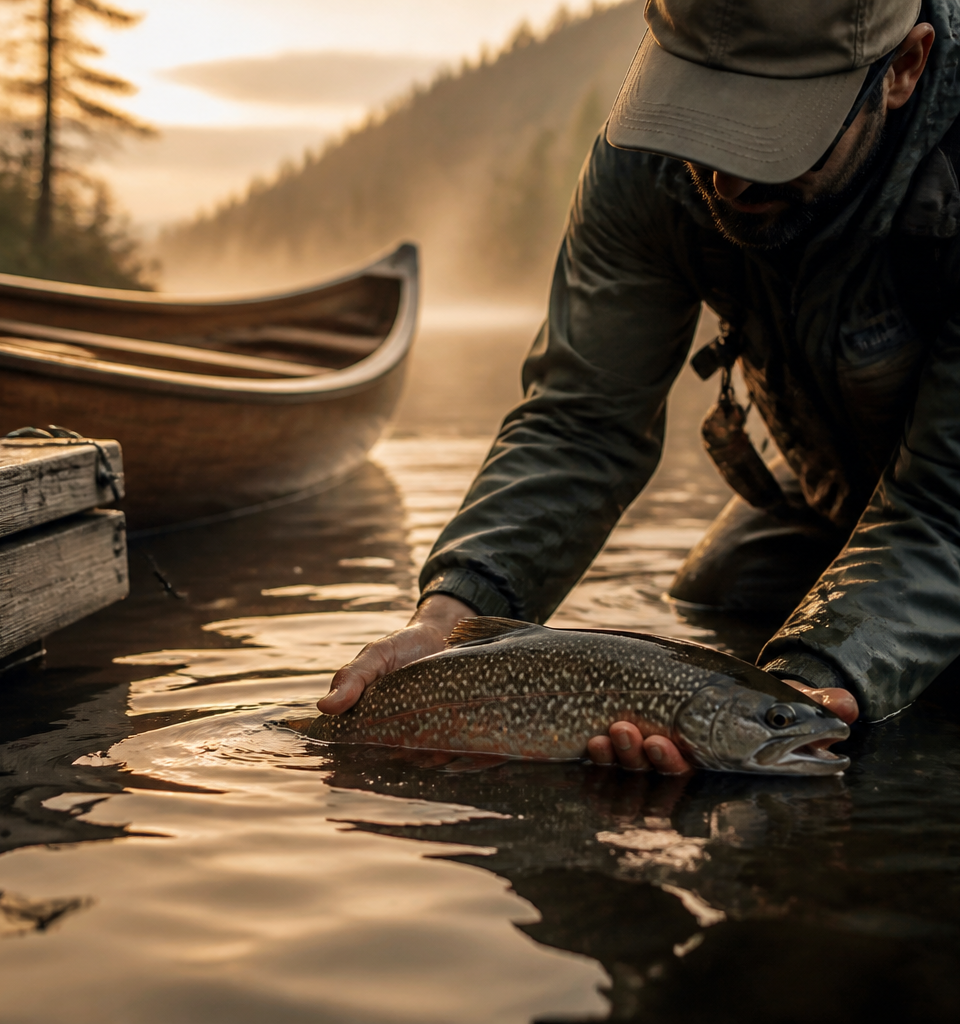
Species overview and identification
Quebec's sea-run brook trout—often referred to locally as sea trout or *salmofont*—is not a genetically distinct species, but rather the anadromous form of native brook trout (*Salvelinus fontinalis*). Unlike river-resident brookies that spend their entire life cycle in freshwater, these fish migrate into brackish estuaries and saltwater bays to feed aggressively. This marine feeding migration dramatically transforms their physiology and appearance, giving them exceptional stamina and a striking silver sheen.
While living in saltwater or fresh out of the tide, sea-run brook trout display a metallic blue-green or steel-grey back, bright chrome-silver flanks, and an immaculate white belly. The classic vermiculations and haloed spots typical of freshwater brook trout fade beneath this silvery coat, though faint pale spots or subtle red flecks may still show through. As the season progresses and the fish push further upstream to spawn, their dark freshwater pigmentation returns, revealing rich olive backs and vibrant fiery-orange bellies.
Morphologically, sea trout feature a stocky, muscular build with a notably thick caudal peduncle. Their tail fin is nearly square with only a slight notch, and the leading edges of their lower fins retain the hallmark crisp white stripe backed by a black accent line. Thanks to nutrient-dense marine prey, anadromous specimens regularly reach sizes far exceeding those of purely resident stream-dwelling brook trout.
Habitat and geographic distribution
In Quebec, sea-run brook trout inhabit river systems directly connected to the maritime St. Lawrence, the estuary, and the Gulf. Renowned populations thrive along the North Shore (Côte-Nord), throughout the Lower St. Lawrence (Bas-Saint-Laurent), across the Gaspé Peninsula (Gaspésie), and into the Saguenay Fjord. Selected coastal rivers on Anticosti Island and in northern maritime zones also host remarkable runs.
Estuarine transition zones represent the critical hub of their life cycle. Brackish river mouths, intertidal mudflats, surf-beaten sandbars, and rocky tidal points serve as prime hunting grounds. Here, sea trout take advantage of nutrient-rich mixing zones teeming with small baitfish and marine invertebrates.
Once in river systems, anadromous brook trout stage in deep, cold pools, fast tailouts below rapids, and around heavy structure. They seek refuge beneath undercut banks, overhanging vegetation, and logjams to stay protected from predators while conserving energy ahead of the autumn spawning run.
Behaviour and seasonal patterns
Sea trout movements are closely tied to seasonal rhythms and the daily pulse of the tides. In spring, typically following ice-out between May and June, post-spawn kelts and young fish drop down into coastal bays and estuaries. They capitalize on an abundance of high-calorie forage—including sand lance, capelin, rainbow smelt, and small crustaceans—to pack on weight quickly.
Upstream migration back into freshwater begins in mid-summer, peaking between late July and early September depending on the region. Unlike Atlantic salmon, sea-run brook trout continue to feed actively throughout much of their freshwater journey, making them exceptionally responsive to well-presented flies and lures.
Tidal movements govern their daily foraging behavior in estuaries. On a rising tide, sea trout push into shallow flats and tidal lagoons to ambush prey stranded by incoming water. On a falling tide, they drop back into deeper drop-offs and main channels, holding in the current to intercept bait flushed out of the shallows.
Best seasons and conditions
Late spring and early summer offer outstanding fishing in coastal areas and river mouths, when trout aggressively target roaming schools of sand lance. Mid-summer through September is prime time for river fishing, as fresh runs of chrome trout gather in river pools.
Weather conditions strongly influence fishing success. Overcast skies, light drizzle, and choppy water surfaces consistently produce the best action. Low-light periods give these wary predators confidence, triggering aggressive feeding runs around sandy points and channel drop-offs.
In flowing water, moderate summer rain events that raise river levels encourage fresh pods of trout to push inland from the estuary. As the river peaks and begins to clear, anglers encounter prime conditions to hook trophy-calibre specimens.
Where and how to find it
To locate sea trout along the coast, scout the shoreline at low tide. Identify tidal channels, rocky headlands creating current seams, and sandbars rimmed with eelgrass beds. These features channel baitfish and create ideal ambush points.
In rivers, pay special attention to transition zones:
- The heads and tails of deep pools in coastal and salmon rivers.
- Current seams beneath riffles and soft pockets behind large boulders.
- Confluences where cold tributary streams enter warmer mainstem rivers during mid-summer heat.
- Well-oxygenated gravel runs situated just above rapids.
Stealth is paramount. Whether wading coastal flats or approaching a riverbank, step carefully to avoid casting heavy shadows or sending vibrations through crystal-clear water.
Recommended techniques and strategies
Fly fishing is by far the most popular and sporting method for targeting sea-run brook trout in Quebec. In estuaries and coastal flats, stripping long baitfish streamers with erratic, darting motions effectively triggers strikes by imitating fleeing sand lance or capelin.
In rivers, nymphing with strike indicators or swinging classic wet flies on light tippets yields steady results in clear, low-water conditions. Traditional Quebec wet flies swung across current seams effectively cover holding water and draw reaction strikes from resting fish.
Topwater fishing with large hair bugs, Muddler Minnows, or deer-hair bombers produces explosive surface takes. Skittering a bushy dry fly across the surface at dusk often coaxes the largest anadromous brookies into aggressive topwater strikes.
Equipment and gear
For fly fishing estuaries and windswept coastal rivers, a 9- to 10-foot, 6- to 8-weight fly rod delivers the backbone needed to cast bulky streamers through coastal breezes and handle strong fish in heavy currents. Pair your rod with a durable, anodized fly reel featuring a sealed drag to withstand saltwater corrosion.
Pack a versatile floating line for river pools and a clear intermediate or sink-tip line to present streamers down into tidal currents and deep runs. Build sturdy yet stealthy leaders, finishing with abrasion-resistant fluorocarbon tippet rated from 6 to 10 lb.
Essential fly patterns for Quebec waters include:
- Baitfish streamers: Mickey Finn, Black Ghost, Clouser Deep Minnow, and sand lance patterns in chartreuse, blue, and white.
- Dry flies and surface attractors: Muddler Minnow, Bombers, and large caddis/sedge imitations.
- Weighted nymphs: Prince Nymph, Copper John, and brackish scud or shrimp patterns.
- Reliable wading gear, including breathable waders, a secure wading belt, and wading boots with studded felt or sticky rubber soles for slick rocks.
Regulations, licences and ethical practices
Fishing for sea-run brook trout in Quebec is subject to strict provincial and river-specific regulations. On designated Atlantic salmon rivers, fly-fishing-only rules strictly apply, and tackle restrictions may mandate single barbless hooks.
Every angler must hold a valid Quebec sport fishing licence. If you fish a designated salmon river or a controlled harvesting zone (ZEC), specific day-use access fees and mandatory daily catch registration apply. For complete regional quota limits, season dates, and waterbody regulations, always consult the Government of Quebec (hunting and fishing).
Catch-and-release best practices are critical for preserving native sea trout runs. Keep the fish in the water while unhooking, use a knotless rubber landing net, and avoid lifting heavy fish out of the water for prolonged photo sessions. Regulations change every year; always verify the official rules before heading out.
Conservation, population and ecosystem role
Anadromous brook trout are vital ecological links between maritime and freshwater habitats in Quebec. By foraging in nutrient-dense marine waters and returning inland to spawn, they transport crucial marine nutrients into freshwater ecosystems, enriching the broader river food web.
These unique populations face ongoing threats, including warming water temperatures, siltation of clean spawning gravels, migration barriers, and localized angling pressure along accessible coastal corridors.
Conservation initiatives led by watershed organizations, ZEC associations, and outfitters focus on habitat restoration and tracking migratory routes. By practicing selective harvest and treating every fish with care, anglers directly help preserve this iconic wild game fish for generations to come.
Planning a guided trip or outfitter stay
Pursuing sea-run brook trout in Quebec's remote coastal regions is a bucket-list Canadian angling adventure best experienced alongside local professionals. Established outfitters along the North Shore, Gaspé Peninsula, and Saguenay Fjord possess invaluable knowledge of tidal schedules, local weather patterns, and access to productive, secluded pools.
A guided outfitter stay provides the benefit of seasoned guides who know how to time tides, read estuarine currents, and track the timing of river runs. Guests enjoy comfortable waterside lodging, home-style meals, and customized technical coaching to refine casting and fly presentation.
Whether you seek the thrill of strip-setting into a chrome brookie on a tidal flat or watching a heavy sea trout rise to a waking dry fly on a wilderness river, a guided trip ensures a safe and rewarding adventure. Visit MyOutfitters to explore vetted destinations, compare packages, and book your next Quebec fishing trip.
Frequently asked questions
What is the biological difference between a resident brook trout and a sea-run brook trout?
They are the exact same species (*Salvelinus fontinalis*). The sea-run brook trout is simply an anadromous individual that migrates into coastal estuaries to feed, which turns its skin bright silver and accelerates its growth rate due to rich marine prey.
What is the best tidal stage for fishing coastal estuaries?
The initial incoming (rising) tide and the start of the outgoing (falling) tide are the two most productive windows. Rising water pushes trout onto shallow flats in pursuit of baitfish, while falling water concentrates forage in outgoing channels.
Which fly line is best suited for fishing coastal Quebec estuaries?
A short-belly floating line or a clear intermediate sinking line is ideal. It helps punch through steady coastal winds while keeping streamers swimming in the strike zone, typically 1 to 4 feet beneath the surface.
Which fly patterns best imitate sea trout prey in estuaries?
Slender baitfish patterns mimicking sand lance and capelin work best. Clouser Minnows, Magog Smelts, Mickey Finns, and Black Ghosts tied on corrosion-resistant saltwater hooks produce reliable strikes across North Shore and Gaspé estuaries.
Should I rinse my fishing tackle after fishing tidal waters?
Yes, always thoroughly rinse reels, rod guides, tools, and flies with warm fresh water after every outing in saltwater or brackish estuaries to prevent corrosion and protect sensitive reel bearings.
Can I fish for sea-run brook trout with spinning tackle in Quebec?
Yes, but only in waters where conventional spinning gear is legally permitted. Many coastal rivers are classified as Atlantic salmon rivers where fly-fishing-only regulations apply. Always verify local regulations before using spoons or spinners.
What size do sea-run brook trout typically reach in Quebec?
Mature sea trout commonly range from 14 to 22 inches (35 to 55 cm) and weigh between 2 and 5 pounds. In forage-rich river systems, trophy specimens can exceed 6 to 8 pounds.
How should I handle and release a sea trout caught in an estuary?
Keep the fish submerged in a knotless rubber net, remove the hook with forceps without squeezing the fish's abdomen, and gently face it into the current until it regains strength and swims away powerfully on its own.
Are breathable waders required for coastal sea trout fishing?
Breathable waders paired with a snug wading belt are strongly recommended. Maritime water temperatures in Quebec remain cold all summer, and quality waders protect against hypothermia while allowing you to safely wade sand flats and rocky points.
Why book an outfitter for a sea-run brook trout trip in Quebec?
Outfitters provide safe access to prime, often remote waters, boats equipped for tidal conditions, and experienced local guides who understand tidal timing and fish migrations, maximizing your chances of a successful and stress-free trip.