Fishing
Brook Trout: The Hidden Face of Wild Abitibi
Explore brook trout fishing in Abitibi-Témiscamingue. Discover an intimate adventure on remote wild lakes, far from the busy crowds of large reservoirs.
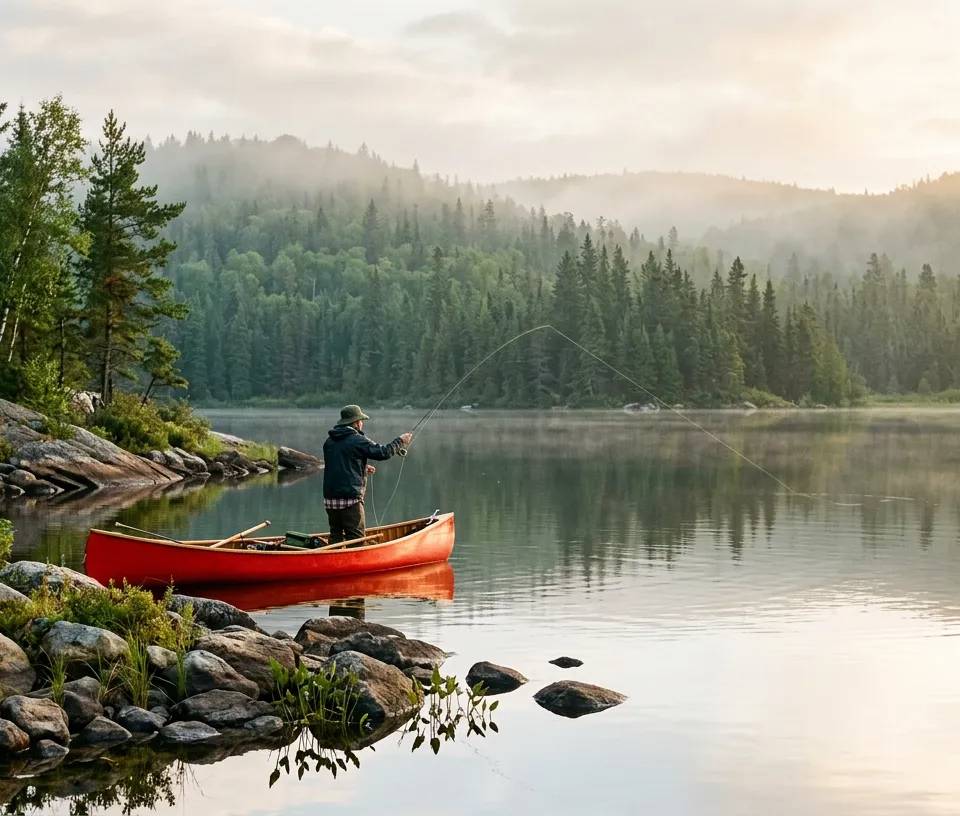
Abitibi-Témiscamingue is often celebrated for its massive reservoirs and trophy walleye, but for the angler seeking quietude, the region’s true gems are its remote brook trout lakes. Tucked away in the dense boreal forest, these headwater lakes offer a more intimate and technical fishing experience than the wind-swept northern seas. Accessing these hidden spots through a professional outfitter ensures you are fishing waters with minimal pressure, where the native truite mouchetée thrives in pristine conditions.
The Allure of Headwater Lakes
These small, high-altitude lakes are fed by cold underground springs, creating the perfect thermal refuge for brook trout even during the height of summer. The landscape here is dramatically different from the flat lowlands; expect rocky outcrops, steep shorelines, and water so clear you can often see the fish strike your lure. Because these lakes are smaller, they warm up and cool down faster, dictating a specific rhythm to the fishing day that rewards those who pay attention to the environment.
Essential Tactics for Boreal Trout
Successful fishing in the Abitibi backcountry requires a mix of tradition and finesse. The trout here are wild and can be surprisingly selective based on the daily hatch or water temperature.
- Spring Surface Action. Shortly after ice-out, trout cruise the shorelines. This is prime time for fly fishermen using streamers or bucktails to mimic small minnows.
- Summer Trolling. As the sun strengthens, fish head for the spring holes. A slow troll with a light spoon and a trailing worm harness is a proven method to trigger a strike from deeper dwellers.
- Stealth and Silence. In small wild lakes, sound travels fast underwater. Using an electric motor or simply paddling quietly is often the difference between a full creel and a quiet day.
A Sanctuary of Silence
Beyond the fishing, the appeal of an Abitibi trout outfitter lies in the profound isolation. Many of these camps are located at the end of long logging roads, far from cellular service and city lights. The nights are punctuated by the call of the loon, and the days are spent in a landscape that feels unchanged for centuries. It is an ideal setting for families or small groups of friends who value the quality of the surroundings as much as the weight of the catch.
How to Book Your Wilderness Retreat
When planning your trip, look for outfitters with exclusive rights to multiple small lakes. This allows you to rotate between different spots, ensuring the fish stay active. Ask your host about the accessibility of the lakes; some may require a short hike or a specialized vehicle, which adds to the adventure. You can browse specialized lodges on MyOutfitters.ca to find the right balance of comfort and ruggedness. Booking early is recommended, as these intimate operations have limited capacity to maintain the quality of the wilderness experience.
Frequently asked questions
What is the best time to fish for brook trout in Abitibi?
Early June is ideal just after ice-out when trout are near the surface, as well as September when the water temperatures begin to drop again.
Do I need special equipment for these small lakes?
A light action spinning rod or a fly rod (4 or 5 weight) is perfect for maximizing the feel and fun on these calm, smaller waters.
Are the trout lakes easily accessible?
Some are accessible by car, but the best ones often require a short portage or the use of an ATV provided by the outfitter.
Is catch and release mandatory?
It depends on the outfitter and zone regulations, but releasing larger specimens is strongly encouraged to ensure long-term conservation.
Are there other species in these lakes?
Often, these headwater lakes are inhabited exclusively by brook trout, although some may also contain white suckers.