Fishing
First family fishing trip: the plan that works
How to choose the outfitter, species and length for a first successful fishing trip with kids — no stress, no complicated gear.
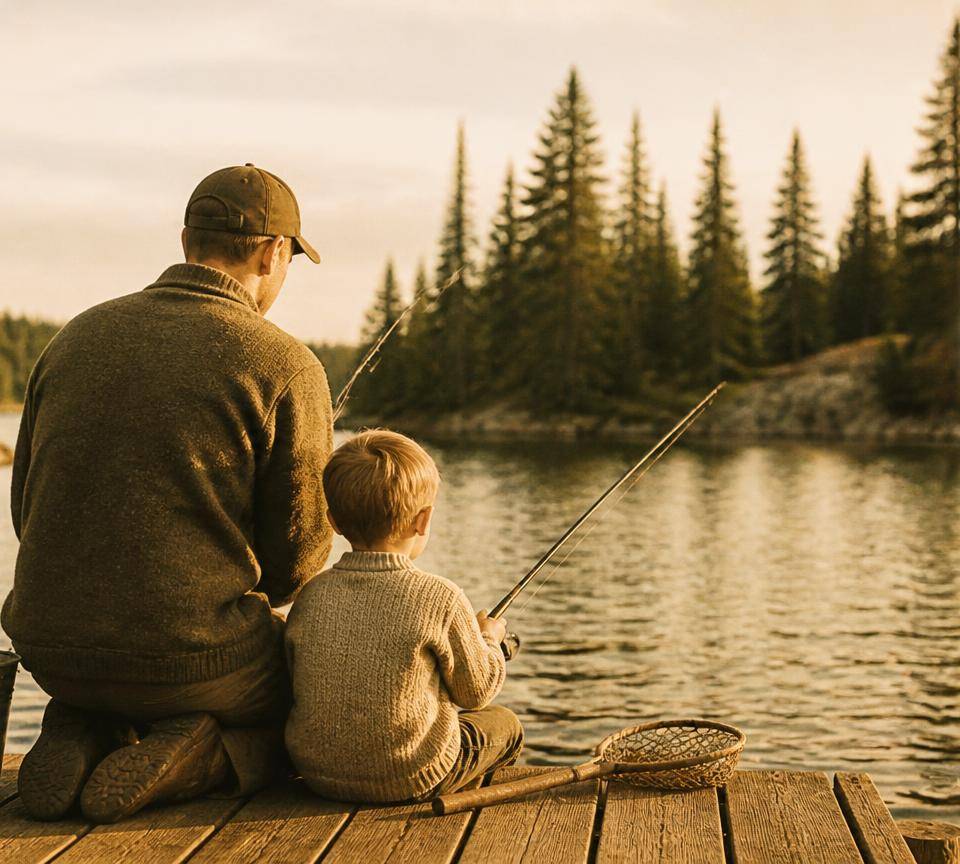
A first family fishing trip is not judged by the weight of the catch, but by one question: do the kids want to go back? Here is a simple, tested and repeatable plan.
Pick the right species
Aim for action, not trophies. Perch, sunfish and stocked brook trout deliver frequent bites, which is exactly what a child needs. Walleye and pike require patience and long trolling passes: save them for later.
Pick the right outfitter
Five criteria make all the difference:
1. Drive time. Under three hours for a first trip. A child who is already tired on arrival starts at a disadvantage. 2. A small lake near the cabin. Fishing off the dock or five minutes away by boat changes everything: you can head back whenever you want. 3. Amenities. Electricity, drinking water, a full bathroom and an equipped kitchen cut the logistical stress. 4. Backup activities. A trail, a beach, a canoe, a campfire, wildlife to watch — the weather will eventually force you to improvise. 5. Gear on site. Many outfitters lend or rent kid-sized rods and life jackets.
The right trip length
Two nights is enough for a first attempt. Three days of intensive fishing is one day too many. Favour a self-catering cabin: you control meal and nap times, which matters more than any technique.
A typical day
- 7 to 9 a.m. Dock fishing or a short boat outing, while fish are active and the water is calm.
- 9:30 a.m. Late breakfast and a break.
- 11 a.m. to 3 p.m. Dry-land activities: trail, swimming, games, nap.
- 5 to 7 p.m. Second outing, often the one that produces the best fish.
- 7:30 p.m. Cook the catch, campfire, early bedtime.
Two short outings beat one long day. Set the end of the outing in advance: "we head back after five fish or in one hour" prevents a lot of tears.
Minimum gear
A short 5 ft rod with a spincast reel, 6 lb mono, size 8 hooks, a few floats, worms, a landing net and a bucket. Nothing more. A float going under is the best teaching tool ever invented.
Safety, without drama
A properly fitted life jacket at all times on the water and on the dock, sunscreen, child-safe insect repellent, a hat, glasses to guard against hooks, and a first aid kit. Explain one rule per outing rather than ten instructions on arrival.
Getting kids involved
Give them roles: ring the departure bell, measure the fish, keep the logbook, rinse the rods, pick the lure colour. Take photos and let them decide which fish go back. Conservation is better learned by doing than by lecture.
And if nothing bites?
It will happen. Have a plan B before you leave: wildlife watching, gathering firewood, cooking dinner over the fire, card games. The memory of an outfitter stay is built as much around the fire as on the water.
To get started, browse family experiences at outfitters or brook trout outfitters, ideal for a first trip.
Frequently asked questions
Which species should a first trip with kids target?
Perch, sunfish or stocked brook trout: frequent bites and fishing possible right off the dock.
How long should a first trip last?
Two nights is enough. Two short outings a day, early morning and late afternoon, beat one long day on the water.
Do we need to bring our own gear?
Not necessarily: many outfitters lend or rent kid-sized rods and life jackets. A 5 ft rod, 6 lb mono and worms are enough.
Do children need a fishing licence?
Rules vary by province: minors are often exempt or covered by an adult's licence. Confirm with the province and the outfitter.
What activities should we plan if it rains?
Trails, wildlife watching, board games, campfire cooking and swimming when possible. Choose an outfitter that offers more than fishing.