Fishing
Atlantic Salmon Strategies: Reading Pools and Low-Water Wet Flies
Master the art of reading crystal-clear salmon pools and selecting small wet flies for challenging late-summer runs on Canada's premier Atlantic salmon rivers.
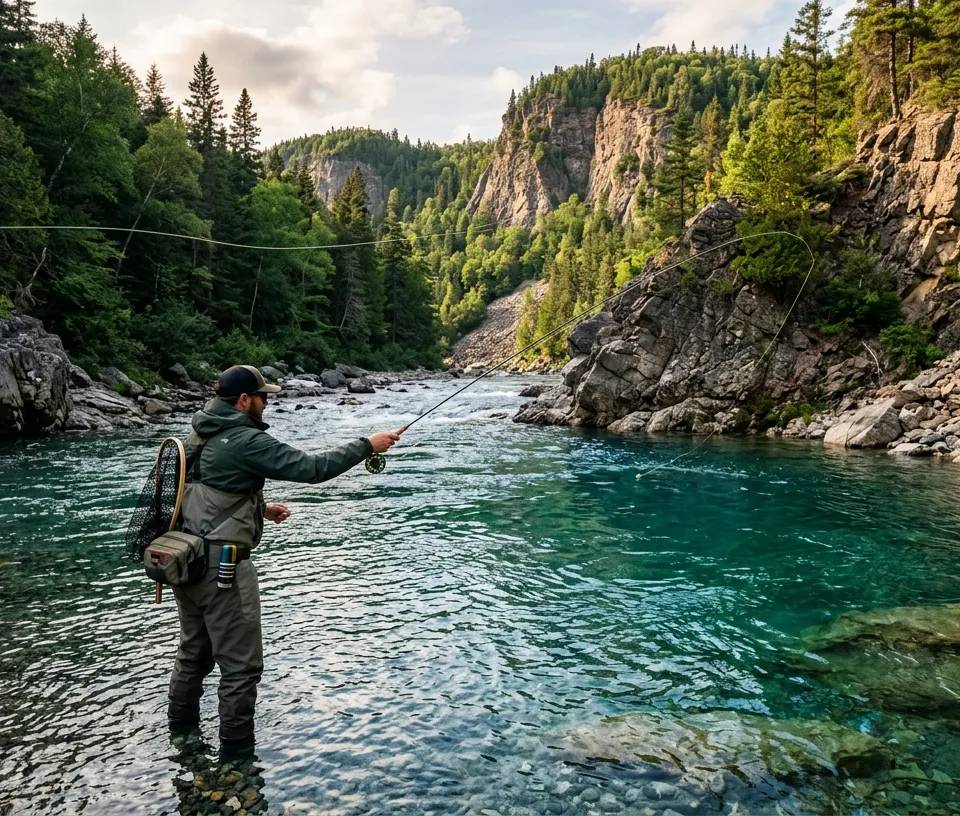
Targeting Atlantic salmon during the late-summer doldrums is a test of patience and technical precision. On iconic rivers like the Bonaventure or the Miramichi, falling water levels and rising temperatures force anglers to rethink their entire approach. Success in these conditions relies on your ability to spot resting fish in transparent pools and present tiny, sparse wet flies that won't spook a wary run.
Reading the Low-Water Pool
As water levels drop, Atlantic salmon migrate toward areas with the highest dissolved oxygen. The deep, slow bellies of pools that held fish in June become stagnant, pushing salmon toward the faster water. Focus your efforts on the 'chute' or the very head of the pool where the water first enters.
- Current Seams. Look for the line where fast water meets slower eddies. Salmon often sit right on this edge.
- Boulder Gardens. In clear water, salmon seek the shade and broken surface provided by large submerged rocks.
- The Tail-out. During early morning or late evening, fish may move to the very end of the pool. Be extremely cautious here, as your approach can easily be detected.
Small Flies for Big Results
When the river is low and clear, 'less is more' is the guiding principle for fly selection. Heavy dressings and large hooks are out; sparse, small patterns are in. Sizes 10, 12, and even 14 become the standard. These smaller profiles mimic the natural drift of insects and appear less intrusive to a salmon that has been in the river for weeks.
- Sparse Dressings. A fly with only a few strands of hair or a thin tinsel body allows light to pass through, creating a more life-like silhouette.
- Classic Patterns. Time-tested flies like the Green Butt Cascades or Undertakers remain effective when scaled down to micro-sizes.
- Hook Weight. Use fine-wire hooks to ensure the fly stays in the upper water column where salmon are looking.
Stealth and Presentation
In late summer, your casting technique is just as important as your fly choice. A heavy line landing over a fish's head will end the session instantly. Long leaders, often exceeding 12 feet, with thin fluorocarbon or monofilament tippets, are necessary to maintain a stealthy profile.
- The Reach Cast. Use this to create a natural drift without immediate line tension.
- Downstream Mending. To speed up a fly in slow water or slow it down in a rapid run, mending is your primary tool for controlling the swing speed.
Booking Your Salmon Expedition
Navigating the complex regulations and access rights of Canada's premier salmon rivers is best handled by a professional outfitter. Outfitters provide more than just a lodge; they offer access to private or restricted pools and the invaluable knowledge of local guides who live on the river. A guide's ability to spot a 'ghost' salmon in the rocks can be the difference between a blank day and the catch of a lifetime. Browse our directory to find outfitters across Atlantic Canada and Quebec that specialize in fly-only salmon adventures.
Frequently asked questions
What is the best fly size for low-water conditions?
During low-water periods, prefer sizes 10, 12, and 14. Flies should be tied very sparsely to appear natural and non-threatening in clear water.
Does fly color really matter for Atlantic salmon?
Yes, on sunny days with clear water, dark or natural colors like black, blue, or brown work best. On overcast days, a touch of brighter color can be effective.
Why use a long leader in late summer?
A leader of 12 to 15 feet keeps the colored fly line away from the salmon's field of vision. This prevents spooking nervous fish in shallow, clear pools.
Where do salmon hold when the water is warm?
They congregate where oxygen is abundant, typically in the fast current at the head of pools or near the mouths of cooler tributary streams.
Should I fish with a floating or sinking line?
A floating line is almost always preferred in low water to ensure a delicate presentation. it allows better control of the wet fly's swing near the surface.