Fishing
Ice fishing at an outfitter: the winter trip guide
Heated huts, groomed trails, ice safety and winter species: everything to know before booking an ice fishing stay at an outfitter.
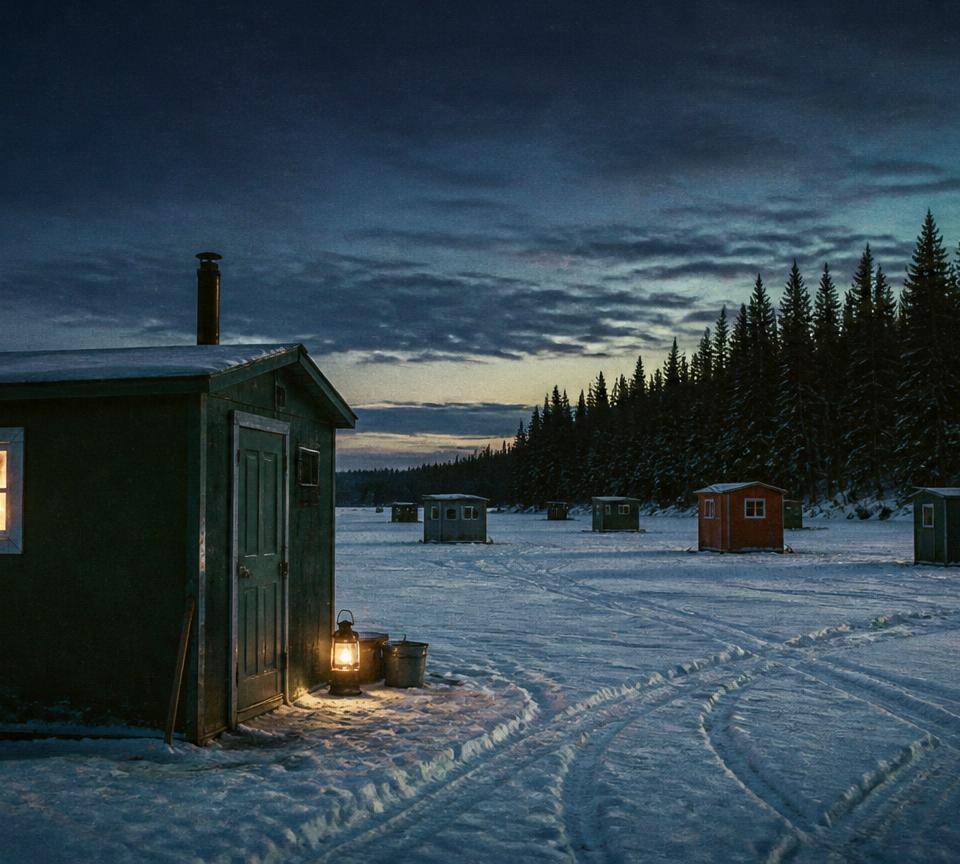
Ice fishing has changed. Where you once had to drill your own holes, freeze and go home empty-handed, outfitters now offer heated huts, pre-drilled holes, groomed trails and sometimes a cabin a few metres from your line. It has become the easiest way to introduce a beginner to fishing.
What a typical stay includes
- A heated hut for 2 to 8 people, with a bench, propane heater and two to six pre-drilled holes.
- Transport on the ice by snowmobile, tracked vehicle or a trail you can drive, depending on the territory.
- Tip-ups and sometimes live bait, ice and fish cleaning.
- Lodging, from a family cabin to a lodge with meals, often with sauna or hot tub access after the day.
Always confirm four things before booking: number of holes, availability of toilets, distance from parking to the hut, and whether live bait is provided or legal in that province.
Winter species
Walleye remains the most sought-after catch. It bites mainly at dawn and dusk in 4 to 8 metres, often near a point or plateau.
Perch gives the non-stop action kids love: a small jig, a grub, 3 to 6 metres of water.
Northern pike hits tip-ups baited with live bait, closer to weed beds.
Lake trout and charr require deep lakes and finer vertical fishing, often at 15 metres or more.
Smelt and tomcod drive very affordable family trips on tidal rivers.
Core techniques
Two approaches pair well: a tip-up set with live bait that works for you, plus a short jigging rod in hand to fish actively. Change your depth every few minutes — most bites come within a metre of the bottom, but walleye sometimes rise higher at dusk. A sonar or underwater camera dramatically shortens the learning curve.
Safety first
- Never venture onto ice the outfitter has not validated; they measure thickness and mark the trails.
- Dress in layers, with insulated boots and spare mitts.
- Keep a charged phone and tell someone your return time.
- Watch for carbon monoxide: every heated hut must be ventilated.
- Carry a minimal kit: ice cleats, rope, dry clothes, headlamp.
When to go
The window usually opens in late December or January once the ice is safe, and closes in March. Mid-February is the sweet spot: thick ice, groomed trails, longer days. Book early for the holiday and spring-break weekends.
Budget
A day in a heated hut often costs less than a day of skiing, especially for a group. Add the provincial fishing licence, fuel and bait. Two or three night packages with a cabin and hut included usually deliver the best value.
Getting ready
Bring a cooler, bags for your catch, a thermos, snacks and something to keep kids busy between bites. Ice fishing is as much a social outing as a fishing trip — which is exactly why it works so well with families.
To choose a territory, browse ice fishing outfitters or all fishing outfitters in Quebec.
Frequently asked questions
How thick should the ice be for ice fishing?
Roughly 10 cm of clear ice for a person on foot and 20 cm or more for a light vehicle, but always rely on the outfitter's measurements and marked trails.
What is included with a heated hut rental?
Usually the hut, heat, drilled holes and sometimes tip-ups. Live bait, the licence and transport on the ice may cost extra.
Which species can you catch in winter at an outfitter?
Mainly walleye, perch and northern pike, plus lake trout on deep lakes and smelt or tomcod on some rivers.
Is ice fishing suitable for children?
Yes, if you target an active species like perch and choose a heated hut close to parking. Short days with frequent breaks work best.
When does the ice fishing season start?
Usually late December or January, once the ice is safe, through March. Mid-February offers the best conditions.