Fishing
Splake Fishing in Quebec: Guide and Techniques
Discover key tactics for catching splake in Quebec. Habitats, seasonal patterns, proven lures, and expert advice to ensure a successful fishing trip.
Species overview and identification
The splake, an artificial cross between a male brook trout and a female lake trout, is a fascinating sport fish for salmonid anglers across Quebec. This hybrid combines the aggressive feeding habits and fighting spirit of the brook trout with the impressive longevity and growth potential of the lake trout. Recognized by its athletic silhouette, the splake displays visual characteristics inherited from both parent species.
To identify a splake on the water, pay close attention to its tail and flanks. Its caudal fin has a moderate fork—noticeably deeper than the nearly square tail of a brook trout, but less deeply indented than that of a lake trout. Its back features wavy, vermiculated markings, while its flanks display pale, slightly yellowish or pinkish spots, without the vivid blue halos typical of brook trout. The white leading edge bordered with black on the pectoral, pelvic, and anal fins directly reflects its brook trout parentage.
This hybrid grows considerably faster than either parent species during its early years. This hybrid vigour allows it to attain trophy sizes in water bodies where other salmonids might struggle to thrive, making it a highly prized target for sport anglers looking for hard-fighting action.
Habitat and geographic distribution
In Quebec, the presence of splake is primarily the result of targeted stocking programs across several administrative regions. It is commonly found in selected lakes throughout the Laurentians, Lanaudière, Mauricie, Outaouais, the Eastern Townships, and occasionally the Bas-Saint-Laurent. These chosen waters are typically landlocked lakes where natural reproduction is not expected, thereby avoiding genetic mixing with native brook trout populations.
Splake thrive in deep, cold, well-oxygenated lakes characteristic of the Canadian Shield and the Appalachian region. They prefer water temperatures between 8 and 15 degrees Celsius. Unlike lake trout, which tend to plunge into deep abyssal holes during the summer heat, splake tolerate a slightly wider temperature range and utilize various depth zones throughout the year.
Preferred underwater structures include steep rocky drop-offs, submerged points, gravel humps, and the edges of weedbeds adjacent to deep water. In early spring, bays fed by cold-water tributaries also serve as prime feeding stations.
Behaviour and seasonal patterns
Splake behaviour varies considerably depending on the thermal stratification of Quebec lakes. Right after ice-out in spring, surface waters are cool and uniformly oxygenated. Splake move up from the depths to cruise shallow shorelines, gravel flats, and tributary mouths where minnows and hatching insects congregate.
As summer progresses and surface water warms past 18 degrees Celsius, splake retreat below the thermocline. They generally hold between 6 and 18 metres deep, staying close to underwater structures where they can ambush baitfish schools while remaining in cold, oxygen-rich water. Their metabolism remains active throughout the summer, making them more willing to strike than lethargic lake trout on hot days.
In autumn, cooling surface waters and lake turnover bring splake back into shallower water and rocky shoals. During the Quebec winter, splake stay active beneath the ice, patrolling intermediate flats and bays, making them a premier target for ice anglers on authorized lakes.
Best seasons and conditions
Spring is undoubtedly the most exciting time to target splake. From opening day through early June, fish are hungry after a long winter and actively feed near the surface. Overcast days paired with a light breeze that creates surface chop offer ideal conditions, reducing the wariness of this sharp-sighted predator.
Autumn is another prime window in Quebec. From mid-September until the close of open-water season, steadily dropping water temperatures trigger an aggressive pre-winter feeding binge. Fish often school along windblown rocky points and steep drop-offs leading into productive bays.
To maximize your success in any season, focus on key periods of the day:
- The first two hours after sunrise, when light levels are low and fish roam freely.
- Late afternoon until dusk, when forage fish activity peaks near structure.
- Cloud cover or light rainy days in summer, which encourage fish to feed higher in the water column.
Where and how to find it
To locate splake efficiently on Quebec waters, a quality sonar unit is an invaluable tool, especially from June to September. Look for the thermocline on your display, which often appears as a narrow band of temperature density between 7 and 15 metres deep. Splake regularly suspend right above or directly within this transition layer.
If fishing without advanced electronics, rely on lake topography. Prominent rocky points extending far out into the lake before plunging into the main basin serve as natural travel corridors for splake. Isolated islands surrounded by deep water and submerged humps are also high-percentage spots to explore.
Early in the season, focus on areas warmed by the spring sun. South-facing shallow bays, sandy shorelines with submerged wood, and lake outlets attract schools of minnows, with hungry splake trailing close behind.
Recommended techniques and strategies
Trolling remains the most effective method for covering water and locating scattered splake. In spring, flatline trolling near the surface with a small flutter spoon or a light lake troll tipped with a worm works exceptionally well. In midsummer, bottom bouncers, lead core lines, or downriggers become essential to present lures directly within the fish's preferred thermal zone.
Casting and vertical jigging also produce great results when fish concentrate over specific structural targets. Jig a soft plastic minnow or tube jig just above the bottom, or work a heavy metal spoon with sharp upward snaps followed by pauses on the drop to trigger aggressive reaction bites.
Proven lures and presentations in Quebec include:
- Classic silver, copper, or two-tone trolling spoons trailed by a fluorocarbon leader and a nightcrawler.
- Medium-sized deep-diving crankbaits in natural finishes (silver, yellow perch, trout patterns).
- Jigging spoons and soft plastic paddletails or grubs, with scented baits where permitted.
- Large streamer flies, such as Muddler Minnows or Woolly Buggers, trolled on sinking lines along deep drop-offs.
Equipment and gear
To handle the surging runs of a strong splake, a medium-light to medium power, fast-action spinning rod measuring 6'6" to 7'0" is ideal and versatile. Pair it with a 2000 to 2500 size spinning reel equipped with a smooth, reliable drag system to absorb sudden headshakes and deep dives without breaking off.
For main line, 8 to 12 lb braided line provides excellent sensitivity to detect subtle takes in deep water. Always finish your setup with a 6 to 10 lb fluorocarbon leader measuring at least 1.5 to 2 metres in length to ensure complete stealth in crystal-clear northern waters.
For fly anglers, a 9-foot 6-weight or 7-weight fly rod paired with a full-sinking or sink-tip line will get your streamers down into productive feeding zones on windy days or in early summer.
Regulations, licences and ethical practices
Sport fishing in Quebec is governed by strict regulations designed to sustain aquatic resources for the future. To fish for splake, every angler must hold a valid Quebec sport fishing licence and adhere to zone-specific regulations, open seasons, and catch and possession limits for each water body or wildlife area.
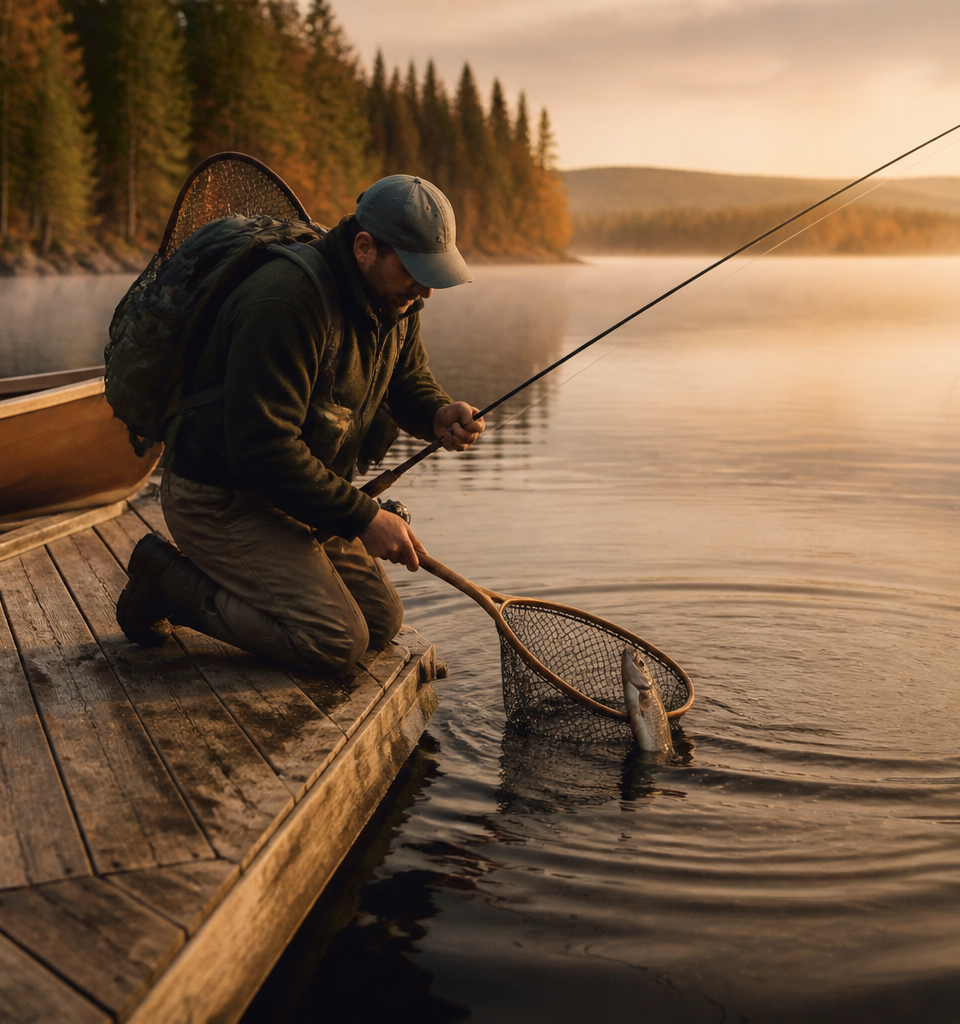
Ethical angling practices are essential on the water. If practicing catch-and-release, use barbless hooks, minimize the fish's exposure to the air, and support it horizontally with two wet hands during photos. When catching splake from deep water during summer, reel them up slowly to minimize barotrauma caused by rapid pressure changes.
To review the full rules applicable to your fishing zone, consult the official website of the Government of Quebec (hunting and fishing). Regulations change every year: always verify the specific rules for your zone before heading out.
Conservation, population and ecosystem role
As a hatchery-produced hybrid, splake have variable fertility and generally do not establish self-sustaining wild populations in Quebec. This distinct characteristic makes them an effective fisheries management tool for provincial biologists, who can adjust stocking rates according to lake carrying capacity and angling pressure.
Stocking splake provides high-quality sport fishing opportunities in lakes where native salmonids might struggle due to competition with abundant forage species. As efficient apex predators, splake help balance forage fish populations and maintain ecological equilibrium in stocked ecosystems.
Protecting aquatic habitats, preventing the spread of aquatic invasive species by thoroughly washing boats and gear, and strictly respecting harvest limits all help safeguard Quebec's world-class fisheries for generations to come.
Planning a guided trip or outfitter stay
Booking a stay at a Quebec outfitter is one of the finest ways to experience top-tier splake fishing. Outfitters provide invaluable local expertise, reliable watercraft, and comfortable lakeside cabins nestled in wilderness settings. Local guides know the exact honey holes, underwater structures, and daily lure patterns suited to the current conditions.
Whether you choose a European plan (self-catering) for full independence or an American plan package that includes meals and professional guide services, an outfitter stay streamlines your entire trip. You can focus entirely on enjoying your time on the water with family and friends in spectacular natural surroundings.
To find your next destination and book an unforgettable splake fishing adventure, explore the outfitting packages available across MyOutfitters and get ready to hook into hard-fighting fish.
Frequently asked questions
What is the main difference between a splake and a brook trout?
A splake grows faster and reaches larger sizes thanks to its lake trout genetics. Visually, its tail is noticeably more forked than a brook trout's nearly square tail, and its sides lack the distinct red spots surrounded by bright blue halos.
What is the ideal depth to target splake during summer in Quebec?
During summer, splake seek cold water below the thermocline, typically holding between 8 and 18 metres deep. Using lead core line, bottom bouncers, or downriggers is highly recommended to present your lures at these depths.
What type of leader material should I use for splake fishing?
A 6 to 10 lb test fluorocarbon leader measuring 1.5 to 2 metres is ideal. Its near-invisibility in clear water fools wary fish while providing good abrasion resistance around rocky structure.
Can splake reproduce naturally in Quebec lakes?
While some individual splake may produce fertile gametes, natural reproduction success rates remain extremely low. Quebec populations are almost exclusively maintained through structured, regular stocking programs.
Which lures are most effective for splake in the spring?
In spring, light silver, gold, or copper flutter spoons tipped with a piece of nightcrawler, as well as small minnow-imitating crankbaits, work exceptionally well when trolled slowly in shallow water near shore.
Can you ice fish for splake in Quebec?
Yes, splake remain active beneath the ice and are a favourite target for winter anglers on designated lakes. They are commonly caught jigging small spoons, blade baits, or leadheads tipped with bait.
Why was the splake hybrid created and stocked in lakes?
Splake were bred to combine the rapid growth and temperature tolerance of brook trout with the deep-water feeding and longevity of lake trout, creating an exceptional sport fish that utilizes forage efficiently without disrupting native species reproduction.
What rod power is best suited for splake fishing?
A medium-light or medium power, fast-action rod measuring between 6'6" and 7'0" provides the optimal balance. It offers sufficient sensitivity for detecting light bites while retaining enough backbone to control strong fish.
How should I handle a splake for catch-and-release?
Keep your hands wet, minimize handling time out of the water, use a knotless rubber landing net, and carefully remove hooks using long-nose pliers to reduce physical injury and stress on the fish.
What weather conditions are best for catching splake?
Overcast days with a light breeze producing surface chop provide prime conditions. The reduced light penetration lowers the fish's guard and encourages them to feed aggressively around shallower structures all day long.