Fishing
Red Trout Fishing in Quebec: Tips and Secrets
Discover how to catch red trout in Quebec: hidden habitats, proven techniques, ideal gear, and expert tips for a successful fishing trip.
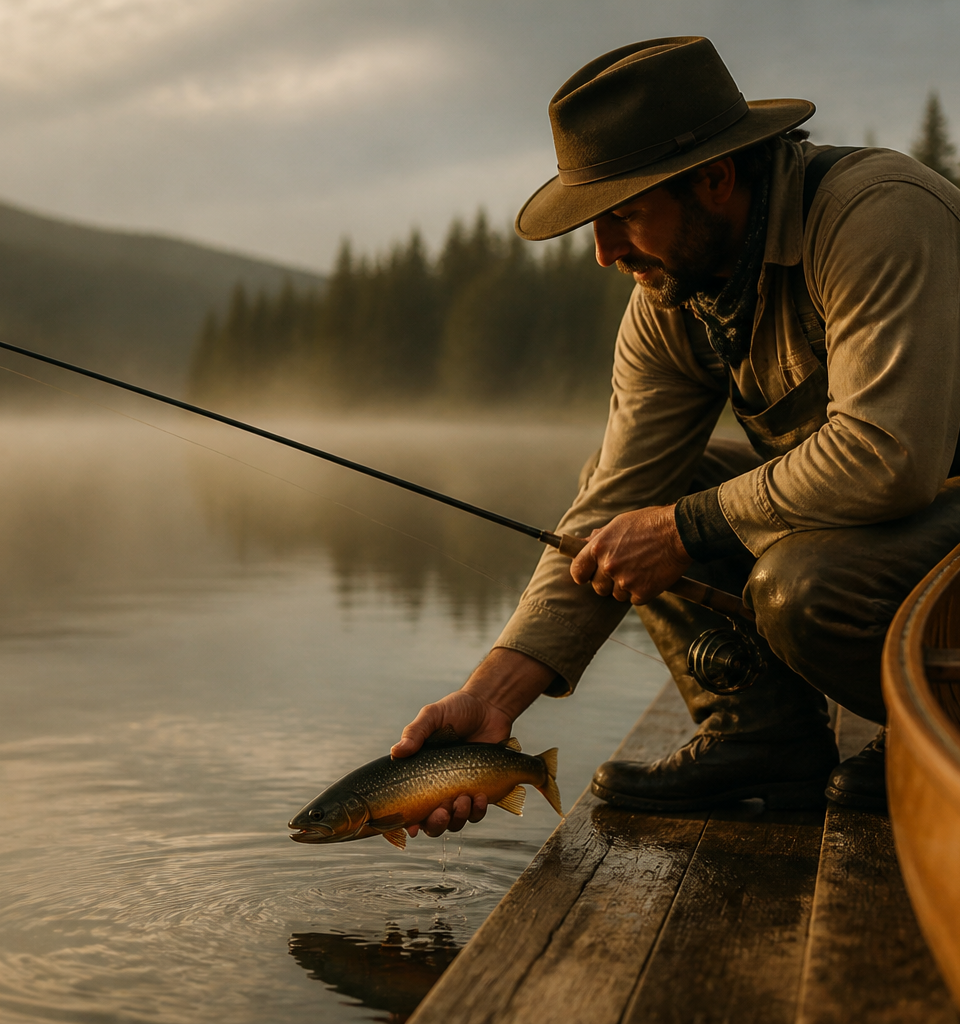
Species overview and identification
In Quebec, the name "red trout" stirs the soul of passionate coldwater anglers. This traditional moniker refers to native brook trout displaying their spectacular spawning dress, or to specific strains of char inhabiting deep boreal lakes that develop a brilliant, fiery-red belly. An iconic jewel of our freshwater heritage, this coldwater marvel stands apart from other salmonids thanks to its high-contrast markings and stocky build, built for powerful currents.
To identify one with certainty, look closely at its dark olive-green back, adorned with intricate, wavy vermiculations resembling polished marble. Its flanks feature small red spots surrounded by distinctive sky-blue halos, while its pectoral, pelvic, and anal fins are edged with a striking snow-white leading line bordered by a sharp black band. Unlike rainbow or brown trout, its scales are minuscule, giving its skin a velvet-like texture that feels exceptionally smooth to the touch.
Habitat and geographic distribution
This prized salmonid demands pristine water quality to thrive. It flourishes throughout the Canadian Shield's vast aquatic networks, where oligotrophic lakes, gravel-bottomed rivers, and headwater streams provide clear, highly oxygenated water that ideally stays below eighteen degrees Celsius during the height of summer.
Geographically, Quebec boasts an abundance of world-class destinations for targeting them, particularly across Mauricie, Lanaudière, the Laurentians, Saguenay–Lac-Saint-Jean, Côte-Nord, Abitibi-Témiscamingue, and into the far reaches of Nord-du-Québec. These forested boreal regions hold countless deep pools, underwater coldwater upwellings, and oxygen-rich rapids that serve as sanctuary for the finest specimens.
Behaviour and seasonal patterns
Red trout activity is closely tied to the thermal cycles of Quebec's waterways. At ice-out, as open water returns, fish abandon their deep wintering holes to roam shallow shorelines and sunlit bays where the water warms first, triggering the emergence of aquatic insects and baitfish activity.
As summer takes hold and lakes stratify into distinct thermal layers, mature fish descend toward the thermocline and deep cold pockets to escape warming surface waters. During this window, feeding periods become heavily concentrated around dawn and dusk. By late summer and early autumn, the spawning instinct takes over: the trout light up in their most vivid, fiery colours, migrate toward gravel spawning beds, and exhibit intensely aggressive territorial behaviour.
Best seasons and conditions
Spring remains the premier season for surface and shallow-water action. From mid-May to mid-June, ravenous post-winter appetites make for unforgettable outings. Overcast skies paired with a gentle surface chop and light breeze break up light penetration, creating the ideal setup to fool these naturally wary fish.
Autumn offers another prime window for targeting trophy specimens sporting breathtaking spawning colours. Cool days, grey skies, and steadily dropping water temperatures push fish to strike larger offerings to build energy reserves for the winter. In contrast, flat-calm heatwaves and sudden cold fronts accompanied by sharp spikes in barometric pressure make bites much more tentative, demanding refined, finessed presentations.
Where and how to find it
Successfully pinpointing red trout on any body of water requires a keen eye for underwater structure. Focus your efforts on pronounced transition zones where rocky shoals plunge steeply into deep basins, or along shoreline points extending out into submerged reefs.
Key structures and habitat markers to prioritize during your search include:
- Stream mouths and tributary inflows delivering cool, oxygen-rich currents.
- Steep drop-offs studded with boulders and submerged timber that create prime ambush cover.
- Clean gravel beds situated adjacent to deep feeding basins.
- Underwater spring seeps, detectable with a sonar or by spotting calm, glassy patches on the surface.
Recommended techniques and strategies
Trolling slowly is one of the most reliable methods for covering water efficiently on Quebec lakes. Running a light spoon or thin hammered flutter spoon ahead of a fluorocarbon leader tipped with a juicy nightcrawler, a leech, or an imitation soft plastic creates flash and vibration that trout simply cannot ignore.
For active casting enthusiasts, working slim minnow plugs, inline spinners, or micro-jigs tight to structure triggers aggressive reaction strikes. Fly anglers will find explosive action swinging large streamers that imitate minnows, leeches, or crayfish early in the season, followed by heavily weighted caddis nymphs and emergers from May through July, fished on floating or sinking lines.
Equipment and gear
A balanced, stealthy setup is the foundation of consistent success. For light spin fishing, opt for a medium-light to fast-action graphite rod measuring 6 to 6.5 feet, paired with a 1000- to 2500-size reel spooled with 6- to 10-pound braid, finished with a 4- to 6-pound fluorocarbon leader for maximum invisibility.
Fly fishers will find a 9-foot, 4- or 5-weight rod ideal for smaller lakes and rivers, while a 6-weight setup provides the backbone needed to cast bulky streamers on windy, expansive waters. Consider packing small diving planers, keel sinkers or split shot to reach the summer thermocline, and always use a knotless rubber landing net to protect the fish's delicate protective slime coat.
Regulations, licences and ethical practices
Sportfishing in Quebec is governed by specific fishing zones that dictate open seasons, daily catch and possession limits, and gear restrictions—such as mandatory barbless hooks on certain designated waters. Every angler must hold a valid provincial fishing licence before wetting a line.
To review the specific regulations for your destination, consult the official publications from the Government of Quebec (hunting and fishing). Practising careful catch-and-release with large spawners directly supports the long-term health of the fishery: keep the fish in the water as much as possible and avoid vertical hanging holds. Regulations change each year: always verify the official rules before your trip.
Conservation, population and ecosystem role
Red trout sit near the top of the aquatic food web across northern watersheds. They serve as a vital bioindicator species: their presence alone signals pristine water clarity, cold temperatures, and overall ecological balance. Habitat loss, shoreline clearing, and rising water temperatures pose direct threats to wild populations.
Responsible resource stewardship relies on mindful, selective harvest. Keeping a moderate meal of mid-sized fish while releasing trophy-class breeders and active spawners helps safeguard local genetic diversity. Protecting aquatic habitats ensures that future generations of anglers will also have the chance to marvel at these scarlet-hued jewels.
Planning a guided trip or outfitter stay
For an unforgettable adventure and the best odds of landing trophy red trout, booking a stay at an established Quebec outfitter is the ultimate choice. Quebec outfitters manage vast exclusive territories with private access to remote wilderness lakes that see very little fishing pressure. You will enjoy comfortable lakeside cabins, reliable watercraft suited to the terrain, and hassle-free logistics.
Fishing alongside an experienced guide is an invaluable asset for quickly reading fish behaviour, navigating local bathymetry, and dialing in the right presentation for the day's weather. Whether you are travelling with family, buddies, or heading out solo to test your angling skills, planning your getaway with the experts at MyOutfitters ensures you find the perfect destination for your next boreal adventure.
Frequently asked questions
What is the difference between a red trout and a standard brook trout?
A red trout is actually a brook trout (or char) displaying an intensely vibrant scarlet belly. This brilliant coloration is typical of mature males during the fall spawn or specific wild strains living in cold, deep waters rich in freshwater crustaceans.
What is the best time of day to target them in midsummer?
During the summer months, focus on the first two hours after sunrise and the twilight period leading into dusk. When the sun is high overhead, trout retreat to the cool thermocline depths and feed far less aggressively.
Which lure colours work best for this salmonid?
Metallic finishes like copper, brass, gold, and hammered silver are timeless staples. High-visibility accents in fluorescent orange, red, pink, and chartreuse work exceptionally well to trigger territorial strikes.
What is the ideal trolling speed for red trout?
A slow crawl between 1.5 and 2.5 km/h (roughly 1 to 1.5 knots) is optimal. This allows spoons to impart a wide, rhythmic wobble without spinning, giving sluggish trout ample time to intercept your bait.
Is a fluorocarbon leader necessary?
Yes, fluorocarbon is strongly recommended due to its low visibility in gin-clear boreal waters. A 4- to 6-foot leader in 4- to 6-pound test will dramatically increase strikes from line-shy trophy char.
How can you reach deep summer basins without heavy downriggers?
You can spool up with leadcore line, use inline diving planers, or add a torpedo weight roughly six feet above your leader. This allows you to present lures down in the strike zone while still fishing with a sensitive, light rod.
Which fly patterns produce best on rivers and streams?
Bulky streamers like the Muddler Minnow, black or olive Woolly Buggers, and the Mickey Finn excel during spring runoff. In summer, weighted caddis nymphs and mayfly emerger patterns prove deadly.
Can you fish for red trout while wading in Quebec?
Absolutely. Wading is highly productive along boreal rivers, below waterfalls, and at lake outlets during the spring. Gear up with breathable waders or hip boots equipped with non-slip soles to navigate swift currents safely.
How should you handle a red trout intended for release?
Always wet your hands before touching the fish to protect its slime coat, use a knotless rubber net, minimize air exposure to just a few seconds, and gently support the fish upright facing into the current until it swims away under its own power.
Why choose an outfitter with exclusive rights for this species?
Outfitters holding exclusive hunting and fishing rights strictly manage angling pressure on their assigned lakes. This ensures exceptional fish populations, larger average catch sizes, and a peaceful, uncrowded wilderness experience.