Fishing
Yellow Perch Fishing in Quebec: Complete Guide and Tips
Discover how to fish for yellow perch in Quebec: proven techniques, key habitats, light tackle, and expert tips for successful open-water and ice fishing trips.
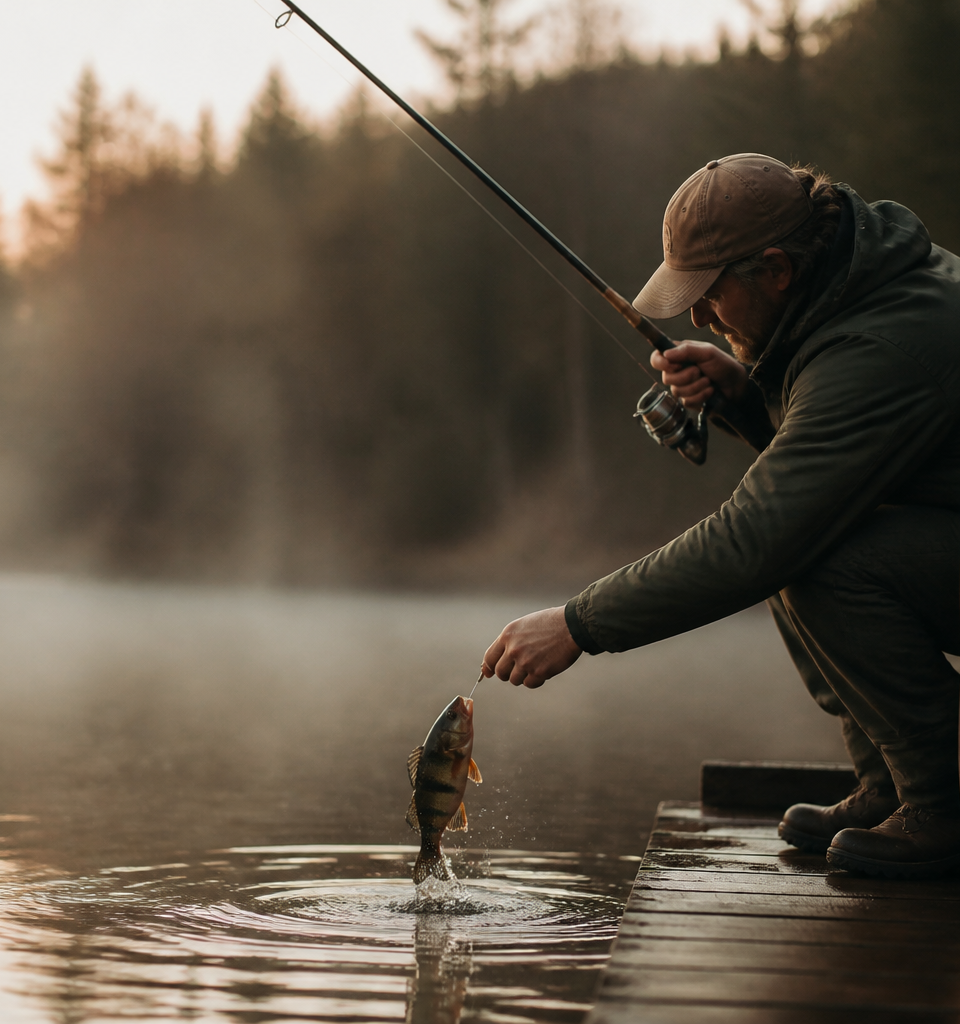
Species overview and identification
Yellow perch (*Perca flavescens*) is unquestionably one of Quebec's most popular and accessible freshwater game fish. A distinguished member of the perch family (Percidae), it shares its lineage with walleye and sauger while standing out with its compact profile and vibrant colouration. Its laterally compressed body displays a golden-yellow to olive-green backdrop, marked by six to eight dark green to blackish vertical bars running down its flanks. A creamy white belly and pelvic and anal fins often brushed with vivid orange or reddish tones complete a striking profile.
This small predator features two distinct dorsal fins: the first is armed with sharp spines that serve as a natural defense against apex predators, while the second has soft rays. Quebec anglers particularly seek out trophy-class specimens, affectionately known as "jumbos," which regularly exceed 25 to 30 centimetres (10 to 12 inches). Although the average size generally ranges between 15 and 22 centimetres (6 to 9 inches), its spirited fight relative to its size and its firm, delicate, slightly sweet white flesh make it a prized catch for shore lunches.
Distinguishing it from other freshwater species is straightforward for anyone observing its distinct striped patterns. Unlike rock bass or smallmouth bass, yellow perch maintains clearly defined dark vertical bars and a modest terminal mouth well suited for seizing small benthic prey, aquatic insects, and minnow fry.
Habitat and geographic distribution
Found across the vast majority of southern and central Quebec's watersheds, yellow perch thrives particularly in the calm, clear, or moderately turbid waters of lakes, reservoirs, river bays, and slow-moving streams. It is abundant throughout the St. Lawrence River basin, the lowlands, Outaouais, the Laurentians, Lanaudière, Mauricie, Abitibi-Témiscamingue, and numerous water bodies across Saguenay–Lac-Saint-Jean and the Eastern Townships.
The species shows a strong preference for areas with rich aquatic vegetation, such as beds of Eurasian watermilfoil, pondweed, and lily pads. These weed beds provide an endless supply of forage alongside reliable cover from larger apex predators like northern pike, muskellunge, and walleye. Submerged structures composed of gravel, soft sand, gentle rocky points, and submerged timber also serve as prime staging grounds where schools congregate.
While yellow perch tolerates a wide variety of depths throughout the year, it favours bathymetric transition zones, commonly known as drop-offs. These depth breaks, typically found between two and six metres (6 to 20 feet) of water, offer ideal ambush corridors to intercept prey along the edges of dense weedlines.
Behaviour and seasonal patterns
Yellow perch is a schooling, gregarious fish that travels and hunts in tight pods, often grouped by size class. Once an angler locates an active school, catching dozens in quick succession at the same spot is common. Its activity is strictly diurnal, peaking around sunrise and late afternoon before settling near the bottom to rest through the night.
In spring, as soon as water temperatures cross the 7 to 10 °C (45 to 50 °F) threshold, spawning begins in shallow bays, wetlands, and calm tributaries. Females drape long, gelatinous ribbons of adhesive eggs across submerged vegetation and sunken branches. During this window, fish concentrate in very shallow water before scattering into productive feeding bays.
Come summer, schools break up and reposition along the outer edges of large weed beds and submerged flats where the water remains cool and well oxygenated. In autumn, dropping water temperatures trigger massive schooling movements toward deeper basins and drop-offs, creating dense concentrations of well-fed fish gearing up for winter. Under the ice, the perch's metabolism slows, but its appetite remains steady, cementing its reputation as the undisputed star of Quebec's ice fishing season.
Best seasons and conditions
While yellow perch can be caught year-round, two peak windows stand out on Quebec's fishing calendar: mid-winter and the fall transition.
- Winter (January to March) is the golden age of ice fishing. Schools gather over mud and gravel flats in depths of three to eight metres (10 to 26 feet), delivering nonstop action whether fishing from heated ice shacks or exploring remote frozen expanses by snowmobile.
- Autumn (September to November) offers prime opportunities to target jumbo perch as they feed aggressively along steep drop-offs before freeze-up.
- Early summer (June and July) remains highly productive for family boat outings, with fish actively patrolling the margins of emerging weed beds.
Stable weather marked by steady or slightly falling barometric pressure ahead of a mild front generally yields the best outings. Overcast skies or a light breeze creating a surface ripple scatter sunlight penetration, prompting perch to venture out of dense cover and hunt actively in the open.
Where and how to find it
Methodical searching is the golden rule for consistent success. Because yellow perch rarely stays evenly dispersed across a lake, covering ground to locate an active school is far more productive than waiting idly at an unproductive anchorage.
During open-water season, start by scanning the outside edges of weedlines with your fish finder to spot marks pinned close to the bottom or suspended baitfish pods. Sandy points tapering into deep water, sheltered bays framed by cattails, and submerged river channels are prime targets. Drifting with the wind allows you to sweep across expansive flats efficiently before dropping anchor once the first bites occur.
In winter, a portable flasher or sonar is an indispensable tool. Drill a grid of holes spanning varying depths, from the inner bay out toward the main basin channel. If no marks appear on the screen after ten minutes of jigging, move on to the next hole. As soon as you mark a school, keep the fish interested by maintaining a steady jigging rhythm to ignite competitive feeding within the pack.
Recommended techniques and strategies
Finesse and quick reactions are essential when dealing with pressured or cautious yellow perch.
- Vertical jigging with micro-jigs: Use small 1/32 to 1/8 oz jig heads tipped with micro soft plastics (tubes, minnow imitations, or larva profiles) worked with subtle rod-tip twitches just inches off the bottom.
- Slip-bobber or still-line rigs: Ideal for family trips with young anglers, this presentation keeps live or artificial bait suspended at a precise depth just above the weed canopy without snagging.
- Ultra-light drop-shotting: Excels at presenting a soft plastic bait at an exact height above soft, silty bottoms without weight drag dulling the finesse presentation.
- Micro jigging spoons and blade baits: A staple under the ice, these flashy metal lures produce vibrations and flash that draw curious perch from afar before they strike the lure or the dropper hook below.
Tailor your cadence to the mood of the school: begin with aggressive hops to pull fish in from a distance, then transition to subtle micro-quivers and extended pauses once fish close in to inspect the offering.
Equipment and gear
To maximise sport and detect light takes, set aside heavy gear in favour of dedicated light or ultra-light setups.
- Open-water rod and reel: An ultra-light to light (UL to L) spinning rod measuring 1.70 m to 2.00 m (5'6" to 6'6") with a fast-action tip for positive hooksets, paired with a 1000- to 2000-size spinning reel.
- Ice fishing rod: A short 60 to 75 cm (24" to 30") ice rod equipped with a sensitive spring bobber to register delicate upward bites under the ice.
- Line: Limp 4- to 6-lb test monofilament or fluorocarbon provides natural bait movement and excellent abrasion resistance without spooking line-shy fish.
- Tackle box essentials: A selection of micro jig heads (1/32, 1/16, and 1/8 oz) in high-visibility colours (chartreuse, pink, white, hot orange), small plastic tubes, micro silver and gold spoons, small barrel swivels, and sensitive slip floats.
Properly balanced gear not only increases your hookup ratio but turns every hookset into an engaging, dynamic angling experience.
Regulations, licences and ethical practices
Sport fishing for yellow perch in Quebec is regulated to ensure the long-term sustainability of the resource. Every angler must hold a valid Quebec sport fishing licence and adhere to the daily catch and possession limits established for the specific fishing zone.
Certain water bodies have seen targeted conservation measures over the years, including moratoria or reduced harvest limits in vulnerable ecosystems such as Lake Saint-Pierre, where perch populations experienced historic declines. The use of live or dead baitfish is also subject to strict regulations depending on the zone and season to prevent the spread of invasive species and fish pathogens.
To review daily limits, open seasons, and zone-specific rules, consult the official Government of Quebec (hunting and fishing) website. Regulations are updated annually: always verify the current rules before heading out on the water.
Ethical anglers are encouraged to practice selective harvest: keeping medium-sized fish for the table while releasing large jumbo breeders helps sustain fishing quality for future generations.
Conservation, population and ecosystem role
Within Quebec's freshwater ecosystems, yellow perch occupies a pivotal position in the food web. It functions simultaneously as an active consumer of aquatic invertebrates, crustaceans, and small forage fish, and as a staple prey base for apex predators such as walleye, northern pike, and double-crested cormorants.
The vitality of perch populations directly mirrors the overall health of our watersheds. The degradation of floodplains, loss of nearshore weed beds to shoreline development, agricultural runoff, and the spread of invasive competitors like the round goby present ongoing challenges to perch recruitment. The loss of traditional spawning habitat impairs the species' natural regenerative capacity.
Local wetland restoration projects, the protection of shoreline buffer strips, and responsible harvest practices by the angling community are essential. Protecting littoral habitats preserves healthy yellow perch populations while safeguarding the ecological balance of the entire aquatic community.
Planning a guided trip or outfitter stay
Booking a stay at an outfitter is the ultimate way to enjoy a hassle-free yellow perch adventure, whether introducing new anglers to the sport or pursuing trophy jumbos on private or remote waters. Quebec outfitters cater to every travel style, from rustic lakeside cabins on quiet islands to full-service lodges featuring premium accommodations, equipped boats, and gourmet meals.
Hiring a professional outfitter guide eliminates the guesswork of scouting: their intimate knowledge of bottom structures and seasonal movements puts you right on active schools. In winter, dedicated ice fishing outfitters provide heated shacks, pre-drilled holes, and all the required gear for a comfortable, family-friendly day on the ice.
To find the right outfitter for your next trip and plan an unforgettable fishing getaway, browse the listings on MyOutfitters and start making memories in the heart of Quebec's wilderness.
Frequently asked questions
What is the average size of yellow perch caught in Quebec?
Most yellow perch landed range between 15 and 22 centimetres (6 to 9 inches). Fish exceeding 25 to 30 centimetres (10 to 12 inches), known as jumbos, are considered trophies and are most commonly found in fertile, forage-rich lakes and river basins.
Can you fish for yellow perch during the winter in Quebec?
Yes, absolutely. Ice fishing is one of the most popular ways to target yellow perch in Quebec. Schools gather over mud flats and remain actively feeding under the ice throughout the entire winter season.
What is the best all-around lure for beginners?
A 1/16 oz micro-jig head paired with a small, brightly coloured soft plastic tube or minnow imitation is the most versatile option. It allows anglers to work multiple depth ranges effectively with minimal fuss.
How do you work an ice jig for yellow perch?
Start with a few sharp hops to attract fish from a distance, then dial back to subtle, steady twitches just off the bottom. Finish with a complete pause of several seconds to trigger the bite.
Why does yellow perch travel in large schools?
Schooling provides defense against apex predators like northern pike and increases foraging efficiency on baitfish and invertebrates. For the angler, hooking one fish usually signals that many more are right beneath the boat or hole.
Is baitfish permitted for perch fishing in Quebec?
Baitfish use is strictly governed by provincial and zone-specific regulations to prevent the spread of aquatic invasive species and diseases. Always check the current regulations for your specific fishing zone before using live or dead baitfish.
How do you handle yellow perch without getting pricked by the dorsal spines?
Smoothly slide your hand down along the fish's back from head to tail to fold the sharp dorsal spines flat before closing your grip. Avoid grabbing the fish abruptly across an erect dorsal fin.
What are the best times of day to catch yellow perch?
Because yellow perch is a diurnal visual feeder, the first two hours after sunrise and the late afternoon heading into dusk generally offer the strongest feeding windows of the day.
Is yellow perch good to eat?
Yes, yellow perch is widely regarded as one of the best-tasting freshwater fish in North America. Its firm, flaky white fillets offer a mild, slightly sweet flavour that is exceptional pan-fried or lightly battered.
What are the benefits of booking an outfitter for yellow perch fishing?
Outfitters provide direct access to prime, well-managed waters, fully rigged boats or heated ice shacks, and the expertise of local guides. It is the most reliable way to maximize your time on the water in complete comfort and safety.