Fishing
Largemouth Bass: Heavy-Mat Punching and Frog Tactics for Giants
Learn how to extract trophy largemouth bass from the thickest aquatic vegetation using expert punching and frog fishing techniques.
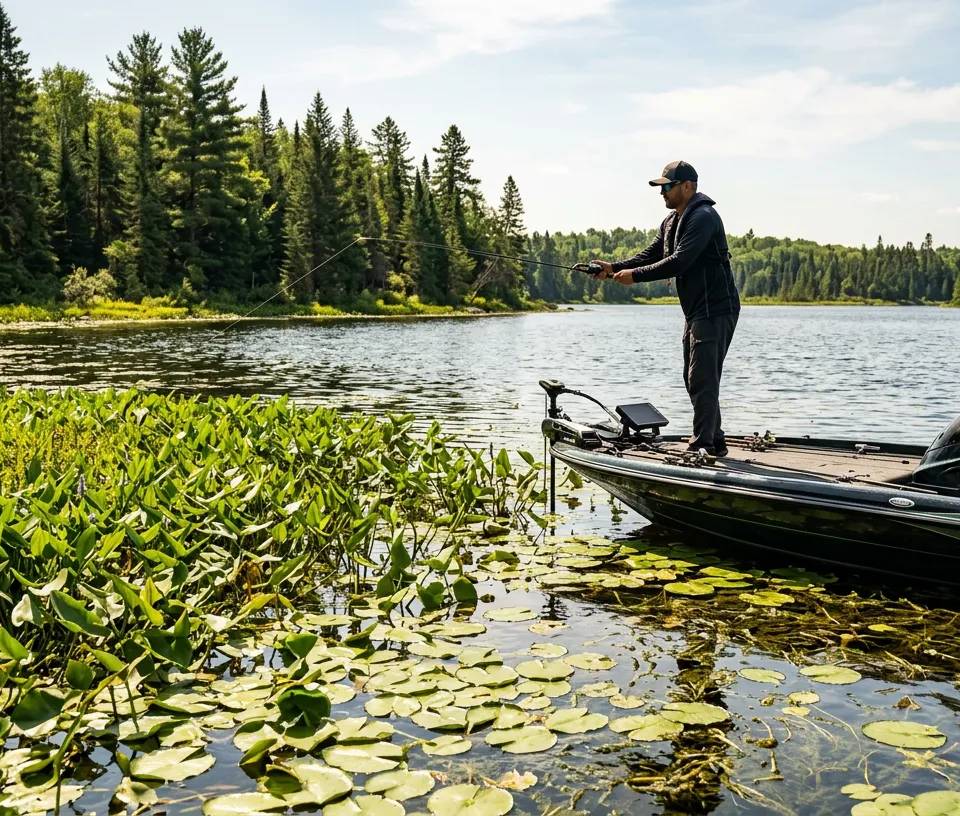
Targeting trophy largemouth bass in thick vegetation is one of the most exhilarating challenges in Canadian freshwater fishing. This guide provides concrete advice from seasoned outfitters on how to effectively use punching rigs and hollow-body frogs to extract giants from heavy cover. When the summer heat drives fish deep into the mats, these specific tactics become your primary tools for success.
Mastering the Heavy Punch
Punching involves sending a heavy lure through a thick canopy of surface vegetation to reach the clear water and bass lurking underneath. It is a high-intensity technique that requires specialized gear.
- The Rig Setup. A streamlined craw-style soft plastic paired with a 1.25 to 2-ounce tungsten weight is standard. Ensure the weight is pegged to prevent it from sliding away from the lure.
- Rod and Line. You need a 7'6" to 8' extra-heavy rod to leverage fish out of the muck. Use a minimum of 65-pound test braided line to cut through thick stems.
- Vertical Presentation. The goal is a vertical drop. If the lure doesn't break through on the initial toss, a quick lift and drop usually does the trick.
Topwater Frog Strategies
Few things match the excitement of a largemouth bass exploding through a mat of lily pads to grab a frog. This lure is designed to go where others cannot.
- Controlled Cadence. Retrieve the frog with a rhythmic side-to-side action. If a bass misses the strike, stop the lure immediately; they will often return for a second, more aggressive hit.
- The Hookset Delay. Beginners often pull too early. Wait until you feel the weight of the fish on the line before delivering a powerful overhead hookset.
- Trimming the Legs. Many pros trim the rubber legs of the frog by an inch to reduce short-strikes and improve the walking action.
Identifying High-Percentage Mats
Not all weeds hold fish. Success depends on finding the specific areas that provide the best combination of oxygen, shade, and proximity to prey.
- The Mat Edge. Focus on the outer edges early in the morning, then move toward the thickest center as the sun gets higher.
- Isolated Clumps. Sometimes a single, isolated patch of weeds in an otherwise open area will hold the largest bass in the vicinity.
- Bluegill Activity. Listen for the 'smacking' sound of bluegills feeding on insects under the pads; if the bait is there, the bass are usually nearby.
Booking Your Bass Adventure
To truly test these heavy-cover tactics, you need the right environment and equipment. When searching for an outfitter on our directory, look for locations in regions known for fertile, weed-rich lakes like the Kawarthas or Sunset Country. Ensure the outfitter provides stable boats suitable for standing and casting. Booking a guide for the first day can be invaluable for learning the specific 'tells' of local vegetation and how the bass relate to current and wind in that specific body of water.
Frequently asked questions
When is the best time for punching?
Punching is most effective from mid-July through late August, when aquatic vegetation is at its peak density and fish are seeking maximum shade.
Why use tungsten instead of lead weights?
Tungsten is denser and smaller than lead of the same weight, allowing it to slip through weed mats much more easily without snagging.
What type of rod is needed for frog fishing?
A heavy power rod with a fast action is recommended to ensure a solid hookset and to quickly pull the fish out of thick lily pads.
Can I use fluorocarbon for these techniques?
No, fluorocarbon sinks and lacks immediate tensile strength; braided line is essential for its buoyancy and its ability to cut through vegetation.
How do I know if a weed mat holds fish?
Look for surface movement, the presence of baitfish, and prioritize mats that have direct access to nearby deeper water channels.