Fishing
Lake Trout in the Laurentians: The Seasonal Calendar for Success
Learn how lake trout depth shifts from spring to summer in the Laurentians and discover the tactics needed to find them all season long.
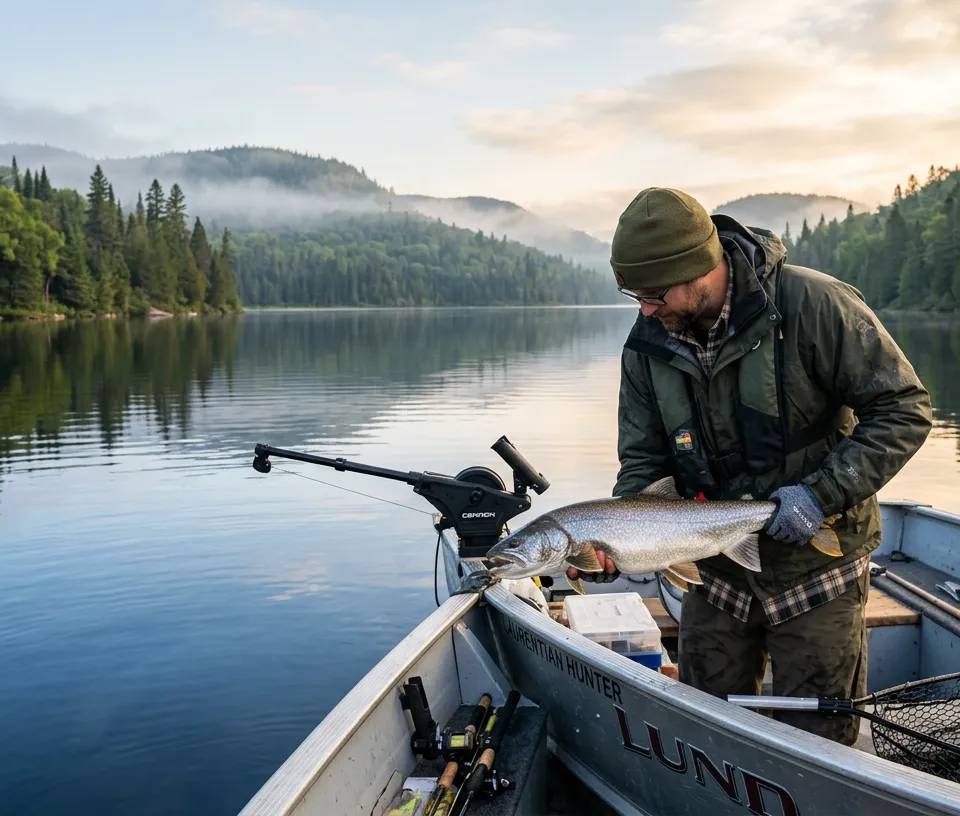
Fishing for lake trout in the Laurentians is an evolving game that follows the lake's thermal layers. As a cold-water specialist, the lake trout moves significantly throughout the season, forcing anglers to adjust their depth and tactics to stay in the action. By understanding this vertical migration, you can transform a quiet day on the water into a successful expedition.
The Spring Shallow Water Window
Immediately following ice-out, the surface waters of the Laurentians remain frigid, creating a unique window where lake trout can be found in shallow water. During this short period, these powerful predators patrol shorelines and shoals in search of baitfish, often in less than 20 feet of water. This is the best time for light tackle enthusiasts to experience the fight of a lake trout without the need for specialized deep-water gear. Flat-lining with minnow-style lures or casting near rocky points is highly effective before the summer heat arrives.
Transitioning to the Thermocline
As June progresses and air temperatures rise, the surface layer warms beyond the lake trout's comfort zone. The fish retreat to the thermocline—the layer where water temperature drops rapidly. In most Laurentian lakes, you will now find them holding between 30 and 50 feet. Success at this stage requires getting your lures deeper using weighted lines or bottom walkers. Trolling becomes the primary method, allowing you to cover vast areas of the lake to locate active schools holding at specific depths.
Mid-Summer and the Deep Water Grind
By mid-July and through August, the lake trout settle into their summer haunts, often deep within the main basins of the lake. To reach them effectively at depths of 60 to 100 feet, specialized equipment is paramount.
- Downriggers. Precise depth control is the only way to ensure your lure passes through the strike zone consistently.
- Sonar Reading. Pay close attention to your electronics to identify the exact depth where baitfish are congregating, as the trout will never be far away.
- Lure Presentation. Larger spoons and flashers help attract attention in the dim light of the deep water, mimicking the natural forage of the Laurentian highlands.
How to Book Your Laurentian Outfitter
Choosing the right outfitter is the first step toward a successful lake trout trip. Many lodges in the Laurentians provide expert guidance and specialized equipment rentals, such as sonar-equipped boats and downriggers. When browsing MyOutfitters.ca, look for establishments that offer bathymetric maps of their lakes. Booking early for the spring shallow-water season is recommended, while mid-summer trips are perfect for those who enjoy the technical challenge of deep-water trolling in a majestic mountain setting.
Frequently asked questions
When is the best time to fish for lake trout near the surface?
The best time is immediately after ice-out in the spring, for about two to three weeks, while the surface water remains very cold.
Is a sonar necessary for lake trout in the summer?
Yes, a sonar is essential in the summer to locate the thermocline and schools of fish taking refuge in the lake's deep basins.
What water temperature do lake trout prefer?
Lake trout generally seek out waters between 8 and 12 degrees Celsius (46 to 54 degrees Fahrenheit).
Can you fish for lake trout without a downrigger in August?
It is difficult but possible using lead core lines or heavy weights, though a downrigger offers much better precision for reaching the required depths.
Which lures are most effective in the Laurentians?
Silver or blue trolling spoons and crankbaits mimicking smelt or lake whitefish are classic and high-performing choices.