Fishing
Mastering Sonar and Thermoclines for Deep Lake Trout
Learn how to use your sonar to locate the thermocline and target trophy lake trout in the deep waters of the Canadian wilderness.
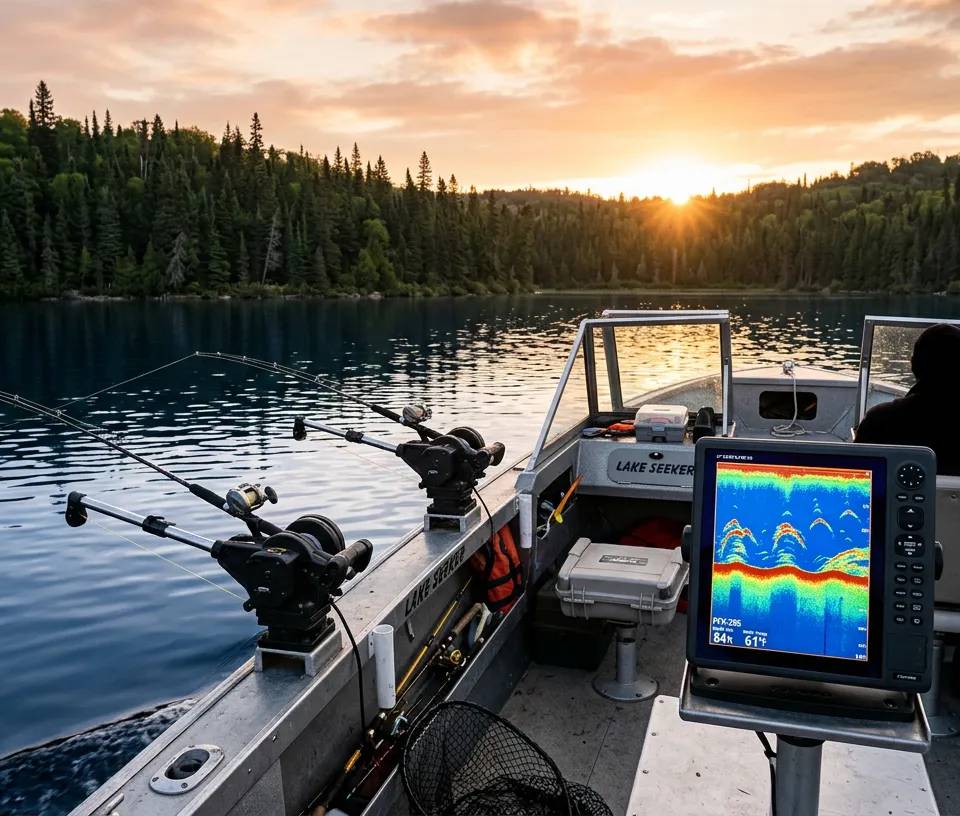
Mastering the pursuit of lake trout requires more than just a good rod; it demands a deep understanding of the underwater environment. These fish are temperature-sensitive predators that follow the thermocline as the seasons shift. By learning to interpret your sonar and locate these thermal layers, you transform a vast lake into a predictable hunting ground. Expert outfitters across Canada emphasize that success in deep-water fishing is a game of electronics and patience.
Finding the Sweet Spot: The Thermocline
The thermocline is the distinct layer where water temperature drops rapidly. For Truite Grise, this zone is critical because it balances their need for cold water with their requirement for dissolved oxygen.
- Visualizing the layer. On a high-quality sonar, the thermocline often appears as a faint, consistent line of clutter. This is caused by the difference in water density between the warm upper layer and the cold depths.
- Temperature targets. Lake trout generally thrive in water between 45°F and 52°F. Locate this range on your electronics to eliminate 90% of unproductive water.
- Depth stability. In large Canadian lakes, once the thermocline sets in mid-summer, it remains at a consistent depth until the autumn turnover.
Reading Fish Behavior on Electronics
Modern sonar technology allows you to see exactly how fish are interacting with your lures in real-time.
- Identifying Arches. Large lake trout often show up as heavy, elongated arches. Look for them hovering near underwater humps or suspended over deep basins.
- Baitfish clusters. The presence of schools of cisco or whitefish is the best indicator of active trout. Large predators will often shadow these schools from below.
- Vertical Tracking. When jigging, you can watch the trout's reaction to your lure. A rising line on the screen following your bait is the ultimate adrenaline rush, signaling an impending strike.
Deep Water Delivery Systems
Reaching the depths where lake trout dwell requires specialized gear to ensure your lure stays in the strike zone during the troll or the drift.
- Downriggers. These are essential for maintaining a precise depth. They allow you to run light tackle while using a heavy weight to keep your line at the exact level of the thermocline.
- Heavy Jigging. Using spoons or tube jigs weighing 1 to 2 ounces allows you to target fish vertically. This is highly effective when you spot fish hugging the bottom on your sonar.
- Dipsy Divers. A great alternative for reaching mid-depths without the complexity of a full downrigger setup, perfect for exploring the edges of thermal breaks.
Seasonal Tactics in Ontario Lakes
Ontario's vast lakes, from the Superior region to Temagami, offer diverse habitats that change throughout the year.
- Late Spring. Trout are often shallow, making side-imaging sonar vital for spotting fish near shorelines before they head deep.
- Peak Summer. This is the prime time for thermocline fishing. Focus on the main lake basins and deep channels where cold water is trapped.
- Fall Transition. As the surface cools, the thermocline breaks down, and fish move toward rocky shoals. Use your sonar to find hard bottom transitions rather than just depth.
Booking Your Outfitter Experience
Selecting the right outfitter is the most important step in a successful lake trout expedition. Many lodges provide boats fully equipped with modern GPS and sonar technology, which is crucial for navigating large Canadian waters. When browsing our directory, look for outfitters who specialize in deep-water species and offer guide services. A professional guide can teach you how to fine-tune your specific electronics for local conditions, saving you days of trial and error on the water.
Frequently asked questions
At what depth is the thermocline usually found?
It varies by lake size and season, but it is often found between 30 and 60 feet during the summer. Using a sonar is essential to locate it precisely each day.
What are the best lures for deep lake trout?
Spoons, deep-diving crankbaits, and 4 to 6-inch tube jigs are highly effective. Colors mimicking whitefish or cisco, such as silver and blue, are reliable choices.
Can I fish for lake trout without a downrigger?
Yes, vertical jigging with heavy lures or using lead core lines allows you to reach the necessary depths. Jigging is especially effective once you have spotted fish on your sonar.
Why do lake trout follow the thermocline?
It is a matter of survival. They need the cold water below for their metabolism but stay near the boundary to access schools of baitfish moving in more oxygenated waters.
Does sonar spook trout in deep water?
At depths of 50 feet or more, the sonar cone is wide and the pulses are generally ignored by the fish. It is an indispensable tool that does not hinder your chances of a catch.