Fishing
Smallmouth Bass Fishing in Quebec: The Complete Guide
Discover the secrets to catching smallmouth bass in Quebec: key habitats, proven techniques, peak seasons, and expert advice for successful days on the water.
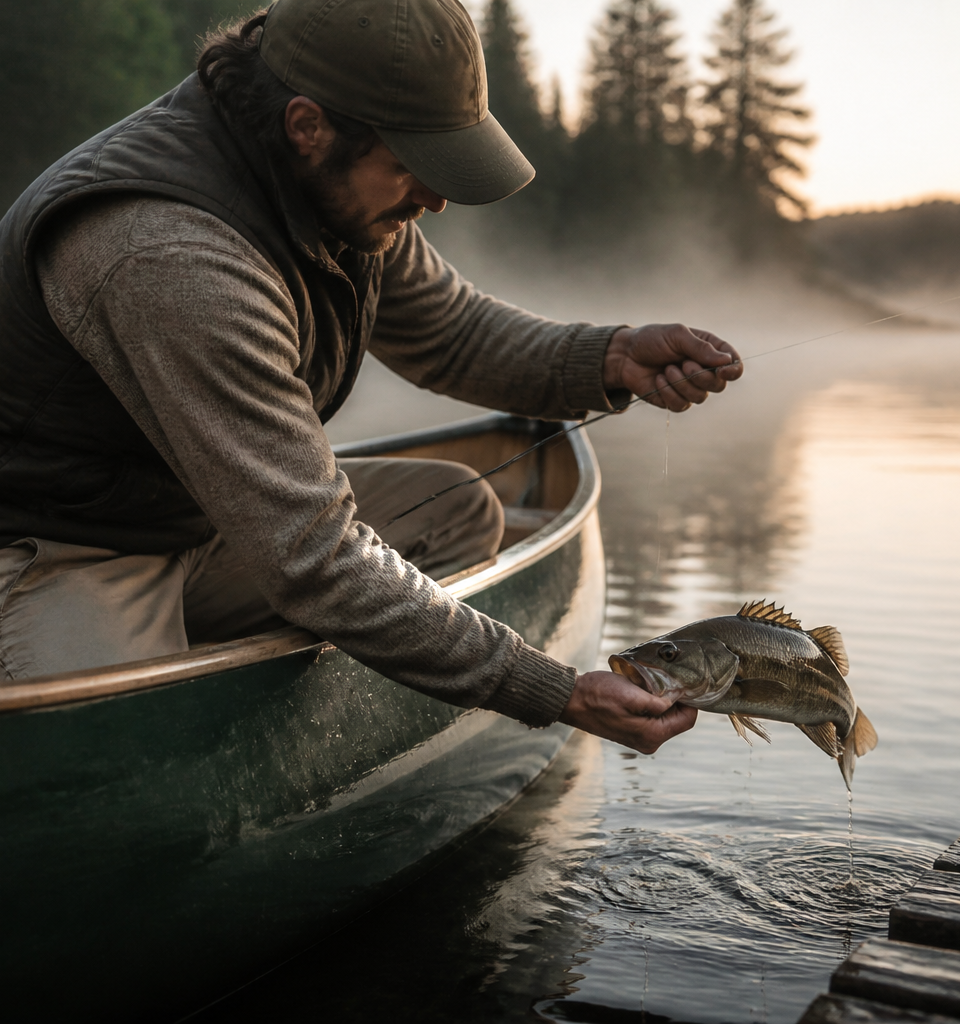
Species overview and identification
The smallmouth bass is without question one of the hardest-fighting freshwater game fish in Quebec waters. A prized member of the sunfish family (Centrarchidae), this species stands out with its compact, muscular, and streamlined body built for explosive speed and acrobatic leaps. Its colouration generally ranges from golden bronze to dark olive green, often accented with dark vertical bars that may fade with age or vary according to water clarity.
To distinguish it from its close relative, the largemouth bass, look closely at the upper jaw line. When the mouth is closed, the corner of the smallmouth's mouth never extends past the rear margin of the eye, whereas it extends well beyond the eye on a largemouth. In addition, the smallmouth's dorsal fin has a much shallower notch between the spiny and soft-rayed sections. Red-tinted eyes complete the distinctive look of this exceptional predator.
From a sportfishing perspective, smallmouth bass inspire true passion among anglers. Pound for pound, few fish deliver such an explosive fight. Spectacular aerial jumps, violent surges toward rocky bottom structure, and relentless stamina make it a prime target for anyone seeking angling excitement across Quebec's lakes and rivers.
Habitat and geographic distribution
Smallmouth bass thrive in clear, cool, well-oxygenated waters with hard bottom substrates. In Quebec, they are abundant throughout the St. Lawrence River watershed as well as numerous major lake and river networks in the southern and central parts of the province. High densities are found in renowned fishing regions such as the Outaouais, Laurentians, Lanaudière, Montérégie, and the Eastern Townships.
Their preferred environment features rocky points, underwater talus slopes, gravel beds, boulder shoals, and man-made cover like bridge pilings or wooden docks. In rivers, smallmouth gravitate toward current breaks where swift water meets calmer eddies, holding behind large boulders to ambush drifting prey without burning unnecessary energy.
Unlike largemouth bass, which favour shallow, muddy bays and heavy weed mats, smallmouth avoid excessive turbidity and silt. Their presence in a lake or river section is typically a strong indicator of excellent oxygen levels and a healthy, diverse rocky aquatic ecosystem.
Behaviour and seasonal patterns
Smallmouth bass behaviour shifts noticeably through the Quebec seasons. In spring, once water temperatures reach 15 to 18 degrees Celsius, spawning adults migrate into shallow bays and gravel flats. The male meticulously builds a circular nest on the substrate and aggressively defends the eggs against nest predators until the fry hatch.
As summer sets in and surface waters warm, adult bass leave the shallows for deeper offshore structure, often holding in depths of 4 to 10 metres. During this period, they display pack-hunting behaviour, roaming along rocky drop-offs and submerged humps. Feeding peaks typically coincide with the low-light transitions of sunrise and sunset.
In autumn, their metabolism drives an intense feeding binge to build energy reserves for winter. Smallmouth feed heavily on crayfish and baitfish around deep points and exposed shoals. Once water temperatures drop below 10 degrees Celsius, schools concentrate in the deepest basins of lakes and river pools, significantly reducing their activity to overwinter in a semi-dormant state.
Best seasons and conditions
Each season presents unique opportunities and challenges when targeting Quebec smallmouth. Late spring and early summer, right after the season opener, deliver fast-paced action in shallow water where territorial bass strike lures aggressively. It is prime time for exciting visual presentations.
Midsummer demands a more methodical approach, but anglers who effectively target deep structure are rewarded with impressive catches. Overcast days with a steady surface chop lower the bass's wariness, prompting them to roam higher in the water column. Stable weather patterns with a consistent barometer are especially productive.
Autumn is the premier window for trophy hunters. From late August through mid-October, cooling waters trigger aggressive feeding among the largest specimens. Even on brisk, windy days, targeted presentations on key structure can produce unforgettable multi-fish days and memorable battles.
Where and how to find it
Successfully locating smallmouth bass begins with reading the underwater topography. A bathymetric chart is essential for spotting sharp drop-offs, narrow island channels, and isolated mid-lake rock humps. Modern sonar further helps pinpoint submerged boulder piles and schools of baitfish.
On the water, observe the surrounding shoreline. Steep rocky bluffs onshore almost always continue below the surface, creating excellent vertical structure. Points extending out into the lake funnel wind and currents, concentrating plankton, baitfish, and waiting predators.
- Submerged rocky humps surrounded by deep water
- Main-lake rocky points exposed to prevailing winds
- Sharp drop-offs and breaklines along island edges
- Current seams, eddies, and tailraces below river rapids
- Bridge pilings, stone jetties, and deep-water docks
Recommended techniques and strategies
Versatility is essential for outsmarting wary smallmouth. The Drop Shot rig is a proven staple in clear, deep water. By suspending a soft plastic minnow or leech imitation a few dozen centimetres above a terminal weight, you can impart subtle action on the spot without moving the rig out of the strike zone, triggering reflex bites from finicky fish.
Ned rigs and tube jigs are equally deadly for mimicking crayfish scuttling across gravel bottoms. Work these baits with short, subtle hops followed by long pauses, as bass frequently inhale them while they sit motionless. For covering water quickly, deep-diving crankbaits and suspending jerkbaits help locate active, roaming schools.
For surface action, early morning topwater fishing with poppers or walking stickbaits delivers heart-stopping strikes. Fly fishing is also gaining popularity on Quebec rivers, using articulated streamers and weighted crayfish patterns stripped along rocky banks.
Equipment and gear
A medium-light to medium power spinning rod, between 6'8" and 7'2" in length, is the go-to setup for most finesse presentations. Choose a high-modulus graphite blank with a fast action that transmits subtle bites while offering enough backbone in the butt section to control powerful runs.
For power-fishing moving lures like crankbaits and spinnerbaits, a medium-power baitcasting combo provides smoother retrieval power and better casting control over repeated presentations. A moderate-gear-ratio reel keeps retrieval speeds manageable without straining your wrist over long days.
- 7-foot medium spinning rod with fast action for Drop Shot and Ned rigs
- 2500-size spinning reel spooled with 8- to 12-lb braided line
- Invisible fluorocarbon leader in 6- to 10-lb test
- 6'6" to 7' medium baitcasting rod for hardbaits
- Assortment of drop shot hooks, specialized jig heads, and tungsten weights
- Soft plastic selection: tubes, straight-tail worms, crayfish, and minnow imitations
Regulations, licences and ethical practices
In Quebec, sportfishing for smallmouth bass is strictly managed to protect spawning fish and ensure sustainable populations. Opening dates, daily catch limits, and possession limits vary by fishing zone. In several southern zones, the season does not open until mid- to late June to allow bass to finish spawning and guarding their nests.
All anglers must hold a valid Quebec sportfishing licence and adhere strictly to the regulations of the specific waterbody visited, including wildlife reserves and ZECs (controlled harvesting zones). To review all current regulations, dates, and zone quotas, consult the official portal: Government of Quebec (hunting and fishing).
Ethical angling makes a real difference on the water. Practising catch-and-release on large mature fish helps preserve valuable breeding genetics for future generations. When releasing fish, handle them with wet hands, avoid holding them horizontally solely by the lower jaw to protect their spine, and minimize exposure to air.
Regulations change annually: always verify the applicable season dates and catch limits before heading out on the water.
Conservation, population and ecosystem role
Smallmouth bass are key apex predators within their habitat. By keeping populations of forage fish, juvenile yellow perch, aquatic insects, and crayfish in check, they play an active role in maintaining balanced aquatic ecosystems across Quebec. A healthy bass population reflects a vibrant, well-functioning waterway.
However, these environments face pressure from human activity and habitat changes. Aquatic invasive species, shoreline degradation, and nutrient runoff threaten essential spawning and feeding grounds. Thoroughly washing boats, motors, and trailers between waterbodies is vital to prevent the spread of Eurasian watermilfoil and zebra mussels.
Through responsible fisheries management and conservation-minded angling, Quebec maintains world-class smallmouth bass fisheries. Anglers contribute directly to conservation by respecting shorelines and adopting selective harvest practices when keeping a meal of fresh fish.
Planning a guided trip or outfitter stay
Booking a trip with a Quebec outfitter is one of the best ways to experience premier smallmouth fishing. Quebec boasts an exceptional network of outfitters operating on pristine, low-pressure waters. Comfortable lakeside accommodations paired with well-maintained boats allow you to focus entirely on productive days on the water.
Hiring a professional outfitter guide significantly improves your catch rates. Experienced guides know every submerged reef, current seam, and tactical adjustment needed to adapt to shifting weather and fish behaviour. Whether you want to master a new finesse technique or enjoy a memorable trip with family, guided outfitter stays turn a simple fishing trip into an unforgettable adventure.
To discover top Quebec destinations and plan your next fishing getaway, explore outfitter packages and find the right lodge through MyOutfitters.
Frequently asked questions
How do you tell a smallmouth bass apart from a largemouth bass?
With the mouth closed, the corner of a smallmouth's upper jaw does not extend past the rear edge of the eye. Smallmouth also feature bronze or golden-brown colouration with dark vertical bars, unlike the green tones and horizontal dark lateral stripe of a largemouth.
What is the best time of day to fish for smallmouth bass in Quebec?
Early morning after sunrise and late afternoon into dusk typically offer the most intense feeding windows. However, on overcast or windy days, bass can remain actively feeding throughout the entire day.
What is the most versatile soft plastic rig for smallmouth bass?
The Drop Shot rig is widely regarded as the most versatile and effective setup. It presents soft plastics naturally above rocky bottoms and can be worked in place, provoking strikes even from sluggish or pressured fish.
Why do smallmouth bass jump out of the water when hooked?
Jumping is an instinctive defence mechanism to vigorously shake their head and dislodge the hook. To keep the fish hooked during jumps, lower your rod tip toward the water surface to maintain steady line tension.
Why is a fluorocarbon leader important for smallmouth fishing?
Smallmouth have keen eyesight and often inhabit crystal-clear waters. Fluorocarbon has a light refraction index close to water, making it nearly invisible, while providing strong abrasion resistance against sharp rocks.
Can you target smallmouth bass on a fly rod?
Yes, fly fishing with a 6- or 7-weight rod is very effective. Baitfish streamers, weighted crayfish patterns, and surface poppers produce fantastic visual strikes along rocky shorelines and river current seams.
What rod action is best suited for smallmouth bass fishing?
A fast-action rod is recommended. It delivers a sensitive tip to detect subtle bites, provides quick hook-setting power, and offers the mid-section backbone required to control hard-fighting fish.
How do fluctuating water levels affect smallmouth behaviour?
A sudden rise in water level typically pushes smallmouth into newly flooded shoreline structure. Conversely, falling water prompts fish to pull back quickly to deeper drop-offs and offshore humps.
How do you locate smallmouth bass holding spots in rivers?
In rivers, look for current breaks: the downstream side of large boulders, eddy lines, gravel bars, and deep pools adjacent to rapids. Bass hold in these spots to intercept food without expending energy fighting heavy current.
Why book an outfitter for smallmouth bass fishing in Quebec?
Outfitters offer exclusive or prime access to well-managed, low-pressure waters. You benefit from turnkey logistics, quality equipment, and local guide expertise to quickly get on the most productive spots.