Fishing
Lake Trout Fishing in Quebec: The Complete Touladi Guide
Master lake trout fishing in Quebec with expert insights on depth control, seasonal patterns, trolling tactics, and proven gear for trophy charr.
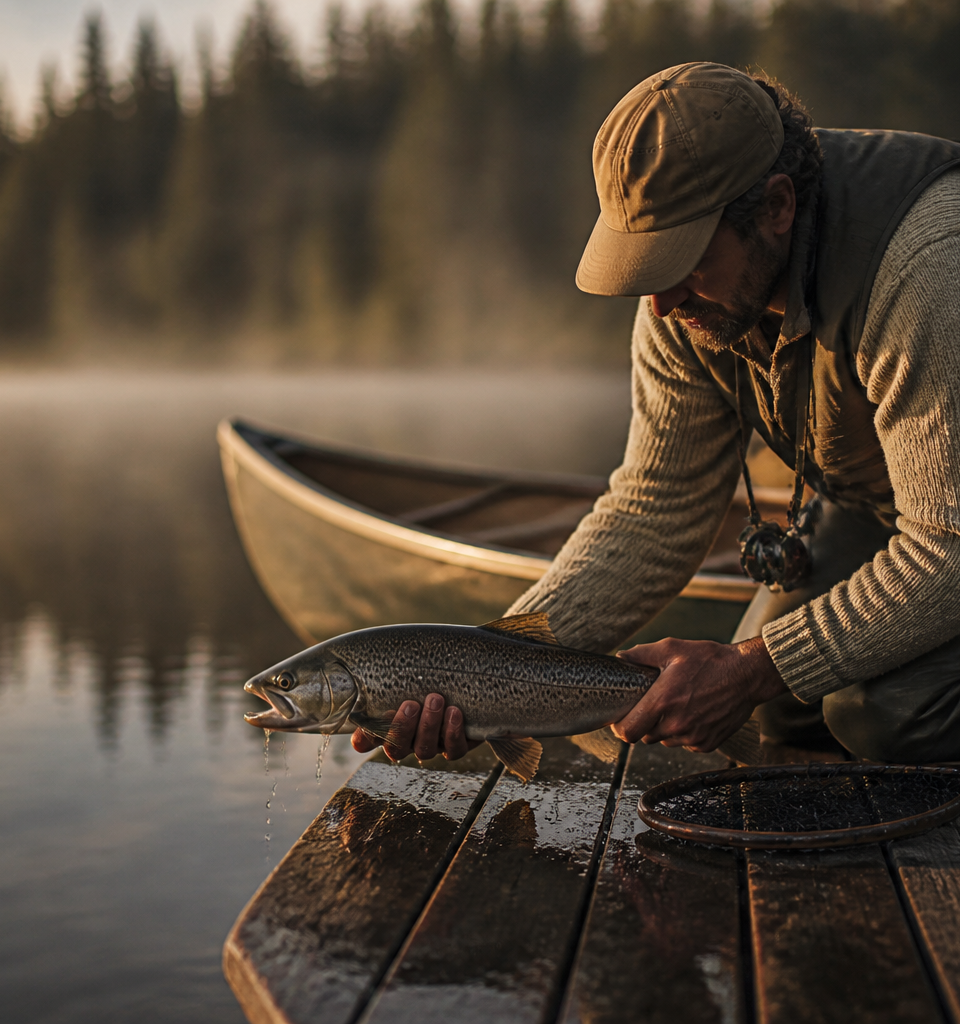
Species overview and identification
Lake trout, officially known in French as *touladi* (*Salvelinus namaycush*) and widely referred to as grey trout (*truite grise*), is one of Quebec's most iconic and sought-after freshwater game fish. While commonly called a trout, it is actually the largest member of the charr genus, sharing close kinship with brook trout and Arctic charr. Built as an apex deep-water predator, it features a hydrodynamic, torpedo-shaped body, a broad head, and powerful jaws lined with sharp teeth designed to seize agile forage fish.
To identify a lake trout accurately, examine its coloration and fin structure. Its body ranges from silvery-grey to dark olive-green, blanketed in a dense pattern of pale, cream-coloured or yellowish spots across the flank, head, dorsal fin, and tail. Its tail is deeply forked—a clear distinguishing feature from the nearly square tail of a brook trout. Furthermore, its lower fins display a clean white leading edge, but lack the bold black accent stripe typical of brook trout.
This deep-water giant exhibits remarkable longevity and exceptionally slow growth rates, particularly in northern latitudes. A ten-pound specimen has often weathered over a decade of harsh Canadian winters, while trophies exceeding twenty or thirty pounds can easily surpass thirty years of age. This unique biological reality makes every mature catch a valuable natural asset that demands careful handling and conservation-minded stewardship.
Habitat and geographic distribution
Lake trout are an obligate cold-water species requiring specific aquatic conditions to thrive. They inhabit large, deep, clear, and well-oxygenated oligotrophic lakes where water temperatures remain consistently between 8°C and 12°C (46°F to 54°F). When surface temperatures rise during summer, lake trout migrate down to the deep basins to stay within this vital thermal refuge.
In Quebec, lake trout are widely distributed across the Canadian Shield. Thriving populations are found throughout the Laurentians, Lanaudière, the Outaouais, and Mauricie, extending into the sprawling lake networks of Abitibi-Témiscamingue. Farther north, the massive reservoirs and pristine waterways of Nord-du-Québec, the Chibougamau-Mistassini region, and the Côte-Nord hold world-class fisheries where fish benefit from vast expanses of low-pressure water.
Lake trout habitat is closely tied to underwater structure and the movements of schooling prey. Rocky drop-offs, submerged shoals, deep humps, and the saddles between major lake basins are prime staging areas. Rocky, gravel, or boulder-strewn bottoms provide ideal ambush points from which lake trout launch attacks on passing schools of baitfish.
Behaviour and seasonal patterns
Lake trout behaviour follows a precise seasonal rhythm dictated by water temperature and lake stratification. Adapting your presentation to these seasonal shifts is the key to consistent angling success, as fish location changes dramatically from spring through autumn.
In spring, right after ice-out, lakes maintain a uniform, cold temperature from top to bottom. During this short multi-week window, lake trout leave the abyss to cruise shorelines, shallow bays, and rocky points in search of baitfish. This is the prime time when these deep-water predators can be caught near the surface with standard casting or light trolling gear.
As summer progresses and surface layers warm, a distinct thermocline develops. Lake trout retreat below this invisible boundary into the hypolimnion—the cold, oxygen-rich bottom layer. They spend the summer suspended near schools of forage or hugging deep structure, rarely venturing into warmer surface layers.
In the fall, as cooling air temperatures break down the thermocline and winds mix the water column, lake trout move toward their spawning grounds. Between late September and late October, mature fish gather over shallow, wave-washed rocky shoals and reefs to spawn at night before retreating into their winter holding zones under the ice.
Best seasons and conditions
Early season, typically running from mid-May to early June depending on latitude, offers the most dynamic lake trout fishing of the year. Fish feed aggressively after the winter freeze and patrol shallow depths within twenty feet of the surface. Anglers can target them using light tackle, delivering an uninhibited, direct fight.
Summer fishing, from late June through late August, requires specialized depth-control tactics but offers outstanding consistency. Once the thermocline is established, fish location becomes highly predictable for anglers who know how to read sonar and deliver lures to precise depths. Summer lake trout are in peak physical condition and fight with exceptional stamina.
When evaluating weather conditions, keep in mind that lake trout avoid intense sunlight. Prime angling conditions include:
- Overcast, grey days with low cloud cover.
- Moderate winds producing steady surface chop, which breaks up light penetration.
- Early morning and late afternoon periods when fish move up along structure to feed.
- Moderate pre-frontal barometric drops ahead of changing weather patterns.
Where and how to find it
Locating lake trout on expansive Quebec waters requires careful map study and effective sonar interpretation. Focus your search on high-percentage transition areas where underwater relief concentrates baitfish.
Key structures include steep breaklines that plunge directly into main-lake basins, isolated offshore humps surrounded by deep water, and sharp bottom transitions dropping from thirty to over seventy feet. Saddles connecting two deep trenches act as natural travel corridors where lake trout intercept schools of cisco (lake herring) or rainbow smelt.
Sonar is indispensable during the summer. Rather than searching solely for individual fish hooks, look for dense clouds of baitfish. When you mark schools of cisco or smelt holding along a drop-off or suspended just below the thermocline, active lake trout are almost always stationed nearby along the perimeter or directly beneath the pod.
Recommended techniques and strategies
Controlled-depth trolling is the premier technique for covering water and presenting lures directly in the strike zone of scattered fish across expansive lakes.
Several trolling and presentation strategies excel throughout the open-water season:
- Spring flatlining and topwater trolling: Pulling shallow-diving crankbaits or lightly weighted spoons behind the boat at 2 to 3 km/h (1.2 to 1.8 knots) along shoreline breaks and rocky points.
- Downrigger trolling in summer: Delivers surgical depth control, keeping lightweight flutter spoons or slender minnowbaits running at 50, 60, or 80 feet directly in the strike zone without dragging heavy inline weights.
- Leadcore line and diving planes (Dipsy Divers): An accessible, highly effective way to get lures down deep without installing permanent downrigger brackets on the boat.
- Vertical jigging: An exciting and increasingly popular tactic where anglers locate active fish on sonar and drop heavy metal spoons, blade baits, or large soft plastics straight down to trigger aggressive reaction strikes.
Always incorporate S-turns and speed variations into your trolling passes. Directional changes cause the outside lure to accelerate and rise while the inside lure slows down and drops, frequently triggering strikes from following fish.
Equipment and gear
Tackling lake trout requires sturdy, dependable equipment capable of handling heavy resistance at depth and the strong runs of trophy fish. A medium-heavy trolling rod between 7'0" and 8'6" with a moderate action and a resilient backbone provides the right balance of hook-setting power and forgiveness under downrigger tension.
Pair your rod with a durable conventional line-counter reel. The line counter is essential for returning productive lures to the exact depth and setback distance after every strike. For vertical jigging, a medium-heavy spinning or baitcasting outfit paired with a 3500–4000 size reel spooled with braided line provides maximum sensitivity.
Essential lures for Quebec lake trout waters include:
- Thin flutter spoons: Classics such as the Williams Whitefish, Dartee, and Sutton Spoon in genuine silver and brass finishes that accurately mimic the flash of cisco and smelt.
- Slender trolling minnows: Deep-diving jerkbaits and crankbaits like the Rapala Husky Jerk, Flatfish, and LiveTarget Smelt in silver, blue, white, and perch patterns.
- Soft plastics for jigging: 4- to 6-inch white or pearl tube jigs, swimbaits, and paddletails rigged on 3/4- to 2-ounce jig heads.
- Leaders: A 6- to 10-foot fluorocarbon leader in 12- to 17-pound test to maintain stealth in ultra-clear water and provide abrasion resistance.
Regulations, licences and ethical practices
Sport fishing in Quebec is managed under clear regulations designed to ensure sustainable fish populations. Every angler must hold a valid Quebec sport fishing licence and adhere strictly to regional quotas, daily possession limits, and open season dates specific to the fishing zone.
On many popular lake trout waters across the province, specific length regulations (such as slot sizes or maximum retention limits) are enforced to protect prime breeding stock. In certain designated zones, single barbless hooks are mandatory to minimize injury and facilitate clean releases.
Proper handling ethics are vital for lake trout, especially when caught from deep water during summer. Bring fish up slowly to allow their swim bladders to adapt to the pressure differential. When practicing catch-and-release, minimize handling time, support the fish horizontally beneath the belly, and never lift it by the gills. Utilizing a descending tool or release weight can help return a fish to its depth if it shows signs of barotrauma.
To review the full rules for your destination zone, consult the official publications from the Government of Quebec (hunting and fishing). Regulations change annually: always verify official rules before heading out on the water.
Conservation, population and ecosystem role
Lake trout sit at the apex of the aquatic food web in northern cold-water lakes. As dominant apex predators, they regulate forage fish numbers and maintain ecological balance across deep oligotrophic ecosystems.
Because of their slow growth rate and late sexual maturity—often taking 7 to 10 years before their first spawn—lake trout are exceptionally vulnerable to overharvest. A lake subjected to excessive angling pressure can experience a population collapse that takes decades to recover.
Anglers play a direct role in protecting this fishery. Practicing selective harvest by keeping only legal, smaller fish for a meal while releasing trophy-class breeders ensures strong genetics and preserves legendary fishing for future generations.
Planning a guided trip or outfitter stay
Tackling vast, unfamiliar northern waters for lake trout can be challenging without local expertise and specialized equipment. Booking a stay with an established Quebec outfitter provides the ideal setup for a safe, comfortable, and highly productive wilderness fishing trip.
Specialized fishing lodges and outfitters provide rugged boats, commercial-grade electronics, and trolling gear suited to big-water conditions. Hiring an experienced local guide saves valuable time by putting you right on the most productive reefs, trenches, and seasonal staging areas from day one.
Whether you are aiming for a trophy fish in northern Quebec or exploring a secluded lake in the Laurentians, unforgettable fishing adventures await. To find the right outfitter for your dates, group size, and preferred fishing style, start planning your next expedition today on MyOutfitters.
Frequently asked questions
What is the difference between a lake trout and a brook trout?
Lake trout feature a deeply forked tail, a grey to olive body, and pale spots without halos. Brook trout have a nearly square tail, distinctive red spots circled by blue halos, and a black accent line running behind the white leading edge of their lower fins.
At what depth do lake trout hold during mid-summer in Quebec?
In July and August, lake trout seek water temperatures between 8°C and 12°C (46°F to 54°F). They typically hold below the thermocline at depths between 40 and 80 feet, moving even deeper on very large, clear lakes.
Why use a downrigger for lake trout fishing?
A downrigger uses a heavy cannonball weight to bring lightweight, action-packed lures down to precise depths without adding heavy weights directly to your fishing line, allowing for an unhindered fight when a fish strikes.
Can you catch lake trout by casting with spinning gear?
Yes, especially in the spring right after ice-out. Because surface waters remain uniformly cold, lake trout cruise shorelines, rocky points, and shallow flats where they readily hit casted crankbaits, spoons, and jigs.
What are the best trolling lures for summer lake trout?
Silver flutter spoons like the Williams Whitefish and Sutton Spoon, along with slender minnow-profile plugs that mimic cisco and rainbow smelt, are top performers for deep trolling.
How can anglers prevent barotrauma when releasing deep-water lake trout?
Retrieve fish slowly from deep water to reduce pressure shock, handle them gently with wet hands, keep them in the water as much as possible, and use a descending release device if the fish struggles to submerge on its own.
Why is the thermocline so important in lake trout fishing?
The thermocline acts as a thermal barrier separating warm surface water from cold deep water. Because lake trout cannot tolerate warm temperatures, the thermocline defines the upper ceiling where fish will actively hold and feed in summer.
What is the ideal trolling speed for lake trout?
A speed between 2.5 and 4 km/h (1.5 to 2.5 knots) is standard. Always monitor lure action alongside the boat to ensure your spoons produce a wide wobble without spinning out.
Can you ice fish for lake trout in Quebec?
Yes, on lakes and within management zones where winter lake trout fishing is explicitly permitted. Anglers target them through the ice using tip-ups with dead bait or by aggressively jigging heavy spoons and white tube jigs over deep structure.
Why is catch-and-release recommended for large lake trout?
Large lake trout are vital breeding stock that take several decades to reach trophy size. Releasing these older fish preserves the reproductive capacity of the lake, while smaller specimens are generally better suited for table fare.