Fishing
Fishing for Lake Whitefish in Quebec: Complete Guide and Tactics
Discover the secrets to targeting lake whitefish in Quebec: northern habitats, fine-tuned rigs, ice fishing tactics, and expert tips for successful outings.
Species overview and identification
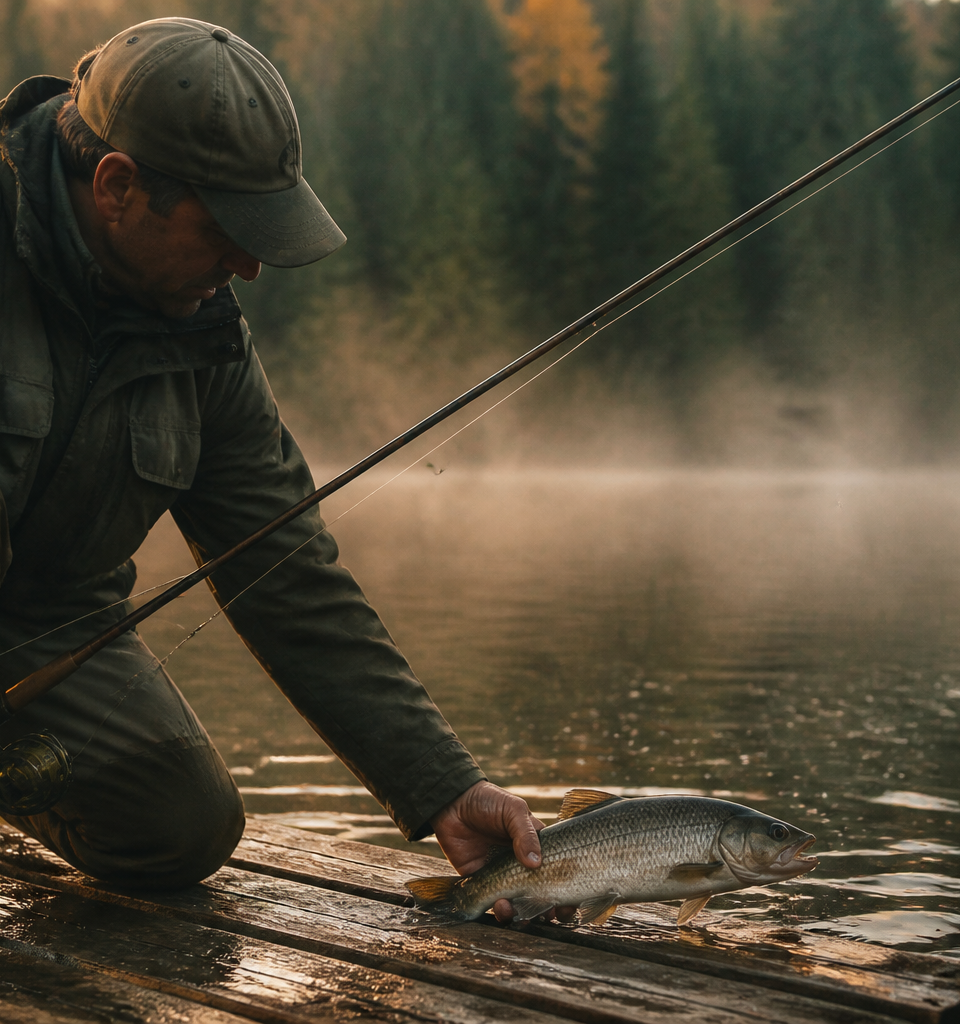
Lake whitefish (*Coregonus clupeaformis*) is a cold-water salmonid often overlooked by recreational anglers, despite being a prized and hard-fighting quarry on Quebec's waters. With its streamlined, laterally compressed body, shimmering silver flanks, and back ranging from olive-green to dark brown, this fish boasts a distinctive profile. A small head featuring an inferior mouth—tucked beneath the snout and lacking prominent teeth—characterizes this benthic species.
Anatomically, lake whitefish possess the adipose fin typical of their family and a deeply forked tail. Their delicate mouth demands a refined touch, as the tissue around their lips is fragile and tears easily during overly aggressive fights. In Quebec lakes, adult specimens commonly measure between 35 and 55 centimetres, occasionally reaching impressive weights in the province's large northern reservoirs.
It should not be confused with the lake cisco, which has a protruding lower jaw that extends past the snout, nor with brook trout or lake trout, whose markings and mouth structures are vastly different. Its firm, mild, and flavorful white flesh makes it one of the most sought-after catches for lovers of boreal cuisine, whether prepared fresh or smoked over maple or alder wood.
Habitat and geographic distribution
Lake whitefish inhabit vast stretches of Quebec territory, from major southern lake systems to the far reaches of Nunavik and James Bay. They are found in abundance across Abitibi-Témiscamingue, Mauricie, Saguenay–Lac-Saint-Jean, Côte-Nord, and Nord-du-Québec. These regions provide the glacial terrain and oligotrophic waters that the species requires to thrive.
This fish thrives in deep, cold, well-oxygenated lakes characterized by crystal-clear water. In lake environments, it favors bottoms of gravel, compacted sand, or clean mud where aquatic micro-invertebrates gather. Across several large river systems, such as the Rupert River basin or the Pipmuacan Reservoir, whitefish also push into river zones during specific times of the year.
The species is particularly sensitive to water temperature. As soon as the surface water column exceeds 15 to 18 degrees Celsius, whitefish retreat to deep water layers to hold beneath the thermocline. Major underwater structures such as deep basins, rocky points extending into deep drop-offs, and deep flats serve as their preferred habitats for most of the year.
Behaviour and seasonal patterns
The life cycle of lake whitefish is dictated by thermal lake stratification and aquatic insect hatches. In the spring, immediately following ice-out, surface waters are cold and uniform. Whitefish move into shallow bays and sandy flats to feed aggressively on mayfly nymphs, chironomid larvae, and small mollusks.
As summer sets in and water warms, the species migrates to deep benthic zones, adopting schooling behaviour. Schools cruise slowly along underwater contours, feeding off the bottom but occasionally suspending in the water column at dusk to intercept drifting zooplankton. During midsummer heat waves, their metabolism slows and feeding windows become remarkably short.
Fall triggers the spawning cycle. When water temperatures drop below 8 degrees Celsius, typically between October and November in Quebec, mature adults congregate over shallow gravel shoals, wind-swept reefs, or near tributary mouths. Spawning occurs at night over clean cobble and pebble substrates, where deposited eggs incubate through the winter under ice cover.
Winter beneath the ice is a period of steady activity for whitefish. Unlike species that enter semi-dormancy, whitefish actively patrol mid-depth flats in search of benthic invertebrates and small prey, making them a prime target for ice anglers.
Best seasons and conditions
For Quebec anglers, two primary windows stand out for targeting lake whitefish with consistency: spring open water and mid-winter through the ice. In spring, the two to three weeks following ice-out offer opportunities to hook fish near the surface or in less than six metres of water—a rare chance to deploy light spinning gear or even fly tackle.
Winter remains the premier season for consistent success. From mid-January through late March, whitefish gather in dense, predictable schools over flats between eight and fifteen metres deep. Stable ice cover creates a dark, secure environment that promotes prolonged feeding periods throughout the day.
Ideal weather conditions include calm days with light overcast skies and steady barometric pressure. High winds or sharp barometric drops tend to pin fish to the bottom and dramatically reduce their willingness to bite. Early morning and late afternoon hours typically deliver the strongest feeding pulses.
Where and how to find it
Locating lake whitefish requires careful study of bathymetric maps and the dedicated use of a quality sonar unit. In open water, focus your search on transition zones where shallow sandy or rocky shoals drop steeply into deep water. Flats sitting between twelve and twenty metres deep are prime starting points during summer scouting.
On the ice, systematic searching makes all the difference. Target submerged points pushing out into open basins or saddles between rocky islands. A good fish finder will display whitefish as thin, wavy lines or tight marks hugging the bottom, often indistinguishable without fine-tuning gain and target separation settings.
- Scout drop-off edges between 10 and 18 metres deep.
- Target soft silt and fine sand bottoms rich in chironomid larvae.
- Watch for suspended plankton layers visible on your sonar screen.
- Identify deep bay entrances where prevailing winds concentrate surface nutrients.
Whitefish rarely travel alone. Once a fish is hooked or marked, work that precise depth zone deliberately; schools frequently circle a tight area for twenty to thirty minutes before moving along the bottom.
Recommended techniques and strategies
Vertical jigging is the gold-standard technique for enticing lake whitefish. Because of their small mouths and suction-feeding behavior rather than aggressive striking, the bite is often deceptively subtle. Lures should be worked with a rhythmic cadence without erratic jerks—lifting the rod tip a few centimetres, then letting the lure fall back down under controlled line tension.
Using a lightweight flutter spoon or compact jigging spoon acts as a visual attractor to draw fish off the bottom. Many experienced anglers tie a 15-to-20-centimetre dropper leader beneath the spoon, tipped with a micro wet fly, nymph imitation, or small hook baited with permitted options such as maggots or scented artificial larvae. This tandem setup dramatically increases hookups when fish shy away from larger profiles.
In open water during spring, ultra-slow trolling with planer boards or light leadcore line covers productive ground effectively. Slender mini-crankbaits or small inline spinners with a fluorocarbon leader yield excellent results when whitefish chase schools of lake smelt or minnows near the surface.
Equipment and gear
The right gear for whitefish centres on sensitivity and finesse. A light-power spinning rod or fast-action winter jigging rod equipped with an ultra-sensitive tip is essential for detecting the delicate suction bite. A rod tip that is too stiff will cause whitefish to drop the lure and result in missed hooksets.
Line choice is critical to fool this wary salmonid in Quebec's gin-clear waters. A light braided mainline (4 to 8 lb test) paired with an invisible 4 to 6 lb fluorocarbon leader provides the ideal blend of strength, zero stretch for deep hooksets, and complete stealth.
- Silver, gold, or two-tone jigging spoons from 3 to 14 grams.
- Small jig heads (1/16 to 1/8 oz) paired with micro soft plastics.
- Beadhead, black, or olive chironomid nymphs tied on size 10 to 14 hooks.
- Portable sonar or electronic ice flasher essential for accurate depth positioning.
- Soft rubber landing net to protect fish scales and slime coats.
A 1000 to 2000 size spinning reel with a smooth, micro-adjustable drag is critical to cushion sharp headshakes and sudden runs as whitefish reach the ice hole or boat side, preventing torn mouth tissue.
Regulations, licences and ethical practices
Targeting lake whitefish recreationally in Quebec requires a valid provincial sport fishing licence. Regulations regarding daily catch limits, possession limits, and open seasons vary depending on the specific Fishing Zone across Quebec. On certain designated bodies of water, special management measures may apply to protect local stocks.
Because lake whitefish frequently inhabit deep water, they are highly susceptible to barotrauma during rapid retrieval. If you intend to practice catch-and-release, reel fish in slowly to give them time to equalize swim bladder pressure. Single barbless hooks make unhooking quick and easy, minimizing handling out of the water.
To review specific regulations, zone maps, and open season dates for your sector, consult the official Government of Quebec (hunting and fishing) website. Regulations change annually: always verify official rules with the department before heading out on your trip.
Conservation, population and ecosystem role
Lake whitefish play a pivotal ecological role across northern aquatic ecosystems. By converting benthic biomass and plankton into high-energy forage, they serve as a cornerstone food source for Quebec's apex predators, including lake trout, northern pike, and walleye. Healthy whitefish populations directly reflect the overall water quality and vitality of a watershed.
While whitefish numbers remain stable and abundant across remote Canadian Shield territories, they remain vulnerable to lake eutrophication, warming surface waters, and invasive aquatic species. Sustaining these populations relies on diligent habitat stewardship and measured harvest practices.
Anglers play a vital role in resource stewardship by avoiding excessive harvest when fish are tightly schooled. Respecting fall spawning sanctuaries and maintaining clean, litter-free ice fishing sites will ensure this boreal jewel thrives for generations to come.
Planning a guided trip or outfitter stay
Experiencing lake whitefish fishing within the welcoming atmosphere of a Quebec outfitter is the ultimate way to master this rewarding species. Quebec outfitters offer exclusive access to pristine waters and remote territories where fishing pressure is low and fish densities are exceptionally high.
Booking a trip with a professional local guide saves valuable time by pinpointing active structure immediately and mastering the subtle presentation details suited to local waters. Whether staying in a fully equipped lakeside cabin on a boreal lake or inside a heated ice fishing shelter in the heart of winter, an outfitter stay delivers safety, comfort, and complete immersion in Quebec's wilderness.
To plan your next fishing adventure and find a destination tailored to your needs, explore available packages and easily book your outfitter stay through MyOutfitters.
Frequently asked questions
How do you tell a lake whitefish apart from a lake cisco?
The simplest way is by examining the mouth. Lake whitefish have a rounded snout that overshoots the lower jaw (an inferior, downward-facing mouth), whereas lake ciscoes feature a longer, protruding lower jaw that extends past the snout (a superior, upward-angled mouth).
Why is setting the hook on lake whitefish so challenging?
Whitefish gently suck in water and prey rather than striking aggressively. Furthermore, the membranes in their mouth are delicate and thin. An overly aggressive hookset or an overly stiff rod will tear the mouth tissue, causing the fish to unhook immediately.
What are the most effective lures for ice fishing lake whitefish?
Small, narrow silver jigging spoons rigged with a dropper line to a micro nymph or soft plastic jig 15 cm below are exceptionally effective. Tipping tiny hooks with maggots or waxworms completes the setup.
What depths do lake whitefish inhabit during summer months?
During summer heat, lake whitefish move below the thermocline into cold water, typically between 12 and 25 metres deep. They hold tight to benthic structure, deep basins, and well-oxygenated flats.
Can you fly fish for lake whitefish in Quebec?
Yes, fly fishing works exceptionally well in early spring during major insect hatches right after ice-out. Whitefish move into shallow bays to feed near the surface. Mayfly or chironomid nymphs fished under floating or intermediate lines can be deadly.
How does lake whitefish taste, and what is its culinary quality?
Lake whitefish features white, flaky, mild, and moderately oily meat with outstanding culinary value. Prized by gourmets, it is delicious pan-fried in butter, baked in foil over camp coals, or smoked according to traditional boreal recipes.
How can you minimize the effects of barotrauma when releasing whitefish?
To prevent fatal swim bladder overexpansion, reel the fish up very slowly from deep water. Minimize handling and exposure to air, and use a suitable landing net to revive the fish in the water before release.
What type of fishing line works best for lake whitefish?
The ideal setup combines a 4 to 8 lb test thin braided mainline for maximum sensitivity and zero stretch with a 1.5 to 2 metre leader of 4 to 6 lb fluorocarbon for total invisibility in clear waters.
Why is a sonar unit crucial when targeting this species?
Whitefish frequently hug the bottom in deep water and move with subtle cues. Sonar allows you to map bottom composition, mark schools, and pinpoint your lure just centimetres above the fish to trigger strikes.
How do lake whitefish behave right after ice-out?
Immediately after ice-out, uniform water temperatures encourage whitefish to leave the depths and patrol shallow bays, sand flats, and sunlit shorelines. They feed actively on emerging aquatic insects before summer warming pushes them back down.