Fishing
Largemouth Bass Fishing: The Complete Guide in Quebec
Discover the best techniques, prime habitats, and strategies for catching largemouth bass in Quebec's lakes and rivers with tips from our fishing experts.
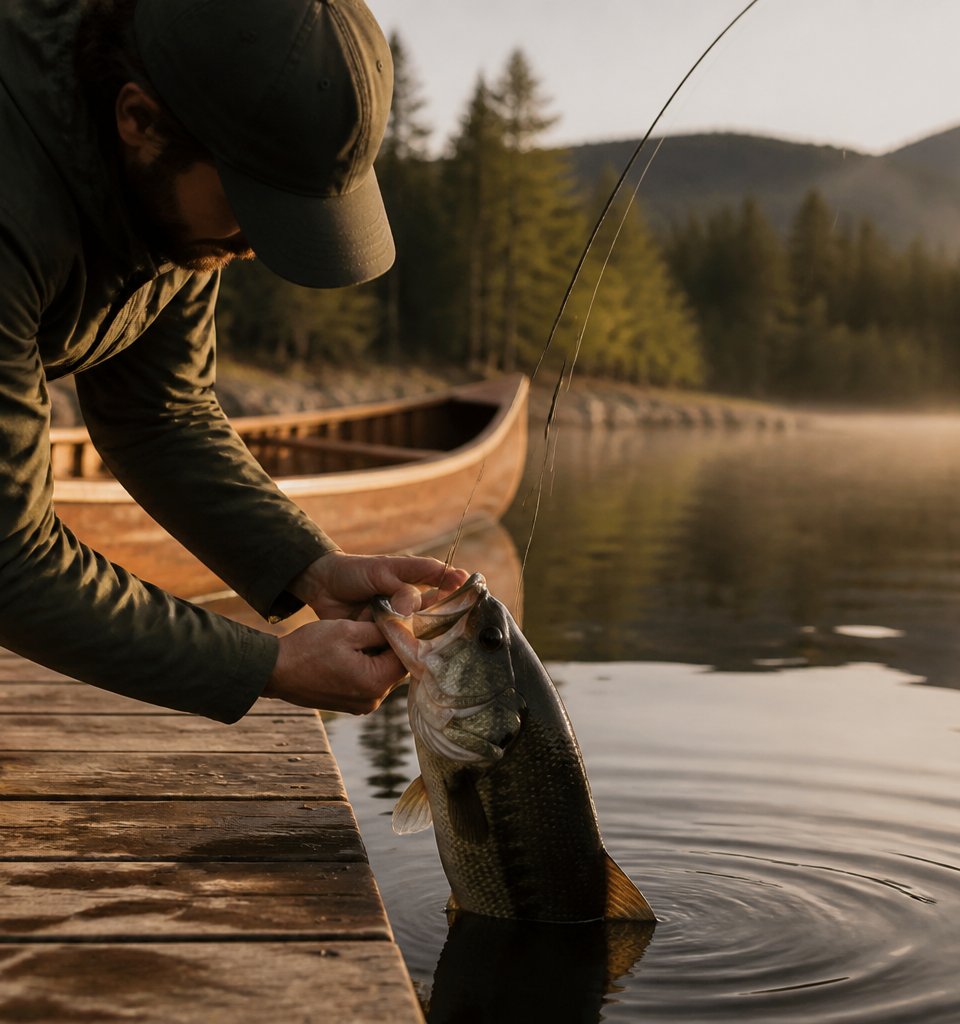
Species overview and identification
The largemouth bass is one of the most sought-after freshwater sport fish in Quebec. Instantly recognizable by its stocky, streamlined build, this predatory fish displays coloration ranging from olive green to dark emerald across its back, fading to a whitish belly. A dark, irregular horizontal stripe typically runs along its flanks, most prominent in younger specimens and clear water.
To distinguish it definitively from its close relative, the smallmouth bass, look at the corner of the mouth (maxilla). On a largemouth with its jaw closed, the corner of the mouth extends noticeably past the rear edge of the eye. In addition, its dorsal fin features a much deeper notch between the spiny and soft sections, almost appearing as two separate fins. Its scales are slightly larger, and its overall profile is thicker and more robust—built specifically for ambush predation within dense aquatic vegetation.
Habitat and geographic distribution
In Quebec, largemouth bass thrive primarily in calm, shallow waters rich in aquatic vegetation. Prime territory includes weedy bays of larger lakes and reservoirs, marshes, ponds, river oxbows, and shallow lakes that warm up quickly in early spring. Submerged structures like deadfalls, lily pad fields, wooden docks, and thick cattail edges serve as its favourite ambush points and sanctuaries.
Geographically, largemouth bass are concentrated across the southern half of the province. They are abundant throughout the St. Lawrence River basin, the Outaouais, Montérégie, the Laurentians, Lanaudière, and the Eastern Townships. While less cold-tolerant than smallmouth bass, largemouths are exceptionally well-suited to the warmer, slower-moving waterways of southern Quebec, where they find an abundance of forage and ideal cover throughout the warm season.
Behaviour and seasonal patterns
Largemouth bass behaviour is closely dictated by water temperature and light levels. In spring, once water temperatures cross roughly 15°C (60°F), adult fish move up from deeper wintering zones into shallow, protected bays featuring sand or gravel bottoms. Males clear circular nests and aggressively defend the eggs and newly hatched fry against any intruders.
During summer, the bass settle into a routine centered on thermoregulation and ambush feeding. During the low-light hours of early morning and dusk, they cruise the outer edges of weedbeds in search of prey. Under the midday sun, they burrow into the thickest weed mats or hold tight under floating boat docks where deep shade offers cooler water and security. In autumn, as water temperatures drop and weedbeds die off, largemouth bass feed aggressively to build winter fat reserves, frequently staging on secondary drop-offs near deeper wintering basins.
Best seasons and conditions
Summer remains prime time for largemouth bass fishing in Quebec, particularly from July through late August when aquatic weed growth reaches peak density. Warm, humid, overcast days often trigger incredible feeding windows, pulling fish out from the thickest cover to hunt in open pockets.
Barometric shifts also have a strong impact on bass feeding activity. The hours leading up to an incoming cold front or summer thunderstorm frequently produce memorable flurries of bites. Conversely, bluebird skies with high pressure and flat-calm water following a cold front demand a much slower, surgical approach targeting fish tucked deep inside cover.
Where and how to find it
Consistently locating largemouth bass requires learning how to read aquatic vegetation. Avoid wasting time over bare shorelines or uniform rock bottoms. Focus your efforts on transition zones: where milfoil beds meet lily pad fields, or inside natural pockets and cuts within thick weed mats.
- Dense floating weed mats ("the slop"): thick surface canopy often shelters the biggest fish from direct sunlight.
- Submerged timber and laydowns: fallen trees, stumps, and root systems provide ideal ambush posts.
- Docks and floating platforms: permanent shade attracts baitfish and provides reliable overhead cover.
- Weed points extending toward deeper water: high-percentage travel corridors during active feeding windows.
Recommended techniques and strategies
Targeting largemouth bass accommodates a wide variety of approaches, from power fishing to subtle finesse tactics. Topwater fishing with hollow-body frogs is easily among the most thrilling methods available. Skimming a weedless frog across thick lily pads and matted vegetation triggers explosive surface strikes that deliver an unmatched adrenaline rush.
When fish refuse to feed on the surface, weedless soft plastic presentations become indispensable. A Texas-rigged plastic worm or creature bait slips effortlessly through dense cover without hanging up. For heavier cover, flipping and pitching a weedless jig tipped with a soft plastic craw trailer mimics a foraging crayfish and generates sharp reaction strikes.
- Topwater: hollow-body frogs, prop baits, and poppers in early morning or under overcast skies.
- Heavy cover: Texas rigs weighted with tungsten bullet weights and flipping jigs with weedguards.
- Search baits: lipless crankbaits and spinnerbaits burned along outer weed edges.
- Finesse: wacky rigs or Neko rigs around dock pilings to fool pressured fish.
Equipment and gear
Wrestling hard-fighting bass out of heavy weeds demands uncompromising tackle. A baitcasting setup is strongly recommended for power fishing techniques. A 7-foot to 7-foot-6-inch medium-heavy to heavy power rod with a fast action delivers the backbone and leverage required to drive home hooks and turn a fish's head.
A high-speed reel helps take up slack instantly on sudden strikes. For line, 40- to 65-pound braided line is standard for cutting cleanly through weed stems without snapping. For lighter finesse applications in clear water or along structure edges, a medium-action spinning rod paired with light braid and a 12- to 15-pound fluorocarbon leader works exceptionally well.
Regulations, licences and ethical practices
Sport fishing in Quebec is governed by provincial regulations designed to protect and sustain healthy fish populations. Every angler must carry a valid provincial sport fishing licence. Largemouth bass season opening dates are scheduled later in the spring across most zones to protect spawning fish while they guard their nests.
Anglers must strictly adhere to daily catch limits, possession quotas, and any size slot limits enforced in their specific fishing zone. To view full zone maps, season dates, and limits, consult the official Government of Quebec (hunting and fishing) website. Adopting careful catch-and-release habits—such as using barbless hooks, wetting your hands before handling fish, and minimizing time out of the water—directly supports the health of Quebec's fisheries. Regulations change annually: always verify the current rules before planning an outing.
Conservation, population and ecosystem role
As top-tier predators in shallow freshwater ecosystems, largemouth bass play a fundamental role in maintaining balanced aquatic food webs. They regulate populations of baitfish, crayfish, frogs, and aquatic insects. A thriving largemouth population is often a clear indicator of a rich, productive ecosystem with abundant nutrients and aquatic cover.
However, shoreline destruction, excessive nutrient runoff, and the loss of littoral habitats pose real challenges to natural recruitment. Protecting spawning beds in spring is critical, as removing a male from its nest exposes vulnerable eggs and fry to immediate predation by yellow perch and sunfish. A strong catch-and-release ethic among Quebec's angling community continues to help maintain robust populations and quality trophy fish throughout the province's waterways.
Planning a guided trip or outfitter stay
Booking a stay at a Quebec fishing outfitter is one of the best ways to explore productive, less-pressured waters. Fishing with professional local guides gives you immediate access to intimate water knowledge, detailed structure mapping, and seasonal fish movements based on changing weather conditions. Their expertise saves valuable time while helping you refine your technical presentations.
Whether you are introducing your family to sport fishing in a fully equipped wilderness lodge or hunting trophy largemouth bass tucked deep in backcountry bays, outfitters provide tailored lodging and guiding packages to match your goals. To find your next destination and book an unforgettable fishing adventure, plan your stay on MyOutfitters today.
Frequently asked questions
What is the main difference between largemouth and smallmouth bass?
With the mouth closed, the upper jaw of a largemouth bass extends past the rear edge of the eye, whereas on a smallmouth bass it stops in line with the middle of the eye. Largemouth bass also prefer warm, calm waters with thick weed cover, while smallmouth bass favor clear, rocky structure and moderate current.
What is the best time of day to target largemouth bass in summer?
Early morning and late evening twilight provide the prime windows for topwater and shallow-weed fishing. During bright midday hours, bass move deep into thick weed mats or beneath shaded docks, where they can be effectively targeted using Texas rigs, punching weights, and jigs.
What soft plastic lure colours work best in Quebec waters?
Natural tones such as green pumpkin, black, and blue work consistently across most Quebec waterways. In dark or stained water, darker colours create a stronger silhouette, while white and chartreuse patterns effectively mimic schooling baitfish.
Why does the bass fishing season open later in Quebec?
The later opening protects adult fish during their critical spring spawning window. Male bass build nests and actively guard eggs and fry from predators. Catching a male off its nest leaves the brood unprotected, severely reducing reproductive success and population recruitment.
What braided line strength is recommended for fishing heavy weed cover?
A braided line rating of 50 to 65 pounds is strongly recommended for frog fishing and punching heavy mats. This strength allows you to slice through thick weed stems and pull strong fish out of dense cover without risking line failure.
How do you effectively fish a hollow-body surface frog?
Cast the frog directly over lily pads or floating weed mats. Retrieve it with small twitches and pauses, letting the bait sit briefly over open pockets of water. When a strike occurs, wait a split second until you feel the weight of the fish on the rod before setting the hook firmly.
Which bodies of water in Quebec offer the best largemouth bass fishing?
Lake Saint-Pierre, Lake of Two Mountains, the St. Lawrence River, and numerous recreational lakes throughout the Laurentians, Outaouais, and Eastern Townships hold excellent largemouth bass populations. Shallow, weed-rich bays across these watersheds are typically the most productive areas.
Can you target largemouth bass on fly fishing gear?
Yes, fly fishing for largemouth bass is exciting and effective, especially using surface foam poppers or weedless streamers that imitate frogs and baitfish. A 7- or 8-weight fly rod is recommended to cast bulky, wind-resistant flies and steer fish away from thick cover.
How should you handle a largemouth bass for catch-and-release?
Always support the fish horizontally using two hands to avoid injuring its lower jaw and spine. Avoid placing it on hot, dry boat carpets, wet your hands before handling, and return it quickly to the water while gently supporting it until it swims away under its own power.
What is a Texas rig and how does it work?
A Texas rig features a wide-gap worm hook threaded into a soft plastic bait so the hook point remains flush or skin-hooked inside the plastic body. Paired with a bullet sinker, this weedless setup slides cleanly through the thickest aquatic vegetation and brush without snagging.