Fishing
Deep Summer Walleye Tactics: Precision Trolling and Live Sonar
Learn how to target suspended trophy walleye during the summer heat using precision trolling and live sonar technology on deep Canadian reservoirs.
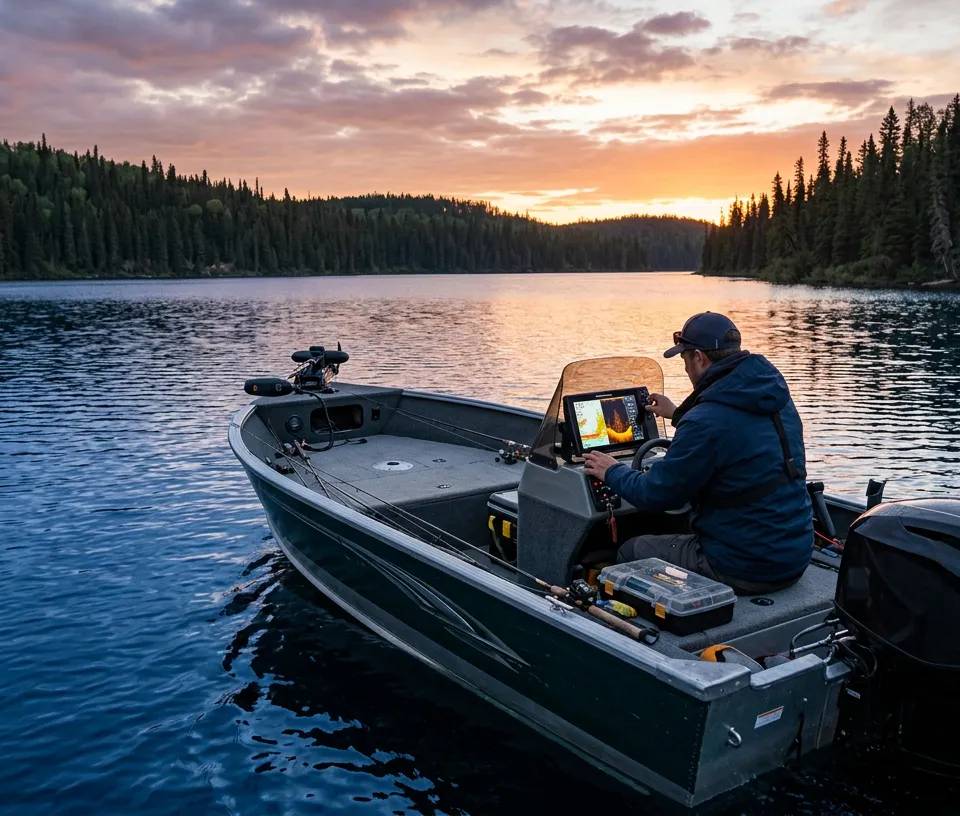
When the summer heatwave peaks, trophy walleye in large Canadian reservoirs often move away from traditional shoreline structures. These larger fish seek the thermal stability of open water, suspending at specific depths to hunt schools of baitfish. Finding them requires a shift from vertical jigging to high-tech, mobile search strategies that cover vast areas efficiently.
Locating Suspended Schools
Mid-summer Doré (Walleye) are pelagic roamers. They follow oxygen-rich currents and schools of cisco or smelt over deep basins. While a standard 2D sonar helps identify the general depth of baitfish, you must look for individual arches suspended in the middle of the water column, often far from any bottom contact. Look for these transition zones where deep river channels meet wide flats.
The Edge of Live Sonar Technology
Forward-facing sonar has revolutionized how we target suspended fish. It eliminates the guesswork of traditional trolling by showing you exactly how a walleye reacts to your presentation.
- Real-time Depth Correction. If the fish are sitting at 18 feet over 50 feet of water, you can adjust your lead length instantly to put the lure right in their strike zone.
- Targeting Trophies. Live imaging allows you to bypass smaller schools and focus your efforts on the larger, solitary signals that represent trophy-class fish.
- Monitoring Behavior. Watching a fish track a lure helps you decide whether to change colors, speeds, or lure actions on the fly.
Precision Trolling Methods
Consistency is the hallmark of a successful summer angler. Using line-counter reels is non-negotiable for repeating successful passes. By using diving charts or mobile apps, you can calculate the exact amount of line needed to reach a specific depth. Deep-diving crankbaits or crawler harnesses behind bottom bouncers (run high in the column) are incredibly effective. A slight "S" turn with the boat will often trigger strikes by causing lures on one side to sink and the other to accelerate.
Lure Selection for Deep Reservoirs
In the stained waters of northern reservoirs, contrast is key. High-UV finishes and metallic golds or oranges often outperform subtle colors. However, in very clear systems, translucent patterns that mimic shiners or young whitefish are preferred. Always ensure your lures are tuned to run perfectly straight, as a wandering bait will never reach its calculated depth during a precision troll.
Booking Your Outfitting Experience
Canadian outfitters on major reservoirs provide the perfect base for exploring these vast waters. Many lodges now offer premium boat rentals equipped with modern electronics or slips for your own rigged boat. When browsing our directory, look for outfitters that specialize in walleye and offer topographical maps of the reservoir. Professional guides at these locations can shave days off your learning curve by pointing out current thermocline depths and active summer patterns.
Frequently asked questions
How deep do suspended walleye sit during the summer?
They typically hold between 15 and 25 feet deep, regardless of the total lake depth. They often position themselves just above the thermocline or directly within schools of baitfish.
Is live sonar necessary for success?
It is not mandatory, but it significantly increases efficiency by showing you fish reactions. Without it, precision trolling using traditional sonar and line counters remains very productive.
What is the best trolling speed in hot weather?
A speed of 1.8 to 2.2 miles per hour (mph) is ideal for crankbaits. This allows you to cover ground while triggering the hunting instincts of active walleye.
Why does walleye leave traditional structures?
Shallow water temperatures become too high and oxygen levels drop. Walleye migrate offshore to find cooler water and follow pelagic prey species.
Which lures are most effective in pelagic zones?
Slender minnow-style crankbaits and worm harnesses with large blades are top choices. They perfectly mimic the smelt and cisco that suspended walleye feed on.