Fishing
Targeting Trophy Northern Pike in Abitibi-Témiscamingue
Unlock the secrets to landing giant pike in Abitibi. Learn which seasons and specific lake structures hold the monsters of the Canadian Shield.
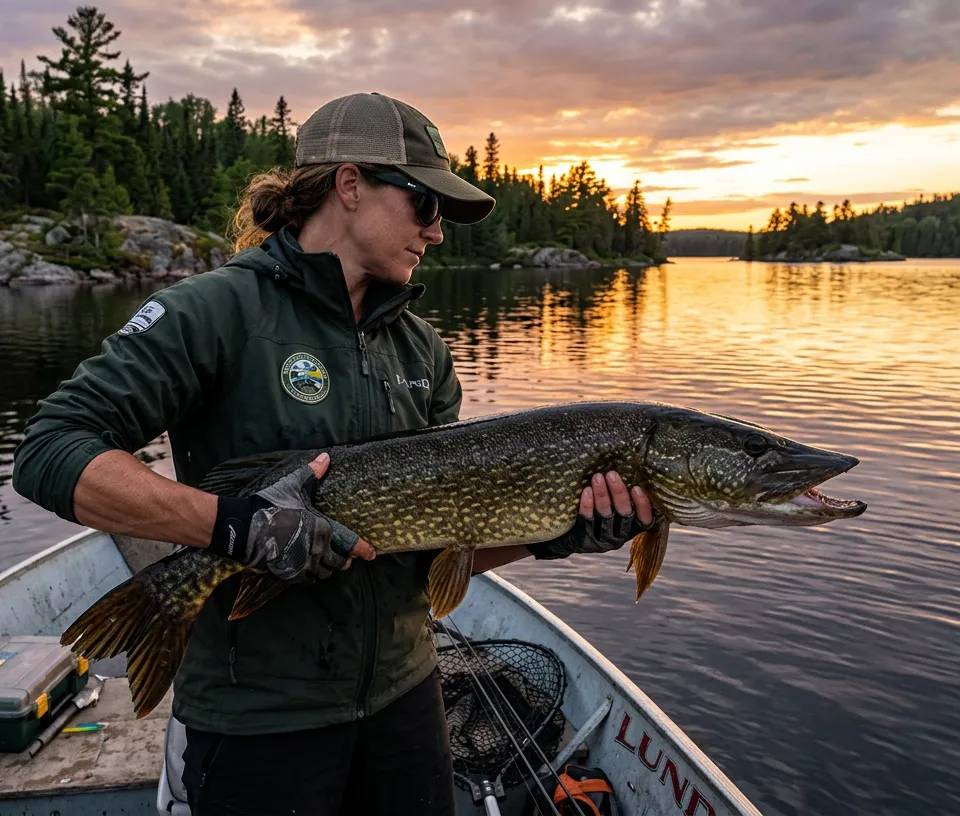
Abitibi-Témiscamingue is a legendary destination for freshwater anglers, but landing a Northern Pike over 40 inches requires more than just luck. In these sprawling northern waters, trophy fish behave differently than the smaller individuals that populate the shorelines. Success depends on understanding thermal refuges and the seasonal movements of apex predators.
Seasonal Peaks for Trophy Success
Timing is the most critical factor when hunting for monster pike. In the early spring, just after ice-out, large females migrate into shallow, muddy bays to spawn. These sun-warmed flats become temporary arenas where massive fish are vulnerable in very shallow water.
Fall is the other premier window. As water temperatures drop from mid-September onward, giant pike move back toward predictable structures to gorge themselves before winter. During this period, their metabolism shifts, making them more likely to strike large, energy-rich baits. While summer fishing is productive for numbers, spring and fall are undoubtedly the best times for a personal best.
Identifying High-Potential Structures
Big pike are solitary hunters that demand prime real estate. To find them, look for areas that offer both cover and quick access to deep water:
- Deep Weed Edges. Look for large cabbage beds located next to significant drop-offs. These underwater forests provide the perfect ambush point for a 20-pound predator.
- Windward Points. Rocky points that face the prevailing wind collect baitfish. The largest pike often sit just off the edge of these points, waiting for disoriented prey.
- Islands and Saddles. Underwater ridges connecting two islands act as natural highways for roaming giants.
Gear and Presentation Tactics
To catch a trophy, you must fish with trophy-sized equipment. Large 8 to 10-inch swimbaits, oversized spoons, and massive bucktails are standard tools for the job. These larger presentations often ignore smaller fish, ensuring that when your rod buckles, it is likely a substantial specimen. In the stained waters of Abitibi, high-contrast colors or realistic patterns mimicking Yellow Perch and Lake Whitefish are highly effective.
Booking Your Abitibi Expedition
Selecting the right outfitter is essential for a successful trophy hunt. Look for lodges situated on vast lake systems or reservoirs known for producing large fish. When contacting an outfitter, ask about their catch-and-release policies for large breeding females, as these conservation efforts are why the region continues to produce world-class pike.
Local guides can save you days of searching by pointing out the specific rock piles or weed lines that hold big fish every season. Use our directory to connect with specialized outfitters in Abitibi-Témiscamingue and start preparing for the heavy strike of a northern giant.
Frequently asked questions
When is the best time for trophy pike in Abitibi?
The best times are early spring, immediately after ice-out, and the fall season from mid-September to late October when large fish feed aggressively before winter.
What lures should I use to target large specimens?
Use oversized lures such as massive spoons, 8-inch or longer crankbaits, and soft plastics mimicking yellow perch to discourage smaller fish from biting.
Is catch-and-release mandatory?
Many outfitters in Abitibi enforce catch-and-release for pike above a certain size limit to protect breeding females and maintain the quality of the fishery.
Where do large pike stay during the summer?
In summer, they often leave the shorelines to stay near deep weed beds or rocky drop-offs where the water is cooler and higher in oxygen.
Do I need a guide to catch a trophy?
While not mandatory, a local guide knows the exact structures and fish movements, significantly increasing your chances of success on large bodies of water.