Fishing
Northern Pike Fishing in Quebec: Complete Guide and Techniques
Discover the best techniques, seasons, and strategies to catch Northern pike in Quebec's lakes and rivers on your next angling adventure.
Key takeaways
- Spring and fall offer the best opportunities to catch trophy-class Northern pike.
- Northern pike favor thick weedbeds, shallow bays, and the edges of submerged rocky structure.
- Aggressively working casting spoons, jerkbaits, and soft plastics triggers reflex strikes from this ambush predator.
- A valid provincial sport fishing licence is mandatory for targeting pike across Quebec.
- Using a steel or heavy fluorocarbon leader at all times protects against razor-sharp teeth.
How to identify Northern pike in freshwater
Northern pike are easily identified by their torpedo-shaped, elongated body, olive-green flank patterned with yellowish-white bean-shaped spots, and flattened duckbill snout lined with hundreds of sharp teeth. Their dorsal and anal fins are set far back near the tail, providing explosive burst speed over short distances to ambush prey.
Unlike muskellunge, which feature dark bars or spots on a light background, Northern pike display light markings on a dark background. The upper half of their gill covers (opercles) is fully scaled, and their lower jaw typically features no more than five submandibular pores on each side, making field identification straightforward.
Where to find Northern pike in Quebec?
Northern pike are widely distributed throughout Quebec, thriving in major southern water bodies as well as the vast river and lake networks of Abitibi-Témiscamingue, Mauricie, Outaouais, and Nord-du-Québec. This predator excels in calm, clear, or slightly stained waters across lakes, hydroelectric reservoirs, and sheltered river bays.
Areas with abundant aquatic vegetation represent prime habitat, particularly beds of water milfoil, pondweed (cabbage), and lily pads. In wilderness regions, you can find world-class Quebec fishing outfitters that provide exclusive access to waters teeming with trophy fish holding around rocky points, shoals, and tributary mouths.
Understanding seasonal Northern pike behavior
Pike behavior shifts with seasonal water temperatures, moving from aggressive shallow-water feeding in the spring to deeper, more methodical patterns during midsummer. As an ambush predator, pike spend much of their time motionless, camouflaged in weed cover, ready to strike passing baitfish, yellow perch, frogs, or rodents.
Following the spring spawn immediately after ice-out, adults linger for several weeks in rapidly warming shallows, feeding heavily to recover spent energy. As summer sets in, larger specimens migrate to cooler water below the thermocline or along deep outside weed edges, returning to the shallows primarily at dawn, dusk, or on overcast, windy days.
When to fish for Northern pike in Quebec?
Early season from late May through late June, as well as the fall window from September until freeze-up, are the most productive periods for Northern pike fishing in Quebec. In spring, emerging weedbeds concentrate fish in less than six feet of water, making topwater and shallow subsurface strikes spectacular.
Fall is prime time for targeting heavyweight trophies feeding actively ahead of the northern winter. To prepare your excursion, reviewing resources such as 10 Quebec outfitters to explore for Northern pike helps you plan your trip when water temperatures spark peak feeding activity.
Weather conditions also play a key role: overcast skies, light rain, and a steady surface chop often trigger feeding runs and reduce the natural wariness of mature predators.
Locating the best structure for Northern pike
To locate Northern pike, target drop-offs, shallow weedy bays, and narrows connecting larger basins. Submerged points, thick weed islands, and fallen timber serve as prime ambush stations where pike wait for roaming schools of forage fish.
During midsummer, monitor your sonar to pinpoint deep cabbage beds in 12 to 25 feet of water. Large pike frequently suspend just above deep weedlines or along the rim of adjacent drop-offs, waiting to strike baitfish moving overhead.
Effective techniques to catch Northern pike
Casting heavy metallic spoons remains a top method for covering open water quickly and triggering violent reaction strikes. The erratic wobble and bright flash of a spoon draw pike from a distance through open weed lanes.
Working hard jerkbaits with a sharp twitch-and-pause cadence is deadly when pike follow lures without committing. Soft plastics rigged on jigheads or weedless hooks allow you to probe the densest weed pockets cleanly with a natural, lifelike presentation.
Trolling slowly along rocky drop-offs and weedlines is an excellent tactic for locating suspended pike and finding scattered fish on bright, high-pressure days.
Choosing the right tackle for Northern pike
A medium-heavy to heavy power baitcasting or spinning rod between 7'0" and 8'0" provides the backbone required for solid hooksets and controlling hard-charging fish. Pair it with a dependable reel spooled with 30- to 50-pound braided line for sensitivity and the ability to cut through thick vegetation during the fight.
A bite-proof leader is essential. Use braided wire, titanium, or heavy fluorocarbon rated at 80 pounds or higher. Without a leader, a pike's sharp teeth can instantly shear your main line on the strike.
Equip yourself with a knotless rubberized landing net, long needle-nose pliers for safe hook removal, and heavy-duty line cutters to quickly deal with deeply hooked lures.
Northern pike fishing regulations in Quebec
Sport fishing in Quebec is managed through designated fishing zones that govern season dates, daily catch and possession limits, and protected slot sizes. Anglers must hold a valid provincial sport fishing licence and carry it on the water at all times.
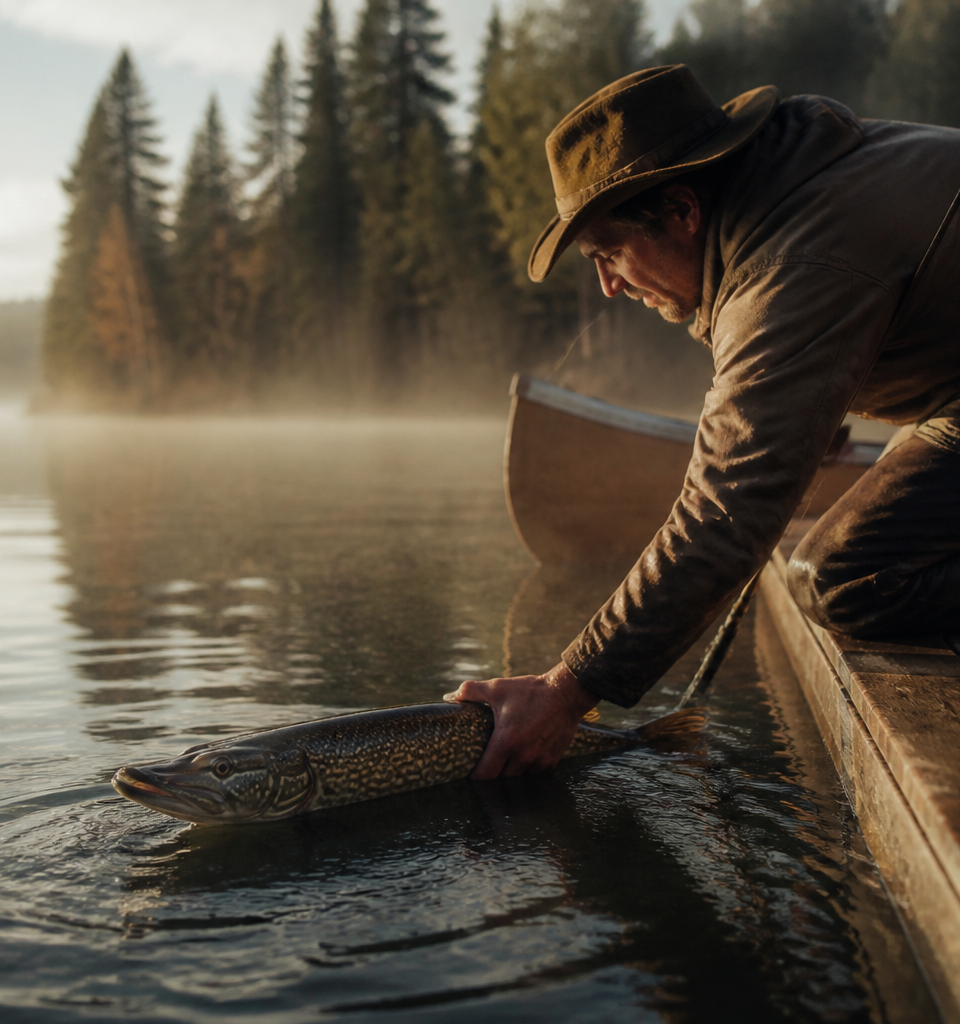
In several wildlife management zones, minimum size limits or protected slot limits require the mandatory release of large breeding fish to protect genetic diversity and maintain healthy stocks. Handle fish carefully by minimizing time out of the water and always supporting their body horizontally without hanging them by the gills. For precise rules applying to your destination, consult the Government of Quebec (hunting and fishing). Regulations change annually: always verify the official rules in effect for your zone before casting a line.
Ecological role and Northern pike conservation
As apex predators, Northern pike play an essential ecological role in maintaining balanced aquatic ecosystems by regulating prey populations and culling sick or injured fish. Their presence supports biodiversity and prevents forage fish overpopulation in northern lakes and rivers.
Protecting shoreline wetlands and flooded spring marshes is critical for pike reproduction, as these shallow habitats provide the submerged vegetation where they lay adhesive eggs. Practicing selective harvest and releasing trophy-class breeding females ensures sustainable pike fisheries for future generations.
Planning a Northern pike fishing trip in Quebec
Booking a guided stay at an outfitter gives you access to exclusive, remote territories with low fishing pressure and higher average catch sizes. Professional guides share localized knowledge on submerged structure, fish movements, and optimal presentations for current weather conditions.
For visiting anglers, dedicated guides explain how MyOutfitters makes hunting and fishing trips easy for Americans, simplifying planning logistics from travel arrangements to selecting American or European plans.
To experience an unforgettable wilderness fishing trip in Quebec and find the right lodge for your group, explore available packages and book your next outfitter adventure directly on MyOutfitters.
Frequently asked questions
When does pike fishing open in Quebec?
Northern pike fishing generally opens between mid-May and late May, depending on the specific Quebec fishing zone. Exact dates vary based on provincial spring schedules and the geographic location of the water body.
What is the best lure for catching Northern pike?
Heavy casting spoons, such as the classic red-and-white or silver patterns, remain the most reliable all-around lures. They produce strong vibrations and bright flash that draw aggressive strikes from pike holding in and around weeds.
Do you need a wire leader for pike?
Yes. A wire, titanium, or heavy fluorocarbon leader is essential to prevent pike's sharp teeth from cutting your line. It prevents lost gear and keeps fish from breaking off with lures in their mouths.
Where do pike hide during midsummer in lakes?
In midsummer, larger pike move away from shallow, warm shorelines toward deep drop-offs and outside edges of cabbage beds. They frequently suspend in 12 to 25 feet of water near cooler thermocline layers.
What rod should you choose for targeting Northern pike?
A 7'0" to 8'0" medium-heavy to heavy rod with a fast action is ideal for casting large lures and setting heavy hooks firmly. It delivers the leverage needed to steer large pike away from heavy vegetation.
How many pike can you keep per day in Quebec?
Daily limits generally range between two and six Northern pike depending on the fishing zone and specific water body. You must review the current regulations for your zone to confirm catch limits and slot restrictions.
What is the difference between a Northern pike and a muskellunge?
Northern pike have light bean-shaped spots on a dark green body, whereas muskellunge have dark bars or spots on a light background. Pike also have fully scaled upper cheeks and gill covers, and five or fewer sensory pores per side under the jaw.
Why release large Northern pike?
Large pike are predominantly mature breeding females essential for healthy recruitment and stable fisheries. Releasing these trophy-class fish protects spawning stock, while smaller, legal-sized fish make better table fare.
How to unhook a pike safely without injury?
Use a rubber-coated landing net, support the fish firmly behind the head, and use long needle-nose pliers to remove hooks. Never place bare fingers inside the gills or near the tooth-lined jaws.
Can you fly fish for Northern pike in Quebec?
Yes. Pike fly fishing is highly effective, especially in spring shallow bays using large streamer patterns made of bucktail or synthetic flash. An 8- to 10-weight fly rod paired with a wire-tipped bite leader is standard.