Fishing
Lake Trout: Shallow vs. Deep-Water Tactics by Season
Learn how water temperature dictates lake trout depth and how to master both light-tackle spring fishing and deep-summer trolling at Canadian lodges.
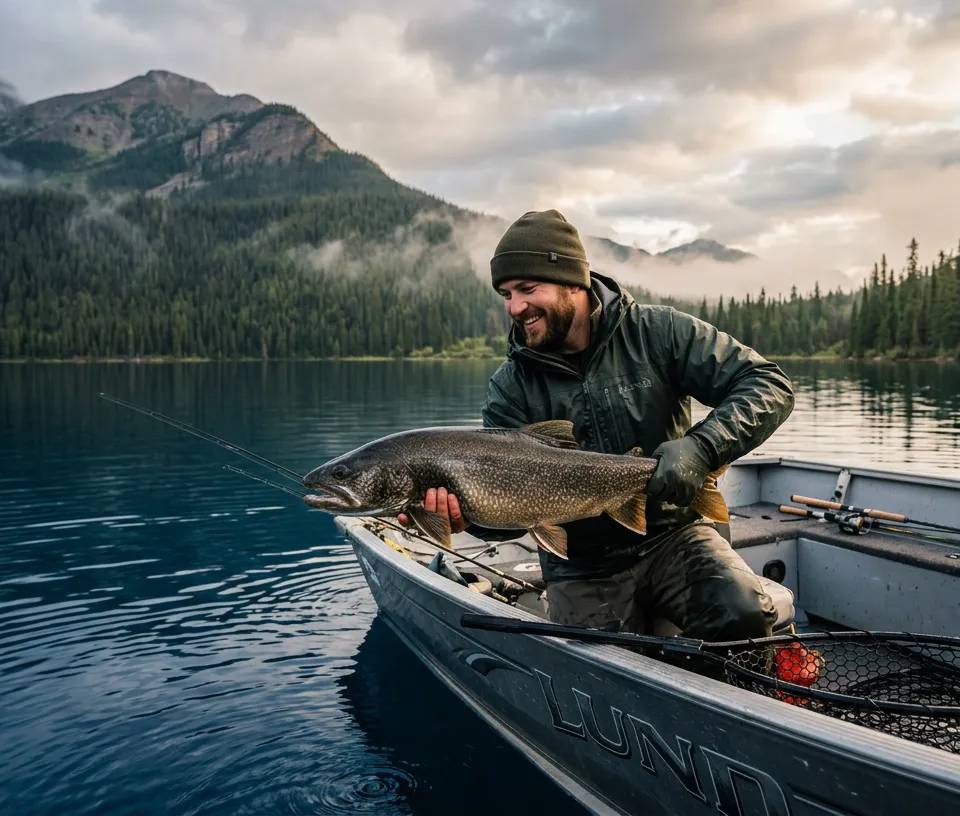
Lake trout are the ultimate temperature seekers, moving throughout the water column as Canadian seasons shift. For an angler, this means the 'Grey Trout' you chase in May is a completely different quarry than the one you hunt in August. Mastering these transitions is the key to a successful outfitter trip, whether you are casting from a rocky point or trolling the dark depths of a glacial lake.
Spring Tactics: The Surface Game
Right after ice-out, lake trout inhabit the top 20 feet of the water. With the entire lake sitting at a crisp, uniform temperature, these predators roam the shorelines in search of baitfish. This is arguably the most exciting time for anglers who prefer active, hands-on fishing.
- Light Tackle. You can leave the heavy lead at home. Medium-action spinning rods and spoons are perfect for casting toward reefs and points.
- Fly Fishing. This is the only window where fly anglers can reliably target lakers on streamers near the surface.
- The Bite. Expect aggressive strikes and high-energy fights, as the fish are rejuvenated by the oxygen-rich, cool surface water.
Summer Strategies: Heading Deep
As July arrives, the upper layers warm beyond the trout’s comfort zone. They retreat to the depths, often hovering just below the thermocline. Success in summer requires a shift toward specialized gear and patience.
- Downriggers and Dipsy Divers. These tools allow you to keep your lure at a precise depth, often between 50 and 120 feet, where the trout are congregating.
- Vertical Jigging. When you spot a school on the fish finder, dropping a heavy white jig or a blade bait directly onto them can trigger a reaction strike when trolling fails.
- Structure Hunting. Focus on deep underwater humps, trenches, and the base of submerged cliffs where cold water pools.
Autumn: The Final Shallow Push
Before the season closes for spawning, lake trout return to the shallows. As water temperatures drop, they move back toward rocky shoals and reefs. They become highly territorial, making them susceptible to larger, more aggressive lure presentations.
- Big Baits. Use larger body baits or crankbaits to appeal to the trout's pre-spawn aggression.
- Visual Cues. Look for rocky areas with plenty of wave action, which indicates high oxygen levels and ideal spawning habitat.
Booking Your Outfitter Experience
Selecting the right outfitter depends on your preferred style of fishing. If you enjoy the technical aspect of deep-water navigation and sonar work, a mid-summer trip to a deep-water lodge is ideal. For those who love the thrill of a surface strike on a light rod, early spring is the time to go. When booking, ask your outfitter about the typical timing of the thermocline setup on their specific lake. Most Canadian outfitters provide the heavy-duty trolling equipment needed for summer, but always confirm if you need to bring your own specialized light tackle for spring excursions.
Frequently asked questions
When is the best time to fish for lake trout near the surface?
The best time is immediately after ice-out in the spring, typically for a two to three-week window while the surface water remains very cold.
Do I need special equipment for summer lake trout fishing?
Yes, in summer, trout are deep. Using downriggers or lead-core lines is often necessary to reach the cold zones where they hide.
Which lures work best for lake trout?
Oscillating spoons (silver, blue, orange) and crankbaits mimicking whitefish or minnows are timeless classics for lakers.
Does a lake trout fight differently depending on the depth?
Near the surface, the fight is more energetic and erratic. From the depths, the fish uses its weight and water pressure, providing a heavy, steady struggle.
Do all outfitters provide deep-trolling equipment?
Many specialized outfitters equip their boats with downriggers, but it is always best to confirm this during the booking process.