Fishing
Chinook Salmon: Dialing In Downrigger Speeds on Lake Ontario
Master trolling speeds for Lake Ontario Chinook salmon with expert advice on downrigger precision, lure action, and subsurface currents.
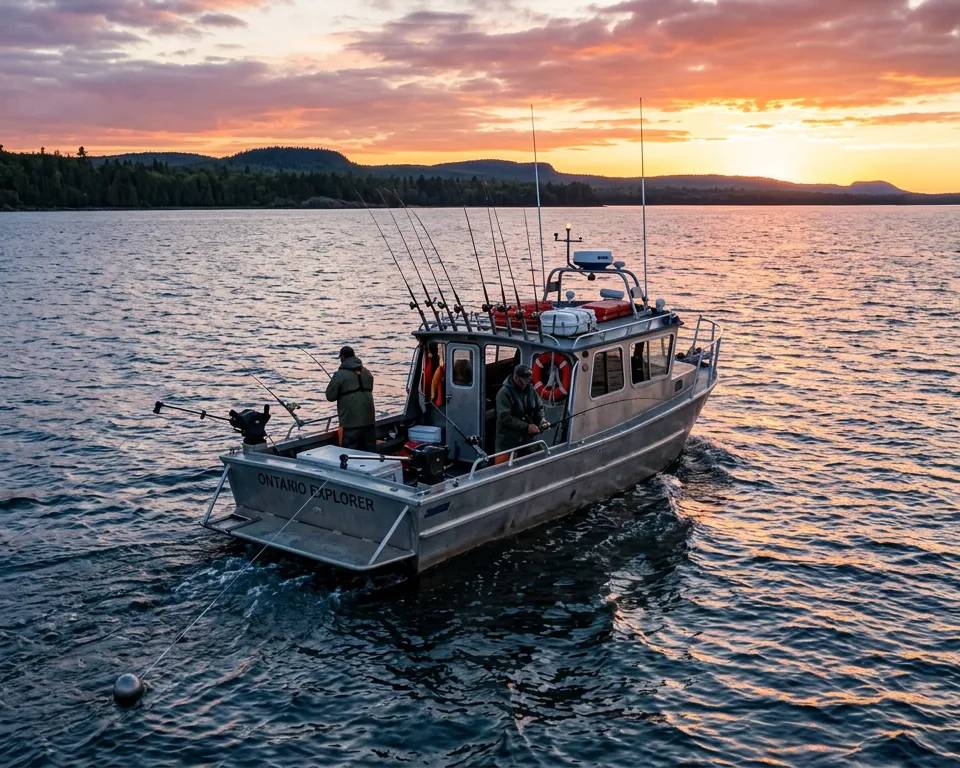
Trolling for Chinook salmon on Lake Ontario is a game of inches and knots. Surface speed is often a liar; the complex thermal layers and subsurface currents of the Great Lakes mean your lure might be motionless 80 feet down even while your GPS shows a steady clip. Mastering downrigger speed is the hallmark of a successful Great Lakes angler, turning frustrating follows into aggressive strikes.
Navigating Subsurface Currents
The vast volume of Lake Ontario creates internal waves and currents that act independently of surface winds. When your boat moves with the current, your lures may lose their action entirely. Veteran outfitters rely on downrigger probes to measure true speed-at-the-ball. Without a probe, watch your downrigger cables. A vertical cable usually means your lures aren't working; you want a consistent "blowback" angle, typically between 15 and 25 degrees, to ensure your spoons are fluttering correctly in the strike zone.
Optimizing Lure Performance
Speed requirements vary significantly based on your chosen gear. Finding the "sweet spot" for your specific spread is essential:
- Trolling Spoons. These versatile lures typically shine between 2.2 and 2.7 mph. If you notice your rod tips aren't pulsing, you are likely too slow.
- Flasher and Fly Rigs. Designed to create massive displacement and sound, these often require more speed, usually 2.5 to 3.2 mph, to achieve the full 360-degree rotation needed to attract salmon from a distance.
- Crankbaits and Plugs. Often used in the spring or when targeting shallower fish, these generally perform best at slower speeds, ranging from 1.5 to 2.1 mph.
The Logic of the S-Turn
When the bite goes quiet, the S-turn is your most diagnostic tool. By steering in a wide serpentine pattern, you create artificial speed variances. The rods on the outside of the turn speed up and rise, while the inside rods slow down and sink. Pay close attention to which side gets hit. A strike on the outside rod is a clear message from the salmon: pick up the pace. Consistent hits on the inside indicate you should throttle back your overall trolling speed.
Environmental Factors and Timing
Water temperature and light levels dictate how fast a Chinook is willing to chase. In the preferred temperature range of 48°F to 55°F, Chinooks are aggressive predators capable of high-speed pursuits. On bright, calm days, increasing your speed can trigger a reaction strike by giving the fish less time to inspect the lure. Conversely, during low-light conditions or when fishing outside the ideal thermal break, a slower, more methodical presentation often yields better results.
Booking Your Lake Ontario Adventure
Success on the Great Lakes often comes down to the gear and local knowledge. Professional outfitters provide the specialized boats and electronics necessary to track shifting thermoclines and stay on the fish. When planning your trip, look for charters that offer full-day excursions to reach the offshore structures where the biggest Kings roam. To secure your spot during the peak summer run, browse our list of Ontario fishing outfitters and connect with a guide who can put you on the trophy of a lifetime.
Frequently asked questions
What is the best trolling speed for Chinook salmon?
The ideal speed is generally between 2.2 and 2.8 mph at the lure. However, this varies depending on the type of lure used and the aggressiveness of the fish that day.
Why is surface speed different from subsurface speed?
Underwater currents and thermal layers in Lake Ontario create water movements independent of the surface. A depth probe is necessary to know the actual speed at the lure's level.
How do I know if I'm trolling too fast?
If your spoons spin instead of flutter or if your downrigger cables vibrate intensely, your speed is likely too high. The S-turn helps confirm this diagnosis.
How does water temperature affect trolling speed?
In their comfort zone (48-55°F), salmon are more active and strike faster prey. In colder waters, it is often better to slow down to give them time to react.
Does downrigger ball weight affect speed?
Weight doesn't directly affect speed, but a heavier ball reduces blowback, helping to keep the lure at the desired depth and better interpret line tension.