Fishing
Chinook Salmon Fishing in Ontario: Secrets and Strategies
Learn how to land trophy Chinook salmon across Ontario's Great Lakes and tributary rivers with expert techniques, prime seasons, and proven locations.
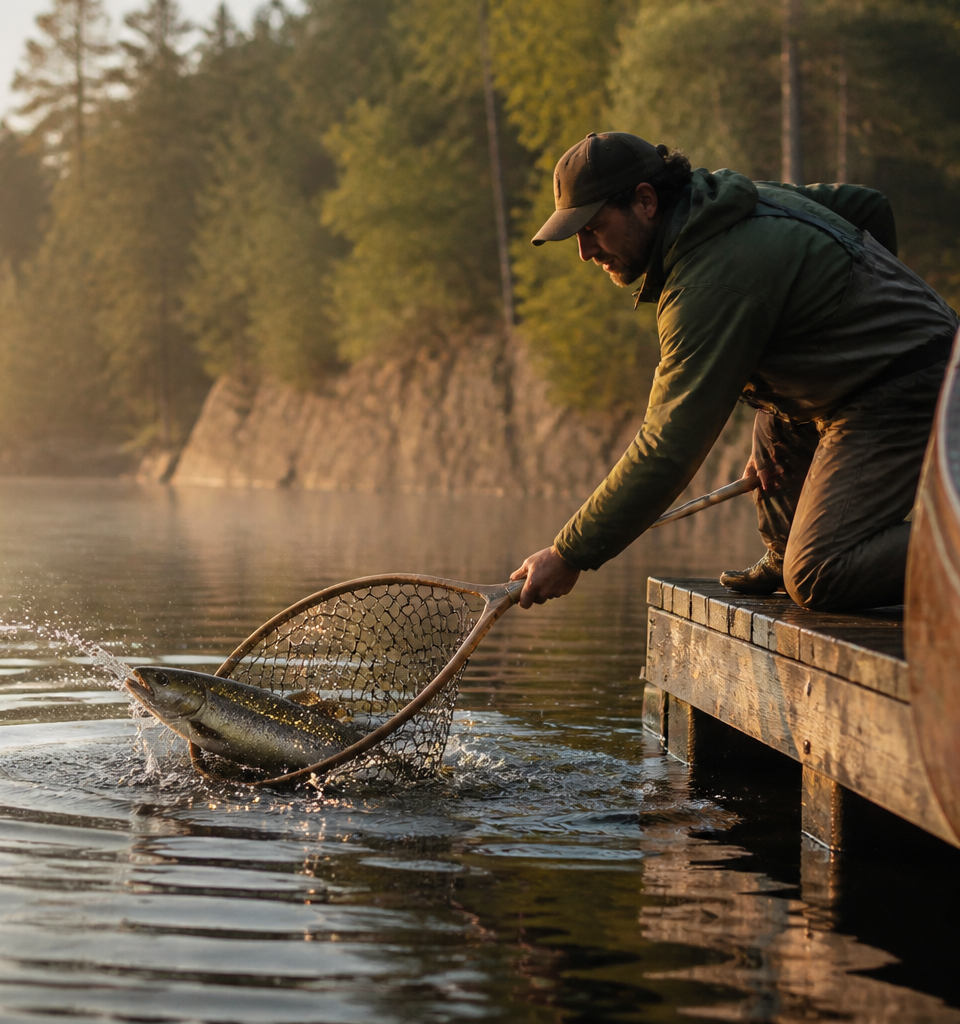
Key takeaways
- From late summer through early fall, massive Chinook salmon runs deliver thrilling battles across Ontario waters.
- Chinooks cruise the deep trenches of the Great Lakes before staging their spawning runs up cold tributary rivers.
- Deep downrigger trolling dominates the open lakes, while float drifting and casting soft plastics excel in rivers.
- Every angler must hold a valid Ontario fishing licence and strictly adhere to zone-specific catch and possession limits.
- Monitor the thermocline between 10 and 15 degrees Celsius to pinpoint schools of baitfish and staging predators.
How to identify Chinook salmon with certainty?
Chinook salmon can be identified immediately by their completely black mouth interior and distinctive dark gums. This Pacific heavyweight, firmly established in Ontario waters, sports a streamlined body with silver flanks peppered with small, irregular black spots across the back and both lobes of the tail fin.
During its pelagic open-lake phase, the Chinook displays a metallic blue-green sheen along the back that fades into brilliant silver along the sides. As autumn approaches and spawning begins, its appearance transforms dramatically: males develop a pronounced hooked snout, known as a kype, and body colours darken into shades of coppery bronze to charcoal black.
Do not confuse it with Coho salmon, which features white gums framed by a black tongue, or rainbow trout, whose tail spots are arranged in neat, radiating rows. Inspecting the fish's mouth remains the most reliable method for accurate identification on the water.
Where to find Chinook salmon in Ontario?
Chinook salmon thrive primarily in the deep, cold expanses of Lake Ontario and Lake Huron, as well as their many tributary rivers. These vast freshwater bodies provide an ideal pelagic habitat where the king of salmonids finds the space and forage needed to reach trophy sizes.
Beyond the Great Lakes themselves, several major river systems serve as vital staging corridors during the fall run, including the Credit River, Georgian Bay tributaries, the Saugeen River, and the Ganaraska River system. These rocky, oxygen-rich waters offer the clean gravel beds necessary for spawning, where adult fish congregate in heavy concentrations.
Anglers exploring the province can also combine multi-species adventures by checking out 10 walleye fishing destinations in Ontario before taking on the powerful migratory salmon of southern and western Ontario.
Understanding Chinook salmon migration patterns
Chinook salmon rely on rapid growth in open lake waters followed by an anadromous-style spawning run back to their natal streams. During their early years, salmon roam the pelagic zones of the Great Lakes, tailing schools of key forage fish like rainbow smelt and alewives.
Upon reaching maturity, typically between three and four years of age, reproductive instincts drive Chinooks toward river mouths. This seasonal migration is triggered by dropping water temperatures and increased tributary flows following late-summer rainstorms.
Once they enter river systems, Chinooks stop feeding entirely, focusing all their remaining energy on spawning. After depositing and fertilizing their eggs over gravel shoals, adult salmon conclude their life cycle and perish, recycling essential marine-derived nutrients back into the freshwater ecosystem to feed the next generation.
Best times to catch Chinook salmon in Ontario
Prime fishing for Chinook salmon runs from mid-July through late September, when fish activity peaks across the province. In midsummer, offshore boat trolling offers exceptional consistency as active predators hunt aggressively out on the open lake.
August brings the transition toward nearshore staging zones, where mature kings begin massing near harbour mouths and river mouths. This window delivers some of the best opportunities for landing trophy-sized fish preparing for their upstream run.
By September and early October, river fishing takes centre stage, producing ferocious territorial strikes in deep pools and fast runs. Overcast, windy days following significant rainfall routinely trigger the most aggressive river runs of the season.
Locating Chinook salmon schools in deep water
To locate Chinook salmon on the Great Lakes, finding the thermocline with a marine sonar unit is essential. This cold-water predator actively seeks temperatures between 10 and 15 degrees Celsius, which routinely positions schools between 50 and 120 feet deep during the heat of summer.
Monitoring baitfish concentrations is another critical factor for success. Pinpointing dense bait balls of alewives on your electronics almost always indicates feeding kings lurking directly below or along the edges of the temperature break.
As salmon move closer to shore, focus your efforts on steep drop-offs, underwater points, and river approach channels. These bottom contours funnel staging fish during their daily movements, creating prime ambush zones for attentive trollers.
Effective trolling techniques for Chinook salmon
Controlled-depth trolling with downriggers and divers is the gold standard for targeting open-water kings. This setup allows you to present lures at precise depths while maintaining a steady trolling speed between 2.0 and 3.0 mph.
Running rotating flashers paired with light spoons or tinsel meat rigs generates the flash and vibration needed to provoke aggressive strikes. Jointed body baits and plugs matching local baitfish profiles also deliver excellent results when pulled on long copper or leadcore setups.
In tributary rivers, tactics shift toward float fishing with cured roe bags, beads, or soft plastics, as well as casting heavy spinners through deep holding pools. Visual and territorial annoyance replaces feeding triggers, provoking sudden reflex strikes.
Choosing a rod and reel for Chinook salmon
Stout, well-balanced tackle is required to handle the punishing runs and sheer power of Chinook salmon. For boat trolling, select 8- to 9-foot fiberglass or composite rods featuring a moderate-fast action designed to absorb violent headshakes.
Line-counter conventional reels are strongly recommended to replicate productive depths accurately. Spool them with 20- to 30-pound monofilament or heavy braided mainline paired with an abrasion-resistant fluorocarbon leader.
For tributary wading, opt for a 10- to 11-foot rod paired with a smooth centerpin or heavy spinning reel. This setup provides seamless drift control while protecting lighter leaders from sharp riverbed rocks.
Chinook salmon fishing regulations in Ontario
Chinook salmon fishing is managed through Fisheries Management Zones (FMZs) that establish specific catch and possession limits. Individual waterways may also have distinct open seasons designed to protect vulnerable river spawning sanctuaries.
Before heading out, you must purchase a valid recreational fishing licence from the Government of Ontario and verify local rules, such as single barbless hook mandates in selected tributaries. You can also review our guide on Ontario and Quebec fishing regulations: licences and limits for help navigating cross-border rules.
Regulations change each year: always verify official rules before heading out on the water.
Ecological impact of Chinook salmon in the Great Lakes
Originally introduced to control invasive alewife populations, the Chinook salmon has evolved into an ecological and economic cornerstone across the Great Lakes basin. As a top pelagic predator, it helps stabilize forage fish numbers while supporting a world-class sportfishing industry.
Provincial stocking programs operate alongside expanding natural reproduction across several Ontario river systems. This managed approach sustains healthy sportfish densities while conserving native species like lake trout and lake whitefish.
Decomposing salmon carcasses post-spawn also provide a vital nutrient pulse to Ontario's tributary streams, supporting aquatic invertebrates, resident fish, and shoreline wildlife throughout the fall and winter months.
Booking a Chinook salmon trip in Ontario
Booking a guided outing with local charter captains significantly increases your odds of connecting with trophy kings. Professional guides run fully equipped vessels outfitted with high-end electronics, downriggers, and the daily knowledge required to track moving salmon schools.
Full-service lodges provide turnkey packages that include waterfront accommodations, professional gear, and experienced captains. Browse our full directory of Ontario fishing outfitters to select the perfect destination for your next trip.
If you want to explore more remote wilderness options across the country, check out our guide to Fly-in fishing outfitters in Canada: The complete guide for an unforgettable fly-in angling adventure.
To plan your next fishing trip with confidence and find the right lodging for your journey, trust MyOutfitters to connect you with top destinations across Ontario.
Frequently asked questions
When does the Chinook salmon run start in Ontario?
The Chinook salmon run typically begins between late August and mid-September depending on water levels and temperatures. Salmon stage near river mouths before pushing upstream once late-summer rainstorms cool the tributaries.
Where can you fish for Chinook salmon from shore in Ontario?
The Credit, Ganaraska, Saugeen, and Niagara rivers offer excellent public shore access. Piers, breakwalls, and harbour mouths along Lake Ontario also provide solid casting opportunities for staging salmon in late summer.
What is the best lure for trolling Chinook salmon?
A rotating flasher paired with a tinsel fly, cut-bait meat rig, or slender trolling spoon is the most productive setup. Spoons in green, glow-white, chartreuse, and chrome match alewife profiles and trigger deep reaction strikes.
What is the average size of Chinook salmon in the Great Lakes?
Chinook salmon in the Great Lakes average between 15 and 25 pounds. Anglers regularly boat mature trophy fish exceeding the 30-pound mark during the peak summer and early fall runs.
Do you need a special licence for Chinook salmon in Ontario?
No special tag or salmon stamp is required beyond a standard Ontario resident or non-resident fishing licence (Sport or Conservation). You must adhere to the catch and possession limits set for the specific Fisheries Management Zone (FMZ) you fish.
How do you fish for Chinook salmon in rivers?
The most effective river technique is float fishing with cured roe bags, beads, or soft plastics drifted through deep holding pools. Casting heavy inline spinners or deep-diving crankbaits also triggers aggressive territorial bites.
What depth should you target for Chinook salmon in summer?
During midsummer, target depths between 50 and 120 feet down over deep lake structure. Chinooks concentrate below the thermocline where water temperatures sit near 10 to 15 degrees Celsius.
How many Chinook salmon can you keep per day in Ontario?
Daily limits generally range between 2 and 5 salmon depending on your licence type (Conservation vs. Sport) and the specific Fisheries Management Zone. Always review the current Ontario Fishing Regulations Summary for your exact waterbody before harvesting fish.
Why do Chinook salmon die after spawning?
Chinook salmon experience programmed physiological collapse after stopping feeding and exhausting their fat reserves during upstream migration and spawning. Their carcasses naturally fertilize the stream, providing vital nutrients for emerging fry.
Can you eat Chinook salmon caught in the Great Lakes?
Yes, Chinook salmon yield rich, flavourful table fare, especially when landed in open lake water during summer. Anglers should consult the official Guide to Eating Ontario Fish for consumption guidelines tailored to specific waterbodies and fish sizes.