Fishing
Walleye Fishing in the Laurentians: How to Choose the Right Lake and Timing
Learn how to maximize your walleye success in the Laurentians by selecting the right lakes and key windows, from the spring opener to warm summer evenings.
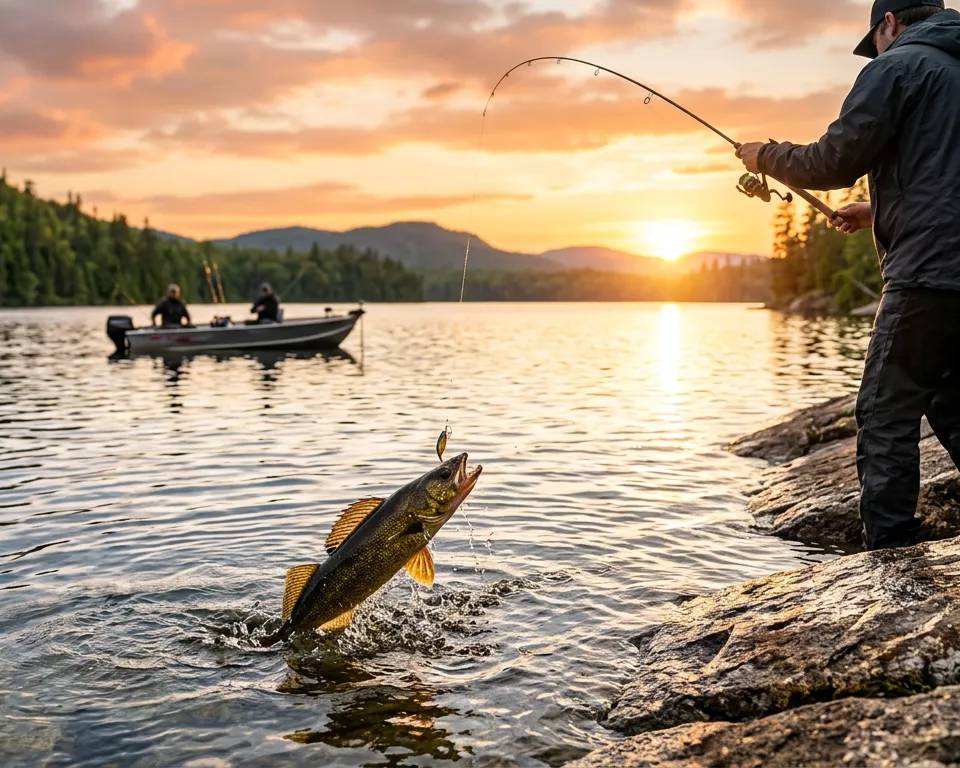
The Laurentians offer a vast network of waterways for walleye enthusiasts, ranging from large, windswept reservoirs to quiet, tea-colored lakes. Success in this region isn't just about showing up; it's about matching your technique to the specific water body and the time of year. Whether you are chasing numbers for a shore lunch or hunting for a wall-hanger, understanding the local ecology is key to a productive trip.
Selecting the Right Lake for Your Style
Not all Laurentian lakes are created equal when it comes to walleye habitat. Your choice should depend on what kind of experience you are after:
- High-Action Shallow Lakes. Waters with significant tannin staining often hold high populations of walleye that remain active even during the day, as the dark water provides natural cover from the sun.
- Deep Reservoir Trophies. The larger systems in the northern part of the region feature dramatic underwater topography. These lakes tend to produce larger individual fish that thrive in the oxygen-rich, moving waters near submerged points and drop-offs.
- Clear Water Challenges. In southern Laurentian lakes with high clarity, walleye are notoriously light-sensitive. These locations require more finesse and a focus on low-light periods.
Timing Your Trip for Peak Activity
The seasonal migration of walleye in the Laurentians follows a predictable pattern that anglers can exploit for better results. The early season, immediately following the spawn, sees fish concentrated in shallow bays and near river mouths where they are aggressive and easy to locate. As June progresses, they transition to primary lake structures like sunken islands. By mid-summer, the bite moves deeper, often requiring downriggers or weighted lines to reach the 25 to 35-foot range where the larger schools congregate to escape the heat.
The Magic of Low-Light Windows
Walleye are biologically designed to hunt in the dark, and in the Laurentians, the dawn and dusk windows are often the difference between a few fish and a limit. During the "golden hour," walleye move from their deep-water sanctuaries up onto shallow flats to feed. If you are fishing during a bright, sunny afternoon, look for "walleye chop"—wind-driven waves that break up light penetration—or target the shaded side of islands. Successful anglers often plan their meals around these peak times to ensure they are on the water when the fish are most active.
Essential Tactics for Local Waters
Vertical jigging remains the most effective way to pick apart the rocky structures found throughout the region. A 1/4 to 3/8 oz jig head tipped with a grub or a live minnow is a staple. For covering large flats, back-trolling with a bottom bouncer and a crawler harness is a proven method to find scattered schools. Always keep your presentation close to the bottom, as Laurentian walleye rarely suspend far from the substrate except when actively chasing baitfish.
Booking Your Laurentian Adventure
To find the perfect outfitter, use our directory to filter by region and species. Look for lodges that offer specialized fishing equipment or local guides who can drastically shorten your learning curve on a new lake. When you contact an outfitter, ask about the recent baitfish spawns and water temperature trends. Booking several months in advance is highly recommended for the popular June window when the bite is at its most consistent.
Frequently asked questions
What is the best lure color for walleye in the Laurentians?
Perch imitations like yellow and orange are classics. In darker or tea-colored waters, white and chartreuse offer better visibility for the fish.
Is a guide necessary for walleye fishing?
A guide is highly recommended for your first few days on a large reservoir. They know the productive structures and the exact depths based on current water temperatures.
How deep do walleye stay during the summer?
In July and August, walleye typically move to depths of 20 to 35 feet. They seek cooler, more oxygenated water near deep drop-offs.
Can you fish for walleye at night in the Laurentians?
Night fishing is often very productive, but always check the specific regulations for the fishing zone and water body, as restrictions may apply.
What type of boat is best for these lakes?
A 14 to 16-foot boat with a reliable motor is the outfitter standard. For large reservoirs, a more stable boat is preferable due to potential wind and waves.