Fishing
Walleye fishing at an outfitter: the complete guide
Where, when and how to fish walleye at an outfitter: reading the water, techniques that work from spring to fall, choosing a package and planning the stay.
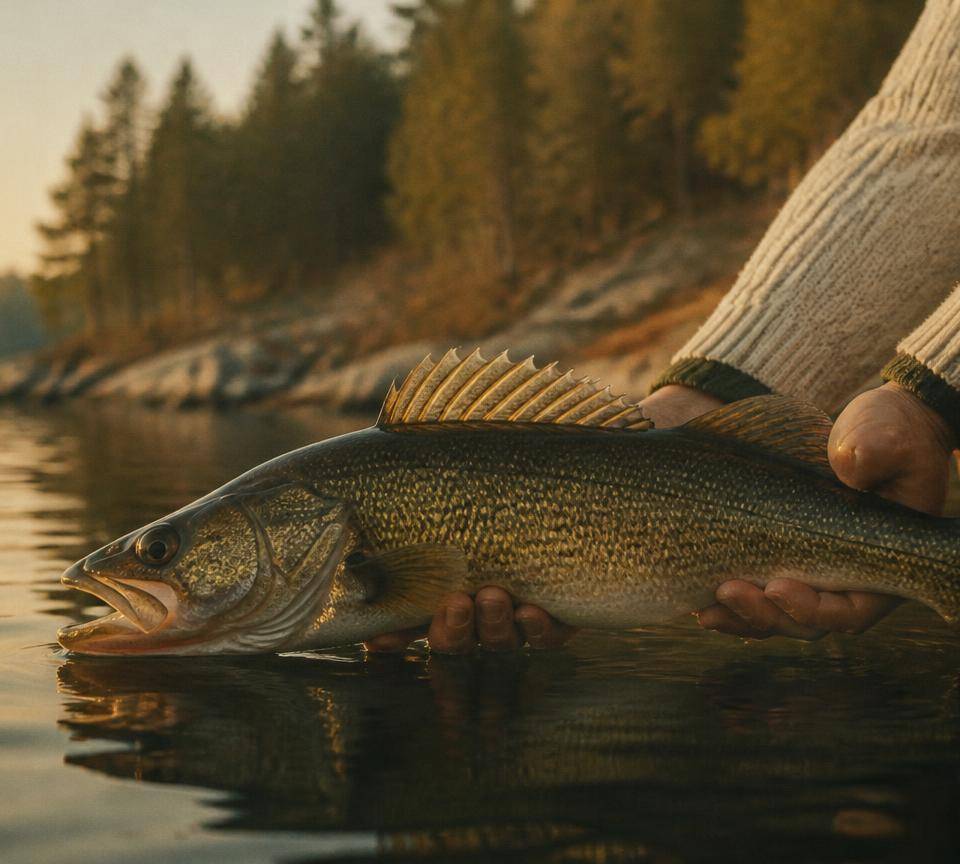
Walleye is the fish that keeps most Canadian outfitters in business. It offers everything anglers look for: excellent table fare, steady aggressiveness and a range that covers nearly every province. Here is how to plan a trip that produces, even if it is your first.
Understanding walleye behaviour
Walleye are low-light predators. They hunt by sight, but their eyes handle bright sun poorly, so they hold deep during the day and move onto shallow flats at dawn and dusk. Three factors dictate where they sit:
- Water temperature. Below 10 °C they stay near spawning areas and inflows. Between 14 and 20 °C they work breaks from 3 to 8 metres. In a heat wave they often drop below 10 metres.
- Wind. A wind-blown shoreline concentrates plankton, then baitfish, then walleye. Outfitter guides almost always start on the windward side.
- Structure. Rocky points, plateaus, channels between islands, bay mouths: walleye patrol edges, rarely open water.
The calendar of a successful trip
Spring (May-June). The most generous window. Fish are shallow, aggressive and grouped. Simple jigging with a 1/8 to 1/4 oz head tipped with a worm or minnow is enough.
Summer (July-August). Fish spread out and go deeper. Slow trolling with a bottom bouncer, spinner rig or live bait becomes the most efficient approach. Fish early, at dusk, and even after dark on clear lakes.
Fall (September-October). Big fish move up again and feed hard before winter. This is the best window for a trophy, using larger baits and a slower presentation.
Gear that makes a difference
A 6 ft 6 in to 7 ft medium-light, fast-action rod with a 2500 reel, 10 lb braid and a 12 lb fluorocarbon leader covers 90 % of situations. Add:
- jig heads in 1/8, 1/4 and 3/8 oz;
- a few 3 and 4 inch soft plastics in natural tones plus one bright colour for stained water;
- two or three diving crankbaits for trolling;
- a thermometer or portable sonar, often already fitted to outfitter boats.
Choosing the right outfitter
Not every outfitter sells the same product. Ask three questions before booking:
1. Is the water exclusive? A controlled-access lake reserved for guests keeps a stable population and consistent catches. 2. What is included? Boat, motor, fuel, private dock, ice and fish cleaning change the real cost of the trip. 3. Which plan is offered? American plan (meals included), European plan (self-catering cabin) or modified plan completely changes the rhythm of your days.
Then compare drive times: several excellent walleye territories sit within three hours of Montreal, Ottawa or Toronto, while the wildest waters require a floatplane.
Regulations and conservation
Every province sets its own limits, minimum sizes and sometimes protection windows during the spawn. Your outfitter will hand you the rules for its territory, but the fishing licence remains your responsibility. Release the large spawners and keep mid-sized fish: that is the surest way to find the same productive lake ten years from now.
Packing list
Layered clothing, rain gear, polarized glasses, sunscreen, insect repellent, waterproof boots and a hard cooler for the drive home. On northern lakes, add light gloves — June mornings are cold on the water.
With the basics covered, all that remains is the territory. Browse fishing outfitters in Quebec or go straight to walleye outfitters to compare packages, cabins and driving distances.
Frequently asked questions
When is the best time to fish walleye at an outfitter?
Late May to late June is the most productive window: walleye are shallow, grouped and aggressive. September and October produce fewer fish but the biggest ones.
How deep are walleye usually found?
One to four metres in spring, three to eight metres on summer breaks, and sometimes below ten metres during heat waves. Walleye move up onto shallow flats at dawn and dusk.
Do I need a fishing licence at an outfitter?
Yes. A provincial licence is mandatory and remains the angler's responsibility, even on exclusive water. Many outfitters sell licences on site.
What is the minimum walleye gear to bring?
A 6 ft 6 in medium-light rod, a 2500 reel, 10 lb braid, a 12 lb fluorocarbon leader, jig heads from 1/8 to 3/8 oz and a few 3 to 4 inch soft plastics.
Are boats included in fishing packages?
Often, but not always. Confirm whether the boat, motor, fuel and fish cleaning are included, since those items change the real cost of the stay.