Fishing
Rainbow Trout Fishing in Quebec: The Complete Guide
Discover proven techniques, prime habitats, and expert strategies for targeting rainbow trout across Quebec's rivers and lakes.
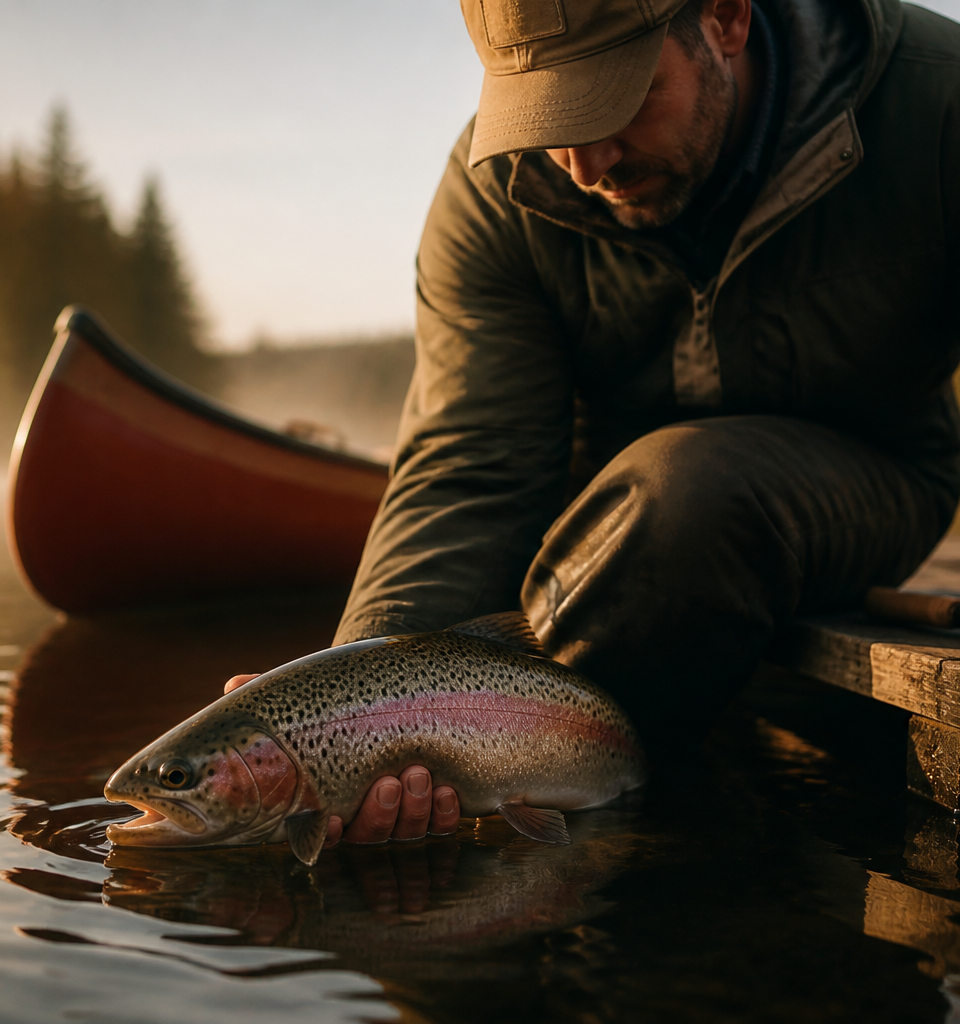
Species overview and identification
Originally native to the Pacific Ocean watershed of North America, the rainbow trout (*Oncorhynchus mykiss*) has become one of the most sought-after sport salmonids in Quebec. Easily recognized by its torpedo-shaped, muscular body, it displays striking coloration that varies based on its environment. Its back ranges from olive green to steel blue, while its silver flanks feature a distinctive purplish-pink or crimson lateral band, which becomes especially vibrant on spawning males.
Unlike brook trout (frequently referred to as speckled trout in Quebec), rainbow trout have clearly defined black spots across their back, flanks, and—most distinctly—over their entire caudal (tail) and adipose fins. Their tail is only slightly forked, and their jaws are lined with sharp teeth. They lack the blue or red halos found on brown trout or Arctic char, eliminating confusion with other species.
From an angling perspective, the rainbow trout enjoys an unmatched reputation among fly fishers and light-spin anglers alike. Renowned for its explosive fighting ability, it commonly reacts to hooksets with blistering runs and spectacular acrobatic leaps out of the water. Its sheer strength tests even high-grade tackle and demands a delicate touch throughout the fight.
Habitat and geographic distribution
Introduced to Quebec in the late nineteenth century, the rainbow trout has established itself successfully across numerous provincial watersheds. Today, viable populations thrive in several river systems across southern and central Quebec, notably in the Eastern Townships, the Laurentians, Lanaudière, the Outaouais, Chaudière-Appalaches, and key tributaries of both the St. Lawrence and Ottawa rivers.
This species demands cold, clean, and highly oxygenated water to thrive. In rivers and streams, rainbow trout seek out moderate to swift currents, deep holding pools, gravel riffles, and eddy seams created by large boulders or natural logjams. Watercourses featuring a steady succession of riffles, runs, and pools serve as their primary corridors.
In stillwaters—such as managed lakes and private outfitter territories across Quebec—rainbow trout inhabit mid-depth and deep zones. They key in on submerged structures, shallow flat drop-offs, rock ledges, and cold feeder creek inlets. While their thermal tolerance is slightly higher than that of native brook trout, they remain vulnerable to severe midsummer water temperature spikes.
Behaviour and seasonal patterns
Rainbow trout behaviour changes markedly throughout Quebec's four distinct seasons. Unlike native char species that spawn in the autumn, rainbow trout spawn in the spring, typically between late April and June as ice melts and water temperatures rise. Mature adults push up gravel-bottom tributaries to dig nests (redds) in clean gravel.
Following the spawn, hungry post-spawn fish enter a prolonged feeding window. They feed actively on aquatic nymphs, insect larvae, crayfish, and baitfish such as minnows and sculpins. As summer heat sets in, rainbow trout adjust their patterns: in lakes, they slide beneath the thermocline into preferred water temperatures between 10°C and 16°C (50°F to 61°F); in rivers, they stack in heavily aerated rapids, pocket water, and deep, shaded pools.
In the fall, cooling water temperatures and shorter daylight hours trigger a second aggressive feeding spree. Trout feed heavily to build up energy reserves ahead of winter. Under the ice, their metabolism slows down, but they remain active and responsive, making them an exciting winter target on lakes where ice fishing is permitted.
Best seasons and conditions
Early season, from mid-May through late June, offers some of the most productive rainbow trout fishing in Quebec. Heavy hatches of mayflies, stoneflies, and caddisflies bring fish to the surface, delivering first-class dry fly action.
Late season, running from September through the autumn closure, is equally productive. Cooling surface water brings trophy-class fish out of the depths to cruise shorelines, shallow shoals, and dying weedlines. Crisp, overcast autumn days consistently produce some of the largest trout of the year.
When evaluating weather, target overcast days, periods of light drizzle, or moderate breezes that create a surface chop on lakes, breaking up light penetration and easing the fish's natural wariness. Sudden drops in barometric pressure or intense heatwaves tend to make trout lethargic. Early morning and late evening remain the most reliable bite windows.
Where and how to find it
Locating river rainbow trout requires reading the water carefully. Trout rarely hold in the strongest mid-river current; instead, they stage along the edges of fast seams, behind submerged boulders, or at the heads and tails of deep pools where they can intercept drifting forage while conserving energy.
- Current seams where fast flow meets slack water.
- Tail-outs of deep pools just above shallow riffles.
- Undercut banks beneath overhanging trees providing shade and ambush cover.
- Mouths of cold feeder streams during hot summer stretches.
On lakes, use bathymetric maps and sonar. Focus on rocky points extending toward deep water, submerged humps, and saddles between basins. During spring and fall, trout cruise transition drop-offs between 3 and 6 metres (10 to 20 feet). In midsummer, focus your efforts in the cool layer of water situated directly below the thermocline.
Recommended techniques and strategies
Fly fishing is undeniably the quintessential approach for pursuing rainbow trout. In rivers, Euro-nymphing or indicator nymphing presents realistic imitations along the riverbed where trout do the majority of their feeding. When surface rises appear, matching the hatch with dry flies triggers unforgettable takes. Swinging streamers that mimic baitfish or leeches is an exceptional tactic for enticing territorial trophy fish.
For spin anglers, compact and reflective metal lures are dependable standards. Small to medium-sized inline spinners and casting spoons, retrieved at a steady pace with intermittent pauses, closely imitate injured prey. Slender minnow-style stickbaits, worked with short, rhythmic rod twitches, frequently draw aggressive reaction strikes.
In lakes, slow trolling is an effective way to cover water and locate roaming pods of trout. Using sinking lines, light bottom bouncers, or downriggers allows you to present small spoons, crankbaits, or articulated flies precisely in the salmonids' preferred thermal comfort zone.
Equipment and gear
For spin fishing, a 6'6" to 7' light to medium-light rod paired with a 1000 to 2500 size spinning reel provides the ideal balance between casting accuracy and fish-playing cushion during jumps. Spool up with 8-to-10-pound braided mainline, and always finish with an invisible 4-to-8-pound fluorocarbon leader to outsmart line-shy fish in clear water.
For fly fishers, a 9-foot 5- or 6-weight fly rod represents the ultimate all-around setup. It provides sufficient backbone to punch flies through lake winds while maintaining the delicacy required for technical river presentations. A reel with a smooth, progressive disc drag is essential for cushioning high-speed runs. Pack both a standard weight-forward floating line and a sink-tip or full-sinking line for deeper lake presentations.
- Inline spinners in silver, gold, or copper (sizes 1 to 3).
- Lightweight casting spoons (1/8 to 1/4 oz).
- Suspending jerkbaits and minnow plugs (5 to 7 cm).
- Wet flies and streamers: Woolly Bugger (black, olive), Muddler Minnow, Zonker.
- Nymphs: Prince Nymph, Hare's Ear, Pheasant Tail (sizes 10 to 16).
- Dry flies: Elk Hair Caddis, Adams, Stimulator (sizes 12 to 16).
- Knotless rubber landing net to protect the fish's delicate slime coat.
Regulations, licences and ethical practices
Sport fishing in Quebec is governed by provincial regulations designed to protect salmonid populations and maintain aquatic biodiversity. Anglers must hold a valid Quebec sport fishing licence and strictly follow open season dates, daily catch and possession limits for the specific fishing zone, and any special waterbody restrictions.
Review current provincial rules, quotas, and zone boundaries via the Government of Quebec (hunting and fishing). On many managed rivers and special-regulation lakes, barbless hooks are mandatory or strongly encouraged to simplify hook removal and minimize handling injury.
When practicing catch-and-release, handle the fish only with wet hands, keep it submerged in the water as much as possible while unhooking, and avoid vertical jaw holds. Gently revive the trout facing into the current until it regains its equilibrium and swims off under its own power.
Regulations change yearly: always verify official zone rules before fishing.
Conservation, population and ecosystem role
Rainbow trout populations in Quebec are closely monitored by wildlife biologists and conservation managers. In multiple river systems, they share habitat with native species such as brook trout and lake trout. Balanced coexistence relies on monitoring watershed carrying capacity and managing stocking programs to prevent unsustainable competition on critical spawning gravel.
Targeted stocking in closed lake systems creates world-class sport fishing opportunities while reducing angling pressure on fragile wild native stocks. Rainbow trout also serve as an environmental bio-indicator: their sensitivity to pollutants, siltation, and elevated water temperatures provides a direct gauge of overall watershed health.
Anglers play an active role in resource stewardship. Thoroughly cleaning boats, trailers, and wading gear between different waterbodies prevents the introduction and spread of aquatic invasive species and pathogens, safeguarding these fisheries for generations to come.
Planning a guided trip or outfitter stay
Booking an outfitter stay in Quebec is one of the most effective ways to maximize your fishing success while experiencing authentic wilderness. Outfitters maintain exclusive rights to managed lakes where rainbow trout achieve impressive sizes thanks to abundant natural forage and sound fishery management.
Enlisting the services of a professional local guide can elevate your entire experience. Guides understand seasonal structure, prime depth zones, and current fly or lure preferences. Whether you opt for a self-catering European plan or a full-service American plan with private waterfront cabins and gourmet lodge dining, an outfitter delivers peace of mind, expert support, and exceptional water access.
To plan your next angling getaway and find the perfect outfitter for your trip, browse destinations and reserve your experience directly on MyOutfitters.
Frequently asked questions
How do you distinguish a rainbow trout from a brown trout?
A rainbow trout features a prominent pinkish-red lateral band and numerous fine black spots scattered across its entire tail fin. A brown trout has a yellowish-brown or golden body, larger dark spots ringed with pale halos, and often red spots on its flanks, but lacks uniform black spots across its tail.
What flies work best for rainbow trout in Quebec?
Streamers like the black or olive Woolly Bugger and the Muddler Minnow are top producers. For subsurface nymphing, the Prince Nymph and Hare's Ear reliably match local aquatic insects. On the surface, caddis patterns like the Elk Hair Caddis and mayfly imitations such as the Parachute Adams deliver consistent results.
What is the optimal water temperature for catching rainbow trout?
Rainbow trout are most active when water temperatures range between 10°C and 16°C (50°F to 61°F). When temperatures exceed 20°C (68°F) in peak summer, their metabolism slows significantly and they seek thermal refuge in deep water or near cold spring upwellings.
How do you locate rainbow trout in lakes during midsummer?
During summer heatwaves, use a fish finder to pinpoint the thermocline, typically between 6 and 12 metres (20 to 40 feet) deep. Use full-sinking lines, weighted rigs, or downriggers to troll or cast directly within this cool, oxygen-rich depth band.
Is a fluorocarbon leader necessary for rainbow trout?
Yes. Rainbow trout have acute vision and are commonly targeted in clear water. A 2 to 3-metre (6 to 9-foot) fluorocarbon leader in 4-to-8-pound test is nearly invisible underwater, significantly reducing tackle detection.
Why should anglers use a rubber-mesh landing net?
Knotless rubber nets protect the fish's external protective slime coat from abrasion, helping prevent post-release fungal infections. They also prevent hooks from tangling, allowing for faster, safer hook removal and higher survival rates.
Can you ice fish for rainbow trout in Quebec?
Yes. Ice fishing for rainbow trout is popular on designated managed lakes and outfitter territories where winter fishing is permitted. Anglers target them using tip-ups or light jigging rods with small spoons, micro-jigs, and scented baits.
What is the ideal boat trolling speed for rainbow trout?
A slow to moderate trolling speed of 2 to 4 km/h (1.2 to 2.5 mph) is generally ideal. Trolling in an S-pattern alters lure speed and depth along turns, which frequently triggers following trout to strike.
Why do rainbow trout jump so frequently during the fight?
Unlike species that dive straight for the bottom, rainbow trout use their muscular bodies to launch out of the water to head-shake and throw the hook. Anglers should lower their rod tip slightly ('bow to the fish') during jumps to prevent sudden line breaks.
What licences and permits are required to fish for rainbow trout in Quebec?
You must hold an official Quebec sport fishing licence, available for both residents and non-residents. If you fish within specialized managed territories such as wildlife reserves (ZECs) or outfitters with exclusive rights, daily access fees or packages apply.