Fishing
Carp Fishing in Quebec: The Complete Angler's Guide
Discover how to catch common carp in Quebec: proven techniques, top St. Lawrence River spots, essential gear, and expert tips for hard-fighting fish.
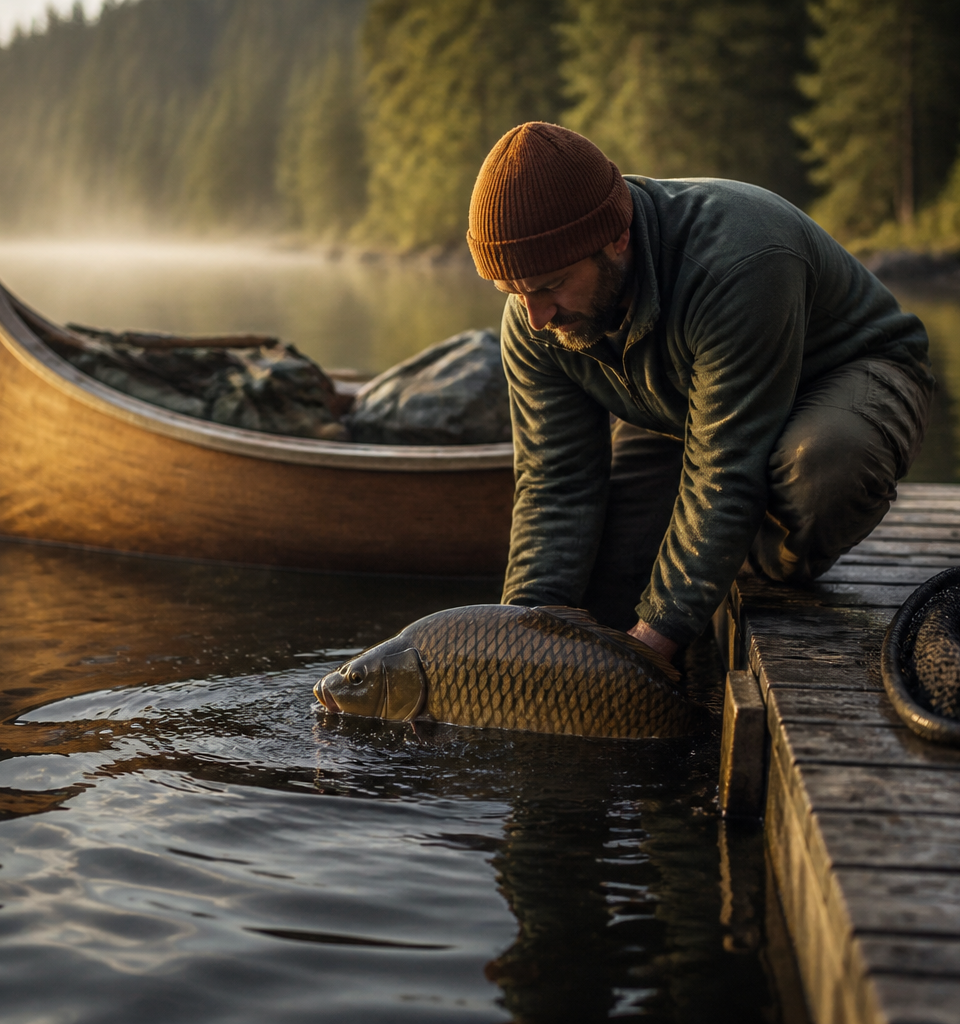
Species overview and identification
The common carp (*Cyprinus carpio*) is one of the most powerful and hard-fighting freshwater game fish swimming in Quebec waters. Introduced to North America during the nineteenth century, it has adapted seamlessly to the province's vast river systems. This robust cyprinid features a deep, laterally compressed body covered in large, golden-to-bronze scales. Genetic variants also exist in our waters, including mirror carp with sparse, irregular scales and leather carp, which are almost entirely scaleless.
To identify a common carp, look for its downward-facing, protractile mouth flanked by two pairs of sensory barbels near the corners of the lips. Its long dorsal fin features a distinctive, stiff, serrated leading spine. In Quebec, average catches range between 4 and 8 kilograms (9 to 18 pounds), but dedicated anglers regularly land trophy giants exceeding 12 to 15 kilograms (26 to 33+ pounds) in the fertile waters of the St. Lawrence River system.
Habitat and geographic distribution
Carp thrive in calm, warm, and highly productive waters rich in organic matter. They seek out slow-moving rivers, large shallow bays, coastal marshes, and lake widenings carpeted with abundant aquatic vegetation. Their preferred bottom substrate consists of soft silt, mud, or fine sand, where benthic invertebrates and crustaceans thrive.
In Quebec, the highest concentrations are found throughout the St. Lawrence Lowlands and the southwestern part of the province. The main St. Lawrence corridor stretching from Lake Saint-François to Lake Saint-Pierre is a world-class fishery. Major tributaries such as the Richelieu River, Rivière des Mille Îles, Rivière des Prairies, Missisquoi Bay in Lake Champlain, and the lower Ottawa River also support massive populations of healthy carp.
Behaviour and seasonal patterns
Carp activity is closely tied to water temperature. As ice departs and water temperatures climb past 10°C (50°F), carp migrate out of deep wintering holes into shallow, sun-warmed weedlines and back bays. This marks the start of an active feeding window ahead of the reproductive period.
Spawning typically occurs from late May through early July once water temperatures reach 18°C to 20°C (64°F to 68°F). During this dramatic event, spawning groups thrash loudly in shallow shoreline cover and reed beds. Throughout midsummer, carp settle into predictable daily feeding routes and patrols. Come autumn, a feeding frenzy takes hold as fish gorge to pack on fat reserves needed to endure the winter lethargy.
Best seasons and conditions
While carp can be targeted successfully from May through October, two key windows stand out on the Quebec calendar. The post-spawn period from mid-June to mid-July provides fast action as fish look to rebuild energy spent during spawning. However, autumn—from late August through the first hard frosts of October—is hands down the prime time for targeting trophy-calibre fish at their peak seasonal weights.
When it comes to weather, target warm, overcast days with a steady onshore breeze pushing floating food and insects toward exposed shorelines. A gentle drop in barometric pressure often triggers feeding spikes. Early mornings and late afternoons right through dusk consistently deliver the most productive bite windows.
Where and how to find it
Locating carp requires keen observation along the bank or from a boat. Unlike many elusive predators, carp frequently give away their location. Look for distinct lines or clusters of tiny bubbles rising to the surface, a telltale sign that feeding carp are rooting through the bottom sediments for insect larvae and small molluscs.
Visual cues are equally effective: full breaches out of the water, heavy wakes along the edges of bulrushes, or localized muddy plumes in otherwise clear bays are surefire giveaways. Position yourself along the edges of submerged weedbeds, off points creating distinct current seams, or near beds of zebra mussels, which serve as natural underwater feeding stations.
Recommended techniques and strategies
Modern carp fishing revolves heavily around stationary bottom presentations paired with strategic pre-baiting (chumming). To maximize your catch rates, prepare a swim over several hours or a couple of consecutive days by introducing boiled particles such as sweet corn, hemp seed, and flavoured boilies. Pre-baiting establishes a feeding zone, concentrates roving schools, and builds their confidence.
Carp anglers consider the hair rig the absolute standard. By positioning the bait just beneath the hook bend on a supple braided line (the "hair") rather than directly on the hook point, the fish inhales the offering naturally without feeling the bare metal. When the carp attempts to blow out the rig, the hook turns cleanly and sets itself in the bottom lip. For anglers seeking high-energy visual action, sight-fishing with a fly rod in shallow flats or drifting light terminal tackle along weed edges delivers an exhilarating challenge.
Equipment and gear
To handle the explosive runs of Quebec carp without endangering the fish, specialized tackle is recommended:
- Dedicated 10- to 12-foot carp rod rated between 2.75 and 3.5 lb test curve.
- Large-capacity reel featuring a baitrunner (free-spool) system or a front drag with smooth, progressive stopping power.
- Abrasion-resistant 15- to 20-lb monofilament mainline, or 30-lb braided line paired with a heavy snag leader.
- Strong, ultra-sharp carp hooks (sizes 4 to 8) tied to coated braid hooklinks.
- Banksticks or rod pod equipped with electronic bite alarms and visual indicators.
- Large landing net (minimum 42-inch arm span) and a padded unhooking mat to protect the fish's scales and protective slime coat on shore.
Regulations, licences and ethical practices
Sport fishing for carp in Quebec is regulated by the provincial wildlife ministry. All anglers must carry a valid Quebec sport fishing licence (other than Atlantic salmon). Daily catch and possession limits can vary across individual fishing zones, although the overwhelming majority of dedicated carp anglers practice strict, respectful catch-and-release.
Carp care ethics demand proper handling at every stage. Always wet your unhooking mat and hands before touching a fish, keep it moist, and minimize any time out of the water for weighing or photos. For full zone boundaries, season dates, and specific limits, consult the official Government of Quebec (hunting and fishing) portal. Regulations change annually: always verify the specific rules for your waterbody before heading out.
Conservation, population and ecosystem role
Although an introduced species, the common carp has been an established component of southern Quebec's freshwater ecosystems for over a century. It should not be confused with invasive Asian carp species (such as silver, bighead, or grass carp), which are subject to rigorous monitoring and control to protect the Great Lakes and St. Lawrence River basin.
In its habitat, common carp contribute to nutrient recycling through their bottom-foraging habits. However, exceptionally high densities in small, closed ponds can increase water turbidity and reduce sunlight for submerged native vegetation. In large, open river environments like the St. Lawrence, populations maintain a stable balance, providing a world-renowned sport fishery that draws dedicated anglers from across the continent and abroad.
Planning a guided trip or outfitter stay
Booking a professional fishing guide or staying at a specialized outfitter can completely transform your carp fishing success. Local guides understand the complex underwater topography of our major river networks, track daily school movements, and meticulously manage baiting campaigns to put you on active fish right away.
Opting for a waterfront lodging package gives you turnkey comfort, access to premium heavy-duty European-style tackle, and hands-on instruction from seasoned carp specialists. It is the premier way to master specialized rigs and battle heavyweight river carp in complete confidence.
To start planning your next angling trip and find the package best suited to your goals, explore the guided packages and outfitter experiences available directly on MyOutfitters.
Frequently asked questions
What is the best bait for carp fishing in Quebec?
Canned sweet corn remains the simplest, most affordable, and most effective bait across Quebec waters. Flavoured boilies (fruit or fishmeal profiles) and properly prepared whole maize (feed corn) are also outstanding choices for targeting larger, pressure-wary specimens.
Is common carp considered an invasive species in Quebec?
The common carp is a naturalized species established in Quebec for well over a century. It should not be confused with high-risk invasive Asian carps, such as silver or bighead carp, which represent a serious ecological threat and are closely monitored by wildlife authorities.
Can you target carp on the fly in Quebec waters?
Yes. Fly fishing for carp is popular in early summer along calm shallow flats, marshes, and weedlines. Anglers use 7- to 9-weight fly rods and cast crayfish, leech, worm, or heavy nymph patterns directly to cruising or tailing fish.
What rig is best for fooling cautious carp?
The hair rig is the undisputed standard. It keeps the hook bare and exposed beneath the bait. When a carp vacuums the bait off the bottom, it feels no resistance from the hook, which naturally catches and turns into the bottom lip as the fish moves away.
Where are the top carp fishing locations in the province?
The St. Lawrence River—especially around Lake Saint-Pierre, Lake Saint-Louis, and the waters surrounding the Island of Montreal—offers world-class action. The Richelieu River, Rivière des Mille Îles, and the lower Ottawa River are also among Quebec's premier destinations.
Why is an unhooking mat recommended for carp fishing?
An unhooking mat shields the carp's protective slime coat, eyes, and scales from abrasive rocks, gravel, and dirt. Heavy carp can easily sustain internal injuries if allowed to thrash on hard ground while unhooking or photographing.
What is the best time of year to catch a trophy carp in Quebec?
Autumn, from late August through October, is the peak window for trophy carp. During this period, fish feed aggressively to build energy reserves for winter, reaching their heaviest weights of the entire year.
Is pre-baiting required to catch carp?
While pre-baiting is not mandatory, it significantly boosts your chances of success. Distributing corn, hemp, and boilies a few hours or days prior draws fish into your target area and builds feeding confidence.
What type of reel is recommended for carp fishing?
A reel equipped with a free-spool baitrunner system or a precise, quick-adjust front drag is ideal. This enables a carp to take line smoothly during an explosive initial run before you engage the main fighting drag with a single turn of the handle.
Do people eat carp in Quebec?
While carp is a traditional food fish in many European and Asian culinary cultures, it is rarely eaten in Quebec due to its oily flesh and numerous intramuscular Y-bones. The vast majority of Quebec anglers pursue carp strictly for sport and practice catch-and-release.