Fishing
Arctic charr fishing in Quebec: Guide and tactics
Discover how to fish for Arctic charr in Quebec: northern habitats, summer runs, top lures, and expert advice for a successful subarctic angling adventure.
Key takeaways
- The prime season runs from July to September during the anadromous river runs and autumn spawning in the Far North.
- This arctic species inhabits the cold rivers of Nunavik and select deep, high-elevation lakes across the Quebec Shield.
- Fly fishing with articulated streamers and spin casting with heavy spoons produce the most consistent sport catches.
- A valid provincial fishing licence is mandatory, along with strict adherence to daily limits and northern management zones.
- Pack heavy leaders and waterproof layered clothing to withstand unpredictable subarctic weather conditions.
Identifying Arctic charr and key physical traits
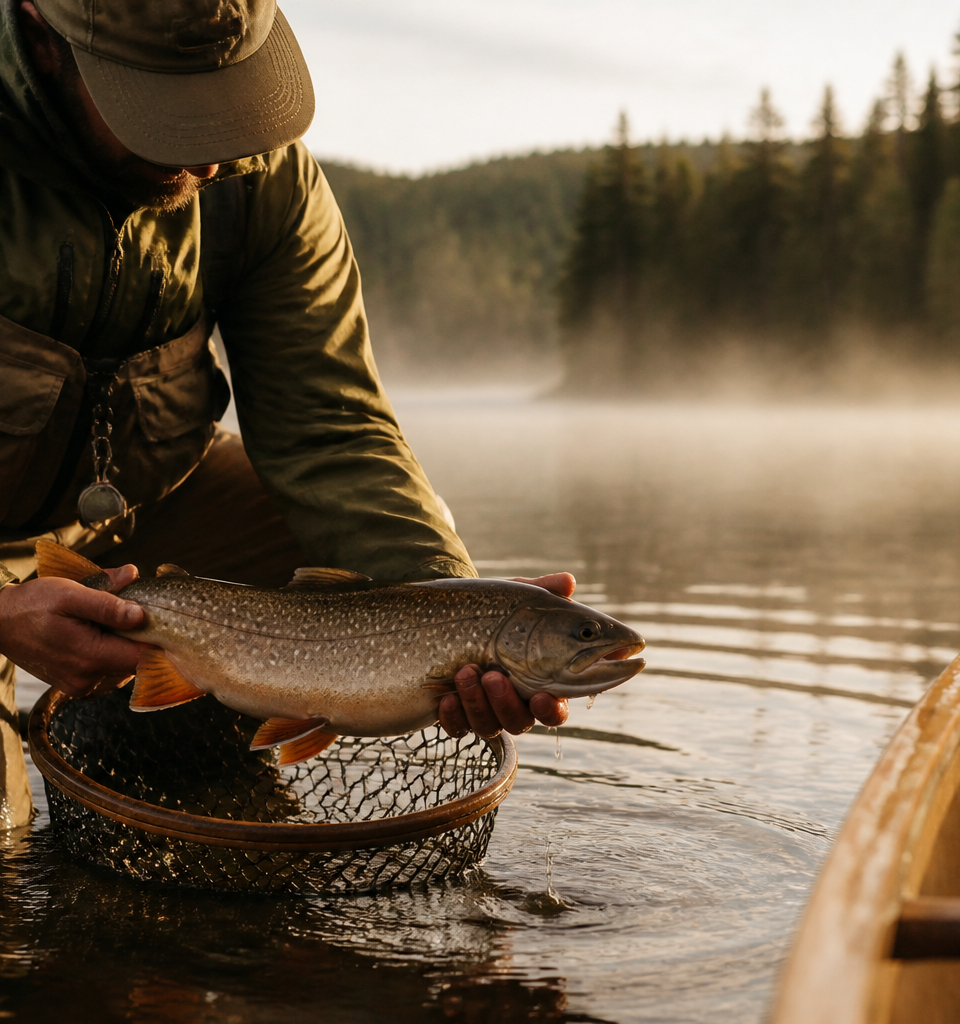
Arctic charr stands out with its streamlined body, striking colours, and the brilliant white leading edges on its lower fins. Belonging to the salmonid family, this cold-water fish features fine, deeply embedded scales and a distinctly forked tail. Its coloration varies widely depending on its life stage and environment: at sea or in large open lakes, its back displays steel-blue to olive-green tones with silver flanks dotted with small pink or red spots.
As the late-summer spawning season approaches, breeding males undergo a dramatic transformation. Their bellies and flanks turn a fiery red or brilliant orange, while the lower jaw develops a pronounced hooked kype. The pectoral, pelvic, and anal fins showcase an immaculate white margin bordered by a contrasting black stripe—a key feature separating Arctic charr from brook trout or lake trout.
Anatomically, Arctic charr features fine vomerine teeth and exceptionally firm, deeply pigmented flesh ranging from pale pink to rich carmine red. This coloration is a direct result of a diet rich in small crustaceans and cold-water forage fish.
Where to find Arctic charr in Quebec?
Arctic charr primarily inhabits the rivers and lakes of Quebec's Far North, particularly throughout Nunavik and along the coast of Ungava Bay. This circumpolar species thrives beyond the 55th parallel, where waters remain frigid year-round. Major river networks such as the George, Payne, Leaf (Rivière aux Feuilles), and Maricourt rivers serve as renowned strongholds for anadromous populations migrating between freshwater and the Arctic Ocean.
Relict landlocked populations also exist in deep, cold lakes further south in Quebec. These fish inhabit the lower water columns, often below the thermocline, in high-elevation water bodies across the Middle North or the Gaspé Peninsula. These isolated populations remain as living legacies of the retreat of the continental ice sheets.
Ideal habitats combine ultra-pure water, maximum dissolved oxygen levels, and temperatures rarely exceeding 12 degrees Celsius. Rocky bottoms, clean gravel beds, and tail-outs below rapids provide essential resting and spawning grounds required for this demanding species to thrive.
Arctic charr behaviour and seasonal patterns
Anadromous Arctic charr overwinter in large inland lakes safe from ice before heading downriver to estuaries during spring ice-out. Once the ice breaks up in late June or early July, adults and large juveniles reach coastal marine waters. During this brief marine feeding period of six to eight weeks, they feed heavily on capelin, sand lance, and amphipods to build extensive fat reserves.
By late July and throughout August, the spawning urge triggers an upstream migration back to their home rivers. These fish push against heavy currents with remarkable power, ascending roaring rapids and waterfalls. Anglers encounter them in their most brilliant spawning attire, delivering unforgettable rod-bending battles.
For non-migratory forms in deep lakes, seasonal movements follow thermal stratification. In spring and autumn, these charr cruise shallow shorelines and shoals. During the summer heat, they retreat into deep abyss basins to escape warming surface waters.
When to fish for Arctic charr in Quebec?
The most productive window for Arctic charr fishing in Quebec spans from mid-July to the first week of September. During this period, anadromous runs peak across Nunavik rivers. Fresh-run sea charr are strong, aggressive, and responsive to both surface and subsurface presentations. To time your adventure effectively, consult our fishing calendar: the best times by species and region in Canada.
Weather conditions strongly influence charr activity. Cool, windy, and overcast days often trigger aggressive takes in rivers, as lower light levels encourage fish to leave deep holding pools and patrol the current seams. Tides also regulate runs in estuarine stretches, with incoming tides pushing fresh waves of fish upstream.
In lakes, the early summer period immediately following northern ice-out provides exceptional shallow-water action. Frigid, uniform water temperatures allow anglers to target trophy fish trolling near rocky shorelines.
Locating Arctic charr in Quebec river pools
To locate Arctic charr reliably, focus on holding pools directly downstream of major rapids. These deep depressions give migrating fish a place to rest out of the main current before tackling the next barrier. Calm eddies, current seams, and cold tributary confluences regularly concentrate dozens of fish.
In river mouths and estuaries, charr cruise along sand points, rocky shoals, and tidal channels. Keep an eye on the surface: on incoming tides, schools often reveal their presence through porpoising rolls or surface swirls as they chase schooling baitfish like smelt and capelin.
On large inland lakes, target steep drop-offs, submerged humps, and rocky points extending into deep water. A quality depth sounder helps pinpoint the precise thermocline depth where suspended charr hold.
Best techniques for catching hard-fighting Arctic charr
Fly fishing and spin casting are the top two methods for tackling Arctic charr in fast-flowing water. On the fly, bulky streamers in vivid shades like orange, fluorescent pink, white, and purple trigger territorial strikes. A fast, erratic strip alternating sharp pulls and short pauses imitates fleeing prey or an intrusive rival.
For spin casting, heavy casting and inline spoons are essential. Narrow, dense models cut through strong currents to reach the strike zone near the riverbed. Working spoons with sweeping rod lifts followed by a fluttering fall creates flash that provokes reaction strikes from neutral fish.
Vertical jigging or slow trolling with deep-diving minnow plugs also produces solid results in lake environments. If you enjoy technical salmonid angling, our guide on golden trout fishing in Quebec: complete guide and tactics offers additional insights into targeting pool-holding fish.
Choosing the right gear for Arctic charr fishing
For fly fishing, a 9- to 10-foot 7- to 9-weight rod is the standard setup to handle powerful charr and persistent northern winds. Pair it with a sink-tip line or an intermediate to fast full-sinking line depending on pool depth. A durable reel with a smooth, sealed drag system and at least 150 metres of backing is critical to handle explosive runs.
For spin anglers, a 7-foot medium-heavy, fast-action rod paired with a 3000- or 4000-size reel works best. Spool up with 20- to 30-pound braided line finished with a 12- to 16-pound fluorocarbon leader to withstand abrasive northern rocks.
Essential accessories include a large landing net with knotless rubber mesh to protect the fish's protective slime coat. Polarized sunglasses with amber or copper lenses help spot holding fish in crystal-clear arctic rivers.
Arctic charr fishing regulations in Quebec
Every angler targeting Arctic charr in Quebec must carry a valid provincial sport fishing licence. Arctic charr fishing is managed under specific northern management zones—notably Zones 22, 23, and 24—which feature distinct daily limits, open seasons, and transport regulations. Always consult the official rules via the Government of Quebec (hunting and fishing) before heading out.
In northern areas governed by territorial agreements, land access permits or mandatory local Inuit or Cree guides may be required. Single barbless hooks are strongly recommended—and mandatory in certain waters—to facilitate quick and safe release.
Practise careful fish handling by keeping charr submerged in water as much as possible while taking photos. Fishing regulations can change annually; verify current official guidelines before departing on your trip.
Conservation and the ecological role of Arctic charr
Arctic charr acts as an apex predator in boreal and arctic aquatic ecosystems. Its presence signals exceptional water purity and pristine ecological conditions. By carrying marine-derived nutrients like nitrogen and phosphorus upstream during migratory runs, charr help fertilize naturally nutrient-poor northern river systems.
Because charr grow slowly in frigid environments, populations are vulnerable to overharvest. A 10-pound fish can take 15 to 20 years or more to reach that size in the cold waters of Nunavik. Climate change presents additional pressures by altering water temperatures, ice regimes, and marine food webs.
Practising catch-and-release for large spawning fish helps safeguard this resource. Releasing prime breeders ensures the genetic continuity of these remarkable subarctic populations.
Planning a successful guided Arctic charr trip
Organizing a northern Arctic charr trip requires specialized logistics best managed by a dedicated fishing outfitter. These remote destinations are accessible only by floatplane or bush plane flying out of regional hubs like Kuujjuaq or Schefferville. Booking a guided package ensures secure wilderness lodging, bush air transport, and experienced local guides who know the timing of the runs.
To plan your trip, browse our directory of fishing outfitters in Quebec. Whether traveling on your own or with friends, our advice on solo, group, or family: choosing the right outfitter for your trip will help you select the right setup. Anglers seeking premium remote accommodations can also explore our overview of 5 luxury fly-in fishing lodges in Quebec.
To experience world-class angling against the backdrop of the Quebec tundra, start planning your northern adventure today on MyOutfitters.
Frequently asked questions
When is the best time to fish for Arctic charr in Quebec?
The prime window runs from mid-July to the first week of September during the peak river runs. Anadromous charr return from coastal waters to their Nunavik spawning grounds displaying their most vibrant colours.
Where can you catch Arctic charr in Quebec?
They are primarily found in Nunavik across major river systems like the George, Payne, and Leaf rivers, as well as in select deep, high-elevation lakes in the Middle North that hold relict landlocked populations.
What fly fishing setup works best for Arctic charr?
A 9- to 10-foot 8-weight fly rod paired with a reel featuring a strong, sealed drag is ideal. Use sink-tip or sinking lines backed by at least 150 metres of backing to manage long, powerful runs.
What are the most effective lures for Arctic charr?
Heavy casting spoons in silver, orange, or chartreuse and bulky articulated streamers in bright fluorescent colours work best. Lures need enough weight to get down quickly in deep, fast-flowing river pools.
Is a provincial fishing licence mandatory?
Yes, a valid Quebec sport fishing licence is required to fish for Arctic charr on public waters. Depending on the northern zone, additional regional access permits or guide requirements may apply.
How do you tell an Arctic charr apart from a brook trout?
Arctic charr features a more deeply forked tail and plain light spots without blue halos on its sides. Its back also lacks the dark worm-like vermiculations found on brook trout.
Can you drive to Arctic charr outfitters in Quebec?
No, virtually all outfitters targeting anadromous Arctic charr are located in the Far North and are accessible only by floatplane or chartered flights. Only a few southern lakes hold small landlocked populations, which are often strictly protected.
What is the average weight of Arctic charr in Quebec?
Catches typically average between 4 and 8 pounds in northern Quebec rivers. Trophy specimens caught during late-summer runs frequently exceed 10 to 15 pounds.
What weather conditions are best for Arctic charr fishing?
Cool, overcast, and breezy days typically provide the most productive river action. Lower light levels encourage fish to leave deep holes and actively feed throughout the river current.
Why is catch-and-release recommended for Arctic charr?
Arctic charr grow very slowly in northern cold-water environments, with large trophy spawners often exceeding 15 years of age. Releasing mature fish protects reproductive stocks and maintains healthy wild populations.