Fishing
Complete Guide to Brown Trout Fishing in Quebec
Discover the best techniques, habitats, and seasons to target Quebec brown trout, a wily and hard-fighting salmonid prized by anglers.
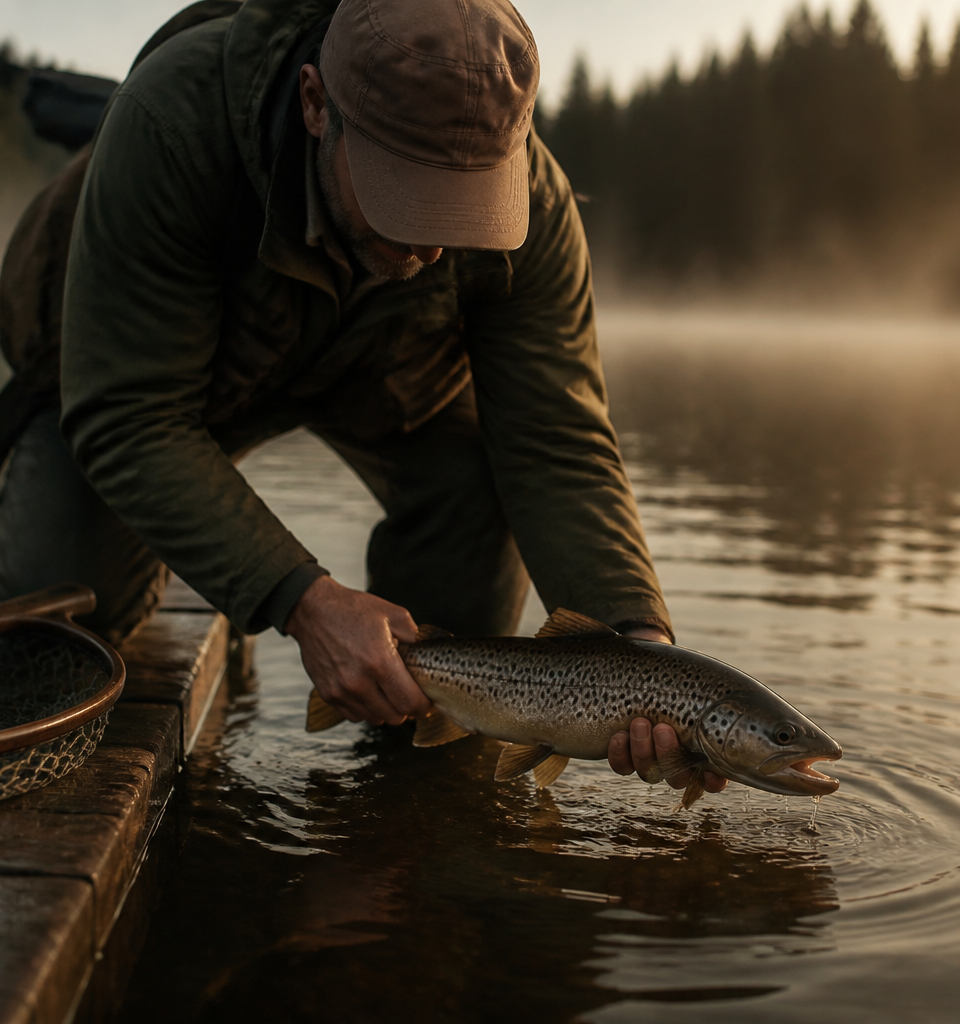
Species overview and identification
Native to Europe, the brown trout (*Salmo trutta*) was introduced to North American waters in the late nineteenth century. In Quebec, it has adapted remarkably well to several river systems, becoming one of the most prestigious and cunning salmonids to target. Its streamlined profile, legendary fighting ability, and natural wariness make it a premier quarry for sport anglers seeking a technical challenge.
Visually, the brown trout is distinguished by colouration ranging from golden brown to olive yellow along its flanks, with a belly that is often cream or pale yellow. Its body is adorned with well-defined black spots and reddish-orange spots ringed by pale halos. Unlike brook trout, brown trout lack vermiculated marbling across the back, and the leading edges of their lower fins do not feature a crisp white margin backed by a black line. The tail is square or only slightly indented, bearing few to no dark spots.
Quebec specimens typically measure between thirty and fifty centimetres, though fertile rivers and select lakes produce trophy breeders exceeding sixty centimetres. The head profile elongates in mature males, often developing a pronounced hook on the lower jaw, known as a kype, during the autumn spawning period.
Habitat and geographic distribution
Brown trout primarily inhabit rivers and lakes throughout southern and central Quebec. Notable populations thrive across the Eastern Townships, Montérégie, Chaudière-Appalaches, Centre-du-Québec, and the Outaouais, as well as select sections of the Laurentians and Lanaudière. Renowned waterways such as the Châteauguay, Saint-François, Nicolet, and Diable rivers support robust fisheries sustained by both historical stockings and natural reproduction.
Unlike brook trout, which require exceptionally cold, pristine water, brown trout tolerate slightly warmer temperatures—briefly withstanding conditions near twenty-two degrees Celsius without immediate lethal stress, though their preferred range spans twelve to eighteen degrees. They favour medium-to-large rivers featuring a distinct mix of deep pools, gravel riffles, moderate rapids, and productive seams.
Gentle tributaries and limestone-rich rivers are particularly hospitable thanks to the abundant benthic forage they produce. Submerged cover, such as tangled logjams, undercut banks, and large boulders, forms an essential component of their core habitat.
Behaviour and seasonal patterns
Brown trout behaviour is defined by extreme caution and strong territorial instincts. As these fish grow older, they become increasingly light-averse, avoiding direct sunlight in favour of crepuscular or strictly nocturnal feeding patterns. Large specimens spend most of the daylight hours buried deep in pools or tucked beneath impenetrable cover, venturing out to hunt primarily at dusk, dawn, or when water conditions turn murky.
In spring, as runoff subsides and waters begin to warm, brown trout feed aggressively to replenish energy reserves depleted over the winter. During this time, they actively target benthic invertebrates, aquatic worms, and small baitfish. Come summer, rising water temperatures push fish into thermal refuges—such as cold groundwater seeps and tributary mouths—where daytime feeding drops off substantially.
Autumn triggers the spawning cycle, typically running from late September through early November in Quebec. Mature adults make short upstream migrations into tributaries to find clean, well-oxygenated gravel beds. During this phase, territorial aggression among males surges significantly, altering typical feeding behaviours ahead of winter dormancy.
Best seasons and conditions
Quebec’s fishing calendar offers two premier windows for targeting brown trout effectively. The first runs from mid-May to late June, coinciding with major, synchronized hatches of mayflies and caddisflies. Water levels stabilize, temperatures are ideal, and fish rise regularly to feed both on the surface and just below the film.
The second prime window occurs from late August until the fall season closes. With shortening daylight hours and cooling rivers, brown trout instinctively gorge on calories ahead of spawning and the winter freeze. They turn especially aggressive toward larger presentations and lures that mimic injured forage fish or territorial rivals.
Weather conditions play a decisive role. Overcast days with light drizzle or gentle rain are far more productive than bright, sunny conditions. Moderate breezes that ruffle the water surface or a slight stain following a summer rain lower the fish's guard, sparking opportunistic feeding windows in broad daylight.
Where and how to find it
Finding river brown trout requires a methodical read of currents and submerged structure. Unlike species that hold out in heavy main-stem currents, brown trout prioritize energy efficiency, positioning themselves adjacent to conveyor belts of drifting food.
To increase your odds on the water, focus your efforts on:
- Undercut banks shaded by riparian vegetation, where submerged root systems provide ideal shelter.
- The tailouts of rapids and the soft cushion of water immediately upstream of large boulders.
- Current seams where two flows of differing speeds merge, gathering foam lines packed with drifting insects.
- The heads and tails of deep pools, right where the substrate transitions toward the next riffle.
- Logjams and timber felled by wind or beaver activity, which offer complete overhead protection from predators.
A stealthy approach is vital. Wade slowly, avoid casting shadows across promising lies, and minimize heavy footfalls on the riverbed or bank—an alarmed brown trout will shut down for hours.
Recommended techniques and strategies
Fly fishing remains the gold standard for pursuing brown trout. Euro-nymphing or indicator nymphing with tungsten-weighted stonefly, midge, or mayfly patterns allows you to probe the bottom of deep runs with precision. During heavy hatches, dry-fly fishing delivers thrilling surface takes. Achieving a drag-free drift is critical, as any unnatural pull on the leader will spook discerning fish.
For targeting trophy-class specimens, large articulated streamers imitating sculpins, minnows, or lampreys are devastatingly effective. Strip streamers aggressively through deep holding pools and alongside structure using sinking lines or sink-tips, especially as light levels fade.
Spin anglers can find great success using 5-to-9-centimetre suspending minnow plugs, gold or copper inline spinners, and small soft plastics rigged on light jig heads. Cast upstream or across-and-down, working the lure close to the bottom with sharp twitches and pauses to mimic a struggling baitfish swept along by the current.
Equipment and gear
For river fly fishing in Quebec, a 9-foot, 4- or 5-weight moderate-fast action rod serves as the ultimate all-around tool. When casting heavy streamers or tackling larger, wind-swept rivers, a 9.5-foot or 10-foot 6- or 7-weight setup provides the backbone needed to turn and land powerful fish quickly.
Your leader setup must account for water clarity and this species' sharp eyesight. A 9-to-12-foot tapered leader ending in 4X to 6X fluorocarbon tippet is recommended for stealth. Fluorocarbon shares a refractive index close to water and offers superior abrasion resistance against rocks compared to standard monofilament.
For spin anglers, a 6'6" to 7'0" ultralight to medium-light rod paired with a 1000-to-2500-size reel spooled with 6-to-8-pound braided line and a 4-to-6-pound fluorocarbon leader works best. Complete your kit with breathable waders featuring high-traction soles, amber polarized sunglasses to spot structure and cruising fish, and a knotless rubber landing net.
Regulations, licences and ethical practices
Sport fishing in Quebec is governed by provincial regulations designed to protect and sustain wild fish stocks. Every angler must hold a valid Quebec sport fishing licence and strictly adhere to the specific rules for the fishing zone they are in, including open season dates, daily catch limits, and possession limits.
Select brown trout waters carry special regulations, such as mandatory barbless single hooks, bait bans, or mandatory catch-and-release sections to protect breeding stock. To verify specific zone boundaries and current rules, consult the official Government of Quebec (hunting and fishing) website.
Practising ethical catch-and-release is vital for maintaining high-quality fisheries. If releasing your catch, keep the fish in the water as much as possible, handle it only with wet hands, avoid squeezing its internal organs, and revive it facing into the current until it swims away under its own power. Regulations change each year: always verify the specific rules for your zone before heading out.
Conservation, population and ecosystem role
Since its introduction to Quebec, the brown trout has carved out a unique ecological niche. In altered or warmer waterways where native brook trout struggle due to agricultural runoff or urban development, brown trout sustain world-class sport fisheries thanks to their higher thermal tolerance.
However, managing this established non-native species requires careful balance. In sensitive watersheds supporting pristine native brook trout populations, biologists avoid stocking brown trout to prevent direct spatial and trophic competition, as large adult browns are dominant, opportunistic predators capable of impacting juvenile native salmonids.
Protecting riparian buffers, restoring streambanks, and maintaining healthy environmental flows remain the cornerstones of aquatic habitat conservation in Quebec. Local river conservation groups and passionate anglers contribute significantly by creating artificial spawning beds and monitoring summer water temperatures to safeguard these fisheries for the future.
Planning a guided trip or outfitter stay
Booking with an outfitter or professional Quebec fishing guide is the most effective way to maximize your success on a brown trout adventure. These local experts log hundreds of hours on the water each season; they know the exact layout of every pool, the locations of key thermal refuges, and the precise timing of weekly insect hatches.
A guided excursion takes the guesswork out of navigating private land access or reaching remote, hard-to-access stretches of water. Your guide can adapt tactics on the fly based on weather shifts and river levels, while providing hands-on instruction regarding presentations, line mending, and hook sets on notoriously wary fish.
To plan an unforgettable angling trip and target trophy brown trout in Quebec's finest waters, explore the MyOutfitters network to connect with trusted outfitters and professional guides tailored to your adventure goals.
Frequently asked questions
How do you distinguish a brown trout from a brook trout?
Brown trout feature a golden-brown to yellowish body covered in dark spots and red spots circled by pale halos, alongside a square, unspotted tail. Brook trout display light, vermiculated worm-like markings across a darker back and distinct white leading edges backed by a black stripe on their lower fins.
What is the best time of day to catch large brown trout?
Dusk, nightfall, and early dawn offer the highest success rates for targeting trophy browns. These cautious, light-sensitive fish use the cover of darkness to leave deep holding lies and actively hunt baitfish along shallower banks.
Why is a fluorocarbon leader recommended for brown trout fishing?
Brown trout possess keen eyesight and easily detect visible line. Fluorocarbon has nearly the same refractive index as water, making it virtually invisible beneath the surface, while offering superior abrasion resistance around sharp rocks and wood.
What are the most effective spinning lures for Quebec rivers?
Suspending minnow plugs between 5 and 7 centimetres, gold inline spinners with red accents, and small soft-plastic sculpin imitations on light jig heads are exceptionally effective at triggering strikes in moderate to fast currents.
Can you fish for brown trout in Quebec lakes?
Yes, select managed lakes and reservoirs hold excellent brown trout populations. Anglers frequently target them by slow-trolling minnow baits or spoons in spring, or by casting near rocky points, drop-offs, and submerged weedbeds at daybreak.
Which fly patterns should I use during summer hatches?
For surface action, mayfly patterns such as the March Brown, Adams, or Hendrickson, as well as Elk Hair Caddis imitations, are essential. Subsurface, tungsten-weighted Pheasant Tail and Prince nymphs deliver consistent results throughout the season.
Why do brown trout tolerate summer heat better than brook trout?
Brown trout have a higher physiological thermal tolerance, allowing them to withstand temporary water temperatures approaching twenty-two degrees Celsius. This adaptation enables them to thrive in lower-elevation rivers that warm up during midsummer heatwaves.
What rod action is best suited for medium-sized trout rivers?
A moderate-fast action rod is ideal. It provides the suppleness needed to cast light presentations accurately and cushion energetic headshakes without breaking delicate tippets, while maintaining sufficient backbone in the butt section to control strong runs.
How should you handle a brown trout prior to release?
Wet your hands before touching the fish, keep it submerged in a knotless rubber net whenever possible, and never hold it vertically. Remove hooks quickly with forceps and gently hold the trout facing into the current until it swims off vigorously on its own.
What are the advantages of hiring an outfitter or fishing guide for brown trout?
A professional guide excels at reading water, knows the specific lies of resident fish, and selects the right fly or lure for shifting conditions. They also provide secure, hassle-free access to productive river sections that are often unreachable from public access points.